
-

-


Follow Us
-

 On Facebook
 On Flipboard
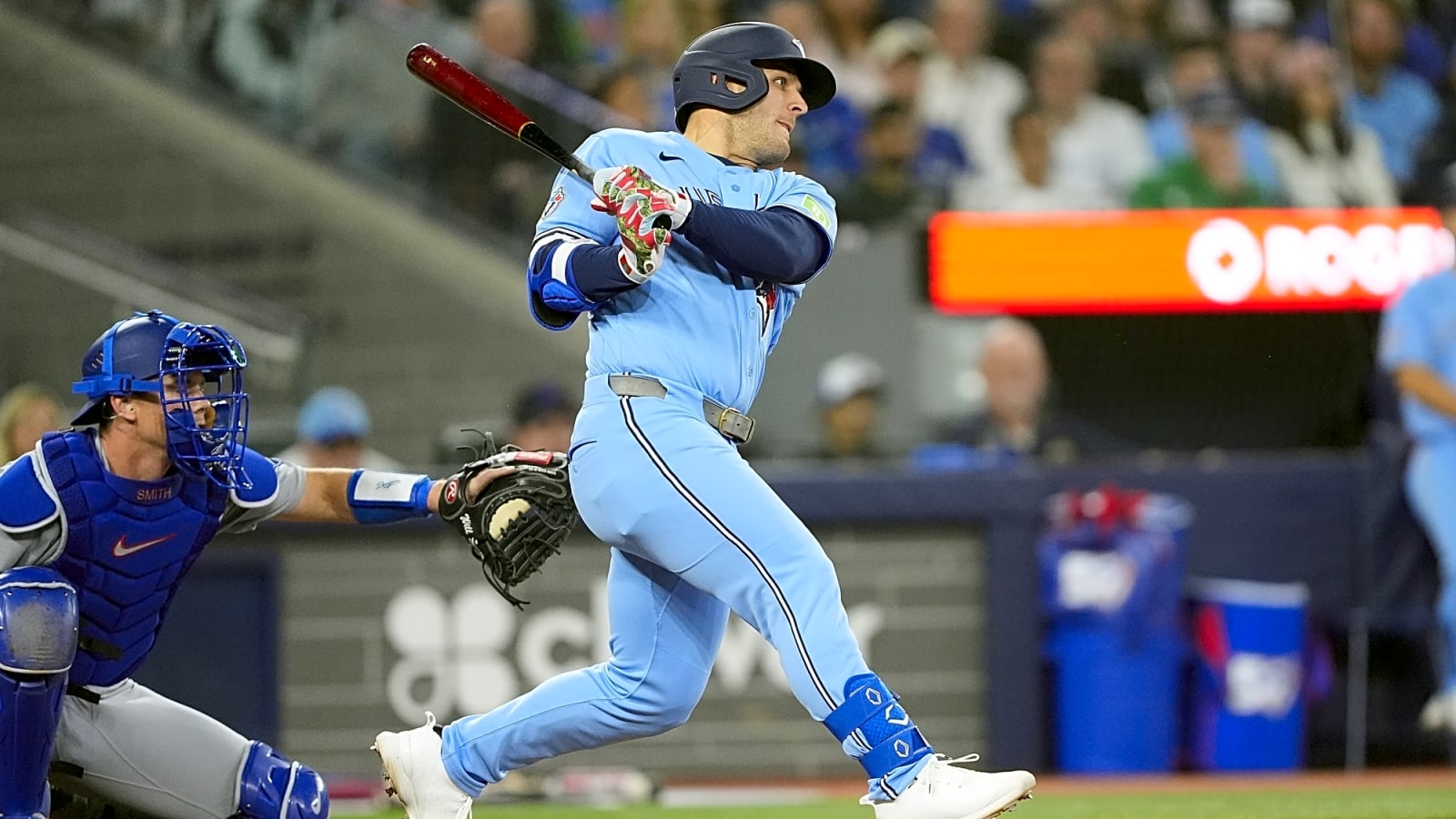
The Toronto Blue Jays snapped a six-game losing streak with a cathartic (and maybe a little painful) 4-3 win over the Los Angeles Dodgers. While Wednesday’s win was a step in the right direction for the Blue Jays, they’re still working their way through a slow offensive start to 2026.
One of the biggest problems for the Blue Jays to start the season has been capitalizing when they have runners in scoring position. That was one of the team’s biggest strengths in 2025; they had the highest average in MLB with runners in scoring position (.292). Conversely, they are ranked 26th so far this season, with a .215 average.
If that’s not bad enough, the Blue Jays are the worst team in the league with the bases loaded. They’re 1 for 19 on the season and have scored just five runs. Compare that to 2025, when they had the highest average in MLB with the bases loaded (.386) and the fourth-most RBIs (123).
One area from last year where the Blue Jays have stayed strong is in strikeouts. Last season, the Blue Jays had the lowest strikeout rate in MLB (17.7%). Their strikeout rate so far in 2026 is one percent higher than last season (18.7%), which is the second-lowest in MLB, slightly higher than the Tampa Bay Rays (18.3%).
The Blue Jays’ strikeout rate is even more impressive when you factor in that 20 of their 86 strikeouts are by Kazuma Okamoto. Okamoto has had a good start to his MLB career, but he has struck out a lot as he adapts to MLB pitching. He has a 39.2 percent strikeout rate, which is the fifth-highest in the majors. This will likely even out as Okamoto becomes more accustomed to MLB pitching. During his tenure with the Yomiuri Giants, Okamoto’s highest strikeout rate was in 2019 (21%), so there is a bit of a learning curve right from the get-go.
DAVIS SCHNEIDER SCORES AND THE JAYS ARE UP BY ONE!
: Sportsnet | #BlueJays50 pic.twitter.com/CpFLyqSILN
— Blue Jays Nation (@thejaysnation) April 8, 2026
The Blue Jays are putting the ball in play, but it’s just not translating into hits. They have the 24th-highest batting average on balls in play (BABIP) at .274. Conversely, they had the highest BABIP in 2025 (.329).
While the offensive struggles have been across the board for the Blue Jays, designated hitter George Springer has had an especially rough start after a career resurgence in 2025. Springer is slashing .184/.273/.367 in 2026. He did have an RBI double as part of the Blue Jays’ rally against the Dodgers. However, his strikeout rate is up from 18.9 percent in 2025 to 25.5 percent in 2026.
Part of the problem for Springer may be his fast swing percentage. From 2024 to 2025, his average bat speed increased from 71.9 mph to 73.7. That average is pretty similar in 2026 (73.3); however, he’s using his fast swing (swing speed of 75 mph or more) less in 2025. In 2025, his fast swing percentage was 40.2 percent. That rate is down to 34.7 percent in 2026.
Springer isn’t the only player whose fast swing percentage is down in 2026. Vladimir Guerrero Jr’s fast swing percentage is down from 67.7 percent in 2025 to 54.1 percent in 2026. On top of that, his average bat speed dropped from 76.7 mph in 2025 to 75.3 mph in 2026. That being said, his average bat speed and fast swing percentage are much closer to his 2024 numbers (75.9 mph and 57.4%), which was a much stronger season from Guerrero.
Bat speed has also been a factor in Daulton Varsho’s sluggish start to 2026. His average bat speed is down from 75.6 mph in 2025 to 73.4 mph in 2026. His fast swing percentage is down from 56 percent in 2025 to 30.4 percent in 2026.
Another problem for the Blue Jays is their plate discipline.
The Blue Jays are swinging more, but not necessarily smarter. Many Blue Jays’ swing percentage is up in 2026, but they’re swinging more on pitches outside the strike zone. Nathan Lukes is the biggest example of this change. His swing percentage is up from 48.8 percent in 2025 to 54.8 percent in 2026. However, he’s swinging on 43.9 percent of pitches outside the strike zone compared to 31.4 percent in 2025.
While Lukes has seen the largest increase, he’s far from the only one. Andrés Giménez’s swing percentage on pitches outside the zone is up from 34.4 percent in 2025 to 43.4 percent in 2026. Jesus Sanchez’s is up from 30.5 percent to 38.6 percent. Springer’s is up from 20.4 percent to 26.6 percent.
Perhaps this is a byproduct of a changing approach that hasn’t paid off yet, but it could also be the result of trying to break out of a slump. As the losses and poor plate appearances pile up, players may be more desperate to get something going.
The Blue Jays have not had the start they were probably hoping for in 2026. While the team, particularly the pitching staff, has been rattled by injuries, the biggest problem for the Blue Jays has been the lack of offensive output. This was an area in which the Blue Jays thrived during the 2025 season, so they are capable of turning things around. But to do that, they will have to get back to playing the kind of baseball that made them so successful last year. That includes disciplined at-bats and capitalizing on the opportunities presented to them.
More must-reads:
- Paul Skenes has ominous comments after Konnor Griffin's extension
- Dodgers' Dave Roberts defends Shohei Ohtani's special treatment after backlash
- The 'Most games played by MLB team' quiz
Breaking News
Trending News





Customize Your Newsletter
 +
+




Get the latest news and rumors, customized to your favorite sports and teams. Emailed daily. Always free!
PRIVACY POLICY COOKIE POLICY CONTACT US
ABOUT YARDBARKER TERMS OF SERVICE


By using this site, you agree to our Terms of Service and Privacy Policy.
This site is for entertainment purposes only.
There is no gambling offered on this site.
Gambling Problem? Call 1-800-Gambler.
