
-


Follow Us

 On Facebook
 On Flipboard
 On Twitter
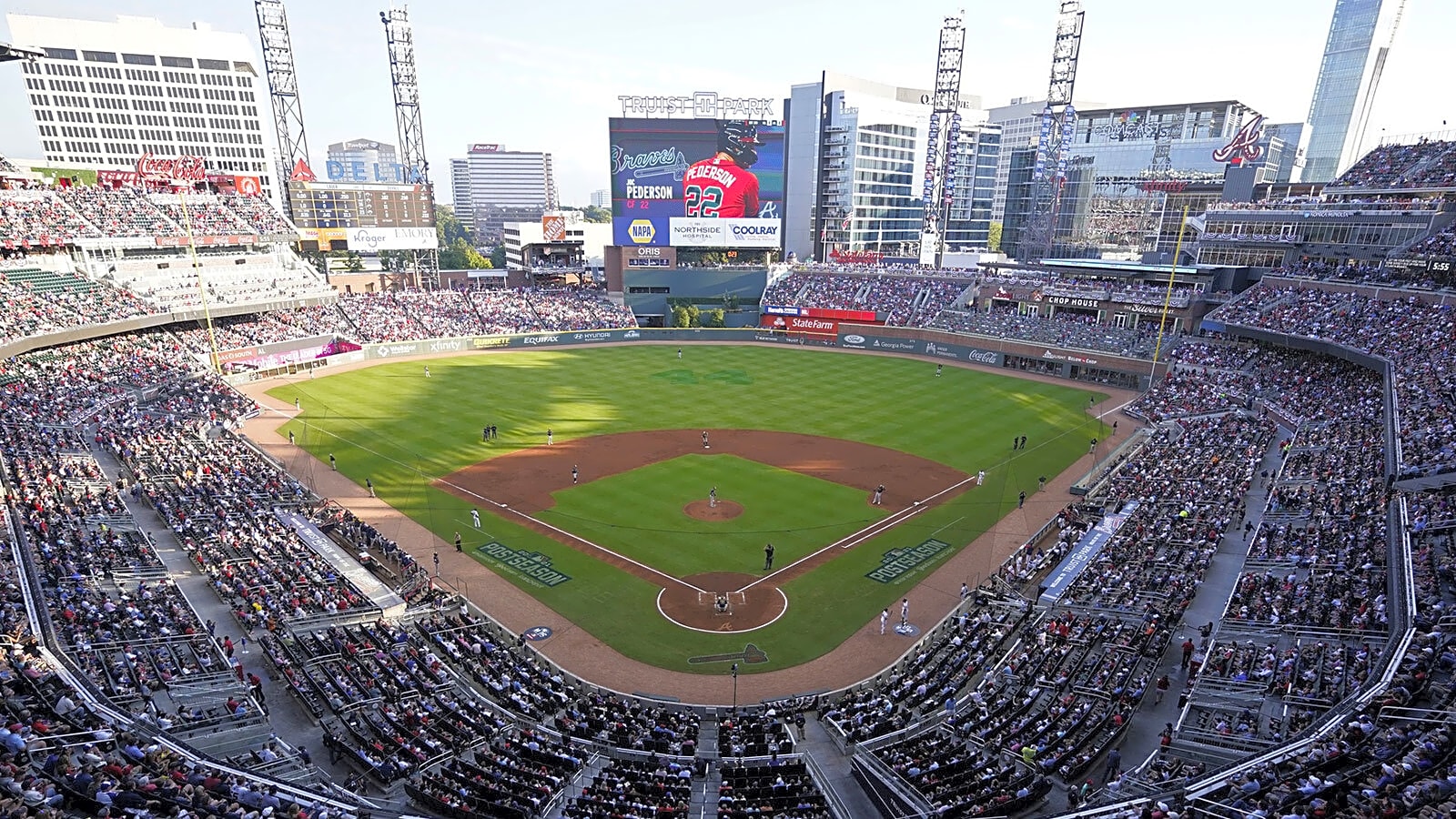
The Atlanta Braves enter the 2026 season at a familiar crossroads, searching for rotation upside without sacrificing long-term flexibility. That pursuit places the Braves at the center of a unique market inefficiency created by a Los Angeles Dodgers rotation logjam and an increasingly complex roster math problem. A trade for Bobby Miller presents Atlanta with a rare opportunity to acquire pedigree, velocity, and team control at a moment when perception lags behind talent.
The Dodgers influx of pitching is not theoretical. It is structural. With Shohei Ohtani having returned to full-time pitching duties in 2025, Yoshinobu Yamamoto entrenched near the top, Blake Snell secured on a massive deal, and Roki Sasaki added as an international prize, Los Angeles has effectively crowded itself out of development patience. That congestion leaves Miller, once a cornerstone arm, without a clear path to consistent innings.
Miller’s fall has been sharp but not fatal. After a dominant 2023 debut that established him as one of baseball’s premier young power arms, his subsequent seasons were disrupted by shoulder inflammation and mechanical inconsistency. In limited 2025 major league action, results cratered, yet the underlying velocity remained intact. The issue was never raw stuff. It was release-point drift, predictable sequencing, and timing breakdowns that unraveled execution.
For the Dodgers, this is not about giving up on talent. It is about asset management. Allowing a former Top 20 prospect to stagnate as a sixth or seventh starter risks eroding what value remains. Trading Miller now reframes him as a high-ceiling reclamation project rather than a failed experiment, a move consistent with how Los Angeles has historically monetized volatility.
The Braves pitching depth chart explains why the club is uniquely positioned to act. Spencer Strider entered the 2024 season healthy but suffered UCL damage almost immediately, making 2026 effectively his first full season entering the year without restrictions since 2023. Chris Sale is 36 and must be protected for October rather than pushed in May. Reynaldo Lopez thrived in a flexible role before shoulder surgery, not as a rigid rotation anchor. The Braves do not need certainty. They need controlled upside that can be shaped.
That is where the Braves pitching infrastructure becomes decisive. Atlanta has earned a league-wide reputation for repairing high-velocity arms whose profiles outpace their results. Lopez’s All-Star resurgence and Sale’s return to elite form were not accidents. They were outcomes of a system that prioritizes repeatable mechanics, sequencing discipline, and role clarity.
Miller fits that mold precisely. He still touches triple digits. His slider remains a swing-and-miss weapon. His changeup flashes enough separation to neutralize left-handed hitters when tunneled correctly. Nothing in his arsenal suggests decline. The Braves would not be betting on a rebound from scratch. They would be restoring a version that already existed.
Contract structure further tilts the calculus. Miller is pre-arbitration with limited service time and control through 2031. For a Braves roster already committed long term to Austin Riley, Matt Olson, and Ronald Acuna Jr., that affordability is not a luxury. It is a necessity. Five years of potential rotation value at minimal cost aligns perfectly with Atlanta’s competitive window.
The return required to make this work is realistic and balanced. JR Ritchie anchors the proposal. The former first-round pick posted dominant minor league results in 2025 and now profiles as a consensus Top 100 prospect. For Los Angeles, Ritchie represents a reset. He is younger, healthier, and not yet on the 40-man roster, buying development time without immediate pressure.
Patrick Clohisy completes the fit. His 2025 minor league season showcased elite speed, defensive versatility, and late-inning utility. For a Dodgers roster built around star power, Clohisy introduces chaos. He is a pinch-running weapon, a defensive replacement, and a bench piece capable of altering games without requiring everyday at-bats.
From a Dodgers perspective, the deal solves multiple problems at once. It clears a roster spot, diversifies prospect risk, and converts stalled upside into functional depth. In an offseason already defined by massive commitments, including high-end free-agent spending, shedding uncertainty in favor of controllable assets is sound roster engineering.
For the Braves, the upside is obvious. This is not about what Miller was in 2025. It is about what he was in 2023 and what Atlanta believes it can recreate. The Sale model applies cleanly. Acquire talent when doubt suppresses cost, then let structure do the rest.
There is also an October layer that cannot be ignored. In a potential National League Championship Series matchup, the idea of Miller starting a pivotal game against his former club carries narrative weight. Baseball thrives on symmetry, and postseason success often hinges on arms no one expected to matter.
The Braves do not need to win this trade on paper. They need to win it on process. The Dodgers need to manage surplus. The Braves need to create leverage. The Miller trade accomplishes both, making it the rare transaction that satisfies competitive logic on both sides.
More must-reads:
- Three losers of the 2025-26 MLB offseason
- Jose Ramirez gives Cleveland Guardians gift with another extension
- The 'NFL undrafted receiving leaders' quiz
Breaking News
Trending News





Customize Your Newsletter
 +
+




Get the latest news and rumors, customized to your favorite sports and teams. Emailed daily. Always free!
PRIVACY POLICY EDITORIAL POLICY CONTACT US
ABOUT YARDBARKER TERMS OF SERVICE


Use of this website (including any and all parts and
components) constitutes your acceptance of these
Terms of Service and Privacy Policy.
This site is for entertainment purposes only.
There is no gambling offered on this site.
Gambling Problem? Call 1-800-Gambler.
