
-

-


Follow Us
-

 On Facebook
 On Flipboard
 On Twitter

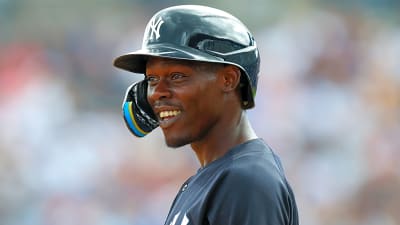
The hype around Carson Benge is no longer just prospect chatter—it’s becoming reality. The New York Mets are expected to give their 2024 first-round pick a real role in 2026, and with Benge projected to open the year as the starting right fielder (wearing No. 3), his rookie season could quietly become one of the most important storylines in Queens.
Slotted initially in the 8th or 9th spot in the lineup, Benge won’t be asked to carry the offense right away—but his well-rounded offensive profile gives him a legitimate chance to outperform that role quickly.
Why Carson Benge Is Built to Produce Early

Coming out of Oklahoma State in 2024, Benge developed a reputation as a polished, disciplined hitter with a mature approach beyond his years. His swing is compact and efficient, allowing him to make consistent contact, while his pitch recognition helps him avoid prolonged slumps—something that often derails rookies.
He’s not a one-dimensional player either. Benge brings sneaky power and underrated athleticism, which should translate into both extra-base hits and stolen bases at the big-league level. That combination gives him a higher floor than most rookies—and a ceiling that could surprise people across the league.
Rookie seasons are rarely linear, but Benge’s skillset makes him one of the safer bets among first-year players. Here’s a realistic look at both ends of his range:
Floor Projection
- AVG: .250
- HR: 11–13
- RBI: 50–58
- Slash Line: .250 / .320 / .395
- SB: 10–12
In this outcome, Benge shows flashes of his talent but goes through typical adjustment periods against elite pitching. He still contributes with improved contact and a bit more speed impact, making him a steady bottom-of-the-order presence who holds his spot thanks to defense and versatility.
Ceiling Projection (Impact Rookie Season)
- AVG: .285
- HR: 19–23
- RBI: 72–85
- Slash Line: .285 / .355 / .475
- SB: 16–20
If Benge finds his rhythm early, this is where things get exciting. A near-290 hitter with 20-homer pop and close to 20 stolen bases is not just a good rookie—that’s a breakout player. In this scenario, he likely forces his way up the lineup by midseason and becomes a consistent offensive spark for the Mets.
The Underrated Factor: Speed
One of the biggest adjustments in this projection is Benge’s impact on the basepaths. His instincts and acceleration suggest he can be more than just opportunistic—he can be a real asset.
With MLB’s continued emphasis on aggressiveness and base-stealing efficiency, Benge’s ability to swipe 10–20 bags could significantly raise his overall value. It also gives him a higher floor; even when the bat cools, he can still influence games.
Lineup Growth Potential

Starting low in the order is strategic, not limiting. If Benge hits anywhere near his ceiling, the Mets will have no choice but to move him into a more prominent role—potentially into the 5–7 range by the second half.
That kind of upward mobility matters for counting stats, especially RBIs and runs scored, which could further boost his visibility on a national level.
Rookie of the Year Outlook
At the beginning of the season, Benge may not headline the race for the MLB Rookie of the Year Award. But that could change quickly.
- Floor scenario: Outside the top 5 but still a respected contributor
- Mid-range outcome: Strong top-3 candidate
- Ceiling scenario: Legitimate Rookie of the Year contender, especially if the Mets are winning
Voters tend to reward players who combine production with team impact—and Benge has a path to both.
The Last Word
The Mets aren’t just plugging a prospect into right field—they’re introducing a player who could quietly become a core piece of their future.
If Carson Benge hits his floor, he’s a reliable everyday player with speed and contact skills. If he reaches his ceiling, he’s one of the most productive rookies in baseball—and a name that will start showing up everywhere from highlight reels to award ballots.
Either way, his 2026 rookie season won’t stay under the radar for long.
More must-reads:
- Pete Crow-Armstrong's contract extension is boom-or-bust deal for Cubs
- MLB's No. 2 prospect makes Tigers' roster for Opening Day
- The 'MLB Rookies of the Year since 2000' quiz
Breaking News
Trending News





Customize Your Newsletter
 +
+




Get the latest news and rumors, customized to your favorite sports and teams. Emailed daily. Always free!
PRIVACY POLICY COOKIE POLICY CONTACT US
ABOUT YARDBARKER TERMS OF SERVICE


By using this site, you agree to our Terms of Service and Privacy Policy.
This site is for entertainment purposes only.
There is no gambling offered on this site.
Gambling Problem? Call 1-800-Gambler.
