
-

-


Follow Us
-

 On Facebook
 On Flipboard


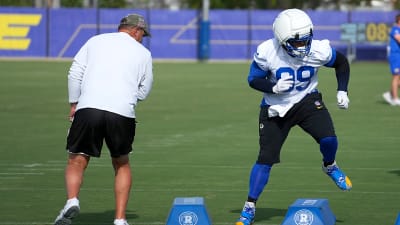
Roch Cholowsky was already at Truist Field when White Sox draft camp opened Thursday in Charlotte. Within hours, Chicago announced agreements with 20 of its 21 selections.
The timing matched Chicago’s philosophy. The organization had already identified a development priority for each selection.
The White Sox selected 11 position players and 10 pitchers. Four came from the high school ranks. Chicago opened with three hitters before taking three straight college right-handers. The club later committed seven-figure bonuses to sixth-round outfielder Alex Weingartner and 11th-round prep right-hander Kyle Casteel.
MLB listed Chicago’s $20,489,500 allotment as the largest pool of the bonus-pool era. The permitted overage of five percent raised the team’s spending ceiling to $21,513,975 before future draft pick penalties would apply. The White Sox finished with a total pool charge of $21,455,200, which was $965,700 above their original allotment and $58,775 below the five percent threshold.
The larger pool gave Chicago room to maneuver, but its development model determined how that flexibility was used.
In a post-draft interview with CHSN, amateur scouting director Mike Shirley described decisions, contact and damage as the three pillars of the organization’s offensive evaluation. A hitter needed to satisfy at least two. This class leaned toward damage. Chicago trusted Ryan Fuller’s hitting department to improve contact or refine swing decisions when another part of the offensive foundation was missing.
Chicago applied the same process to pitching. Brian Bannister and the research department identified specific pitch characteristics they believed the organization could sharpen after the draft. The team targeted carrying tools and accepted flaws it believed its development staff could address.
Roch Cholowsky Was More Than the Safe Pick
Cholowsky spent most of the spring as the expected No. 1 selection, but Chicago kept the decision open until the final day.
ESPN’s account of the last meeting showed more than two dozen staff members comparing him with high school shortstop Grady Emerson. Vahn Lackey remained part of the broader process. Jesse Rogers later clarified that the final discussion came down to Cholowsky and Emerson.
Chicago chose the more advanced defender without viewing Cholowsky as finished. He moved to shortstop as a UCLA sophomore and immediately won the Brooks Wallace Award and a collegiate Gold Glove. Baseball America credited him with 20 defensive runs saved that season. His anticipation creates more range than his straight-line speed suggests. He also throws accurately from different angles.
The offensive plan also shaped the final decision. Cholowsky hit .320/.452/.636 with 21 home runs as a junior. His contact rate reached 82 percent and his average exit velocity finished at 93 mph.
Fuller focused on the gap between Cholowsky’s normal swing and his two-strike setup. ESPN reported that he produced a 1.400 OPS before two strikes but hit .198 after shifting into a more defensive stance. His hard-hit rate fell by 16 percentage points.
Chicago wants to soften his lead-arm bar and preserve more of his earlier-count aggression later in at-bats. The change may produce more strikeouts. Getz used a rise from 12 percent toward 18 or 20 percent as a hypothetical rather than a projection. The point was to consider whether Cholowsky had protected a low strikeout rate at the expense of better contact and additional power.
The White Sox also trusted him to handle the adjustment. Fuller challenged the swing during their meetings and received an enthusiastic response. Shirley said UCLA coach John Savage urged Chicago to stop searching for a makeup concern because Cholowsky helped run the program from shortstop.
A June visit gave Cholowsky a closer look at the organization. He attended Braden Montgomery’s walk-off major league debut and spent time with Fuller inside the organization. He later signed for a draft-record $10.35 million. That saved Chicago $1,000,600 against the No. 1 slot. Getz made clear that the current infield gives the White Sox time to develop him naturally.
I covered Chicago’s selection and Cholowsky’s full scouting report in greater detail at FutureSox.
The No. 34 Trade Changed the Class
The White Sox sent Jacob Gonzalez and Brandon Eisert to Pittsburgh for left-hander Jaden Woods and the No. 34 selection. The deal added $2,897,400 to Chicago’s pool and gave the club five picks within the first 105.
Rogers reported that Chicago acquired No. 34 after learning Landon Thome would not reach No. 41. Getz and Shirley did not publicly tie the deal solely to Thome. The pick secured Thome, while the additional pool space helped Chicago meet Cole Prosek’s price seven selections later and strengthen the rest of the class.
Landon Thome, INF, No. 34
The family connection will follow Thome, but the bat drove the selection. Shirley called his hit skill elite after years of exposure through Nazareth Academy and the White Sox Area Code program.
Thome hit .535 with seven home runs and a 1.676 OPS as a senior. He also stole 54 bases in 56 attempts after improving his conditioning. More home run power could come as he adds strength.
Second or third base appears more likely than shortstop over the long term, but the bat gives him enough margin to move. Thome signed for $2,497,500, which was $399,900 below slot. My FutureSox profile covers his swing and defensive outlook in greater detail.
Cole Prosek, INF, No. 41
Prosek completed Chicago’s opening run of three hitters. Just Baseball ranked him No. 31 in the class.
The left-handed hitter produced 18 home runs as a senior and averaged 96.2 mph off the bat at the combine. His direct swing creates power without requiring a long path. Shirley said Prosek swings with “dangerous intentions,” though that aggression can pull him outside the strike zone.
Chicago plans to begin Prosek on the infield rather than let catching slow the bat. Second base is the initial focus, with third base also possible. Rogers reported that Prosek’s asking price contributed to his fall. He signed for $3.25 million, which was $803,900 above slot and roughly matched late first-round value. The full FutureSox profile examines the offensive upside and defensive options.
Together, the first three selections showed how Chicago used its expanded pool. Cholowsky gave the system a premium defender at shortstop, while Thome and Prosek brought two left-handed bats the organization had targeted.
Four Pitchers Will Begin on Starter Tracks
After opening with three hitters, Chicago used its next three selections on college right-handers.
Joey Volchko, Eric Segura and Cal Scolari will begin as starters. Kyle Casteel joined that group in the 11th round after receiving one of the largest bonuses in the class.
Joey Volchko, RHP, No. 77
Among Chicago’s pitching selections, Volchko owns the biggest raw arsenal. His fastball holds in the mid-90s deep into starts and can reach 101 mph. The pitch shows unusual cut, while the slider gives him another bat-missing weapon.
Most of Volchko’s arsenal moves toward his glove side, so Chicago must help him develop a dependable offering in the opposite direction. His command creates relief risk, but the White Sox will first give him an opportunity to start. If he eventually moves to the bullpen, the arsenal could play up in shorter stints and give him high-leverage upside. Volchko signed for $1,247,500, which was $160,900 above slot.
Eric Segura, RHP, No. 105
Segura offers a stronger strike-throwing foundation after posting a 2.22 ERA for Oregon State. The addition of a running sinker helped him limit damaging contact and reduce his walk rate. Chicago believes Bannister can sharpen the pitch’s seam effects.
Segura has the highest-floor starting profile of Chicago’s three early college arms. He still needs a more dependable finisher and a better answer against left-handed hitters to remain in the rotation. He signed for $745,200, which was $2,500 below slot.
Cal Scolari, RHP, No. 137
At Oregon, Scolari reached 98 mph and showed a bat-missing curveball. His slot creates an uncomfortable angle, but the delivery has not produced enough strikes. He walked 14.3 percent of opposing hitters in 2026 and previously underwent Tommy John surgery. Chicago still views him as a starter. Scolari signed for $550,000, only $2,300 above slot.
Kyle Casteel, RHP, No. 315
The 11th round does not reflect how Chicago or outside evaluators valued Casteel. Jim Callis said he could easily have been selected in the fourth round. According to Keith Law, the Pennsylvania prep right-hander signed for $1.25 million. Sox Machine noted that only the amount above $150,000 counted against the pool, giving the deal a $1.1 million pool charge.
Casteel works from an easy delivery with good extension. He commands the fastball to different quadrants. His breaking ball can land for strikes. The changeup gives him an answer against left-handed hitters. Former major league right-hander Matt Clement served as his high school pitching coach, while Casteel handled much of his own development program.
Shirley said Bannister supported the pick. Getz also became involved when Chicago narrowed its choice to Casteel or an unidentified position player. Chicago used the 11th round to complete a priority signing while taking advantage of the pool rules.
Chicago Kept Buying Damage
The White Sox used the same offensive model to determine the bats they took in the later rounds. Chicago accepted contact risk when another part of the offensive profile justified the development challenge.
Alex Weingartner, OF, No. 166
One of the best athletes at the combine, Weingartner ran a 6.24-second 60-yard dash and showed a mid-90s arm from the mound. The New Jersey prep player also displayed significant power during batting practice, including several balls above 106 mph and a 442-foot home run at the MLB Draft Combine.
Chicago plans to develop Weingartner in center field. The contact needs to hold against professional velocity and spin. He signed for $1,397,500, which was $983,600 above slot and roughly matched the assigned value of the No. 64 pick.
Clay Burdette, OF, No. 195
After hitting .343/.436/.701 with 17 home runs at Xavier, Burdette posted a 110.2 mph 90th-percentile exit velocity. He also runs well enough to receive opportunities in center field. The contact and chase rates must hold against stronger pitching.
Shirley said area scout J.D. Heilman advocated for Burdette throughout the year. David Keller later supplied an independent endorsement after seeing Xavier play Georgia Tech.
Jayson Jones, 3B, No. 225
Jones stood out as one of the better senior-sign fits for the White Sox. He gave Chicago a chance to save pool space without moving away from its offensive model. Jones hit .355/.430/.583 with 15 home runs at Wichita State, and his batted-ball data ranked among the strongest in the college class. He also kept the strikeouts under control. Swing decisions remain the main concern after he chased too often and drew few walks.
Matthew Bucciero, OF, No. 285
Bucciero won MAAC Player of the Year after hitting .327/.453/.688 with 20 home runs and 20 stolen bases. The production fits Chicago’s emphasis on damage. His patience also gives the profile some margin. Contact inside the strike zone remains the primary concern. A short MLB Draft League stint produced 16 strikeouts in 26 plate appearances. The sample is too small to define him, but it previews the adjustment against better velocity.
Braden Holcomb, OF, No. 345
Holcomb hit 14 home runs for Vanderbilt and posted a 109 mph 90th-percentile exit velocity. The 6-foot-5 hitter moves better than his size suggests and drives the ball to both gaps. The power comes with substantial miss risk. He struck out 63 times against 35 walks in 58 games.
Shirley said scout Harold Zonder began advocating for Holcomb around the fifth round. Chicago waited until the 12th before his expected price aligned with its board. He signed for $157,500, with the $7,500 pool charge matching the full bonus Chicago paid to each of its selections in rounds eight through 10.
Grayson Fitzwater, 1B, No. 375
One of my favorite late-round picks in Chicago’s class, Fitzwater stood out early as a fit for its hitting model. Fitzwater batted .325/.470/.753 with 21 home runs at VMI while finishing with more walks than strikeouts. His batted-ball data ranked among the best in the class, and he homered in each of his first three MLB Draft League games.
Contact against better velocity remains the main question because the swing can run long. His defensive value is also limited to first base. Still, few 13th-rounders entered pro ball with this much offensive evidence.
Shirley said Chicago’s area scouts were “jumping up and down” when Fitzwater was selected. They had seen him more than the senior decision-makers and remained convinced the bat belonged in the class.
Crew McChesney, OF, No. 495
A 70-grade runner with enough raw strength to produce home-run damage, McChesney still has work to do with the hit tool. He struck out 51 times and walked 12 times in 181 plate appearances at BYU. Chicago is trusting professional instruction to create enough contact for the speed and power to remain in the lineup.
Jake Berkland, SS/UTIL, No. 555
The Division II infielder hit .366/.507/.614 with 11 home runs and 22 stolen bases for Minnesota State Mankato. Berkland walked 35 times against 24 strikeouts while appearing at four positions. He had been preparing to transfer to Kansas before the White Sox selected him. His bat-to-ball ability and defensive flexibility provide a direct path into professional games.
The Later Arms Each Offered One Separator
Chicago’s remaining pitchers did not arrive with complete rotation profiles. Each offered one pitch or release characteristic worth developing.
Luke Craytor, RHP, No. 255
At Virginia Tech, Craytor reached 98.6 mph and paired the fastball with a hard slider. His delivery and command history point toward relief. The two-pitch combination gives him a middle-inning path if he throws enough strikes.
Isaac Yeager, RHP, No. 405
Yeager struck out 49 and walked 11 in 39⅔ innings for Oregon State. His slider generated a 56.9 percent whiff rate in the available data. A sinker that reaches 96 mph gives him another option for multi-inning work. Shirley said the research department strongly supported the pick.
Cameron Johnson, LHP, No. 435
Johnson entered college as one of the highest-profile pitchers in the 2023 high school class. Callis said he was once viewed as a potential No. 1 overall pick in 2026. His sinker reached 99 mph at Oklahoma, but his fastballs landed in the zone only about 40 percent of the time. That gap between stuff and control defines the profile.
Shirley described Johnson as Chicago’s “lottery ticket.” The 15th round was a reasonable place to take a chance on an arm with early-round raw ability.
Darin Horn, RHP, No. 465
Shirley said Bannister asks the scouting group to identify an unconventional pitching profile each year. Horn fit that request in this class.
The Coastal Carolina right-hander released the ball from roughly 4.9 feet and created around 21 inches of arm-side run on his sinker. The pitch generated a whiff rate above 40 percent despite sitting in the upper 80s. His sweeper approached 3,300 rpm.
Horn finished with a 3.21 ERA and 93 strikeouts in 67⅓ innings. The release traits and pitch geometry point toward a multi-inning bullpen role with leverage potential.
Jackson Bergman, RHP, No. 525
Bergman’s stuff improved after his transfer from Toledo to Indiana. The 6-foot-6 right-hander reached 96.7 mph from a low release height and generated strong extension. His sinker showed heavy arm-side action, while a sweeping slider and changeup gave him three usable pitches before an elbow injury ended his season. Shirley said Bergman’s pre-injury progress made him too appealing to pass in the 18th round.
Connor Fennell, RHP, No. 585
Fennell did not sign with Chicago. The Vanderbilt right-hander attacks from a low slot and creates a flat approach angle. His changeup gives him a weapon against opposite-handed hitters. Shirley said the White Sox explored a deal but lacked enough pool space to meet his asking price. Chicago used the selection as insurance in case a medical issue elsewhere freed additional money.
The Class Now Becomes a Development Test
With 20 of their 21 picks signed, the White Sox can now test the development plans that shaped the class. Assignments will follow, though several college pitchers may be eased into pro ball after the longest seasons of their careers.
Chicago entered the draft with the first selection and more pool space than any team in the bonus-pool era. Those resources created an obvious advantage, but the strength of the class rests in how the White Sox used them.
Jim Callis spoke with FutureSox and said he ranked their class second in baseball and estimated that six to eight selections could enter MLB Pipeline’s White Sox Top 30.
The class will ultimately be judged by whether Chicago chose the right developmental risks. The scouting department identified the carrying tools, while player development helped decide which flaws the organization believed it could correct.
I’ll take a closer look at each group for FutureSox in the coming weeks. For now, this recap serves as one place to understand how the class came together and where the development work begins.
Chicago’s record pool gave the organization an unusual opportunity. Turning that advantage into lasting value now falls to the players and development staff.
More must-reads:
- MLB releases spring training schedule as dark cloud looms over 2027
- Konnor Griffin's return could be the Pirates' last hope of clinching a spot in the postseason
- The 'Multiple 3-HR games in a season' quiz
Breaking News
Trending News




Customize Your Newsletter
 +
+




Get the latest news and rumors, customized to your favorite sports and teams. Emailed daily. Always free!
PRIVACY POLICY COOKIE POLICY CONTACT US
ABOUT YARDBARKER TERMS OF SERVICE


By using this site, you agree to our Terms of Service and Privacy Policy.
This site is for entertainment purposes only.
There is no gambling offered on this site.
Gambling Problem? Call 1-800-Gambler.
