
-

-


Follow Us
-

 On Facebook
 On Flipboard


Auction drafts are a unique animal in fantasy baseball. Many to most of us have our roots in the straight draft format, typically in which the rounds reverse. Auction demands more discipline, but in some ways provides more ways to pivot when your draft does not unfold as you think it will.
There are plenty of ways to influence the draft and maximize value in your auction. Here are 10 tips and tricks to help you navigate the landmines that are inevitably going to be a part of the process for your league.
Know Your League
This is standard advice in any format. Know the other owners, what their biases are and how they bid, if you know. Also, there is a difference between 8-, 10-, 12-, and 15-team auctions. In a deeper league, replacement- and bench-level players are more “meh”.
Pick a Strategy

Are you going to have a splashy “Stars & Scrubs” draft in which you spend on some big names and backfill your roster with cheap sleepers or the “Spread the Wealth” strategy of even spending for better balance, typically best in deeper leagues. Maybe your strategy is to spend more on pitching than other teams. A typical split is 65 percent of your budget on offense and 35 percent on pitching, so maybe to go 60/40 or even 55/45. If you want to remain flexible maybe instead of a strict strategy, develop a “philosophy” around your approach to filling your roster.
Nominate Players You Don’t Want, Especially Early
This will get money out of wallets and on the table as you begin to see what other teams have left to spend, what positions they have and need — all while you sit back and hold your money. It’s often good to nominate weaker or thinner positions — catcher, second basemen and closers to get owners to spend where you won’t plan on overspending yourself.
Track Budgets, Needs, and Category Targets Live

While Julio Rodríguez is getting bid up $1, $2, $3, $4 — well below where you know he’ll go — use that time to assess. Who has spent a lot of money, what do they need, and what have they rostered? If they have a star SS early, they are likely to be out on Trea Turner, for example. Is one team in bad need of stolen bases? If so, find a high-steals guy who suffers in other categories to nominate. Auctions don’t give you the ability to wait around, go get another drink, or visit the bathroom while you wait for 20 picks. When a player you don’t want is called use that time to assess your own needs and those of your league mates.
Be An Accountant, Not a Fan
Set your auction price for every player and be disciplined at the draft table. In the room, treat every bid as “value vs. my sheet,” not “do I like this player,” so you don’t get sucked into fights. You won’t get drawn into spending a couple of extra bucks for a player and then sacrificing on another player later.
Use the “Freeze Bid”
In many ways, auctions are a funny thing. We’ll bid on Shohei Ohtani a dollar at a time, slowly increasing from his $1 opening bid, through the teens and 20s. I love raising the bid immediately to his expected closing price neighborhood. So if I would bid $48 on Ohtani, I’ll take the bid from the early $2 or $3 straight to $45. You will force other teams to make immediate decisions, rob other owners of that assessment time we spoke of, and in a small way, you impose your will. Do this a couple of times in the draft and see what results. You’re almost always going to be pleased with the result. If it disrupts the flow of the draft, that’s the reason to do it.
Exploit Psychological Price Points
Teams often cap their assessment on players at the $0 and $5 marks. So bidding 21, 26, or 31 instead of 20, 25, 30 often gets less resistance than you’d expect relative to that extra dollar. Often this trick is combined with the freeze bid philosophy above.
Let the Room Set the Early Market, Then Pivot
Track if the first 10 to 15 players are going above or under value. If the stars are going cheaper than expected, lean into a stars-heavy approach. If they are going higher than expected, hold your cash for plenty of mid-draft value buys.
Know Your Endgame Guys
Before the draft, do your research and make a deep list of $1 to $5 players you’d be happy to roster at every position. This will allow you to be more aggressive early on star players knowing you have late-game options you can live with.
Ruin The Endgame for Other Teams
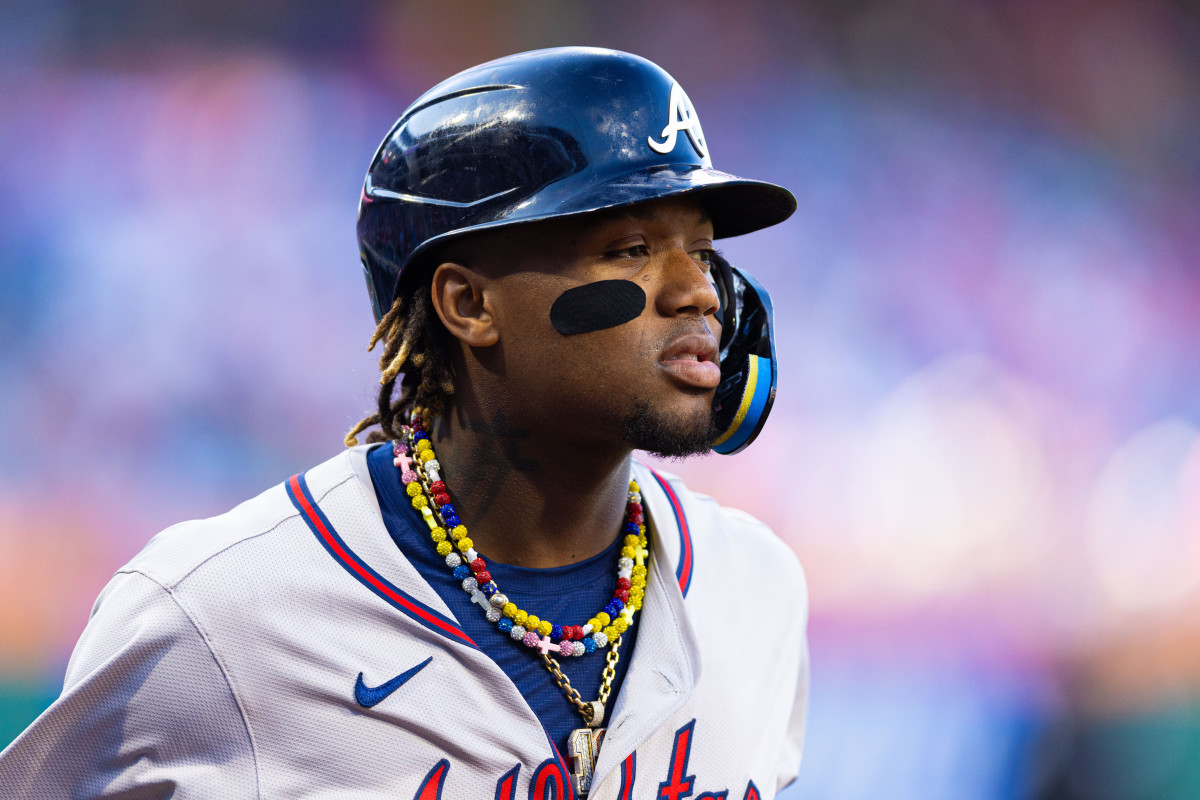
There is a huge difference between $1 and $2 players. When teams have limited dollars late, they will often nominate the player they want for a buck. If you have extra dollars, and can live with a $2 price point on a guy, snipe him from that team. He could be a player who is far more valuable than 2 bucks when you approach that team for a trade early in the season. The deeper your predetermined endgame list is, the easier this trick is to use.
As with all leagues, draft day will not win you the league. It’s vitally important of course, but all shortcomings can be addressed and injuries will happen. But if you employ many of the above tricks, you’ll be further ahead of many teams and fixing those errors will be far easier.
For Managers Who Want to Know More About Auction Drafts for Fantasy Baseball
What is the stars-and-scrubs auction strategy in fantasy baseball?
Stars-and-scrubs means spending heavily on a few elite players while filling the rest of the roster with inexpensive sleepers.
How do you build an auction draft budget?
Many managers divide budgets by tiers or “round equivalents,” reserving funds for both elite players and mid-draft values.
What is the best nomination strategy in auction drafts?
Nominate players you do not want early so other managers spend money and reduce their bidding power later.
How do managers track auction drafts live?
Most managers track remaining budgets, roster positions, and category needs using spreadsheets or draft software.
What is the best auction endgame strategy?
Successful managers spend all remaining funds and target undervalued players who can outperform $1–$2 prices.
Spread-the-wealth vs stars-and-scrubs: which strategy works better?
Spread-the-wealth provides roster balance, while stars-and-scrubs offers higher upside but greater roster volatility.
More must-reads:
- Phillies need all hands on deck in the OF after Adolis Garcia injury
- Angels southpaw Reid Detmers is a trade candidate on the rise
- The '6+ three-pointer NBA Finals games' quiz
Breaking News
Trending News




Customize Your Newsletter
 +
+




Get the latest news and rumors, customized to your favorite sports and teams. Emailed daily. Always free!
PRIVACY POLICY COOKIE POLICY CONTACT US
ABOUT YARDBARKER TERMS OF SERVICE


By using this site, you agree to our Terms of Service and Privacy Policy.
This site is for entertainment purposes only.
There is no gambling offered on this site.
Gambling Problem? Call 1-800-Gambler.
