
-

-


Follow Us
-

 On Facebook
 On Flipboard


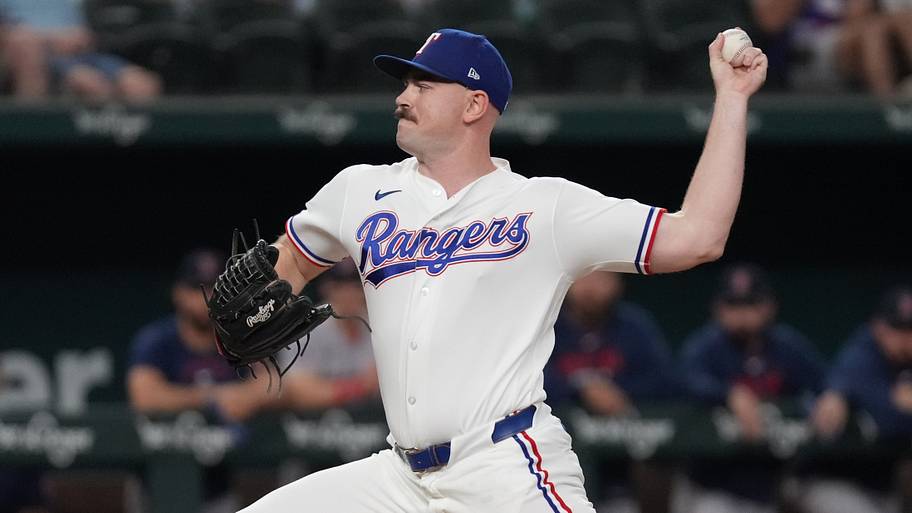
Tyler Alexander was a little bit of everything to the Texas Rangers in 2026.
The left-hander was an opener. He was a reliever. He was even a closer. In some respects, he was Texas’ best reliever outside of Jacob Latz, their All-Star closer.
In most respects, 2026 represented a breakthrough season for the 32-year-old who grew up in the Dallas area, went to Carroll High School in Southlake and played his college baseball at TCU.
But nothing could have prepared the Rangers for what he did in 2026.
Breaking down Tyler Alexander’s Season
Alexander was drafted in the second round of the 2015 MLB draft by the Detroit Tigers. He made his Major League debut in 2019 and his numbers before he joined the Rangers were average.
In 195 career games, with 57 starts, he was 22-42 with a 4.63 ERA. He had just one save. He struck out 445 and walked 128. He played for four different teams. He landed with Texas on a one-year deal worth barely more than $1 million coming off a 2025 in which he was 5-14 with a 4.98 ERA in 52 games with Milwaukee and the Chicago White Sox.
It would be right to argue that Alexander was adrift. The Rangers got him locked in.
He made a career-high 75 appearances. He went 5-2 with a 3.70 ERA, which was a career low. He struck out 60 and walked 23 in 73 innings. He even had four saves.
Why did this happen? Two things stand out.
First, he was a Statcast standout in three categories that are important for pitchers that don’t carry lots of velocity — barrel percentage (94th percentile, 4.0%), hard-hit percentage (86th percentile, 33.3%) and ground ball rate (88th percentile, 51.1%).
In easy terms, batters found his stuff hard to hit. When batters did make contact, they didn’t catch it square. When batters did catch it square it was usually a ground ball.
Second, his pitch mix is wild in an age where organizations chase velocity. His two most used pitches were his change-up (23%) and his cutter (21%). Neither topped 90 mph on average. The change-up averaged 84.7 mph and the cutter averaged 88.3 mph. Both were right on the league average for left-handers.
He combined that with a sinker (19%), a sweeper (18%) and a four-seam fastball (18%) to keep hitters off-balance. The ability to play his off-speed pitches off his fastball made his four-seamer a plus-offering to left-handed and right-handed hitters.
The pitch use is almost the inverse of 2025, when he threw his four-seamer 26% and his sweeper 22%. He only used his change-up 16% of the time.
Texas clearly asked him to emphasize the off-speed offerings to set up his four-seam fastball, and it worked. It made his 91.9 mph fastball more effective and gave him five effective pitches to use against hitters on both sides of the plate. It also made him one of the best free-agent signings for the Rangers in 2026 and a pitcher they should chase this offseason to re-sign.
More must-reads:
- Guardians expose White Sox's biggest flaw en route to ALCS
- Biggest question facing Guardians, Rays heading into ALCS
- The 'Most 3-HR MLB Playoffs' quiz
Breaking News
Trending News







Customize Your Newsletter
 +
+




Get the latest news and rumors, customized to your favorite sports and teams. Emailed daily. Always free!
PRIVACY POLICY COOKIE POLICY CONTACT US
ABOUT YARDBARKER TERMS OF SERVICE


By using this site, you agree to our Terms of Service and Privacy Policy.
This site is for entertainment purposes only.
There is no gambling offered on this site.
Gambling Problem? Call 1-800-Gambler.
