
-

-


Follow Us
-

 On Facebook
 On Flipboard


Surface-level statistics don’t always provide a true picture of a fantasy baseball player’s prior and future performance, so let’s analyze the advanced-level statistics for fantasy baseball’s early-season polarizing players to determine if the overperformers will stay hot and if the underperformers are good buy-low targets.
April 2026 Winners: Players Who Outperformed Expectations
Ben Rice, Yankees
Rice has 12 HR, a .343 BA and a 1.214 OPS in his first 33 games. Per Statcast, his barrel % and average exit velocity are in the 97th percentile and his hard-hit rate is in the 98th percentile. He’s raised his pull rate from 46.9% in 2025 to 53.8% this season and is taking advantage of the short porch in right field at Yankee Stadium, like every left-handed hitter should. Rice has also raised his BAA against breaking balls and offspeed pitches and has lowered his chase rate compared to last season.
Rice’s near-term outlook: The Yankees started the season sitting Rice against tough left-handed pitchers, but with a .367 BAA against lefties he’s now an everyday player. His production will eventually level off, but he should hit at least 30 HR and drive in close to 100 runs before the 2026 season is over. He’s the real thing.
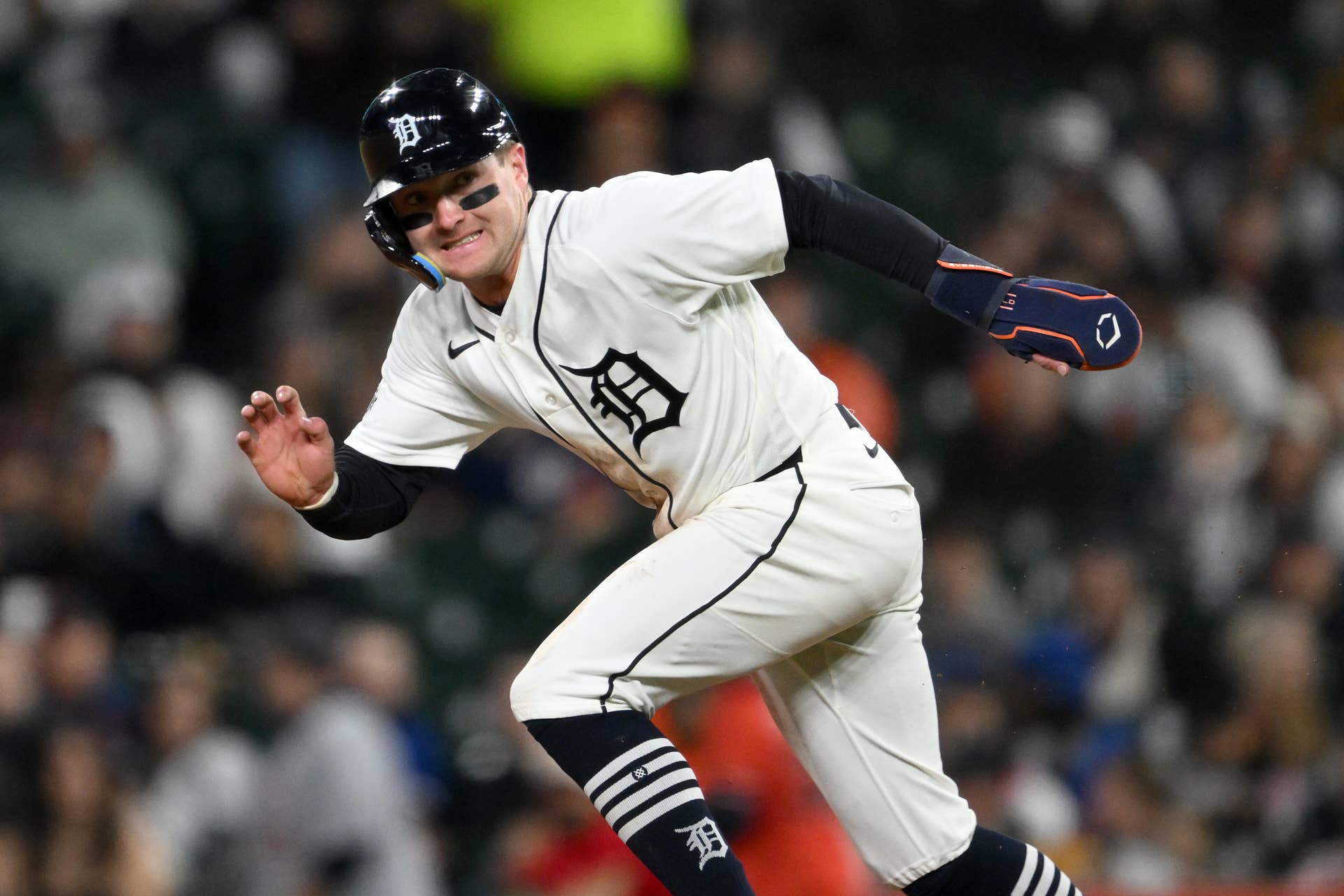
Kevin McGonigle, Tigers
Rookies may be risky, but McGonigle hit the ground running and started hitting like a big leaguer from day one. He has a .308 BA and .869 OPS in his first 35 games. McGonigle has displayed elite plate discipline, walking 20 times (13.0%) and striking out just 20 times (13.0%) so far this season. Just about the only thing he hasn’t done yet is hit home runs. He has just two, but based on his .525 xSLG and with him hitting the ball in the air (20.5 LA) and barreling the ball (12.6%), the home runs will come.
McGonigle’s near-term outlook: As a rookie, big league pitchers will discover and prey upon McGonigle’s weaknesses as a hitter. He’ll likely see more breaking balls (.161 BAA). McGonigle will likely slump at some point this season, but based on his minor league pedigree he’ll adjust and likely maintain his fantasy relevance for the rest of the season. I’m anticipating McGonigle’s end-of-season stats somewhere in this range:
| Stat | Projection |
|---|---|
Batting Average |
.285 |
Home Runs |
17 |
Stolen Bases |
10 |
Xander Bogaerts, Padres
Bogaerts wasn’t on my radar in preseason drafts and based on his 29th ranking among shortstops according to preseason ADP, he probably wasn’t on yours either. In his prime, Bogaerts was one of fantasy baseball’s top shortstops, but recently his skillset slowly eroded, and he spent parts of the past two seasons on the IL. He’s healthy now and in his first 34 games he has six HR and four SB to go along with a .270 BA and .781 OPS. He’s also continued to demonstrate above-average plate discipline. Bogaerts’ current 11.3% walk rate and 14.8% strikeout rate are the best of his career.
Bogaerts’ near-term outlook: Bogaerts is on pace for a 20 HR/20 SB season. Based on CBS Sports fantasy baseball scoring, he’s the 11th-best fantasy baseball shortstop and as long as he can avoid the IL, he should continue to outperform his preseason ADP.
April 2026 Losers: Players Already Showing Regression Warning Signs
José Caballero, Yankees
With a .215 BA and .595 OPS, Caballero certainly looked like a fantasy baseball 2026 April loser in his first 19 games of the season. Since then, he’s riding a 16-game hot streak in which he’s batting .310 and has an .855 OPS. By demoting Anthony Volpe, last season’s starting shortstop, the Yankees showed that they intend to ride Caballero’s hot streak and for the short term so should you. However, keep in mind that despite Caballero’s recent success, he’s a career .232 hitter, and based on his expected stats (.223 xBA, .327 xSLG) another slump is likely on its way.
Caballero’s near-term outlook: It isn’t all doom and gloom when it comes to Caballero’s future. He’s made strides offensively, including reducing his K% from 26.5 to 20.5 this season, and his 13 stolen bases are the second most in baseball. However, Volpe or George Lombard Jr. are likely to be the Yankees’ starting shortstop at some point this season and Caballero’s ability to play multiple positions (2B, 3B, SS and OF) makes him more of a potential future utility player and pinch runner for the Yankees. His real-life future value will probably be higher than his future fantasy baseball value.
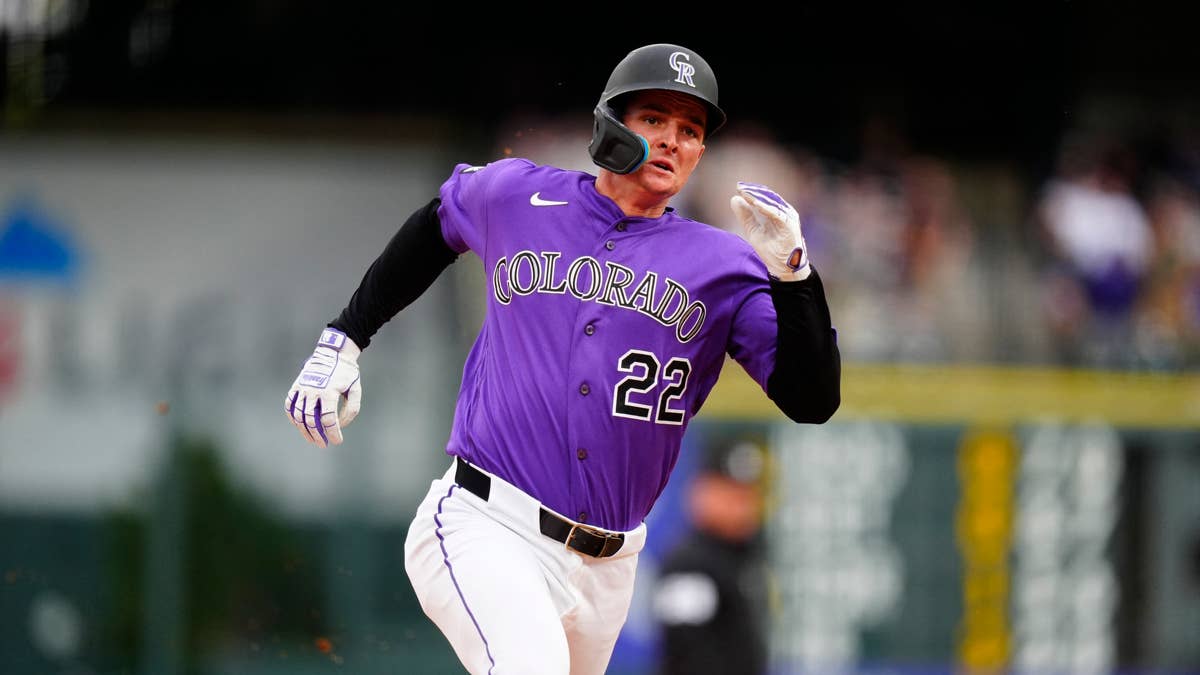
Mickey Moniak, Rockies
Through his first 28 games of the season, Moniak has 11 home runs, a .333 BA and a 1.123 OPS; however, based on his expected stats, extreme home/away splits and inability to hit left-handed pitching, it appears that regression is in his future. Moniak’s .250 xBA is .083 lower than his actual BA and his .745 xSLG is over .200 points higher than his traditional SLG. Moniak has a .182 BAA against lefty pitchers and is sometimes platooned. His impressive overall stats are fueled by a home .390 BA that is .134 points higher than his road BA and a home 1.379 OPS that is over .600 points higher than his road OPS.
Moniak’s near-term outlook: Moniak’s extreme splits will likely catch up to him, and his overall stats will trend toward his career norms. Expecting a 30 HR season from Moniak is a bit too optimistic based on his splits and the fact that he sits against good left-handed pitching. However, a 2026 season in which he comes close to matching his 2025 stats of 24 home runs and 68 RBIs is well within reach.
Jeremiah Jackson, Orioles
Jackson was a hot waiver wire add a few weeks ago and a good option at a thin fantasy baseball second base position. In his first 34 games this season he has a .259 BA, six HR and 24 RBI. He has slumped lately and heading into Wednesday’s action Jackson has a .196 BA and .495 OPS in his last 46 AB. His extremely low 1.7% walk rate and above-average chase rate are likely contributing to his downturn.
Jackson’s near-term outlook: With the Orioles’ expected starting second baseman, Jackson Holliday, on the IL due to a right-hand hamate injury, Jackson became the team’s starting second baseman and took advantage of the opportunity. Holliday is close to starting a rehab assignment and eventually rejoining the team. With Jackson struggling lately, it will be interesting to see what type of role he’ll have moving forward. The fact that he can play second base, third base and in the outfield will work in his favor.
Actionable April Takeaways: Buy, Sell & Hold for May
Hold on to the three fantasy baseball 2026 April winners mentioned in this article, and if it improves your roster, try trading for them.
On the other hand, the fantasy baseball 2026 April losers covered earlier should be considered sell-high candidates based on their potential rest-of-season downturn.
In the meantime, pay attention to what the underlying stats are telling you and do your best to buy the legitimate fantasy baseball risers and sell the inflated fantasy baseball losers before it’s too late!
Questions About April Winners & Losers, Answered
Who were the biggest fantasy baseball winners in April 2026?
Players who posted elite Statcast metrics including hard-hit rate, barrel percentage and velocity gains that exceeded surface-level production.
Which hitters or pitchers were the biggest April 2026 losers?
Players whose production was driven by unsustainable BABIP luck, poor command or declining exit velocity became major regression candidates.
How should I use the April winners and losers report for roster moves?
Target the winners as buy-low or hold candidates and consider selling high on players showing likely regression indicators.
Are April stats reliable for the rest of the 2026 fantasy season?
Surface stats alone are noisy, but fast-stabilizing Statcast metrics can provide meaningful early directional signals for future performance.
When does the fantasy market typically correct April winners and losers?
Most market corrections happen by mid-to-late May once sample sizes grow and advanced metrics become more widely accepted.
Should I make trades based solely on April 2026 performance?
No. Always combine April results with underlying Statcast data and rest-of-season projections before making major roster decisions.
More must-reads:
- Dodgers to get key part of rotation back on Saturday
- Dodgers get major Mookie Betts injury update
- The 'Multiple 4K-yard NFL seasons' quiz
Breaking News
Trending News





Customize Your Newsletter
 +
+




Get the latest news and rumors, customized to your favorite sports and teams. Emailed daily. Always free!
PRIVACY POLICY COOKIE POLICY CONTACT US
ABOUT YARDBARKER TERMS OF SERVICE


By using this site, you agree to our Terms of Service and Privacy Policy.
This site is for entertainment purposes only.
There is no gambling offered on this site.
Gambling Problem? Call 1-800-Gambler.
