
-

-


Follow Us
-

 On Facebook
 On Flipboard

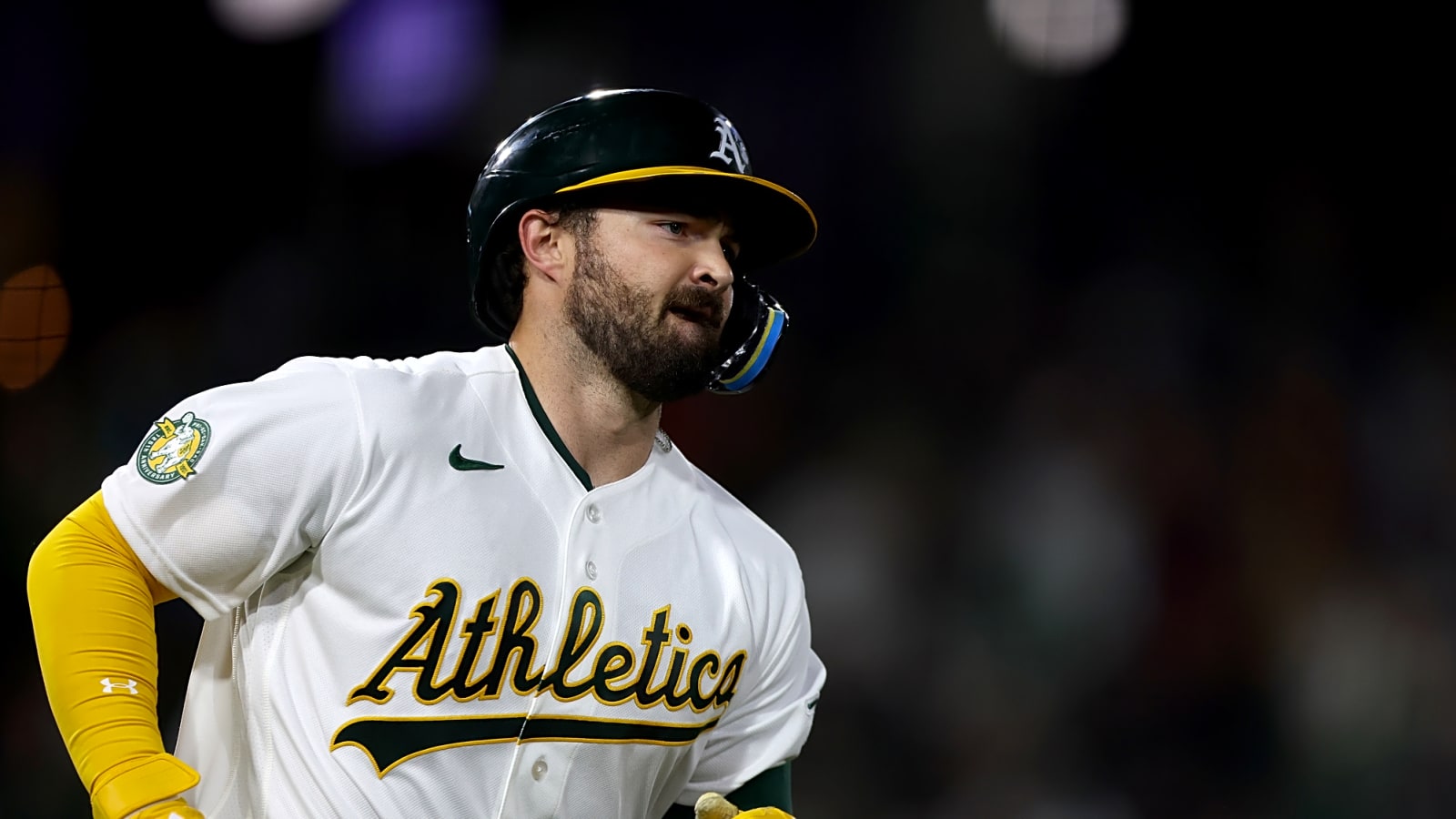
Just over 300 days ago, Shea Langeliers went into the 2025 All-Star break down on his luck. The 27-year-old Athletics catcher scuffled through a first half with a .226 average and .709 OPS, ending the half on a 6-for-36 stretch after recovering from a oblique injury.
But what’s happened ever since has been a revelation in the middle of the A’s order.
Over his last 93 games , only Bobby Witt Jr. and Aaron Judge have been more or as valuable, according to Fangraphs. Langeliers is slashing .331/.378/.638 for a 176 wRC+ and 5.4 fWAR. Among the 142 qualifying position players in that span, he ranks first in average, first in slugging, second in wRC+ and third in fWAR.
Players with 30+ HR and 5+ fWAR since July 1st, 2025:
— Just Baseball (@JustBB_Media) May 3, 2026
Aaron Judge
SHEA LANGELIERS
The A’s catcher has been one of the best players in the game for awhile! pic.twitter.com/LO4DzKtbpr
This started in the second half of last season, where Langeliers dominated the last two months of the season with a 1.018 OPS. That success has continued into 2026, where’s he’s posted a 1.011 OPS. In some ways, Langeliers is improving on aspects of hitting he previously struggled with. In others, he’s doubling down on the skills he already had.
Stats were taken prior to play on May 11.
Langeliers To Left
Langeliers hit 19 home runs in his final 57 games of the 2025 season, and 12 of those dingers were hit to left field. Pulling the ball had always been a priority for Langeliers, but he took it to the next level during this stretch.
| LANGELIERS 2025 | Pulled Air % | % of Fly Balls Pulled | HR/FB% |
| FIRST HALF | 17.0% | 30.9% | 20.0% |
| SECOND HALF | 27.0% | 48.2% | 26.8% |
Around the league, hitters generally hit a quarter of their fly balls to the pull side. If you’re a power hitter, you want to do it as much as possible.
Fly balls hit to the pull side are 30% more likely to result in homes compared to those hit straightaway or to the opposite field. To hit 30% of your fly balls to the pull side is a great place to be. At 50%, you’re probably one of the best sluggers in the league.
Langeliers’ 48.2% pull rate on fly balls in the second half of last season was the tied for the fifth highest among the 256 hitters with at least 25 fly balls in than span. These efforts earned him a six-percent increase in home run/fly ball rate.
This year, Langeliers is doing things differently but still getting the job done. In April, only 19.4% of his fly balls were pulled, his lowest rate in any month since May of 2024. Despite this, the fly balls have still left the yard at a steady 22.9% rate this year.
Although he isn’t hitting the ball to his best side, Langeliers found the barrel on 14.9% of his batted balls. It was his highest barrel rate in any month since that same May of 2024, a month where he hit .250 with a .921 OPS.
Where April of 2026 differed from May of 2024, however, lies in the amount of contact Langeliers was making.
In that month, like many others in the first three years of his big-league career, he recorded a strikeout rate of 28.9%. After dropping the strikeout rate below 20% last year, he continued in the direction of that trend with a 20.0% strikeout rate in April.
With more contact and a higher barrel rate, Langeliers has been able to alleviate the costs of less pull to keep his numbers where they were at the end of last year. If a 16.5% barrel rate doesn’t appear sustainable through a 162-game season, Langeliers finding that elite pull rate again could offer him a full season as one of the game’s most elite bats.
Hacking at the Heater
Langeliers spent much of his first four seasons trying to figure out how to hit four-seam fastballs, the pitch he and most major leaguers see more than anything else.
Up until last year’s All-Star break, he was hitting .177 and slugging .354 against four-seamers with a 28.5% Whiff rate. His -1.24 RV/100 against them was the third worst among the 147 hitters to face at least 1,5000 four-seamers in that span.
The script was flipped starting last July.
Shea Langeliers LAUNCHES his 11th home run of the year!
— Just Baseball (@JustBB_Media) May 7, 2026
108.4 MPH, 412 feet pic.twitter.com/xteeG3iDdG
Since July 18 of last year, Langeliers it hitting .311 against four-seamers and slugging .811 with a 23.6% whiff rate. His barrel rate against them has gone from 15.4% before this span to 24.2% in this span, the 13th highest among the 222 hitters with at least 50 batted balls ending on four-seamers throughout this span.
His 3.06 RV/100 against them trails only Kyle Schwarber among the 127 hitters to face at least 400 four-seamers in this span.
Remarkably, he went from one of the worst four-seam hitters to one of the best seemingly overnight.
This was a game-changing development for Langeliers, who had hit well against breaking balls and off-speed pitches over the years.
Since his big-league debut in August of 2022, Langeliers has a .235 average and .446 slugging percentage against non-fastballs. The whiff rate may be high and the average may be low, but the power numbers still make him a threat to crush one that hangs. His 10.3% career barrel rate against these pitches sits above the league average.
With four-seamers no longer being the neutralizing force they once were against Langeliers, opposing pitchers are left without a reliable option. For Langeliers to master the art of hitting four-seam fastballs was a missing piece that is now in place.
By optimizing his batted-ball direction and improving against four-seamers, Langeliers evolved from simply an offense-first catcher to one of baseball’s most feared bats.
When the Athletics traded Matt Olson ahead of the 2022 season, they were scrapping a middle-of-the-order bat that had been a staple in the Oakland Coliseum for five seasons. Amazingly, the main part of the return seems to have worked out just as well.
As of May 11, Olson and Langeliers make up two of the nine position players in baseball to post at least 2.0 fWAR. Although it took a few years, Langeliers is now holding up his end of the deal.
More must-reads:
- Agent Scott Boras provides optimistic injury update on Tigers' Tarik Skubal
- Concern levels for five of MLB’s slumping stars
- The 'Active playoff scoring leaders' quiz
Breaking News
Trending News







Customize Your Newsletter
 +
+




Get the latest news and rumors, customized to your favorite sports and teams. Emailed daily. Always free!
PRIVACY POLICY COOKIE POLICY CONTACT US
ABOUT YARDBARKER TERMS OF SERVICE


By using this site, you agree to our Terms of Service and Privacy Policy.
This site is for entertainment purposes only.
There is no gambling offered on this site.
Gambling Problem? Call 1-800-Gambler.
