-

-


Follow Us
-

 On Facebook
 On Flipboard

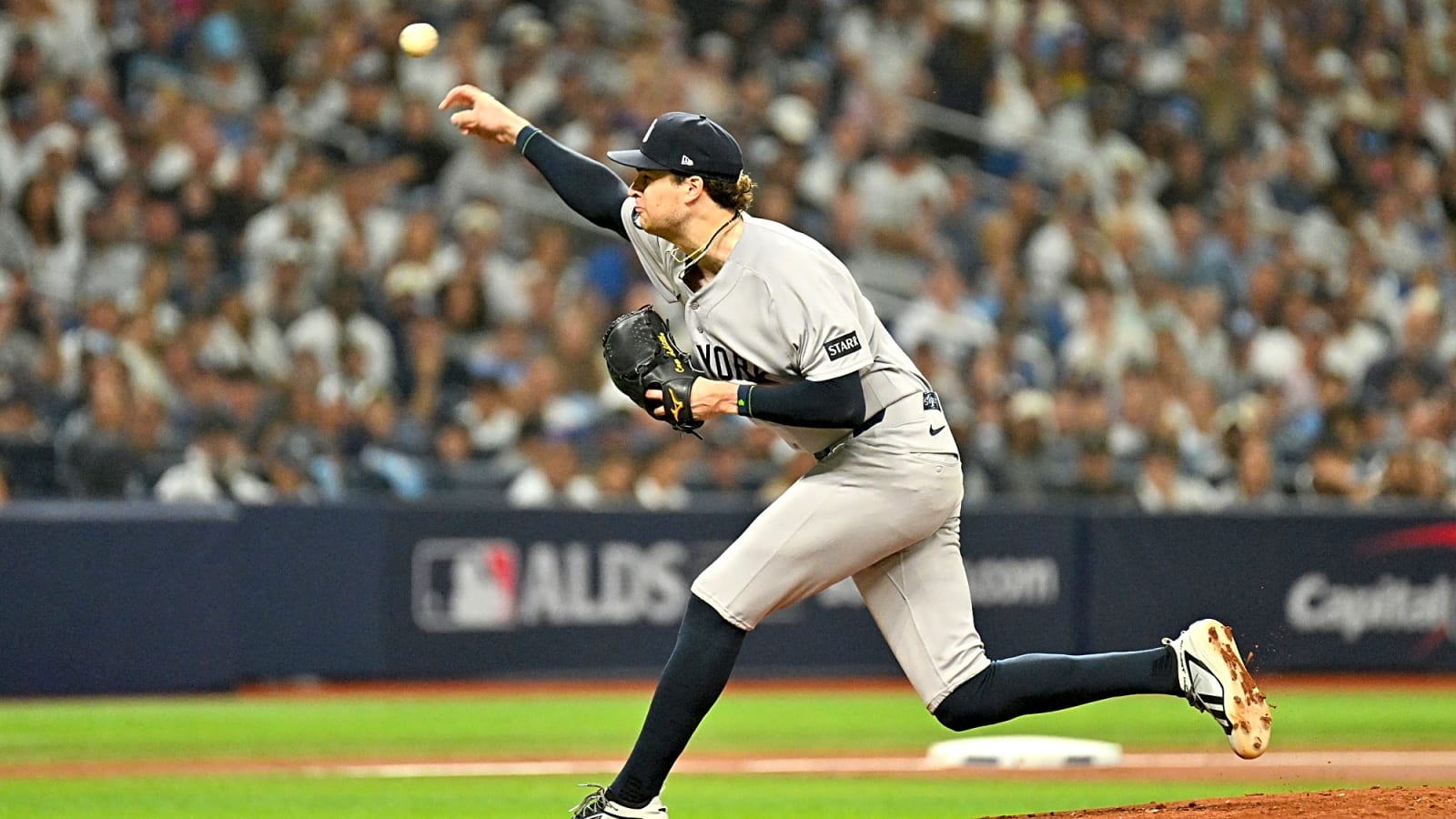
The New York Yankees won 93 games, thrashed their hated rivals in Boston in the Wild Card Series, and sported one of the best rotations in their franchise’s history.
Cam Schlittler will likely win the 2026 American League Cy Young Award, and the team found a way to finish eighth in Runs Scored per Game (4.59) despite Aaron Judge only playing in 66 games during the regular season.
Yet despite all of these undeniable truths, there lies an apathetic feeling among many in the fanbase regarding how the season ended and the all-too-familiar road the 2026 season took.
For most teams in baseball, this kind of season would be an acceptable outcome, but for this franchise at this stage of their contention window, this kind of season feels like a missed opportunity.
How can we avoid that same kind of uninspiring fate in 2027?
What Do the Yankees Need to Do This Offseason?
The first step of this article is to identify what the Yankees need this winter, and I looked at six different MLB acquisitions that the team should seriously consider making:
- Right-Handed Hitting Center Fielder
- Second Baseman
- Third Baseman
- Right-Handed Hitting Catcher
- Reliever
- Reliever
New York will enter the winter with an already-existing payroll of roughly $281 million after finishing the season with a payroll at around $341 million, and it’s unclear whether they will slash or exceed payroll.
The Yankees decreased their payroll from 2024 to 2025, but it’s debatable whether the team would have pushed that number further if they retained Juan Soto and went on with whatever their Plan A was. From 2025 to 2026 they increased payroll, so there are reasons to believe they could go in either direction.
I aimed to have a payroll around $320 million (using CBT calculations) since that’s a bit below their number on Opening Day 2026, but not so much of a slash that it would be insulting to the fanbase. Due to a high pre-existing payroll and a lockout that could result in harsher restrictions for the league’s top spenders, I made a conscious effort to acquire controllable players who could leave their payroll flexible for future seasons.
While this sounds like I’m laying the groundwork to excuse an underwhelming offseason, the reality is that team-building is more than just spending money. The Boston Red Sox and Milwaukee Brewers made a creative deal involving six players that all provided positive WAR for their club this season, an effective challenge trade that helped both clubs qualify for the postseason.
Another goal I set was to try and acquire a highly-functional roster that had players who fit into their specific roles very well rather than just aggregating 26 players who sort of make sense for the team.
Is Anthony Volpe a first-division starting second baseman? I’d assume not.
Could he be a valuable utility infielder with an outside chance to become a more reliable bottom-of-the-order bat? Absolutely.
With all of that out of the way, here is my 2026 offseason plan for the New York Yankees; enjoy!
Overhauling a ‘Detrimental’ Yankees’ Offense in 2027
The Yankees were swept in the 2026 American League Division Series, and when Hal Steinbrenner spoke to the media, he blamed the offense for their fate.
While I would argue some blame should go towards the front office and the team manager as well, I happen to agree with Mr. Steinbrenner’s evaluation that their biggest on-field issue was an offense that was slaughtered by Tampa Bay’s array of fastball-changeup pitchers.
New York was dead-last in Zone Contact% (83.8%) and 24th in OBP (.311) as an offense and I believe those two things contributed most to their inconsistent offense, so how do they solve those issues? The first move I would make is to re-make their infield, which will likely not run back their main second base and third base options in 2027.
Step 1: Sign J.P. Crawford to a 2-year $30 million contract
The Yankees need a third baseman, and Crawford could solve that hole for the team without blowing up their payroll. He recorded a .335 OBP this past season with a 105 wRC+ as he played in one of the worst ballparks for offense in the entire sport out in Seattle.
Crawford is not a flashy player and I would not expect much more than 2-3 WAR out of him at third base, but by being a solid defensive corner infielder with good plate skills, he can help address the team’s two biggest issues from last season which were contact and on-base ability.
While he was a left-handed hitter, Crawford had a 110 wRC+ vs LHP and a 103 wRC+ vs RHP with a track record of being a fairly even-splits hitter. This is a player that I think you can strike a deal early with given that the Mariners infield is filled up with left-handed options such as Brendan Donovan, Cole Young, and Colt Emerson.
Step 2: Trade For Steven Kwan To Become The Yankees’ Leadoff Hitter
While Spencer Jones was impressive in his first season in the big leagues, the Yankees’ inability to make contact directly contributed to their poor OBP. An acquisition of Kwan addresses that issue as he is a rental player who could hit at the top of the order and give the team a reliable .350-.360 OBP with elite defense out in center field.
Kwan finished inside the top-10 in Defensive Runs Saved (6) and Outs Above Average (6) at the position despite playing the majority of his games in left field for the AL Central Champions in 2026. He doesn’t have the same power we saw in 2024 when he recorded double-digit bombs, but his hit tool is still one of the best in baseball and as a centerfielder, he could turn in a 4-5 WAR season.
This is an excellent skill fit given what the Yankees need, and alongside J.P. Crawford the Yankees should expect their team K% and OBP to improve considerably.
Step 3: Trade Pitching For Infielder Zack Gelof
The Athletics saw plenty of hitters take advantage of the launching pad of a stadium they play in, but Gelof’s improvements went beyond a friendly home ballpark. His bat speed jumped from 72.1 MPH to 73.8 MPH and his Fast Swing% increased from 14.2% to 32.1% in just one season, as Gelof flattened his swing and began hammering the ball with authority.
He hit 22 HRs with a 114 wRC+ in 111 games for the A’s last season, and with the Yankees having a surplus of arms to deal out of, they could be in prime position for a challenge trade. Flipping RHP Elmer Rodriguez for Gelof reminds me a lot of the Curtis Mead trade, where Connelly Early was dealt by Boston in return for the Nationals’ breakout infielder.
Gelof doesn’t have the same level of offensive skills as Mead does, but he plays an excellent third base, runs the bases well, and can move around the diamond if injuries occur as he even has experience out in center field. Unlike Crawford and Kwan who are contact hitters, Gelof provides some power from the right-handed side to balance out the offense further.
Step 4: Sign Kyle Higashioka to a one-year $4 million contract
Bringing back an old friend can be a good thing, and in this case, I think Higashioka is a nice veteran who can complement Austin Wells splendidly at a low cost. He’s more of a mediocre defensive catcher now, but his familiarity with the likes of Gerrit Cole and Carlos Rodon wouldn’t hurt much.
The reason you’re signing Higashioka is because he produced a 139 wRC+ vs LHP this past season and since 2022, has recorded a .748 OPS and .343 xwOBA in those matchups. Would I prefer someone who could steal the starting job from Wells in the scenario where he struggles?
Yes, but Wells had a 97 wRC+ against RHP this season and is one of the best defensive catchers in the sport, so I’m not sure that you’re going to find many players who are outperforming him considerably in those matchups. Netting a 95-105 wRC+ from the catching room with their usually-strong defensive outputs should ensure that this position is not even remotely an issue for the club in 2027.
Reloading the Yankees’ Bullpen For 2027
While the Yankees had the best bullpen ERA in the sport last year, the unfortunate reality is that they have to still add arms in the marketplace as multiple key names are hitting the market.
David Bednar and Paul Blackburn were their best right-handed relievers, and both are due for a massive raise after their incredible 2026 seasons. With the bullpen needing some reinforcement, here’s the sample plan I have put together to rebuild this group without blowing up the payroll or farm system.
Step 1: Sign David Bednar to a three-year $55 million contract
Bednar was an incredible closer last season who used his fastball-splitter combination to keep the ball inside the yard and punch tickets. His curveball fell to the wayside in terms of usage after Tyrone Taylor launched a game-tying moonshot off of him in May, but it’s still an important pitch he can flip over the plate to steal a strike.
He’s a priority for me and I never wavered on the idea of whether they should re-sign him or not in any plans I put together for this article. Bednar is too reliable and too in-line with where the modern game is going with heavy off-speed reliance for me to want to make a change here.
A case could be made to pay Adrian Morejon, but I would be stunned if the Yankees were to make a nine-figure bid to someone who they’d view as a closer. Morejon is under 30 years old, could start for a team in 2027, and is one of the top relievers in the game, so I would suspect that other clubs with worse rotations would value him higher than Brian Cashman would.
Step 2: Sign Kris Bubic to a one-year $5 million contract
I will miss Paul Blackburn dearly, but I would anticipate that the Yankees look for their next Blackburn instead of looking to re-sign him. In steps Bubic, a left-handed starter who keeps getting hurt and probably needs to move to the bullpen as a result of the constant injuries.
Bubic has excellent spin capacity with a funky armslot and a good changeup, and when the Dodgers moved him to the bullpen he experienced an uptick in fastball velocity as well. The ability to throw two sliders and a sinker should allow him to keep hitters off-balance and move the ball around the zone in ways that keep them from barreling him up.
The Yankees love groundball pitchers who avoid barrels, and Bubic does that well while not being healthy enough to truly demand a premium on the marketplace as a flier.
Step 3: Just give Ryan Yarbrough another $2.5 million
Yarbrough is a productive long-man who does a good job of keeping hitters off-balance and filling in when a starter goes down or gets knocked out of a game early. He has a 4.03 ERA and 4.28 SIERA over the last two seasons in a role where he is almost always asked to pitch multiple innings in an outing, which is more valuable than you’d initially think.
There’s not a pitcher on the roster who I am particularly interested in giving this role to, and I doubt that the market for Yarbrough is going to explode. He’s returned on investment for the Yankees, and I’d roll with him until the wheels fall off.
More must-reads:
- Mets’ Francisco Lindor honored with 2026 Clemente Award
- Brewers' bullpen delivers another knockout punch in World Series Game 2 win
- The 'World Series Game 1 starters' quiz
Breaking News
Trending News


Customize Your Newsletter
 +



Get the latest news and rumors, customized to your favorite sports and teams. Emailed daily. Always free!
PRIVACY POLICY COOKIE POLICY CONTACT US
ABOUT YARDBARKER TERMS OF SERVICE


By using this site, you agree to our Terms of Service and Privacy Policy.
This site is for entertainment purposes only.
There is no gambling offered on this site.
Gambling Problem? Call 1-800-Gambler.