
-


Follow Us

 On Facebook
 On Flipboard
 On Twitter
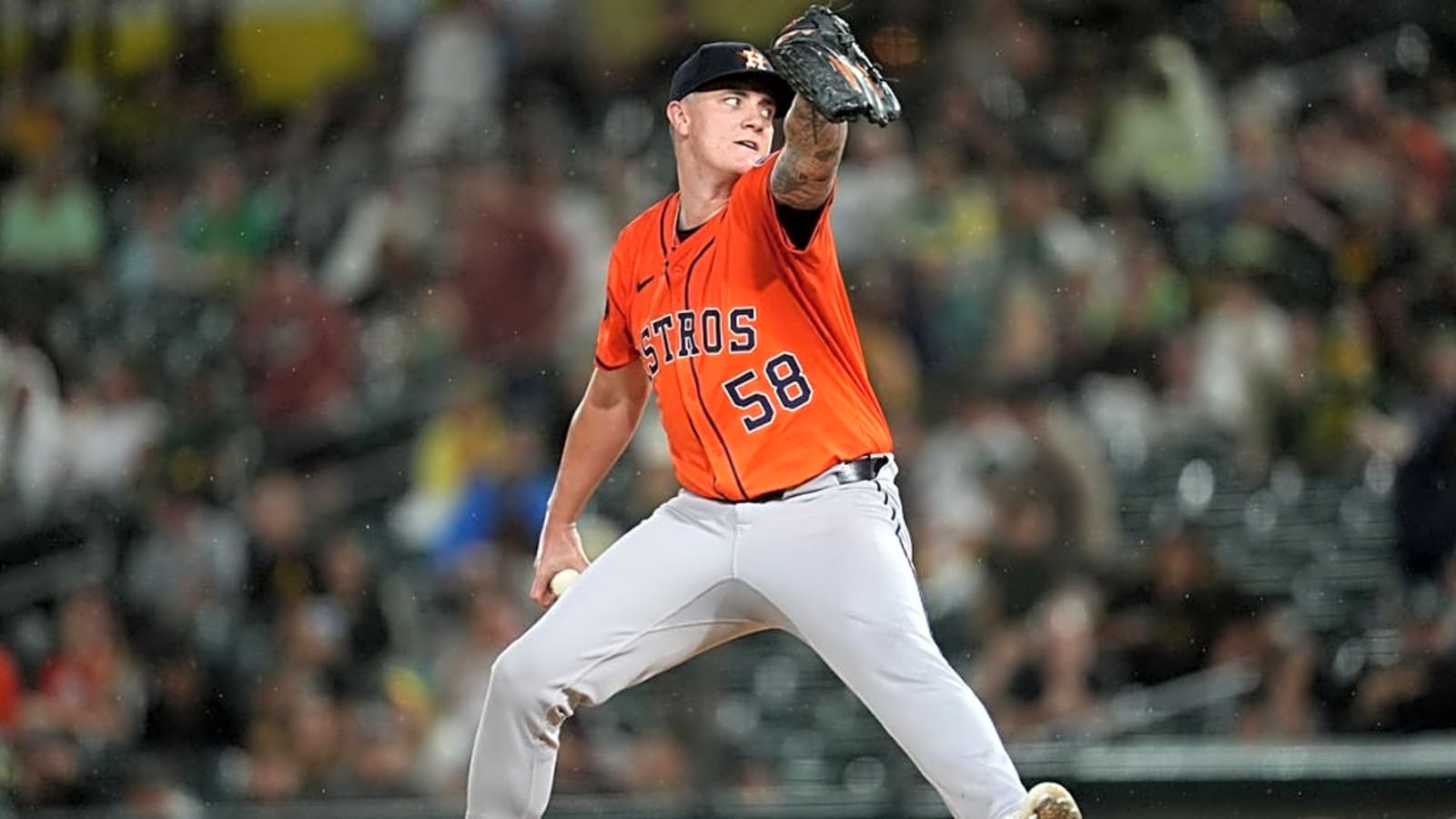
The Houston Astros’ 2025 season was marked by two powerfully contrasting narratives. On the one hand, the team endured its first playoff drought since 2016 after finishing second with an 87-75 record in the American League West, thus ending the franchise’s streak of eight consecutive postseason appearances.
On the other hand, amidst the turmoil, a young pitcher named Hunter Brown rose to prominence, offering a ray of hope to the organization. The remarkable turnaround of Brown from a prospect who was barely holding on and likely to be given up, to a bona fide ace, was by far the brightest spot in the Astros’ dark cloud of a season.
The Unlikely Rise of Hunter Brown
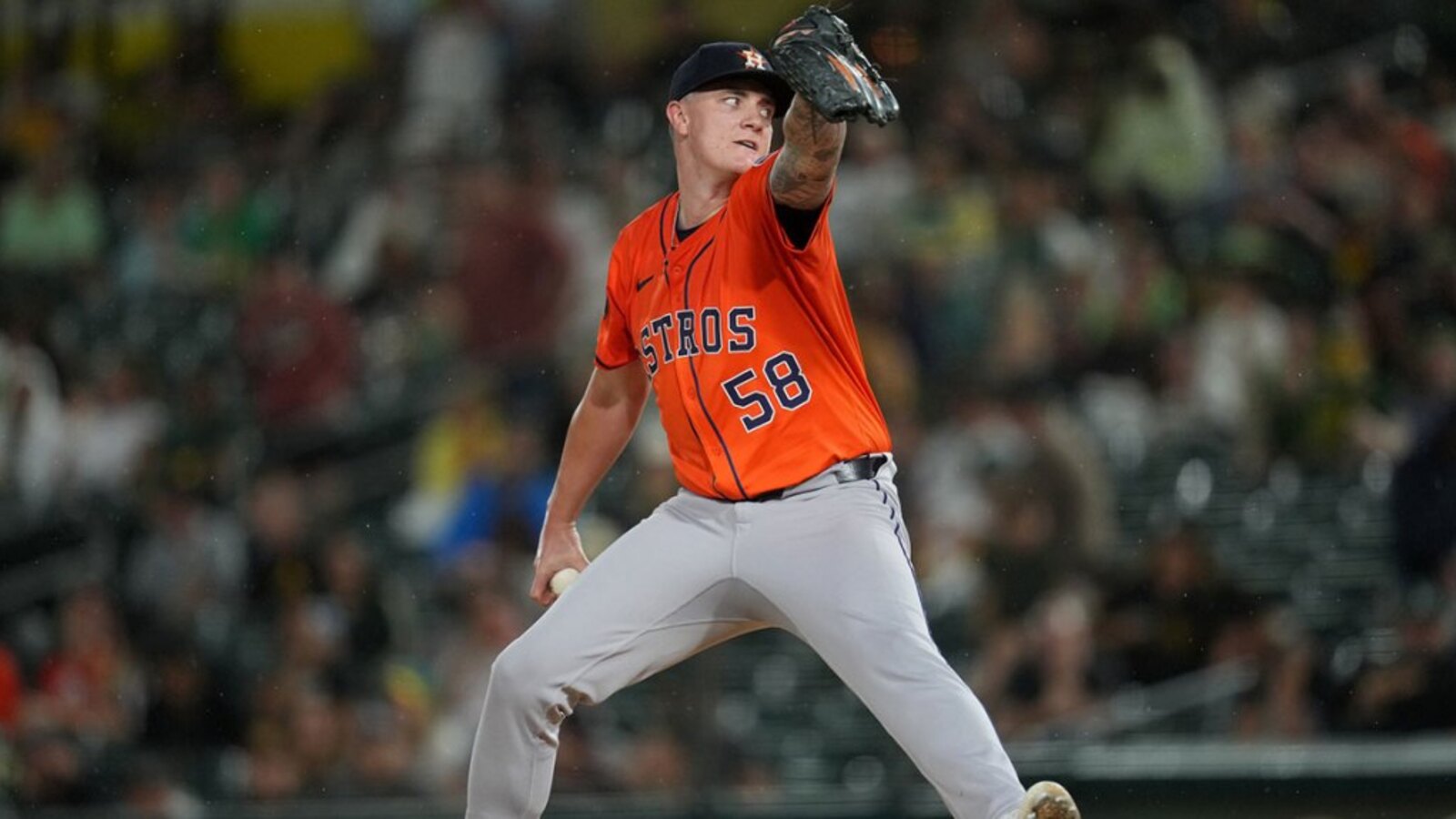
Hunter Brown seemed destined for obscurity just eighteen months ago. His career was on the verge of collapse on April 11, 2024, when he gave up nine runs against the Kansas City Royals without recording an ounce out. After three starts, his season ERA skyrocketed to 9.78, and after 44 big-league games, his career ERA was a concerning 5.20.
Few people thought the young right-hander would bounce back from such a steep decline. However, the Astros’ development system, which is known for producing elite weapons from untapped talent, refused to give up on the project.
Over the course of the following 18 months, Brown underwent one of baseball’s most amazing metamorphoses. He didn’t accomplish this by simply increasing velocity, though he did add velocity; rather, he completely reimagined his pitching arsenal. The pivotal moment occurred in May 2024 when he introduced his first professional sinker, a subtle but revolutionary adjustment that fundamentally altered his approach. Prior to this evolution, 94% of his pitches were cutters, knuckle curves, and four-seamers, a predictable combination that hitters learned to exploit.
Brown’s pitch mix had changed by 2025 to resemble the contemporary elite arms of baseball. His fastball velocity increased from 95.0 mph in 2024 to 96.5 mph in 2025, placing him in the top five in the league for velocity gains. His cutter reached 93.3 mph, while his four-seamer regularly reached 97.2 mph, the sixth-fastest among starting pitchers.
His slider reached 90.9 mph, the fastest of all starting pitchers, and his knuckle curve leaped to 84.2 mph, demonstrating a similar improvement in his breaking pitches. Brown was ranked among the best with a 112 rating on Stuff+, a metric that assesses pitch quality without regard to sequencing, ranking him alongside well-known aces like Tarik Skubal and Hunter Greene.
The Houston Astros Collapse
Brown’s rise to prominence as a top-tier starter was the lone bright spot in a season that otherwise broke the Astros’ hearts. On July 1st, they were sitting pretty atop the AL West, holding a seven-game lead, a feat made even more impressive by the team’s struggles with injuries. Yordan Álvarez battled fractured ribs and an ankle issue, and Jeremy Peña dealt with fractured ribs and oblique problems.
The pitching staff, too, was hit hard, with Cristian Javier, Justin Verlander, Jose Urquidy, J.P. France, Luis Garcia, and Lance McCullers Jr. all sidelined at various points, leading Houston to use a staggering 32 different pitchers throughout the season.
Despite these challenges, the Astros were able to hold onto their division lead until late summer. However, in a cruel turn of events, the Seattle Mariners came to Houston in early September when the teams were tied, and by the time Seattle left, the Astros had fallen behind by three games and had no time to recover. The collapse was as abrupt as it was devastating, ending one of the most reliable playoff runs in modern baseball history.
Hunter Brown was not the one to carry the team by himself when the roster was depleted due to injuries, and when Kyle Tucker and Alex Bregman left. However, his transformation from a prospect whose career was in danger to a real ace is the Houston Astros’ main competitive advantage that they consistently maintain: no other team is able to develop top-class pitchers from unrefined players as effectively as they do.
With the team possibly losing its ace, Framber Valdez, to free agency in 2026, the rise of Hunter Brown is a way the team can continue winning in the future, a statement from the Astros’ pitching lab that can still produce great pitchers even when the organization is in a state of turmoil.
More must-reads:
- Athletics might not be done spending, could sign more young players to extensions ahead of Las Vegas move
- Anthony Rendon restructure will finally end Los Angeles' $245M mistake
- The 'CFP appearances' quiz
Breaking News
Trending News








Customize Your Newsletter
 +
+




Get the latest news and rumors, customized to your favorite sports and teams. Emailed daily. Always free!
PRIVACY POLICY EDITORIAL POLICY CONTACT US
ABOUT YARDBARKER TERMS OF SERVICE


Use of this website (including any and all parts and
components) constitutes your acceptance of these
Terms of Service and Privacy Policy.
This site is for entertainment purposes only.
There is no gambling offered on this site.
Gambling Problem? Call 1-800-Gambler.
