
-

-


Follow Us
-

 On Facebook
 On Flipboard

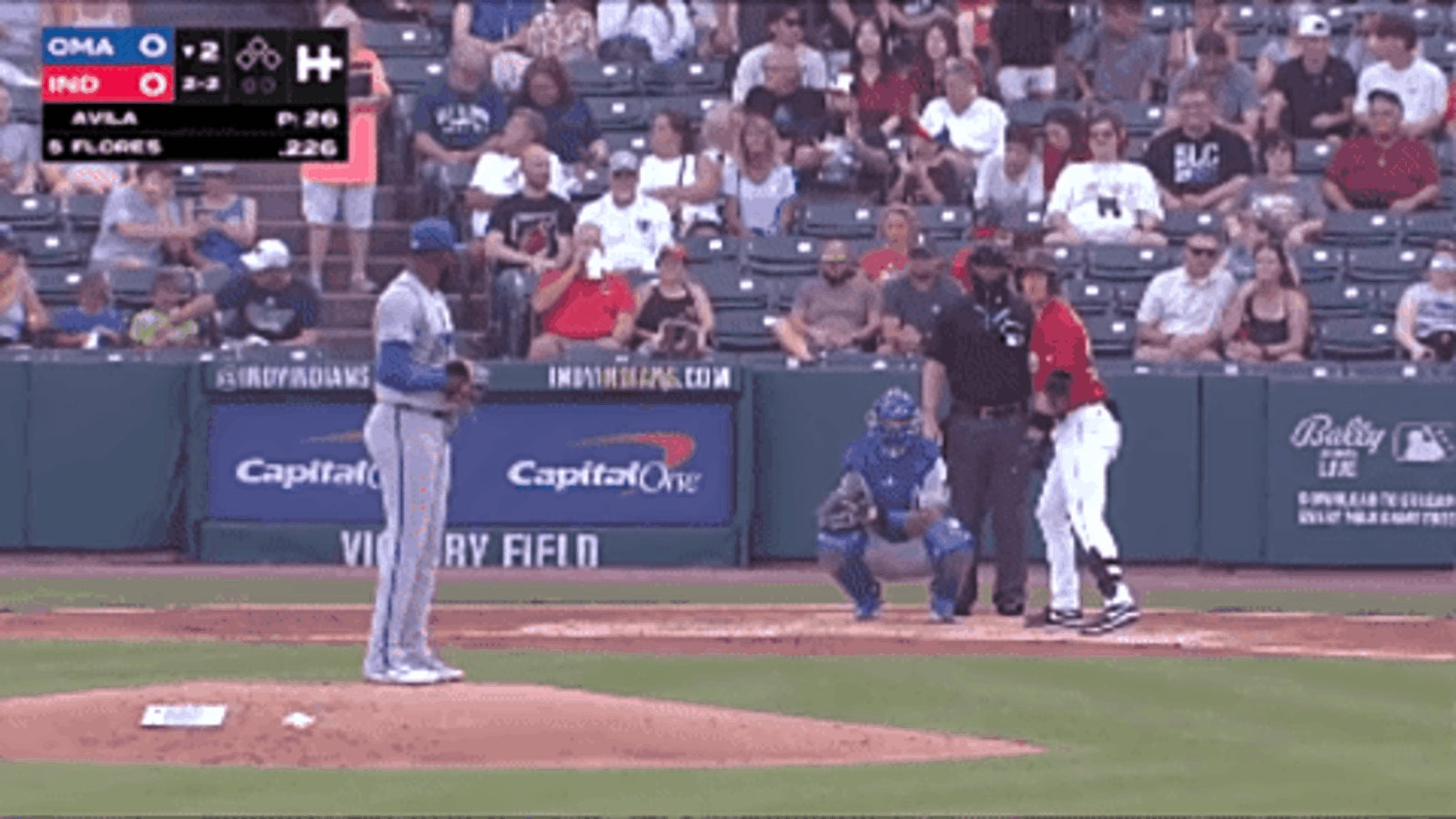
The Kansas City Royals’ rotation was one of baseball’s best in 2025, ranking sixth in fWAR and seventh in starters’ ERA league-wide.
Impressively, they achieved this without much help from 2024 All-Stars Cole Ragans and Seth Lugo, who combined for just 2.6 fWAR in 2025 versus 9.6 the year prior.
It was clear that depth was their secret sauce, with 13 different arms starting games throughout the 2025 campaign.
Fans should expect no less this year, and while there are plenty of deserving names who could eat innings for the Royals in 2026, one of my personal favorites is longtime farmhand Luinder Avila.
Overview
A Venezuelan signee in 2018, Luinder Avila began his professional career in the Dominican Summer League as a 16-year-old.
Fast forward to 2025, the Caracas product pitched primarily at Triple-A Omaha, posting a 5.01 ERA with 71 strikeouts in 59.1 innings.
While mostly a starter at the level, Luinder was more of an opener, throwing two-to-three innings at a time before he was officially moved to the bullpen in mid-August.
He remained there until he got the call to Kansas City on August 13, where he continued to work in relief.
Cutter
Avila’s arsenal is built around a cutter that typically sits in the mid-to-high 90s with 12.8 inches of vertical ride and flashes 0.8 inches of arm-side movement.
Luinder Avila 2025 Cutter Specs Comparison
| Examinee | Velocity | Whiff% | wOBA Against |
| 2025 Luider Avila, Triple-A | 94.9 mph | 24.2 | 0.472 |
| All 2025 Triple-A Cutters | 88.3 mph | 25.8 | 0.368 |
From a shape perspective, it’s an impressive offering, especially when considering Avila is running it up 6.6 mph faster than the average cutter.
Unlike a traditional fastball, however, he throws it only 29.2% of the time, generating a slightly-below-average 24.2% whiff rate.
Opponents have teed off on it (0.472 wOBA against), but when you consider its velocity and the fact that he’s still throwing it for strikes, it’s hard not to dream about how many more bats he could eventually miss if he learns to effectively throw the pitch.
Luinder Avila 2025 Cutter Stats by Strike Zone Location
| Zone | Number of Pitches | wOBA Against | Whiff% |
| 1-3 | 54 | 0.00 | 26.5% |
| 4-9 | 101 | 0.605 | 14.9% |
As shown above, attacking hitters in the top third of the zone was key to whatever success Avila did have with his cutter.
He threw it 54 times in this region, absolutely fooling hitters to the tune of a 26.2% whiff rate and a 0.000 (!) wOBA against. It was arguably the best cut-fastball in Triple-A last year when he climbed the ladder.
Conversely, the nightmare begins when he’s throwing it in middle and low, where he got shellacked and rarely missed bats.
It’s comical to see just how opposed these results were depending on location, yet critical when looking for a silver lining in what is clearly a promising pitch.
Equally as important is using this information to think about how to best go after hitters in 2026, not just with the cutter, but in setting up the rest of his arsenal.
Curveball
Avila obviously didn’t have confidence in his cutter last season, and given the overall results, I don’t blame him.
Consequently, it was no surprise to see him lean into his hammer as his premier weapon and most frequently thrown pitch overall, doing so 39.9% of the time in the low-80s.
It tunnels well off of the cutter, with 18.3 inches of vertical offset, 10.9 inches of horizontal offset, and an eye-watering 13 mph difference in velocity.
Interestingly, if this usage were to translate to MLB, it would rank as the highest curveball percentage usage amongst any pitcher league-wide (min. 1,000 total pitches).
The pitch boasts elite spin, averaging around 2,800 rpm. It consistently creates a sharp overall vertical drop (46.3 inches) and a late bite that consistently fools hitters.
Opponents struggle with just a .246 wOBA against, supported by a blistering 42.6% whiff rate. This clears the typical 40% threshold requirement of a plus offering.
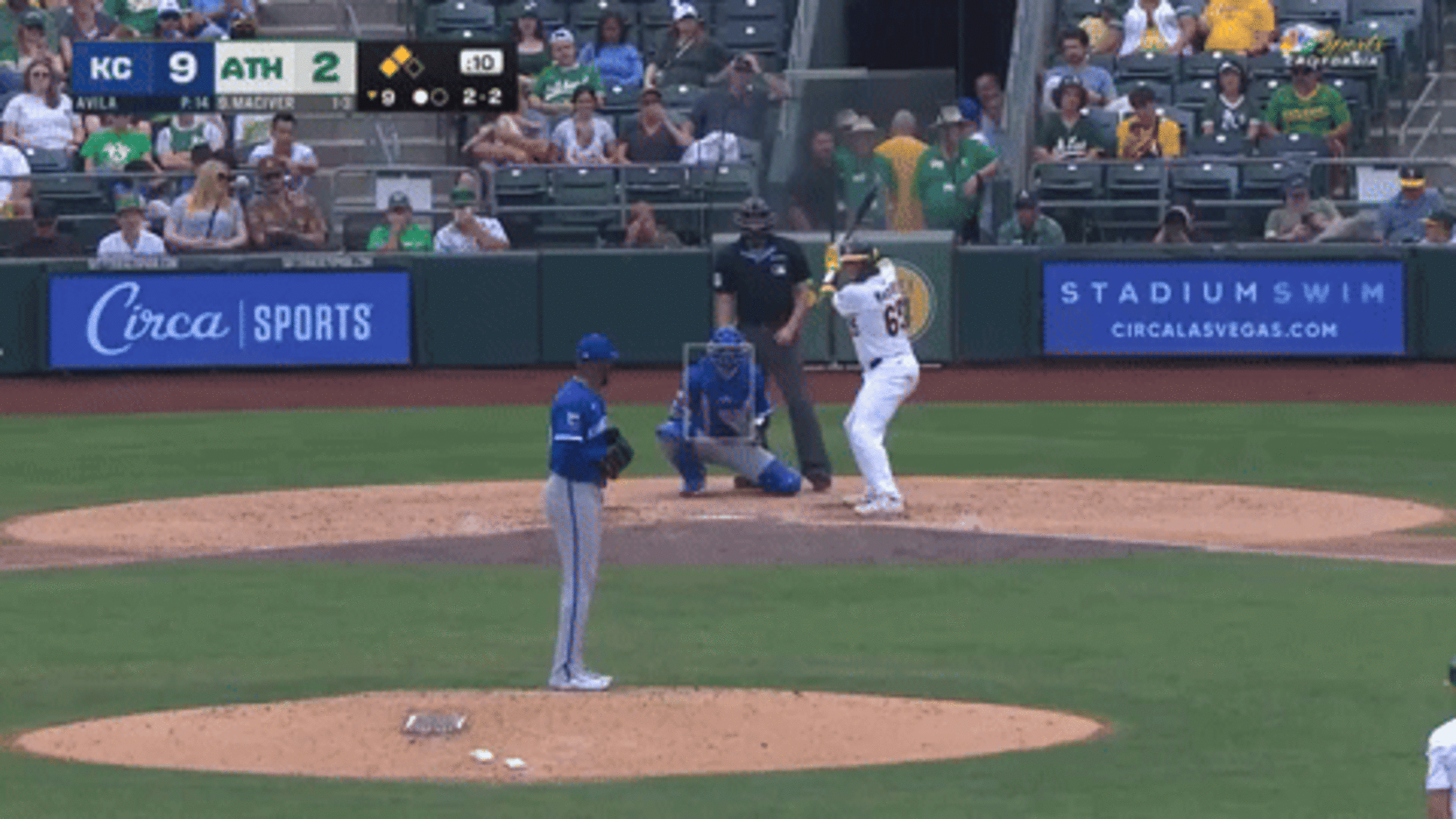
It’s important to note the success he had in the bottom third of the zone, where the pitch mustered a mere 0.145 wOBA against.
When Luinder is forced to attack hitters at the bottom of the zone, the bender is a fantastic option. Regardless of location, this is his go-to strikeout offering, as evidenced by his 47.1% whiff percentage and 0.148 wOBA against in two-strike counts.
Sinker
Avila’s sinker sits comfortably at 94–95 mph with late arm-side life (12.6 inches of run) and some depth off the cutter (1.8 inches offset).
The movement profile allows him to tighten up right-handed hitters and produce ground balls at a strong clip (58%) while also limiting damage (.216 wOBA against).
Even if it’s not a true bat-misser (19.1% whiff rate), Luinder’s sinker will play as a functional fastball alternative to his cutter, which, as aforementioned, got shelled last year.
Most importantly, the sinker gives him an option in the horizontal middle third of the zone, an offering he threw 30 times in this zone for yet another 0.000 wOBA against.
The sinker works best when sequenced with his high-spin breaking ball, forcing hitters to cover multiple planes.
Makeup
Even if he came out of the bullpen this past year, Avila profiles as a potential starter due to his track record of throwing 100-plus innings in a year twice so far in his professional career.
Durability has been a clear strength of his; with more than 400 professional frames on the ledger, he handles starter volume with ease despite a procedural move out of the rotation.
That said, his results have been inconsistent; ERAs north of 4.50 at the upper levels, including a 5.23 mark in Triple-A this past season, reflect command lapses.
Hitting his catcher’s target with each signature pitch will be a key performance indicator for him in 2026. We saw how often Avila was heavily prone to missing location with each pitch, leading to baserunners and crooked numbers.
When he’s on, his stuff will absolutely play when he dots cutters high, sinkers middle, and curveballs low in the zone.
Avila has not one, but two cases for one of Triple-A’s best situational pitches; when locating the cutter in the top third and the sinker in the middle third. Considering this, it’s easy to see the appeal he has as a starter.
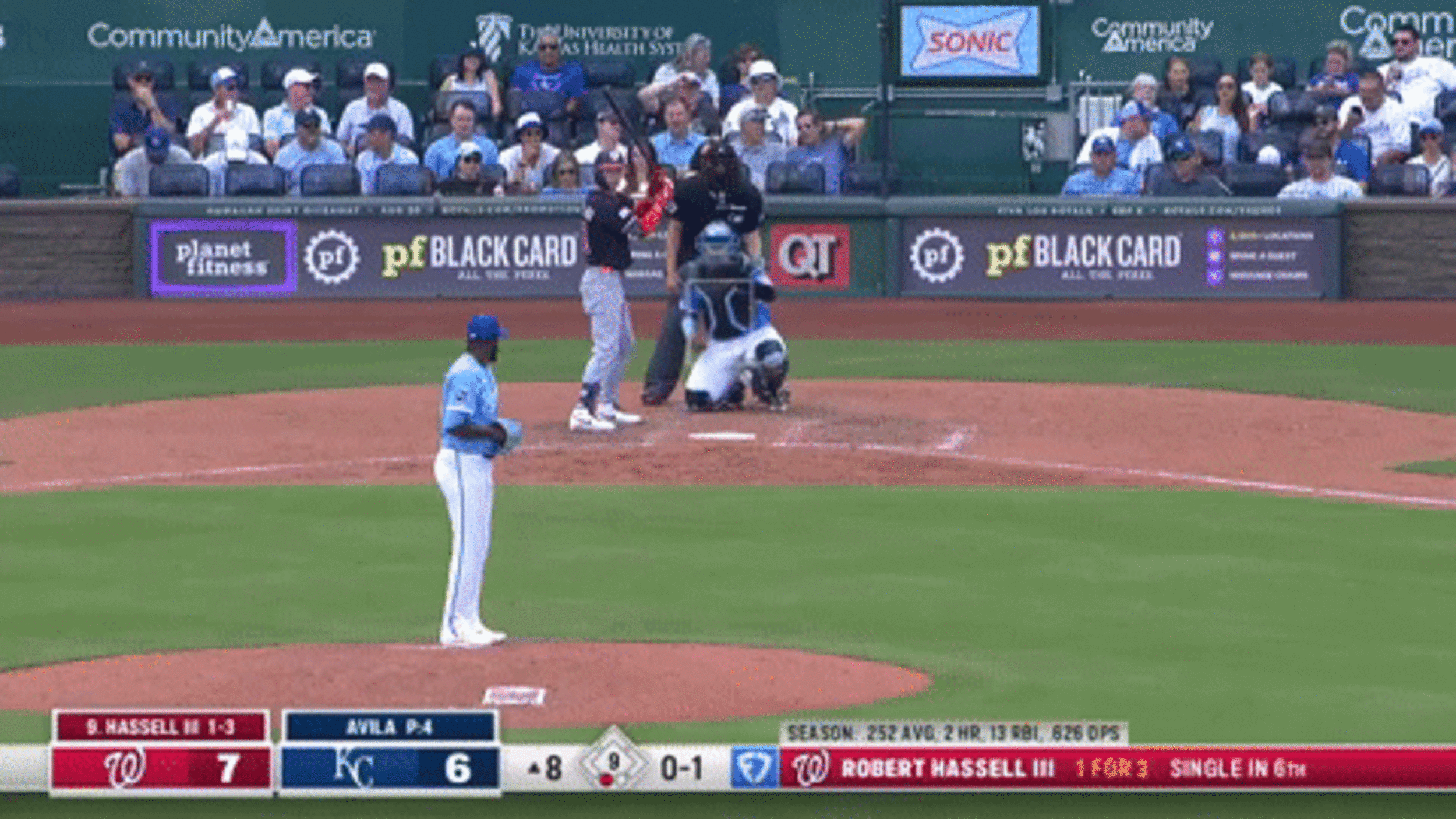
The sinker/curveball pairing specifically will miss barrels and bury lots of batted balls in the dirt, allowing his defense to bail him out.
Outlook
At the moment, Avila projects as a long reliever with a chance to crack the back end of KC’s rotation if his cutter rebounds. It’s also entirely possible KC still sees him as a starter and allows him to run this back in 2026.
I also wouldn’t mind a permanent switch to a relief role, especially when considering the bump in his strikeout rates when limiting exposure to repeated lineups.
His 50th-percentile outcome is comfortably an average of about 1 WAR per season, which translates roughly to a sixth starter or a long reliever on a championship-caliber team.
With improved command, he could be a 1.5-WAR-per-year guy early in his career.
All told, there’s clearly enough on the table to be a valuable member of Kansas City’s staff in some capacity, so I hope he enjoys the local barbecue.
More must-reads:
- Tigers' Tarik Skubal shines in first rehab start but offers no update on timeline
- Mets' Freddy Peralta reportedly seeking massive long-term deal in free agency
- The 'Foreign-born 250-HR club' quiz
Breaking News
Trending News


Customize Your Newsletter
 +
+




Get the latest news and rumors, customized to your favorite sports and teams. Emailed daily. Always free!
PRIVACY POLICY COOKIE POLICY CONTACT US
ABOUT YARDBARKER TERMS OF SERVICE


By using this site, you agree to our Terms of Service and Privacy Policy.
This site is for entertainment purposes only.
There is no gambling offered on this site.
Gambling Problem? Call 1-800-Gambler.
