
-


Follow Us

 On Facebook
 On Flipboard
 On Twitter
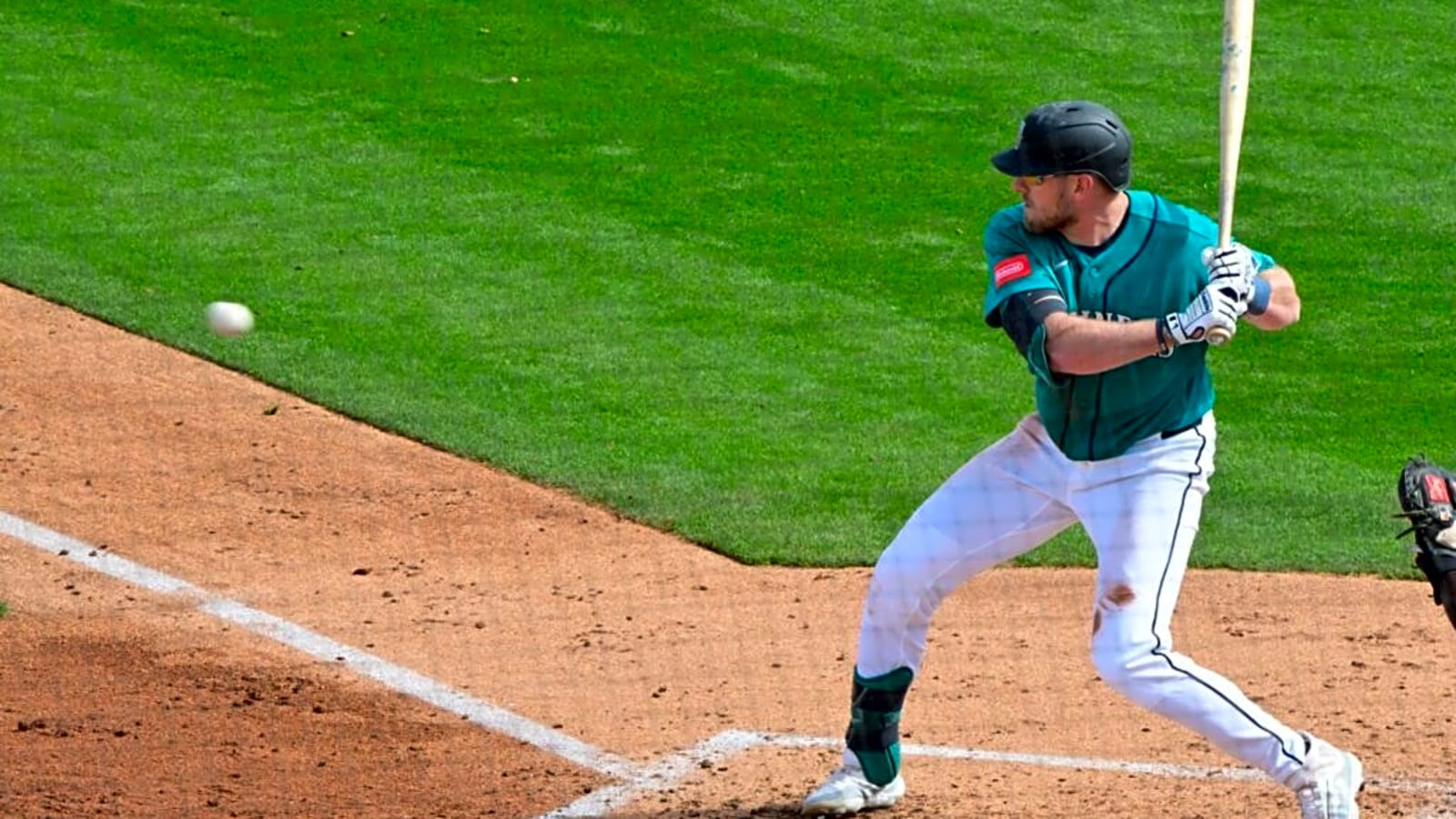
The Mariners enter 2026 with one of their deepest rosters in recent memory. In all departments, they look like a squad poised to back up their best season of the century. But they will be looking for certain members to come back strong following disappointing seasons. Using pitch data, contact profiles, and underlying metrics, three names emerge as strong candidates for bounce-back seasons in 2026 for the Mariners.
Mariners Players Looking to Bounce Back in 2026
Luke Raley
Following the disappointment of 2025, it is easy to forget how vital Luke Raley was to the success of the 2024 Mariners. Narrowly missing out on the playoffs, it was a team that rode its dominant starting rotation and lacked potency on offense. This did not apply to Raley. He became a staple of the offense, putting up a 3-WAR season and a 129 wRC+. T-Mobile Park seemed to be a graveyard for left-handed hitters, and yet Raley still produced.
Fastball Collapse in 2025
But following that strong showing, his luck would not continue in 2025. Picking up an oblique injury early in the season, even when he returned eight weeks later, he never seemed himself. This was most visible in his numbers against the fastball. In 2024, he posted a staggering 254 wRC+ across 455 pitches. Raley hit .304 against four-seam fastballs with a .625 slugging percentage and a .431 wOBA. There was a slight overperformance relative to expected data, but the underlying metrics suggested it was not a one-off.
Following his oblique injury, these numbers fell off a cliff. In 2025, his fastball numbers dropped to a .209 average, .264 slugging, and a .302 wOBA. Most alarmingly, his strikeout rate against four-seamers increased from 22.8% in 2024 to 26.3% in 2025. Pitchers clearly saw this trend and began to pound the strike zone. In 2025, Zone% increased from 56.0% to 63.0%, and his in-zone swing rate rose from 74.9% to 79.4%. Following the injury, he struggled to catch up to elite velocity, as his swinging strike rate against fastballs rose from 13.6% to 18.5%. These issues were perpetually exploited by opposing pitching staffs who knew just to target the zone with velocity. This left Raley almost unplayable by the playoffs, when dependability is most valued.
Getting Back Up To Speed
So why is Raley poised for a bounce-back season when the numbers look so dim? His numbers were poor, and while he overperformed his data in 2024, negative variance caught up to him in 2025. His expected slugging against fastballs in 2025 (.389 xSLG) outpaced his actual slugging (.264 SLG), indicating underperformance relative to quality of contact. With the oblique injury behind him and a full offseason to recover, he should be back up to speed in 2026. His splits against breaking balls and off-speed pitches in 2025 were consistent, and his chase rate only moved from 19.5% to 22.0%, suggesting his approach against fastballs remained relatively stable.
Despite offseason trade speculation, he appears set to play an important role. His start in center field in the opening game of Spring Training suggests he will not only platoon in right and at DH but also provide coverage when required. Depending on health, Raley could be set up for a season closer to 2024 than 2025.
Bryce Miller
Fastball Regression
Bryce Miller seems to have been forgotten somewhat within the Mariners’ star-studded starting rotation. Following a lost 2025 due to an elbow injury that fortunately did not require offseason surgery, Miller will be looking to make a major bounce-back in 2026. Miller struggled mightily when he returned from his injury last season. In 2024, he was arguably the Mariners’ best pitcher and one of the best starters in the league following the All-Star break.
Miller built his success on his fastball as his bread and butter. In 2024, Bryce Miller’s four-seam fastball was one of the most valuable individual pitches in baseball, posting a +19 run value. Opponents hit just .184 against Miller’s four-seamer in 2024 with a .264 wOBA and .348 slugging percentage. This cratered in 2025 to a -8 run value. His fastball wRC+ allowed spiked from 80 in 2024 to 149 in 2025. With a noticeable drop in velocity, his barrel rate doubled, and slugging increased by over 200 points.
Why the Foundation Remains
What will be encouraging for Miller is that his spin rates remained elite. That matters because spin rate is one of the most stable pitch characteristics year to year. A major injury often shows up first in spin degradation. Miller’s fastball spin ranked in the 92nd percentile in both 2024 and 2025, and he maintained his ability to generate strong ride compared to league average. This suggests that the pitch’s underlying characteristics remain intact. As pitchers reported for bullpen sessions and live batting practices, it has been reported that his fastball velocity is sitting around 97 mph.
This is a promising sign as the Mariners look to boast one of the best starting rotations in the league, with Miller to bounce back as a key part of their success.
Carlos Vargas
Following his trade from the Diamondbacks in 2023, Carlos Vargas featured for the first time in the majors in 2025, having spent a season in Triple-A. Vargas possesses a high-powered fastball and the stuff that gives him huge upside as a mid-reliever.
However, to say Vargas had an inconsistent season would be generous. With an ERA of 3.97, he had one of the lowest strikeout rates and whiff rates in the leagues in the bottom 10% for both metrics. With a 4.59 FIP and 1.359 WHIP, his ERA may have been a little fortunate relative to skill indicators. It was clear to see when he pitched. His command was just not there; it bordered on dangerous at times, with a high-profile hit-by-pitch against Houston that led to a fracas from the benches. This is something he must be able to control if he is to have any kind of success because metrics do point to a more positive 2026.
Elite Ground-Ball Profile
Despite some poor underlying numbers and an inability to miss bats, Vargas generated elite ground balls, ranking in the 95th percentile with a 57.1% ground ball rate. Hitters seemed to struggle to elevate his pitches, as shown by a 92nd percentile barrel rate allowed (4.9%) and 87th percentile hard-hit rate allowed (35.2%). This is a trait the Mariners are leaning into, as shown by the addition of Jose Ferrer. Throwing over 60% sinkers, he will look to hone this ability to induce groundballs with elite velocity.
Bullpen Volatility and Upside
Bullpen arms can be so volatile season to season. Dependable arms can seemingly come from nowhere, as we saw from an impressive campaign from Eduardo Bazardo. If he can even slightly increase his whiff rates and command his pitches, his upside as a groundball stabilizer could lead to a very productive 2026, where he can perform as Bazardo did last season.
More must-reads:
- How Pete Alonso can impact the Orioles' young core
- Yankees prospect Spencer Jones draws comparisons to Shohei Ohtani
- The 'Last 40-homer season by MLB team' quiz
Breaking News
Trending News






Customize Your Newsletter
 +
+




Get the latest news and rumors, customized to your favorite sports and teams. Emailed daily. Always free!
PRIVACY POLICY COOKIE POLICY CONTACT US
ABOUT YARDBARKER TERMS OF SERVICE


By using this site, you agree to our Terms of Service and Privacy Policy.
This site is for entertainment purposes only.
There is no gambling offered on this site.
Gambling Problem? Call 1-800-Gambler.
