
-

-


Follow Us
-

 On Facebook
 On Flipboard

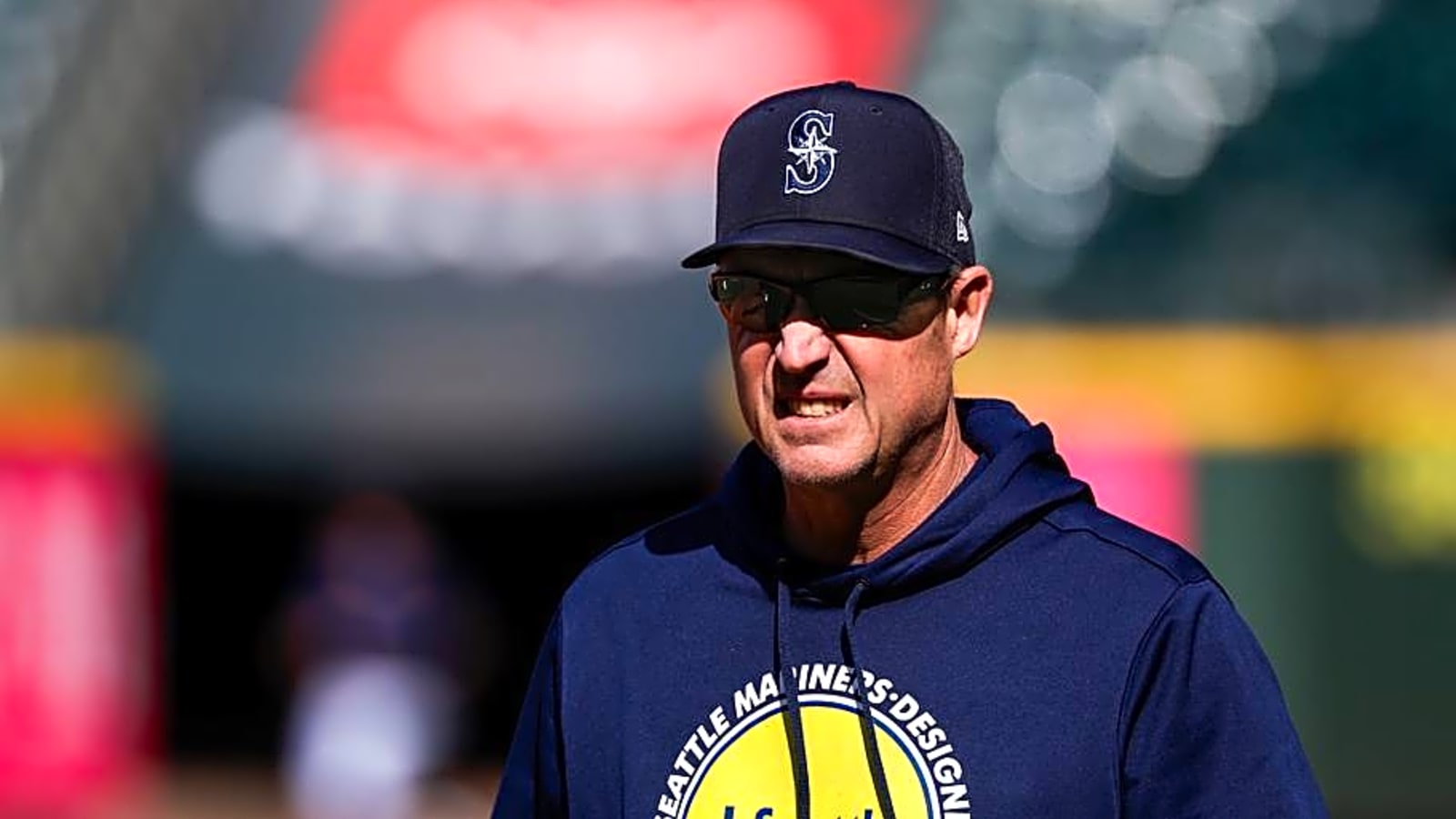
Steve Phillips wants the Seattle Mariners to take a beat and remember how close they came to the World Series last season. That reasoning would help them resist blowing the entire operation up.
The former Mets general manager told Seattle Sports that he would have difficulty dismissing leaders who were just a few outs away from winning the AL pennant in 2025. His verdict was unequivocal: “I would not change the general manager and I would not change the manager.”
The Mariners shouldn’t listen to that advice. Look, last October was special. Dan Wilson deserves credit for guiding Seattle to 90 wins, an AL West title and Game 7 of the ALCS during his first full season. He finished third in AL Manager of the Year voting. That doesn’t mean we get to erase the fact that this sequel has stunk.
2025 cannot become job security in this situation. Wilson’s responsibility isn’t limited to managing when the rotation is rolling, Cal Raleigh is rewriting record books and everything feels possible. The real test arrived when players regressed, injuries accumulated and the season started spiraling out of control. This team has yet to stop sliding. And no, winning the last game of a four-game-set against the A’s Quad-A lineup doesn’t mean things are turning around.
Dan Wilson’s Mariners Never Found an Answer
Phillips framed Seattle’s collapse primarily as a case of player underperformance. The hitters didn’t hit. The pitchers didn’t pitch. Too many players fell short of expectations at the same time.
Not sure how that explanation is supposed to protect Wilson. It does exactly the opposite.
Phillips then acknowledged that the Mariners were unable to correct their problems from a coaching perspective…Okay? Sure, Wilson can’t step into the batter’s box for a struggling hitter or throw a bullpen session. But that’s not the point. A manager’s job is to keep a roster prepared and hold them accountable. The fact that this team has been unable to make adjustments and prevent the same problems from reoccuring throughout the season says it all.
By the time Phillips offered his defense, Seattle was 66-75. The Mariners ranked last in baseball at 3.96 runs per game, while the pitching staff that was supposed to carry them had fallen to 16th with a 4.16 ERA.
Those weren’t the only problems. The defense fell apart. The baserunning hasn’t been nearly as good as it was last season. Too many mental mistakes. Lineup decisions and bullpen choices were debated every other night. But the season-long pattern was the worst part. Seattle kept showing us the same flaws without producing any kind of meaningful correction.
Wilson’s calm demeanor helped stabilize the Mariners when he replaced Scott Servais in 2024. It worked well in 2025. When the season demanded urgency, sharper execution and a stronger response to adversity, that same approach produced nothing anyone could point to as a turnaround. Wilson should be held accountable for that.
Firing Wilson Cannot Become Seattle’s Entire Solution
Phillips makes a stronger point, even if he reaches the wrong conclusion. Seattle’s problems are bigger than its manager. That’s true.
Removing Wilson and announcing another internal promotion would be the easiest move available. It would allow the people above the dugout to present the appearance of accountability without addressing how the roster arrived to this point. Jerry Dipoto called this the most talented roster of his 11 seasons running Seattle’s baseball operations. When the offense collapsed, the Mariners dismissed assistant hitting coach Bobby Magallanes. Dipoto acknowledged that Magallanes was not the primary source of the problem and wasn’t even certain the move was correct. Wilson reportedly opposed the dismissal.
That’s not an organization confidently solving its problems. It is a group pulling the nearest lever because something had to move. It would be odd if Wilson isn’t the next lever.
Dipoto cannot escape the larger evaluation. He built a roster around the belief that Seattle’s homegrown pitching would provide an overwhelming advantage. He remained reluctant to move those arms for the kind of offensive addition this lineup needed. Then the pitching regressed.
Seattle was left with baseball’s lowest-scoring offense and a pitching staff that collapsed when the season demanded more. Through 144 games, the Mariners had been outscored 640-569, while their staff carried a 5.41 ERA after the All-Star break. That wasn’t bad timing. It was a roster-building bet failing.
Dipoto has accomplished plenty in Seattle. He rebuilt the farm system. He assembled a top tier, homegrown pitching staff. He also constructed a roster that ended the postseason drought. All of that can be true while this is also true: his plan may have reached its limit.
Mariners Ownership Owns Part of This Failure
We also can’t discuss Dipoto’s roster without discussing the money he was given to build it.
Seattle finished 2025 with a franchise-record payroll of roughly $165 million, which ranked 15th in MLB. The Mariners entered the following offseason with an estimated $30 million to $35 million available under a similar starting point. That was more flexibility than Dipoto had received in recent winters. It still placed a team coming off an ALCS appearance around the middle of the league financially. John Stanton didn’t hand Dipoto an empty wallet nor a blank check.
Stanton’s group determines where the ceiling sits. If ownership expects a World Series roster while remaining hesitant to spend like a serious championship contender, it owns the gap between those expectations and reality.
That context doesn’t absolve Dipoto. Plenty of decisions and poor valuations were made within the available budget, and too many of them failed to give Seattle the depth and balance it needed.
The responsibility is easy to trace. Wilson owns what happened on the field. Dipoto owns the roster and the organizational processes behind it. Ownership controls the resources and decides who continues leading the operation. Nobody gets to hide behind the person below him.
That’s why the Mariners should move on from Wilson without pretending his dismissal would finish the job. They have to decide whether Dipoto should be trusted to select another manager and reshape a roster whose competitive window cannot remain open forever. Ownership must then give whoever leads the next plan enough financial room to finish it.
Phillips sees one terrible year following one unforgettable year and recommends continuity. The Mariners should see a talented team that stopped executing, a manager who never found the counterpunch, a front-office philosophy that finally buckled and an ownership group that still has not pushed its resources to match the moment.
More must-reads:
- Pete Crow-Armstrong makes Cubs, MLB history by joining 40-HR club
- Notable update emerges on Don Mattingly’s future with the Phillies
- The 'Multiple 3-HR games in a season' quiz
Breaking News
Trending News





Customize Your Newsletter
 +
+




Get the latest news and rumors, customized to your favorite sports and teams. Emailed daily. Always free!
PRIVACY POLICY COOKIE POLICY CONTACT US
ABOUT YARDBARKER TERMS OF SERVICE


By using this site, you agree to our Terms of Service and Privacy Policy.
This site is for entertainment purposes only.
There is no gambling offered on this site.
Gambling Problem? Call 1-800-Gambler.
