
-

-


Follow Us
-

 On Facebook
 On Flipboard
 On Twitter
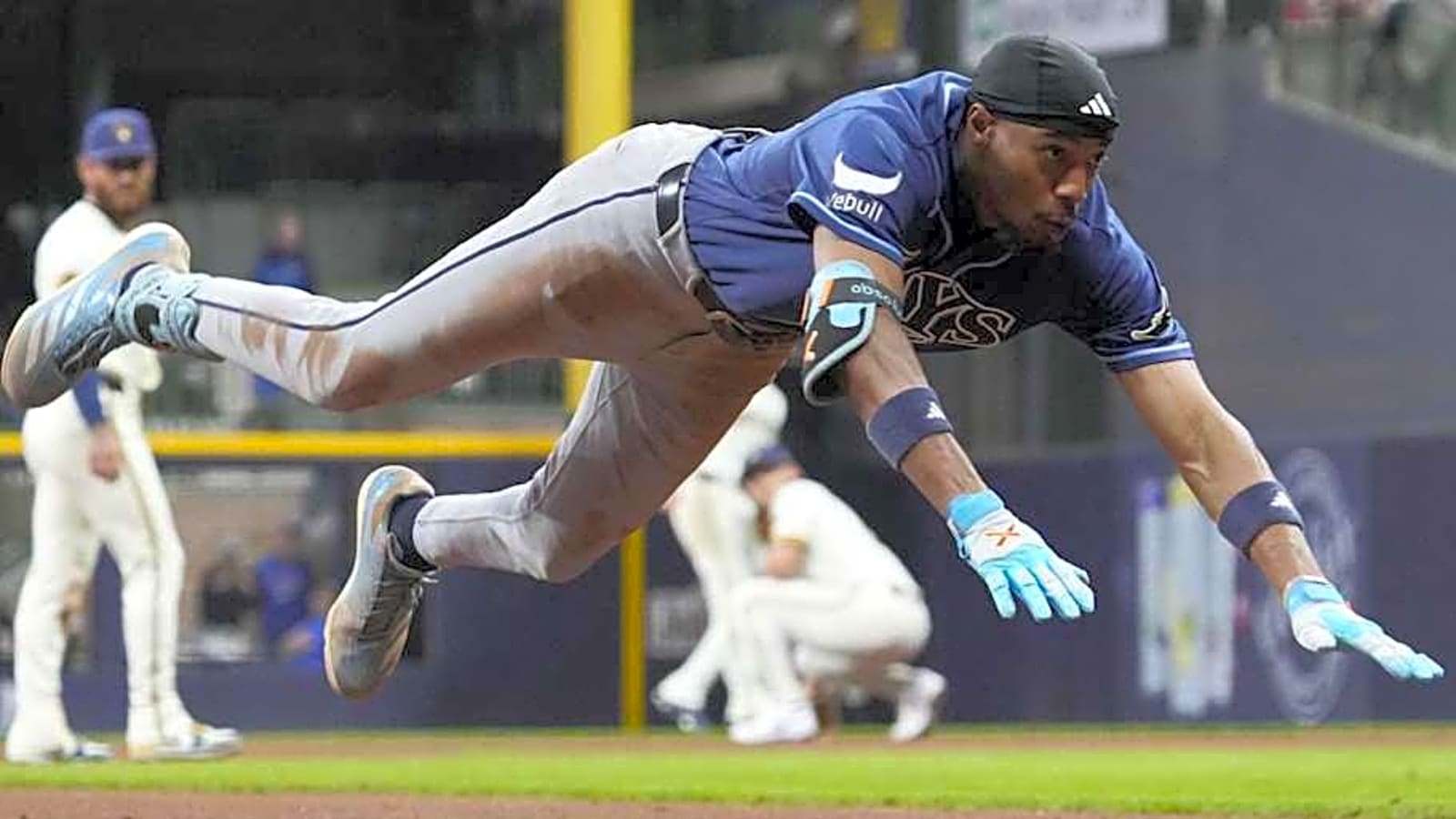
The first week’s worth of Tampa Rays baseball has been played, and there’s a lot to take away.
The hitting feasted against mediocre St. Louis Cardinals pitching and then expectedly fell to earth against a notoriously tough lot of Milwaukee Brewers arms. Walking away from the first two-thirds of the Midwest road trip at 2-4 is tough, albeit not terrible.
The Rays' strengths have been on display with strong starting pitching performances that have kept them in games even when the bats are cold. The continuing dominance of Drew Rasmussen, great outings from Nick Martinez and Joe Boyle and finally a clean, healthy slate for Shane McClanahan highlight a rotation that should be among the better in baseball.
Where Tampa Bay fans have no doubt been ripping their hair out watching is in the late innings. There’s a lot of blame that will find its way to Griffin Jax.
Rays have some issues to iron out early in season
He’s been the face of late-inning meltdowns lately. Blown saves, backbreaking home runs given up and a horrid outing in Milwaukee, where he did not even record an out before allowing three earned runs, have made him an eyesore.
Despite the nightmare start for him, strong whiff rates and lively stuff suggest this is the closer for the Ras, and that positive regression will now swing the other way.
The lineup, meanwhile, badly needs length. As everyone expected, the 1-2-3 of Yandy Diaz, Jonathan Aranda and Junior Caminero is deadly. Diaz is off to perhaps the most torrid start in baseball, while Aranda is proving his breakout last year was no Steinnbrenner Field accident.
Caminero, meanwhile, presents a whole different challenge. Anyone watching can see that opposing pitching staffs want nothing to do with him; he’s being pitched wildly outside and is seeing significantly fewer pitches in the heart of the zone.
While this is partly because he’s such a talented hitter, the tougher reality is that the rest of the league now knows what follows Caminero isn’t nearly as dangerous.
While the top of the lineup is up there with the best in baseball, the dropoff gives cause for alarm. The early returns on Chandler Simpson and Jonny DeLuca are fantastic, as those two hitters have a lot of untapped potential, but the rest are light-hitting.
Ryan Vilade has some potential as a lefty masher, Gavin Lux should be replacing Richie Palacios soon, and Cedric Mullins needs to return to something of his former self. With that in mind, just profiling as an average lineup could carry the Rays far with this much pitching depth.
Now, let's take a look at their upcoming series against the Minnesota Twins.
Game 1: Joe Boyle vs. Bailey Ober
It was unfortunate for several reasons that Michael McGreevy dealt as well as he did against Tampa Bay in the opening series, but one in particular was his overshadowing of Boyle.
Trouble in the first inning led to an early deficit for him that felt magnified by McGreevy mowing down Rays hitters in order. Yet, after that first inning, Boyle found a groove. Efficiency by staying in the zone with his lights-out stuff proved to do the trick.
It’s what the scouts have been saying all along about him. When Boyle trusts his stuff enough to throw it down the pipe, it usually results in good outings. It’s just what he’ll need to do against the Twins in what will be frigid conditions in Minneapolis.
It’s hard to believe that this is year five of Bailey Ober as a rotation stalwart in Minnesota. Co-starring alongside Pablo Lopez and Joe Ryan for years has made him the more unsung pitcher on the team, which shouldn’t be the case at this point.
Back-to-back 3-WAR seasons, as well as a Game 1 start in the 2023 ALDS, already adorn Ober’s resume, which is more impressive than many think. Unlike how Boyle uses his large frame to throw gas, Ober extends with his 6-foot-9 frame to dot a usually well-placed changeup and fastball, which have proven to get outs.
It’s not a groundball-heavy changeup or a high velocity fastball that does the trick, but more of a tendency to keep hitters off base. The fewer free passes over the years have meant fewer back-breaking home runs, and it’s made him effective.
The last control artist Tampa Bay faced in McGreevy gave them fits, so it will be interesting to see if a trend continues with Ober.
Game 2: Steven Matz vs. Mick Abel
If there’s one takeaway from Matz’s outing against the Cardinals in Game 3 of the set, it was that his control needs some time to heat up. Hanging pitches were being punished, and it left him with a so-so first outing.
There’s a lot of reason to gloss over Matz as the least flashy member of this Rays’ starting unit because he’s going to be doing a lot of his work through controlling the zone. When he is successful, it will be with low strikeout, soft contact games that just get the job done.
When he gets hit hard, it’s because of slight misfires that leave hangers. Rest assured, Matz is a good pitcher that Tampa Bay trusts. Seeing him get more length as a starter is a worthwhile experiment the Rays are keen to try and do after last season’s lights-out bullpen year.
Mick Abel does not have problems with being flashy on the mound. One of the prizes of last season’s firesale for Minnesota, Abel came from the Philadelphia Phillies, advertised as a ready-now Major League starter with elite stuff.
He should help make up for the sting of losing Jhoan Duran because there’s so much to love about his game. The Twins see his elite fastball and curveball as enough to carry his profile as a starter.
Sitting in the 97-98 mph range consistently with the heater and then using a snapping breaking ball almost exclusively against left-handers makes him tough from both sides.
A lower-than-usual arm slot ties it all together in what is an electric talent to watch. Still, a very limited Big League sample size and ever-developing control make him far from his final form.
Game 3: Nick Martinez vs. Simeon Woods Richardson
Nick Fortes provided the clutch hit needed to secure the 3-2 win against Milwaukee on Monday, but it was Nick Martinez who impressed the most. Navigating a tough Brewers lineup, making only one real mistake to one of the game's best in Wiliam Contreras felt like a win.
With a quality start in hand for his first outing, Martinez stayed doing what he’s best at, which was mixing a deep arsenal at a fast pace. Locked into a rhythm with the changeup, getting hitters to whiff on it at a 42.9% rate, Martinez shoved his first outing and has the opportunity to do so against one of the game’s weaker lineups in Minnesota.
Simeon Woods Richardson, the prize of the Jose Berrios trade in 2021, has been consistently average for two seasons now. There is nothing spectacular about his stuff. His simple assortment of a fastball, slider, and curve is a little predictable, and he uses his fastball almost exclusively to lefties at a near 50% clip.
That points to him being hittable, but there are little things about him that keep hitters off balance, like a new splitter that raised eyebrows. Oddly, righties and lefties hit him about equally, with neither showing a real aptitude against him.
Woods Richardson has about average stuff paired with around average control, a combination surprisingly not many pitchers possess. It’s what allows him to get outs and keep him a job in the Twins’ rotation.
Rays have opporuntity to win series agianst Twins
The pressure is on the Rays to capitalize in this series. The Twins are not one of the more egregious bad teams of the year, but last year’s trade deadline washed away almost all of their depth. It’s now a below-average team left with some high-end pieces that don’t match the team’s winning aspirations.
Byron Buxton, Joe Ryan, and Royce Lewis are elite names that will fetch interest at the deadline, and Minnesota might be having deja vu in July. Skipping over Ryan in the rotation and facing three righties all without elite profiles should give the Rays favorable matchups.
The weather will be testing as winter conditions in April are the norm in the Twin Cities for a Twins roster that is much more used to it than Tampa Bay.
A Rays player, especially on the radar for this set, is Chandler Simpson. After a very up-and-down rookie season, the early results from his sophomore at-bats have been encouraging. Mostly, it seems as if he’s not putting a wild amount of pressure on himself to run his way on base every time.
It’s a small sample, but he’s already doubled his walk rate from last year, and he’s being more selective. When Simpson extends the zone, he does his worst hitting. It’s what has plagued other contact hitters of his nature, like Luis Arraez, who feel the need to always try for contact.
These little tweaks give Simpson the chance to make marginally better improvements that could lead to bigger results down the line. He will also be facing three righties and receiving the majority of outfield reps. That, paired with a huge outfield in Target Field, gives his balls in play lots of ground to roll and chances for extra bases.
More must-reads:
- Three MLB rookies who could be next in line for extensions
- Konnor Griffin megadeal would be franchise-shifting moment for Pirates
- The 'Youngest MLB 30/30 seasons' quiz
Breaking News
Trending News





Customize Your Newsletter
 +
+




Get the latest news and rumors, customized to your favorite sports and teams. Emailed daily. Always free!
PRIVACY POLICY COOKIE POLICY CONTACT US
ABOUT YARDBARKER TERMS OF SERVICE


By using this site, you agree to our Terms of Service and Privacy Policy.
This site is for entertainment purposes only.
There is no gambling offered on this site.
Gambling Problem? Call 1-800-Gambler.
