
-

-


Follow Us
-

 On Facebook
 On Flipboard


Particularly, I love the stories of players who arrive on a team without high expectations and then manage to revive their careers with the best season of their career. The process is usually exciting when we look for every point where a trend shows how a player is beginning to do something never seen before.
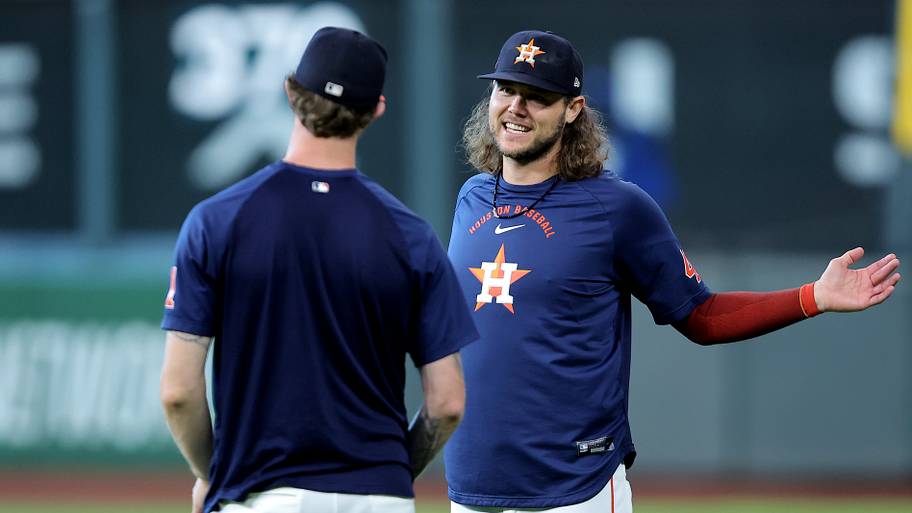
Part of that process was the 2026 season of left-handed reliever Steven Okert with the Houston Astros. He arrived with only 1.8 bWAR and not a very good reputation as a reliever with three different teams between 2023 and 2025 — including his first year with the Astros in 2025 — when he went 9-6 with two saves, a 3.97 ERA in 176 appearances and posted a 3.73 FIP.
Okert was, often, the uncomfortable lefty that his teams brought in to pitch to seek an advantage in lefty vs. lefty situations. Perhaps, in another era, his profile would have found more value, when the bullpen game was somewhat different for situational lefties who only faced hitters from their own side. But at present, the bullpen has a different demand.
Every reliever has to face at least three batters from the moment he enters, unless he closes out the inning before fulfilling that rule. That means Okert was much more important in 2026, as he had to go through all kinds of situations. He finished his season at 35 years old with the best bWAR of his career, at 2.3, and lowered his ERA from 3.01 to 2.13 with his second consecutive season pitching in 68 games.
Behind Josh Hader (1.9 fWAR), Okert (1.2) posted the best fWAR among Astros relievers, and he often resolved many complicated situations that allowed save opportunities to reach Hader. Okert did not allow runs in 55 of his 68 appearances, with 36 of them without allowing a single hit.
Go to the Free-Agent Market or Bet on Okert?
It is never too early to get ahead of events, as the Astros will have to answer that question this winter. And I think the most interesting part of the analysis here was precisely the doubts that Houston’s bullpen left us in the second half of the season, intensifying its problems during the final month.
For almost the entire way after the All-Star break, Houston’s bullpen showed great strength, even before Hunter Brown began reaching the sixth inning more frequently and Hayden Wesneski and Cristian Javier recovered. The Astros depended so much on the bullpen that they used 19 different starters to be able to go all the way, and one reliever, right-hander AJ Blubaugh, who led the bullpen with 96 innings pitched, ended up accumulating more innings than 17 of the starters they used.
Amid the chaos, Okert had a much more consistent second half of the season, so the accumulation of innings did not bring him down. His walk rate dropped from 2.3 to 0.8 BB/9, while his strikeouts remained around 9.0, to generate a jump from 3.9 to 10.5 K/BB. His FIP was also better, 3.40 compared to 4.25 in the first half, but the adjustment that caught my attention the most was how his dominance did not fall against hitters from either side.
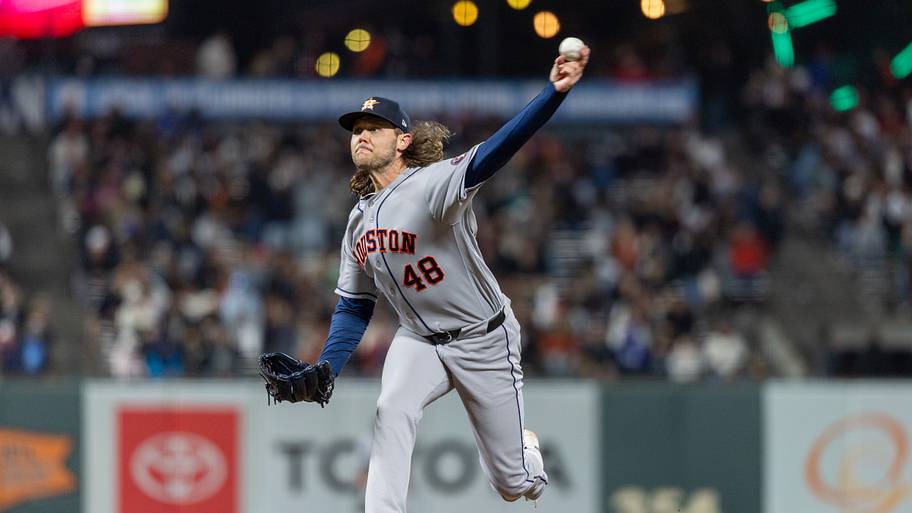
Okert limited lefties to just a .186 batting average with a .218 BABIP, while righties hit just .194 against him with a .235 BABIP. The biggest difference came afterward, with the explosion in his strikeout rate to 30.1 K% against righties, much better than in matchups against hitters from his same side (21.6 K%).
So Okert’s impact spoke for itself, and I think the Astros should value him heading into this winter, even though there could be interesting left-handed arms in free agency such as Adrian Morejon (2.8 fWAR) of the San Diego Padres and Sean Newcomb (1.7) of the Chicago White Sox, who lead all left-handed relievers in fWAR.
Gregory Soto of the Pittsburgh Pirates and Alex Vesia of the Los Angeles Dodgers are also interesting names, but given the Astros’ bullpen problems, if they can afford to improve, Okert could still remain in the conversation. Houston could explore some fair negotiation, as we cannot forget that Okert will enter his age-35 season in 2027.
More must-reads:
- Tarik Skubal shows exactly what kind of weapon he can be for Dodgers in Game 1 win
- Kyle Schwarber makes feelings clear on Don Mattingly after Phillies season ends
- The 'Most HRs by an MLB first baseman' quiz
Breaking News
Trending News


Customize Your Newsletter
 +
+




Get the latest news and rumors, customized to your favorite sports and teams. Emailed daily. Always free!
PRIVACY POLICY COOKIE POLICY CONTACT US
ABOUT YARDBARKER TERMS OF SERVICE


By using this site, you agree to our Terms of Service and Privacy Policy.
This site is for entertainment purposes only.
There is no gambling offered on this site.
Gambling Problem? Call 1-800-Gambler.
