
-

-


Follow Us
-

 On Facebook
 On Flipboard


Tatsuya Imai’s first season with the Houston Astros is going to be remembered, above all, for what we could not see.
Imai displayed his undeniable potential, but did not achieve enough consistency and that led him to lose his spot as a starter in the second half of the season.
In eight of his 15 starts, he was unable to complete the five innings, and in three of them he did not even manage to get the third out in the first inning. Imai recorded only five quality starts and all of them were in his last starts of the year, when the Astros began to think about offering him a role with less prominence in the starting rotation and moving him to the bullpen.
If you followed Houston for a good part of the season, it is likely that you remember Imai’s peak moment, when he threw six consecutive scoreless innings on May 25 at Globe Life Field and left the Texas Rangers without hits to begin a three-man no-hitter, combining with Steven Okert and Alimber Santa. Perhaps we could think that it was not a night of much dominance for Imai, since he gave four walks and struck out only two of the 20 batters he faced, but he allowed more ground balls than fly balls.

After being a main part of that no-hitter feat, Imai pushed himself a little and achieved a resurgence of dominance, recording all of his quality starts after an absolutely disastrous start. However, he could not prevent that first stretch of 13 starts from being the cause of reflecting his biggest problems on the mound.
During that stretch, his ERA rose to 6.06, he recorded a 5.06 FIP and a 5.7 BB/9 rate in his first 52 innings of his Major League debut. His adaptation process, something Imai highlighted during his battles to find his rhythm at that moment, was decisive in making the attempt to improve.
“It’s my first year — I’m going to different stadiums, different cities, everything is the first time, so I have to adapt,” Imai told reporter Matt Kawahara of Houston Chronicle (subscription required). “I just want to keep moving forward during the day, not waste time, try to adapt and try to perform well. But mentally, I’m fine. Whether I pitch or not, I just have to be ready whenever, even for next season, or for this season too. I just have to be ready and get used to it and make sure that I can perform as everyone expects.”
The interesting thing here is that Imai did not give up and continued working to be more consistent throwing in the strike zone. And, fortunately for the Astros, he managed to make an interesting turnaround in his last 10 outings of the regular season, improving his ERA to 2.55 with a 2.53 FIP, while his strikeout rate rose from 10.0 to 12.4, even though walks continued to be a problem and he did not allow home runs.
Should the Astros trust that Imai can elevate his level?
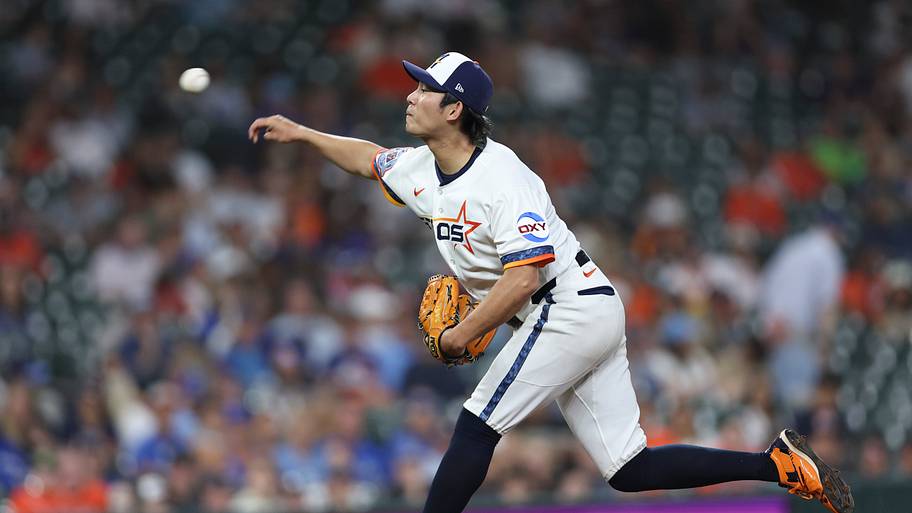
Houston has some questions to resolve during this winter, beginning by analyzing which free agent could be feasible to remain with the team. Relievers Steven Okert, Enyel De los Santos and Bryan Abreu became free agents. Imai has a player option he can trigger to become a free agent.
The Astros need to work on both sides, since they went through many inconsistencies until reaching the postseason with a deficient rotation and an overloaded bullpen. Mike Burrows (-0.4) and Ronel Blanco (-0.4) were the team’s two worst starters, and the constant injuries pushed the Astros to use 19 different starters throughout the year. So, analyzing it from this point, Imai did not represent the main problem of the rotation, although he has to make adjustments to his arsenal and work focused above all on his command.
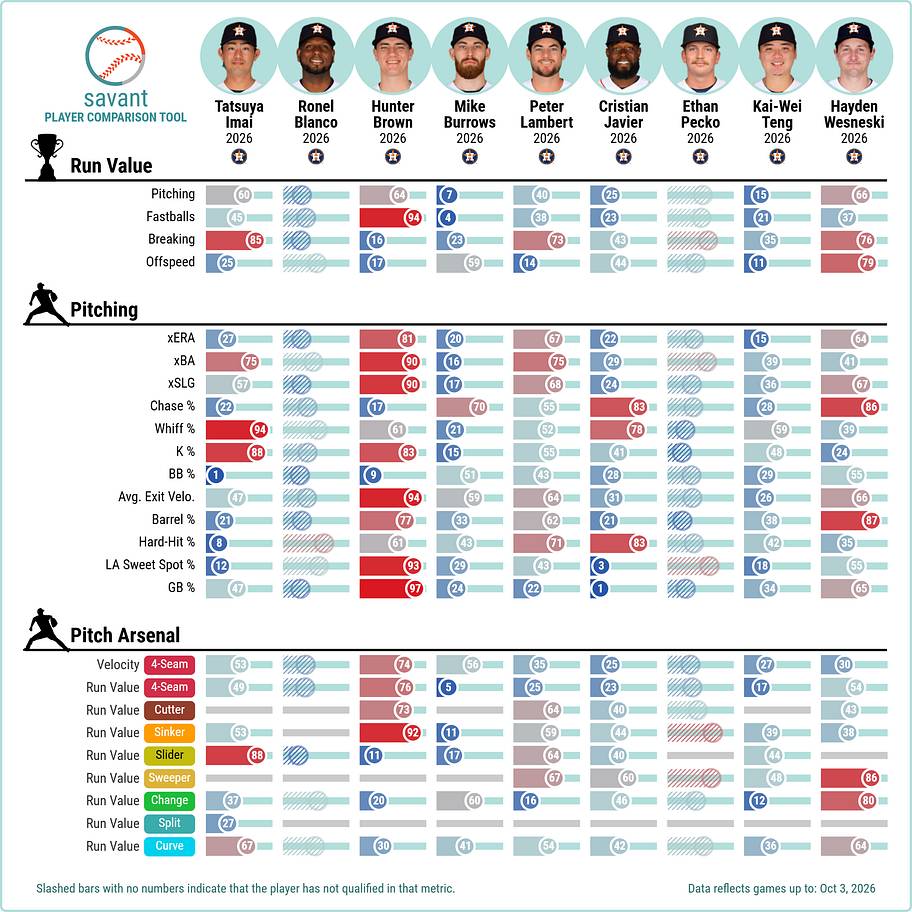
When analyzing the percentiles of Houston’s pitchers, Imai appears leading in two key points, with 94 in Whiff% and 88 in K%, occupying the second-best spot on the team, in both cases behind Abreu, which was a problem of consistency during part of the year for established starters such as Hunter Brown, Peter Lambert and Hayden Wesneski, who appear in the middle of the ranking in Whiff%.
It is not difficult to analyze Imai’s process and the challenge he has ahead, since he used 94% of his arsenal throwing the slider, his four-seam fastball and the sinker, leaving the split-finger, the curveball and the changeup in the background. His slider really was his main weapon and, although he used it in 45.5% of his pitches, it recorded a 38.8 K% rate, leaving the league with a low .167 average and .309 slugging. But here is where Imai’s problem begins. His slider generated a 39.7 whiff% rate and the league averaged 39.6 Hard Hit%, but his other two secondary weapons were not as dominant.
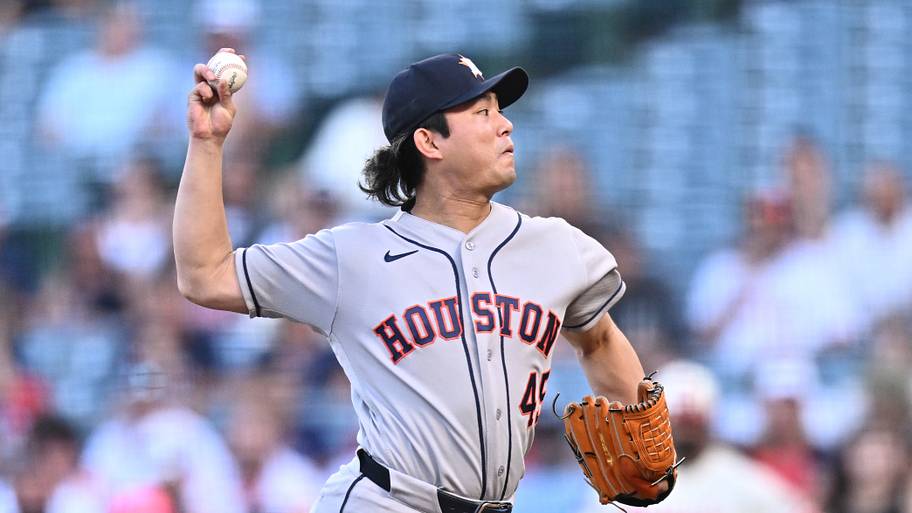
With his four-seam fastball and the sinker he achieved a combined whiff rate of 21.7%, but when hitters hit, a good part of the batted balls were hit hard, recording a Hard Hit rate above 47% and 50%, respectively. That was a turning point that opens many questions for Imai’s second season. The .380 and .182 slugging against both pitches hides the thin line between apparent dominance and a possible chaos, since the expected statistics reveal to us that the fastball allowed .463 xSLG and the sinker .563.
So, even the strategy that worked best for him can be questionable, analyzing those two averages that lean more toward the idea of a bigger problem in the future if Imai does not manage to expand his pitch mix and add a breaking pitch or an offspeed pitch.
More must-reads:
- Stadium roof ends up being MVP for Brewers in Game 1 win over Padres
- Rays' Drew Rasmussen flirts with no-hitter in Game 1 of ALDS against Yankees
- The 'Most HRs by an MLB first baseman' quiz
Breaking News
Trending News


Customize Your Newsletter
 +
+




Get the latest news and rumors, customized to your favorite sports and teams. Emailed daily. Always free!
PRIVACY POLICY COOKIE POLICY CONTACT US
ABOUT YARDBARKER TERMS OF SERVICE


By using this site, you agree to our Terms of Service and Privacy Policy.
This site is for entertainment purposes only.
There is no gambling offered on this site.
Gambling Problem? Call 1-800-Gambler.
