
-

-


Follow Us
-

 On Facebook
 On Flipboard
If somebody asked me to describe the Arizona Diamondbacks‘ season, I would not know where to start. One word that keeps coming to mind is bizarre. Ketel Marte’s antics, the bullpen doing a 180, Eduardo Rodriguez looking like a true ace, Lars Nootbaar and Max Kepler playing in the outfield. I feel like in five years we will forget that Nootbaar and Kepler played on the Diamondbacks.
Although they missed the playoffs, I don’t feel like this was a bad roster from the beginning. The lineup had a number of proven players, All-Stars, and a savvy vet who still had something left in the tank in Nolan Arenado.
I’ll be honest: when they traded for Arenado, I thought it was a poor decision. The 35-year-old had shown a decline each of the three years prior and was coming off his worst season as a Cardinal. I thought that nothing was left in the tank, and adding Arenado would be yet another failed transaction for Arizona.
Well, I was wrong.
Arenado’s Resurgence
At 35 years old, Arenado played in 152 games for Arizona. This would mark the tenth time that he appeared in over 140 games in his 14-year career. If you would have told me before the season that Arenado played 152 games, I would have at least assumed that he had moderate production and remained healthy. A low bar that I still would have attributed as a win.
Instead, Arenado was one of the best players on the Diamondbacks all season. He slashed .255/.331/.475 with 30 home runs and a 120 wRC+. He led the team in home runs, was third in games played, and was second in wRC+ behind only Gabriel Moreno. We aren’t talking about an older veteran providing leadership and a little bit of impact. We’re talking about an offensive driver that they acquired for next to nothing.
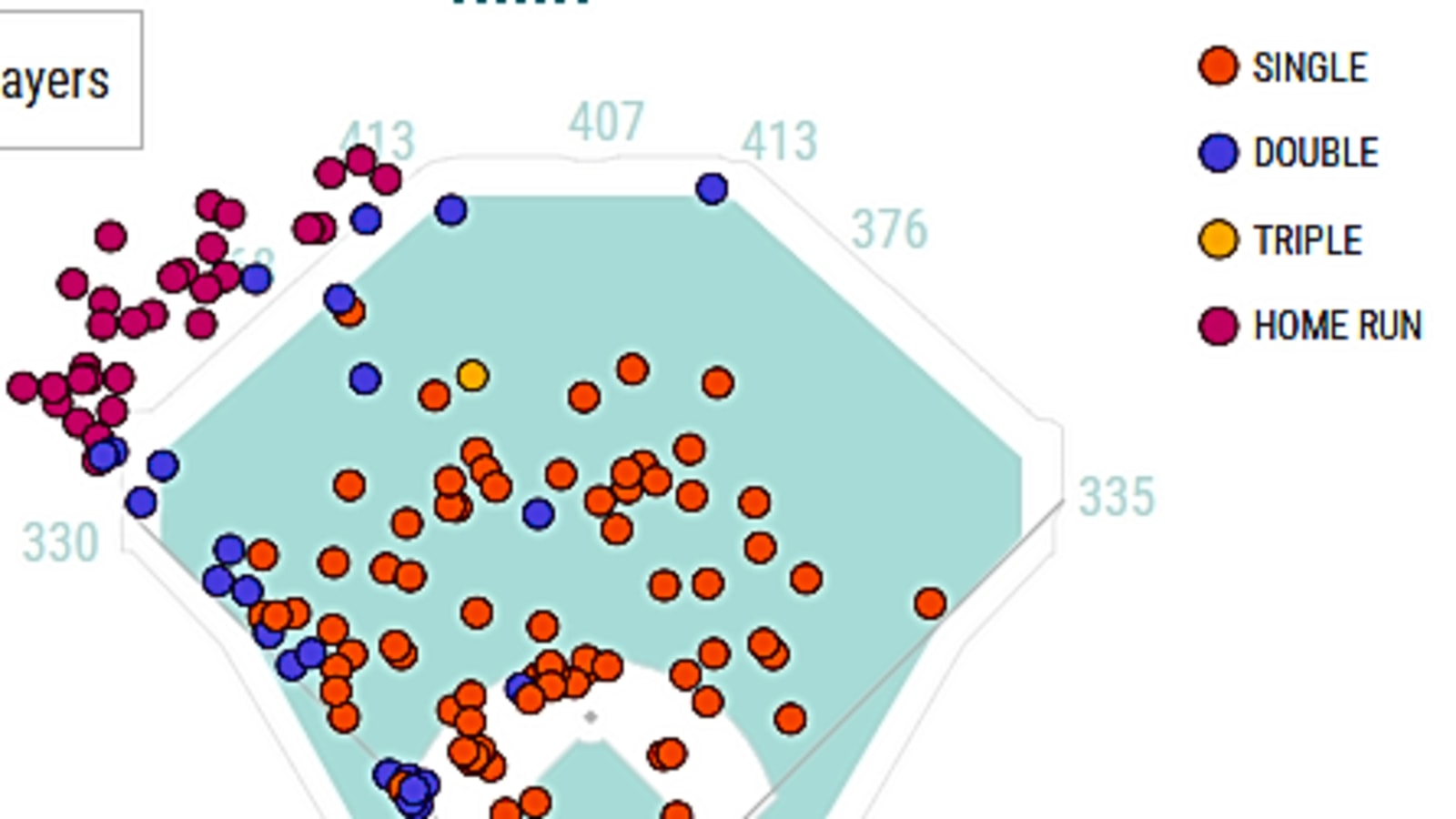
Usually, I would go into a dive about the changes a player made from last year to this year to explain the difference in production. However, Arenado was a rather similar player in terms of data. He was still reliant on a pull-heavy swing to tap into his power and actually saw a large drop-off in his in-zone contact.
An average exit velocity of only 85.2 mph usually doesn’t result in much success for players. In fact, it would be the death for most players’ careers. We did not see a drastic change in his swing path or attack angle, and the operation mostly resembled what we had seen throughout his career. The biggest difference really came down to one thing: hitting fastballs.
Over the past two seasons, Arenado has struggled to take velocity out of the ballpark, finishing 2024 and 2025 with fewer than 10 home runs against fastballs in each season. This year, he hit 20 fastballs over the fence. A slugging percentage of .594 off velocity was his highest slugging percentage since 2022 and over 100 points higher than the past three seasons.
More balls left the field because he was pulling fly balls at a 30% rate, which ranks among the top in the league. You don’t have to hit the ball as hard when you’re trying to put balls out in the shortest area of the field. Although it was only a 5-7% increase from the past two seasons, that 30% rate aligned with his 2021 and 2022 seasons, both of which he hit 30 home runs.
Via Baseball Savant
The recipe is pretty simple for Arenado at this point in time. Pull everything as much as you possibly can. He might not have the same juice as he once did, but he has enough to leave the ball right down the foul line. It’s a profile that we’ve seen work in the past, not only for Arenado but for other players. You wonder how long this can last.
Is what we saw this season repeatable in 2027? Arenado is under contract with the Diamondbacks for one more season, but you have to wonder if they can get the same production we saw this year.
Can Arenado Repeat His Success?
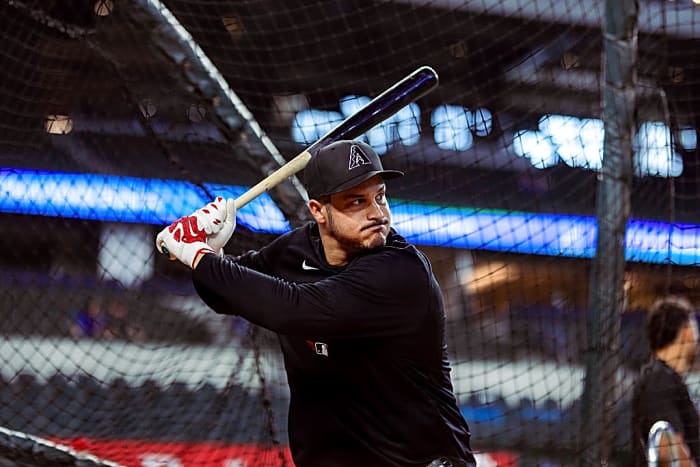
Let’s start by saying, even if Arenado does not repeat his 2026, I still think this trade was a win for Arizona. The low cost to acquire him, paired with a relatively inexpensive, bought-down contract, has already paid off in one season. If 2027 is the crash-out in the end, so be it. The Diamondbacks already capitalized on this trade.
While we certainly want to praise what actually happened on the field in 2026, there are plenty of signs pointing toward a repeat being unlikely. Anyone who relies on one area of the field so heavily also relies on luck. What if you don’t get as many pitches that you can hit pull-side in the air? Does your value immediately drop? We already saw Arenado get more breaking balls low and away, and the numbers did not look great.
A 31% whiff rate against breaking balls was his highest in almost a decade. His chase rate remained near a career norm, and he still hit seven home runs off breaking balls, which ironically is the identical number in three of the past four seasons.
However, pitchers are starting to throw breaking balls to Arenado more and more. The number of fastballs he has seen has decreased in each of the past three seasons, while the number of breaking balls has increased. The only way Arenado does much with a breaking ball is if it misses its spot and ends up in the middle of the plate. That happens. He makes up for the mistake pitch. But if it’s well located — low and away — Arenado hits under .200 in that area of the zone.
I’m sure that we will see this trend continue. What makes Arenado great is his ability to punish mistake pitches. He knows how to make up for what he lost with age by being smarter, attacking mistake pitches, and getting to his production through that avenue.
If you’re a fan of expected stats, then you will be predicting a massive downturn in 2027. He had an expected batting average of only .231 with an expected slugging percentage of .366, more than 100 points less than his actual slugging percentage of .475.
I should note that Arenado and the profile he brings are always going to have expected numbers lower than his actual numbers. These metrics are based purely on batted-ball data and will hurt players who are pull-heavy. We’ve seen the same story throughout his career, and yet here he is, launching 30 home runs, putting up a 120 wRC+ at 35 years old.
I wouldn’t go as far as to predict that Arenado would be the same player in 2027. But I would use caution when referencing his expected numbers as the primary reason for his potential decline.
Final Thoughts
It always felt like Nolan Arenado stayed one year too long in St. Louis due to his no-trade clause, giving him all the power to stay put. By the time it came for him to actually be moved, most teams were uncomfortable with the idea of taking him on. The Diamondbacks made the move, and it paid off.
If it’ll pay off again, who knows? I think I can speak for a lot of people when I say that Arenado was one of our favorite players to watch. The defensive highlights are no longer the same, but seeing him put up another great year at age 35 was fun to watch. Here’s to hoping we have one more.
More must-reads:
- Dodgers remain inevitable as they cruise to another NLCS
- Yankees stars offer staunch support for Aaron Boone despite ALDS flop
- The 'Most HRs by an MLB first baseman' quiz
Breaking News
Trending News






Customize Your Newsletter
 +
+




Get the latest news and rumors, customized to your favorite sports and teams. Emailed daily. Always free!
PRIVACY POLICY COOKIE POLICY CONTACT US
ABOUT YARDBARKER TERMS OF SERVICE


By using this site, you agree to our Terms of Service and Privacy Policy.
This site is for entertainment purposes only.
There is no gambling offered on this site.
Gambling Problem? Call 1-800-Gambler.
