
-

-


Follow Us
-

 On Facebook
 On Flipboard

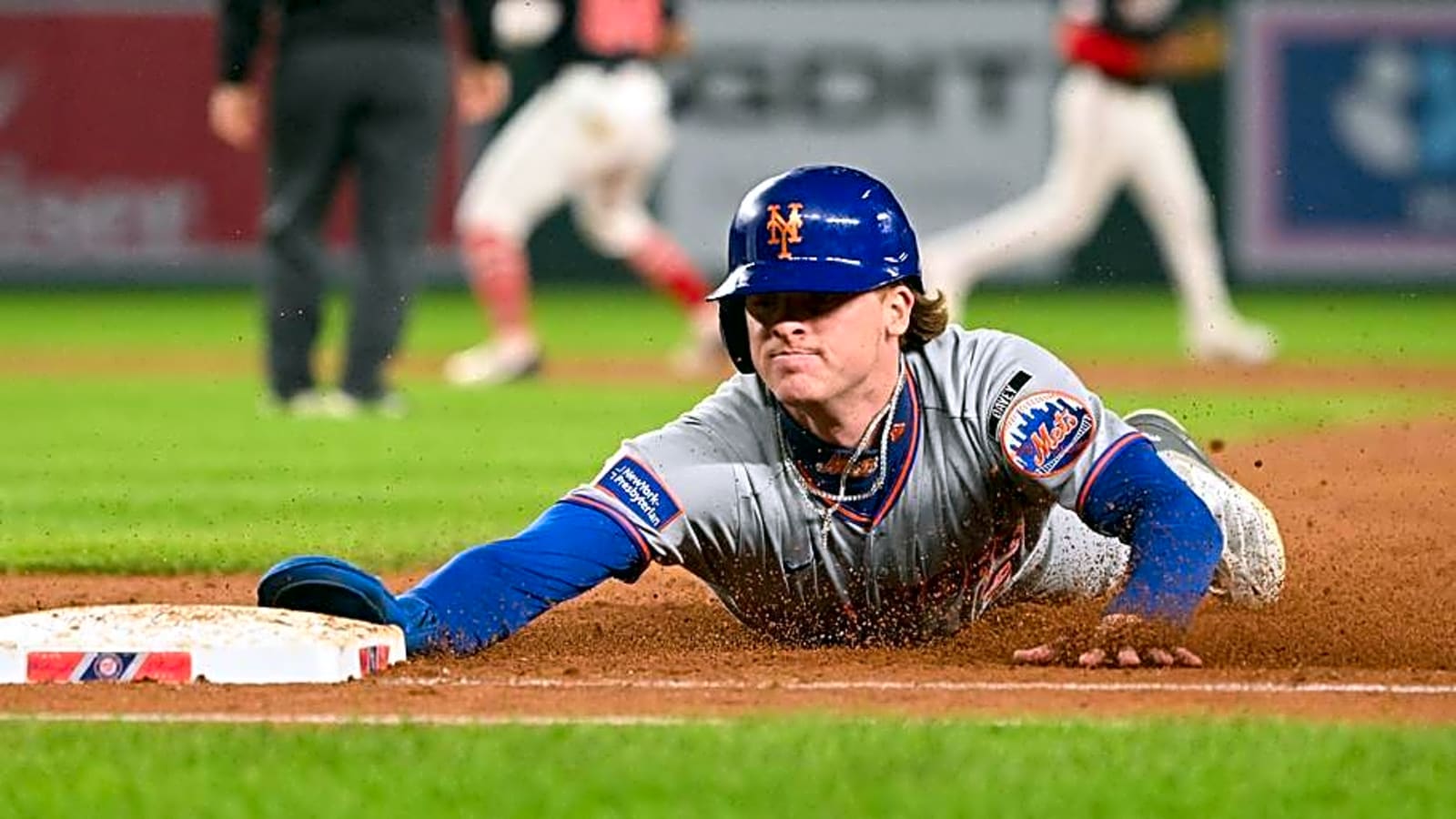
There is a lot on David Stearns' plate this offseason, and he already hinted at some potential moves at his end-of-season press conference on Monday. One thing that didn't come up in that media availability is the potential to lock up some of the club's young stars to long-term contract extensions.
The idea of a long-term extension for a young player early in his career is in vogue thanks to its seemingly mutually beneficial nature. The player benefits from getting paid more earlier in their career, which helps when the minimum salary is under a million dollars right now. Meanwhile, teams can ensure cost certainty throughout arbitration years and buy out a year or two of free agency.
That exchange often causes young players to leave money on the table in the long run in exchange for financial security that could set them up for life. The Atlanta Braves made quite a habit of locking up talent to team-friendly extensions. Then there are young stars like Kevin McGonigle and Konnor Griffin, who signed long-term extension contracts early in their rookie seasons. Cooper Pratt, however, signed his extension before being promoted to the majors.
The Mets have avoided this practice for a bit, not extending a homegrown player before free agency since Jeff McNeil's four-year deal. Former GM Billy Eppler offered Pete Alonso a seven-year deal worth over $150 million, which Alonso rejected.
Stearns has a few players who fit the extension window on his roster right now, including outfielders Carson Benge and A.J. Ewing and starting pitchers Nolan McLean and Christian Scott.
The case for extending the Mets' young stars
The biggest benefit of extensions for the Mets would be cost certainty, especially if they believe players like Benge and McLean can ascend to star levels. Neither player is eligible for arbitration yet, but if the Mets choose to go year-to-year with them, their salaries could escalate quickly through arbitration.
Some of the top-end performers in arbitration can earn upwards of $30 million, as we saw with Juan Soto getting $31 million in his last year of arbitration with the New York Yankees in 2024 and Tarik Skubal getting $32 million this season. Getting pen-to-paper can avoid the uncertainty of arbitration and any bad feelings that can come out of that process, which essentially forces teams to argue against paying their players more.
Locking in core players on long-term deals can also provide some cost certainty for the Mets, as Steve Cohen has indicated he doesn't want to keep paying into the luxury tax indefinitely. If Stearns believes Benge and McLean, for example, will be on the Mets into the start of the 2030s, it makes sense to have their salaries set at a fixed number to better account for future budgets.
The case extending against the Mets' young stars
While everyone points to sweetheart deals for the likes of Ronald Acuna Jr. as evidence of why early extensions work, we have seen plenty of examples of how those deals can backfire on the team.
The Braves haven't quite gotten their money's worth so far on Austin Riley's 10-year, $212 million extension. And the Yankees regretted giving Aaron Hicks a seven-year deal worth $70 million pretty quickly, buying him out of it with over two and a half years to go in 2023.
If Stearns had embraced the extension philosophy, there is a good chance Mark Vientos and Francisco Alvarez would have received long-term deals after their contributions to the 2024 campaign.
Vientos has regressed significantly since then and is a non-tender candidate this winter, while Alvarez's development has stalled thanks to a combination of injuries, defensive regression, and inconsistent hitting approaches.
Lastly, we can't forget the collective bargaining agreement, which could change baseball's economic structure by introducing a salary cap. Given that the Mets already have two significant long-term deals on their books in Francisco Lindor and Juan Soto - and the potential of handing out a third to Skubal - it may behoove Stearns to wait and get confirmation of the rules of the game before locking in any more long-term deals.
What the Mets should do
The answer to this dilemma is multi-faceted and nuanced. Stearns is absolutely correct not to consider any long-term extensions until he knows whether baseball will have a salary cap or not, which could change how he allocates his money going forward. It would be bad business to potentially overpay someone like Ewing or Benge now and not have enough money to keep McLean later in a cap system.
Once that uncertainty is cleared up, however, the Mets should think more seriously about trying to extend their young stars for the long haul. With Cohen, the Mets have largely operated under the philosophy of going year-to-year with their players, since they have the financial advantage to outbid the market if they want to keep a player, which has had mixed results.
The philosophy paid off in the winter of 2022, when the Mets retained Edwin Diaz and Brandon Nimmo, but the Nimmo deal was an overpay in years. Stearns was eager to get rid of the veteran outfielder, even with the risk of hindering the team's long-term roster construction.
The Mets also lose control of the situation once a player hits the market, as it only takes one team to fall in love with a player and make them an offer that is more than what the Mets deem appropriate, which is what happened with Alonso in Baltimore last winter.
Getting ahead of the market with these extensions is not only smart business but also engenders goodwill in the locker room, as players respect organizations that reward solid performance with an appropriate pay bump. As most free agent classes get thinner as teams lock up their players before hitting the open market, the Mets would be wise to join that trend once they know what salary structure will rule the day going forward.
More must-reads:
- Kyle Schwarber makes feelings clear on Don Mattingly after Phillies season ends
- Yankees' Aaron Boone has blunt response on Aaron Judge’s ALDS status
- The 'Active 100-hit MLB seasons' quiz
Breaking News
Trending News




Customize Your Newsletter
 +
+




Get the latest news and rumors, customized to your favorite sports and teams. Emailed daily. Always free!
PRIVACY POLICY COOKIE POLICY CONTACT US
ABOUT YARDBARKER TERMS OF SERVICE


By using this site, you agree to our Terms of Service and Privacy Policy.
This site is for entertainment purposes only.
There is no gambling offered on this site.
Gambling Problem? Call 1-800-Gambler.
