
-

-


Follow Us
-

 On Facebook
 On Flipboard


Judging Josh Bell by his .253 batting average or his 15 home runs this season leads to the wrong conclusion: that of an ordinary veteran first baseman.
The standings tell a different story. Minnesota is 30-13 when Bell drives in at least one run, a record that becomes overwhelming at 13-4 when he drives in two or more. The Twins’ designated hitter does not carry the team through the sheer volume of his production, but through the destructive value of his contact when runners are on base.
The paradox of Bell’s season lies in the gap between his cumulative production and his actual impact. While his .314 on-base percentage looks modest, his batted-ball profile reveals the danger he presents when he steps into the box. Bell owns a 90.0 mph average exit velocity, an 82nd-percentile maximum exit velocity of 113.7 mph and a 44.4% hard-hit rate, per Statcast. On the field, that translates into a hitter who does not give pitchers many weak-contact outs when they are forced to challenge him.
That ability to punish the baseball becomes even more pronounced against velocity. Fastballs account for 50.2% of all pitches Bell has seen this season. Against four-seam fastballs, Bell has dismantled opposing game plans, batting .300 with a .381 wOBA and a 44.3% hard-hit rate.
The Road Grind as a Defining Trait
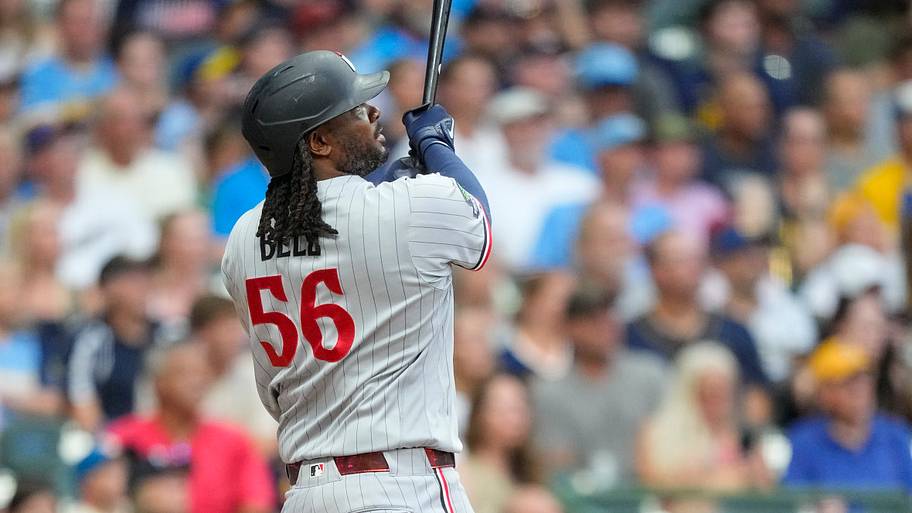
When the Twins leave Target Field and the mental demands increase, Bell’s discipline becomes particularly valuable. His numbers on the road rise to a .264 batting average, a .331 on-base percentage and a .468 slugging percentage, pushing his OPS to .799. In those situations, Bell attacks pitches in the strike zone with a 72.9% Z-Swing% and makes contact on 82.7% of swings at pitches in the zone.
The real damage comes when he faces right-handed pitchers on the road. In that matchup, his expected weighted on-base average climbs to an elite .362, fueled by a 43.1% hard-hit rate and a barrel rate just below 10%. Bell identifies the fastball early in the count and uses a 71.5 mph bat speed against right-handers to drive the ball with an ideal 60.2% attack angle into the gaps.
Bell’s Ambush Against Pitchers in High-Leverage Situations
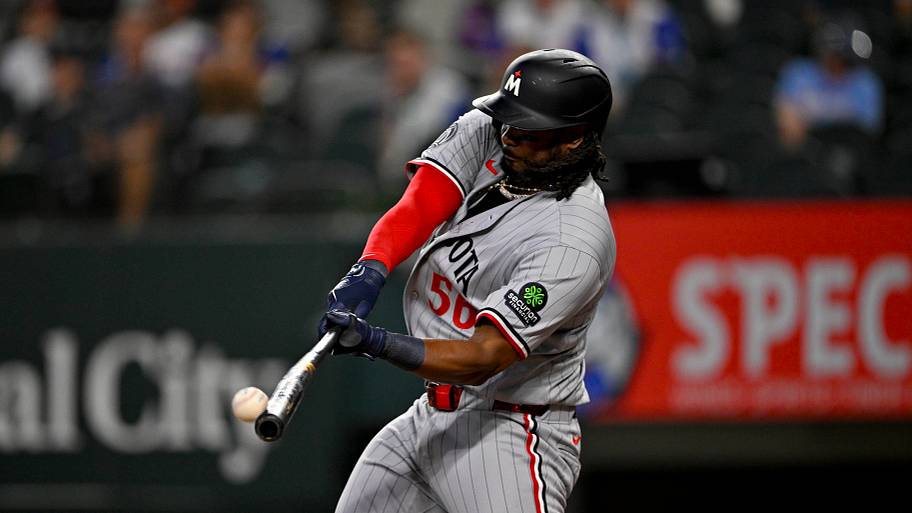
For a pitcher, facing Bell with runners on base has become a difficult puzzle to solve. If he tries to hide the fastball and turns to secondary pitches down in the zone, such as the splitter or sweeper, Bell has still shown a relatively low whiff rate against breaking pitches overall, with a 23.9% whiff rate. If the pitcher gets careless and goes back to the fastball to even the count, he is stepping directly into the hitter’s greatest area of strength.
Bell is projected to finish with 93 RBIs, which would give him the highest total for a Minnesota Twins player since 2021. That is not simply a product of luck or lineup position. It is the direct consequence of a hitter who understands his role in the batting order.
Modern analysis can become fixated on towering home runs and 100-RBI seasons. Bell’s campaign offers a different lesson: a hitter’s true value to a lineup cannot be measured solely by the aesthetics of his accumulated numbers. At the highest level of competition, the real difference-maker is the hitter who knows how to turn an opponent’s aggressive pitching into the run that decides the game.
More must-reads:
- Nationals made a painful admission with Luis Garcia Jr. trade
- Padres add outfield depth with signing of Austin Hays
- The 'Last five-hit game by MLB team' quiz
Breaking News
Trending News


Customize Your Newsletter
 +
+




Get the latest news and rumors, customized to your favorite sports and teams. Emailed daily. Always free!
PRIVACY POLICY COOKIE POLICY CONTACT US
ABOUT YARDBARKER TERMS OF SERVICE


By using this site, you agree to our Terms of Service and Privacy Policy.
This site is for entertainment purposes only.
There is no gambling offered on this site.
Gambling Problem? Call 1-800-Gambler.
