-

-


Follow Us
-

 On Facebook
 On Flipboard

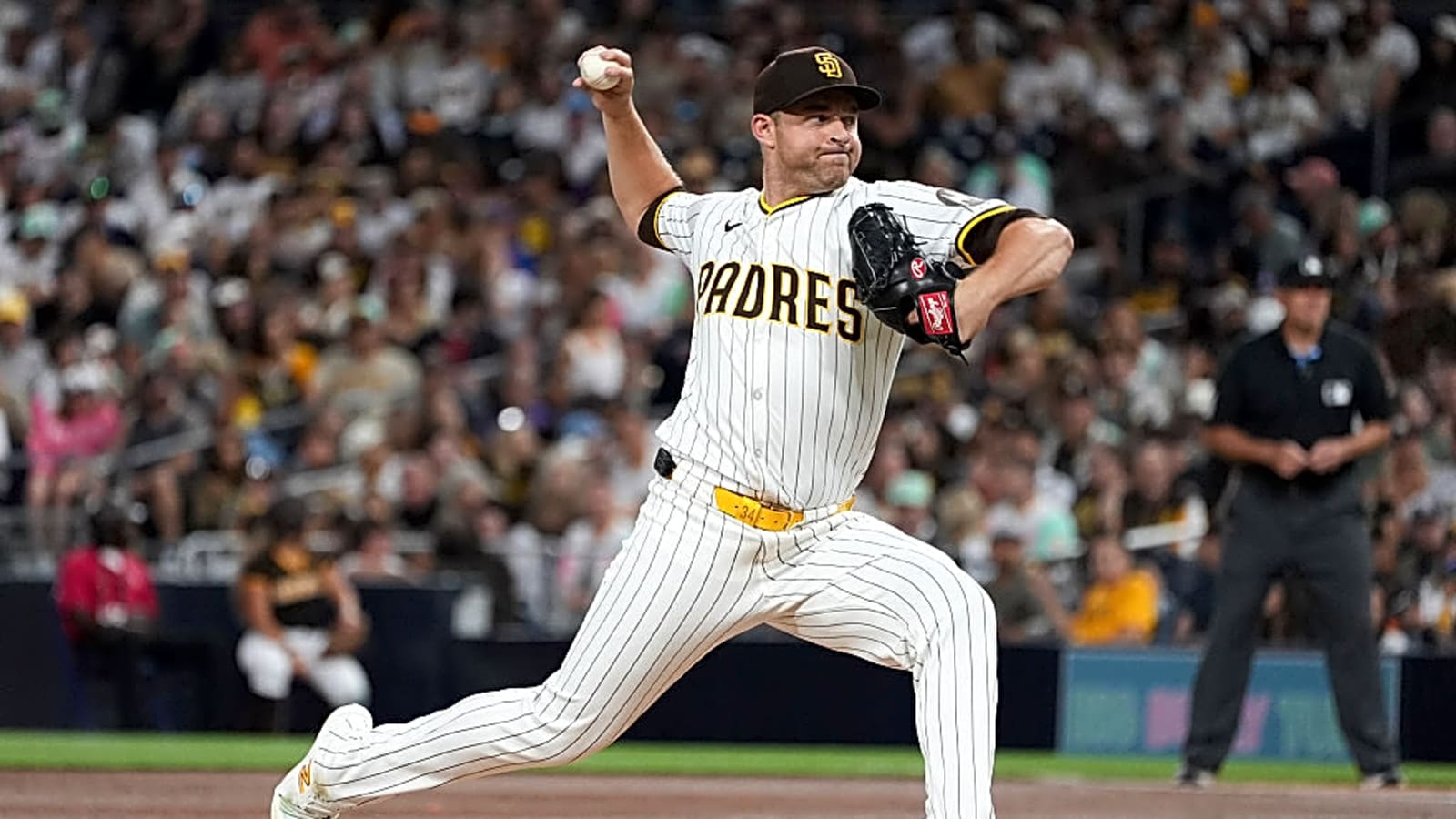
A few years ago, Michael King had to prove he belonged in the starting rotation. Now, he gets to find out how much teams will pay for him to be a part of one.
The former Yankees reliever has spent three seasons establishing himself as a starter in San Diego. In 2024, he delivered a 2.95 ERA and 201 strikeouts in 173 2/3 innings. After injuries interrupted his next season, he returned in 2026 with a career-high 185 innings and a 3.21 ERA.
King entered last offseason coming off a season limited by shoulder and knee injuries. This time, he reaches the market after making 32 starts, giving prospective employers considerably more evidence that he can handle a full season’s responsibilities.
The question is no longer whether King can succeed as a starter, but rather how much of that success teams expect him to sustain into his thirties.
After declining his player option with the Padres, King is a free agent heading into his age-32 season. He offers three years of strong results in San Diego, but his declining strikeout rate gives clubs something to consider before committing to the biggest contract of his career.
What Teams Would Be Paying For
King’s strongest selling point is contact management.
According to Baseball Savant, King finished 2026 in the 86th percentile for average exit velocity allowed and the 89th percentile for hard-hit rate. Baseball Savant lists an average exit velocity of 87.0 mph, evidence that opponents struggled to square him up even as they put more pitches in play.
His changeup remains a particularly compelling weapon. King used it 26.4% of the time in 2026, holding opponents to a .204 batting average and .276 slugging percentage while generating a +11 run value. His four-seam fastball averaged 94.3 mph, up from 93.7 mph in each of the previous two seasons.
That is the optimistic interpretation. King has the repertoire and contact-management skills to remain effective without overwhelming hitters.
The less optimistic interpretation starts with the strikeouts. His strikeout rate fell from 27.7% in 2024 to 21.0% in 2026, while his walk rate reached 9.2%. His expected ERA was also 4.42, well above his actual ERA.
His FIP tells a similar story. King posted a 3.21 ERA against a 4.13 FIP in 2026, meaning his results were better than that metric’s assessment of his strikeouts, walks and home runs. FanGraphs credited him with 2.6 wins above replacement, compared to a 4.3 WAR by Baseball Reference’s statistic, an important distinction when evaluating his season.
Free Agent Profile: Michael King
- Age in 2027: 32
- 2026 Stats: 32 GS, 185.0 IP, 12-10, 3.21 ERA, 159 K, 1.178 WHIP, 2.6 fWAR
- Qualifying Offer Eligible?: No
Contract Projection
- Projected Length: 3-5 years
- Projected AAV: $27-38 million
The projected range reflects King’s established production but also the uncertainty surrounding his next several seasons. The top of the annual salary range would be easier to justify on a shorter commitment. A fifth guaranteed year would give a team reason to negotiate a lower annual figure.
Using Baseball Reference’s projection model to base an outlook for his 2027 season, it would look something like a 3.45 ERA across 159 innings, paired with 150 strikeouts and a 1.233 WHIP. King’s market will depend on which teams believe his ability to limit hard contact can continue to bridge the gap between his ERA and his peripherals. These five clubs have distinct reasons to consider that investment.
Free Agent Landing Spots for Michael King
San Diego Padres
The Padres have the most straightforward advantage: They already know how King fits.
Across three seasons in San Diego, he posted a 3.15 ERA in 432 innings. The organization has seen his transition into a full-time starter, his injury-interrupted 2025 season and his successful return to a full workload.
There is more at stake than maintaining a comfortable relationship, however. King’s departure comes amid substantial uncertainty elsewhere in the rotation.
Walker Buehler, Robbie Ray, Casey Mize, and Nick Pivetta have also reached free agency. With questions about Yu Darvish’s and Joe Musgrove’s health, Randy Vásquez might be the only mainstay returning to the rotation.
That makes King a stabilizing investment rather than a luxury addition. Bringing him back would give the Padres an established starting point as they address the rest of the staff.
The interest is not purely theoretical, either. MLB.com reported mutual interest in a reunion after King opted out. “I feel like I have a second home on the West Coast,” said King. “It’s been awesome. And I hope to continue it.”
The obstacle is allocating enough money to one starter while leaving room to acquire others. A four-year offer near the middle of the projected annual range would be a plausible approach, but San Diego would have to weigh that commitment against the cost of rebuilding the innings around him.
Chicago Cubs
The Cubs’ connection to King begins with the number of innings they could lose.
Shota Imanaga, Kevin Gausman, David Peterson and Matthew Boyd entered the offseason as potential departures. Cade Horton’s recovery adds another complication, leaving Chicago with a substantial rotation-building assignment rather than a single opening.
King’s appeal is that he could reduce both the uncertainty and the number of separate moves required. His 185 innings would provide an established foundation while the Cubs sort through the remaining jobs.
There is a limitation to the fit. Chicago’s rotation finished 21st in strikeout rate in 2026, and King’s recent strikeout decline means he should not be marketed as an automatic solution to that weakness.
Instead, the Cubs would be buying a pitcher who has continued to prevent runs without maintaining his previous strikeout dominance.
The contract length creates another connection. Chicago also faces decisions involving free agents Seiya Suzuki and Ian Happ, so committing to King on a three- or four-year agreement could preserve more long-term flexibility than pursuing the market’s most expensive starter.
That would not make King cheap. It would make him a different kind of investment: meaningful annual spending without necessarily accepting the longest commitment available.
New York Mets
For the Mets, King would be a bridge between a developing rotation and the expectations placed on a team trying to contend immediately.
Nolan Mclean, Christian Scott and Zac Thornton give New York younger starters to build around, but their workload capabilities and experience differ considerably.
McLean made 31 starts in 2026, while Thornton made 15 and Scott continued establishing himself following Tommy John surgery. Adding King would reduce the need for every member of that group to become a dependable full-season starter at the same time.
His postseason usage adds another layer. King allowed one run across 12 innings in two starts during the 2026 postseason, then contributed two scoreless relief innings and a save in the National League Division Series.
While a team should not award long-term contracts based on a handful of October appearances, that performance still offers evidence of how King could contribute to a postseason staff beyond simply taking his regular turn.
The Mets would be a logical candidate to explore a shorter contract with a higher annual salary. That structure would compensate King for his recent production without extending as far into his late 30s.
Chicago White Sox
The White Sox would be paying King to address a specific weakness exposed during their breakthrough season: Their starters did not provide enough innings.
Chicago’s rotation finished 26th in ERA and last in innings pitched in 2026. Its postseason appearance created an opportunity to reinforce a competitive roster rather than simply wait for another wave of internal improvement.
King’s career-high workload in 2026 makes him particularly relevant to that problem. Signing him would give the White Sox a pitcher coming off 32 starts instead of asking several less-established options to combine for comparable production.
He could also help create a more manageable transition for younger pitchers, including Hagen Smith. The benefit would be practical rather than an assumed veteran-leadership effect. More innings from King would mean fewer innings the organization has to find elsewhere.
The financial picture makes this worth considering. The White Sox have no guaranteed money committed beyond 2027, leaving room for a multi-year pitching investment.
Payroll flexibility is not the same as a willingness to spend, but if Chicago intends to reinforce its competitive window, a four-year offer towards the lower or middle portion of the projected annual salary range would direct those resources at an identifiable roster problem.
Baltimore Orioles
Baltimore’s case starts with the possibility of losing Trevor Rogers.
Rogers reached free agency after posting a 3.16 ERA across 48 starts dating to May 2025. Replacing that production would require more than finding someone to occupy the fifth spot in the rotation.
King offers a different way to preserve that level of run prevention. He is older, and his recent strikeout-to-walk profile is less favorable, but he brings three seasons of successful work in San Diego’s rotation.
The Orioles would have to decide which skills they trust most. Paying King would mean placing considerable value on his repertoire and ability to suppress damaging contact.
There is also a relevant history. Baltimore was connected to King during his previous trip through free agency, although that reporting should not be mistaken for confirmation of renewed interest this offseason.
His qualifying-offer status adds flexibility to the comparison with other outside targets. King would not carry a draft-pick penalty, allowing Baltimore to evaluate his contract without adding extra acquisition cost.
The Orioles make the most sense if the bidding stays within a disciplined three- or four-year structure. A fifth year combined with an annual salary near the top of the projected range would require a much stronger belief that King can continue outperforming his underlying indicators.
More must-reads:
- New favorite emerges in Tarik Skubal sweepstakes
- The one team that could and should land Ketel Marte this offseason
- The 'World Series MVPs' quiz
Breaking News
Trending News





Customize Your Newsletter
 +




Get the latest news and rumors, customized to your favorite sports and teams. Emailed daily. Always free!
PRIVACY POLICY COOKIE POLICY CONTACT US
ABOUT YARDBARKER TERMS OF SERVICE


By using this site, you agree to our Terms of Service and Privacy Policy.
This site is for entertainment purposes only.
There is no gambling offered on this site.
Gambling Problem? Call 1-800-Gambler.