
-

-


Follow Us
-

 On Facebook
 On Flipboard


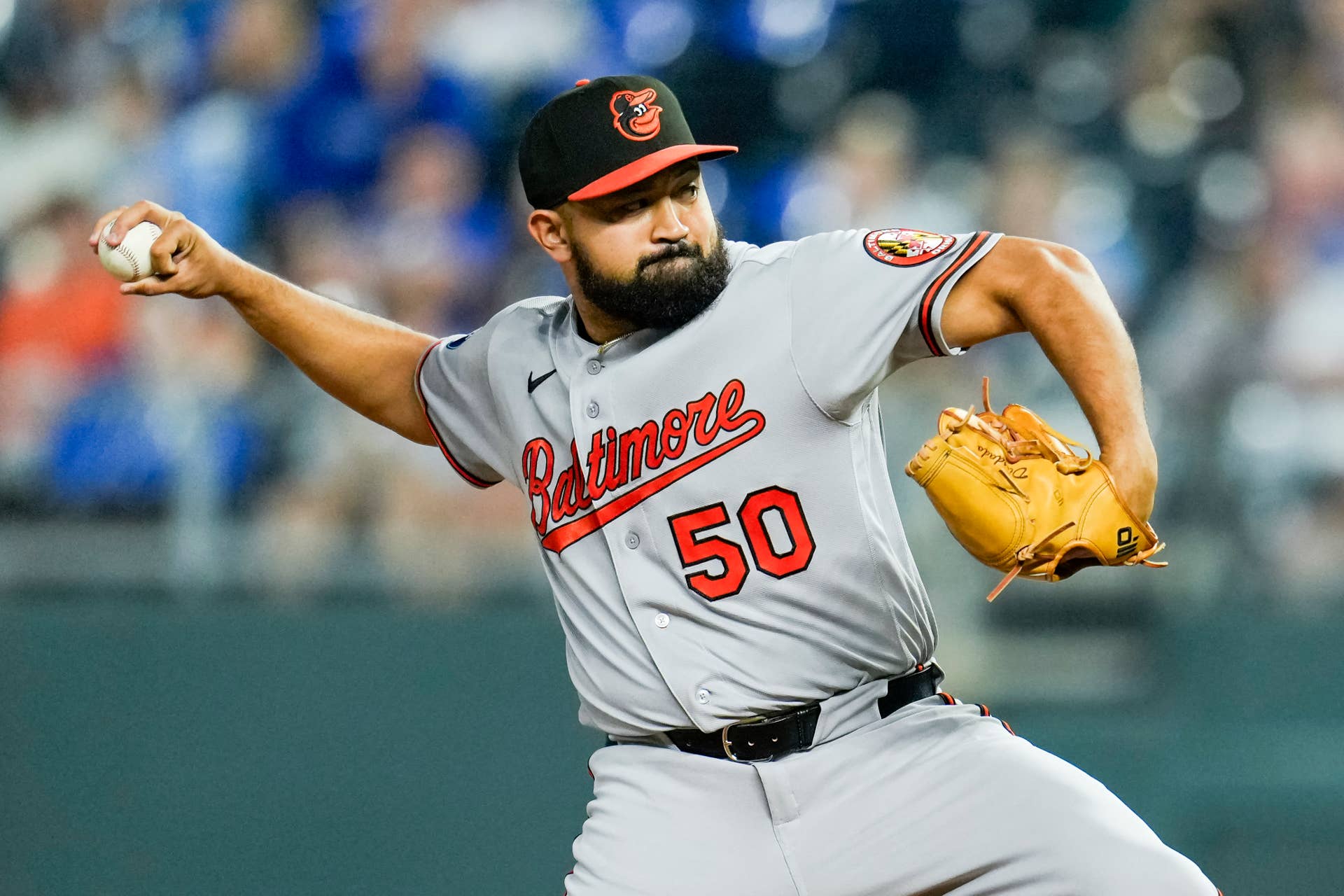
There is a 32-year-old relief pitcher in Baltimore who has allowed one hit in the field of play through his first 20-plus appearances of the 2026 season. His BABIP is .000. His ERA is 0.00. His WHIP is 0.36. He entered this season with a career MLB ERA of 5.27 across seven organizations, three waiver claims in a single calendar year, and a signing bonus in 2016 of exactly $1,000.
His name is Rico Garcia, and what is making him unhittable in 2026 is not luck. It is a specific set of identifiable adjustments that fantasy managers need to understand right now, because the closer role in Baltimore is currently his.
Rico Garcia's Historic Low-Hit Start in 2026
The Numbers That Defy Belief
Garcia is the first pitcher in the Expansion Era to allow one hit or fewer over his first 64 batters faced, and the first pitcher in the Modern Era since 1900 to allow no more than one hit across his first 20 appearances in a season. Through May 24, opponents are hitting .018 against him. The only hit he has allowed in the field of play all year was a home run by the Royals' Michael Massey on April 21, which means every single batted ball that has stayed in the park has turned into an out.
That is the BABIP story, and it is real: a .000 BABIP is not sustainable and nobody is pretending otherwise. But the deeper numbers explain why this is not simply a hot streak built on air. His average exit velocity sits at 83.5 mph. His hard-hit rate is 24.3 percent. His wOBA allowed is .122. His barrel rate is 2.7 percent. His xBA is .149 and his xERA is 1.84, even after stripping out the batted-ball luck entirely.
For context, this is a pitcher who posted a 4.50 ERA in his only prior Baltimore stint in 2022, a 9.26 ERA split between Oakland and Washington in 2023, and spent the summer of 2025 being DFA'd by the Mets, claimed by the Yankees, DFA'd by the Yankees, re-claimed by the Mets, and DFA'd by the Mets again, all within the span of a few weeks. His career ERA entering this season was 5.27 across 70 innings and 59 appearances for seven different organizations.
The sample already carries statistical weight. Twenty-plus appearances is not two outings where everything happened to bounce foul. This is a sustained body of work that demands a real explanation.
The Pitching Changes Driving His Transformation
Arsenal, Command, and Sequencing Adjustments
The Garcia who is currently retiring professional hitters at a historic rate is structurally different from the Garcia who spent years getting cut. The changes are measurable, specific, and in most cases, durable.
In short, Rico Garcia did the thing that Billy Beane told his scouts in “Moneyball.”
Start with the pitch mix. Prior to 2025, Garcia was a fastball-heavy pitcher with more than half of his pitches being four-seamers. Now only about a third of his pitches are the four-seamer, which keeps hitters off balance in a way that was simply not possible when they knew what was coming two out of every three pitches. His current arsenal sits at a four-seam fastball averaging 95 mph, a slider at 88, a curveball at 86, and a changeup at 87. Four legitimate pitches, thrown at similar velocities from the same arm slot. That is a problem for hitters.
The delivery compounds it. Manager Craig Albernaz described the effect: "He has a sneaky, lower-slot, vertical approach with some carry on the heater, so it makes the heater jump a little bit more. He uses that well and pairs that with the slider off that, and he also has the changeup to neutralize the lefties."
The changeup has become something genuinely unusual in baseball. According to Statcast, Garcia's changeup averages just 22.4 inches of vertical drop, the third-fewest in the big leagues, nearly 10 inches less than other changeups thrown at similar velocities and release points. Typically a hitter anticipates a changeup dropping somewhere between 30 and 40 inches. Take 10 inches off that expectation and that batter is whiffing, which hitters have been doing against it at a 75 percent rate.
The fastball runs 11.9 inches arm side. The changeup runs 16.3 inches arm side. That natural east-west tunnel makes it extremely difficult for hitters to distinguish one from the other out of the hand. He throws 60 of every 64 changeups against left-handed hitters, and they still cannot square it up. The whiff rate on the changeup is 56.4 percent, the best of his offerings. The slider generates a 58.3 percent whiff rate from a pitch he throws more than a quarter of the time. The curveball has a 37.5 percent putaway rate and a .115 xwOBA against it.
The slider itself is a relatively new weapon. Garcia said he learned the pitch while in the minors in 2024, describing it as a significant development. His revamped four-seam fastball saw a direct jump in strikeouts and a steep drop in batting average against it as a result of the slider's existence making the fastball harder to sit on.
The approach philosophy changed too, and this may be the most important piece. Garcia's chase rate ranks in the sixth percentile in baseball, because he is not trying to get hitters to expand the zone. "I kind of learned that lesson in previous years, where I tried to get that chase," Garcia said. "Not seeing that chase helped me learn that I'm not the kind of pitcher that gets chase. My stuff plays better when going right after guys. Just developing my arsenal to do that has helped a lot."
His full Statcast picture confirms the transformation is real. His breaking ball grades in the 98th percentile, his fastball in the 82nd, and his offspeed in the 83rd. He leads all relievers in pitching run value at plus-12 on only 251 pitches, which works out to an extraordinary 4.6 runs per 100 pitches. Mason Miller is third on that list. Garcia is first.
Fantasy Outlook and Roster Strategy for Rico Garcia

Buy, Sell, Hold, or Add Now?
The answer depends on your format, your roster construction, and your honest assessment of what BABIP normalization actually means for a pitcher with these underlying numbers.
Here is the clear version. The .000 BABIP is going to move. It may move substantially. When it normalizes toward something in the .200 to .250 range, the ERA climbs, the WHIP climbs, and the surface numbers look less supernatural. That is going to happen.
What does not go away: the slider whiff rate, the changeup tunnel, the four-pitch mix, the ground ball rate in the 90th percentile, the exit velocity suppression in the 99th percentile, and the xERA of 1.84 that strips out all the fortune and still says this is a legitimate elite reliever.
With Ryan Helsley on the IL with elbow inflammation and no firm return date, Garcia is the Baltimore closer right now. He has handled both save opportunities cleanly since Helsley went down. In standard 12-team leagues he is a must-add. In 15-team and deeper formats he should already be rostered. In daily lineup formats he is a plug-and-play high-leverage option whose ground ball tendencies travel well to Camden Yards.
The sell window is worth considering only if you are in a saves-specific format and have received a substantial trade offer inflated by the historic surface numbers. Otherwise, hold. The regression is coming but the floor has been raised permanently by the arsenal changes. The pitcher who emerges on the other side of BABIP normalization will still have a 58.3 percent slider whiff rate and a changeup that hitters cannot pick up out of his hand.
"Every year of my baseball career so far I think has taught me a different lesson," Garcia said.
The 30th-round pick from Hawaii Pacific. Seven organizations. A torn UCL at 27. Three waiver claims in a single summer. Signed for $1,000 in 2016 and currently leading all relievers in pitching run value while closing games in the American League East.
The luck will normalize. The pitcher underneath it is real.
Questions About Rico Garcia, Answered
Is Rico Garcia's unhittable start in 2026 real or just luck?
It is both. The .000 BABIP will normalize, but his 83.5 mph average exit velocity in the 99th percentile, 1.84 xERA, and 98th-percentile breaking ball all confirm the underlying skills are genuine.
What records has Rico Garcia set for hits allowed in 2026?
He is the first pitcher in the Expansion Era to allow one hit or fewer over his first 64 batters faced, and the first in the Modern Era since 1900 to do so across his first 20 appearances in a season.
Should fantasy managers add Rico Garcia off waivers right now?
Yes. He is a must-add in 12-team leagues and should already be rostered in 15-team formats, with Ryan Helsley on the IL giving Garcia the Baltimore closer role right now.
How sustainable is Rico Garcia's low BABIP and .018 opponent average?
The BABIP will rise toward a normal range, but his xERA of 1.84, 58.3 percent slider whiff rate, and changeup that generates a 75 percent whiff rate represent real, durable skill improvements that will survive the regression.
What changed in Rico Garcia's pitching arsenal this season?
He reduced his four-seamer usage from more than half of his pitches to about a third, added a slider he developed in 2024, and deployed a changeup with just 22.4 inches of vertical drop that hitters simply cannot distinguish from his fastball out of his hand.
How should managers use Rico Garcia in daily lineup or weekly formats?
In daily formats he is a plug-and-play high-leverage option with favorable ground ball tendencies at Camden Yards; in weekly formats he is a reliable saves source for as long as Helsley remains on the IL.
More must-reads:
- Austin Wells makes MLB history in Yankees' blowout win over Red Sox
- On deck: Cubs, White Sox open big series, plus Yankees-Padres
- The 'Switch-hitter 35-HR seasons' quiz
Breaking News
Trending News






Customize Your Newsletter
 +
+




Get the latest news and rumors, customized to your favorite sports and teams. Emailed daily. Always free!
PRIVACY POLICY COOKIE POLICY CONTACT US
ABOUT YARDBARKER TERMS OF SERVICE


By using this site, you agree to our Terms of Service and Privacy Policy.
This site is for entertainment purposes only.
There is no gambling offered on this site.
Gambling Problem? Call 1-800-Gambler.
