
-

-


Follow Us
-

 On Facebook
 On Flipboard

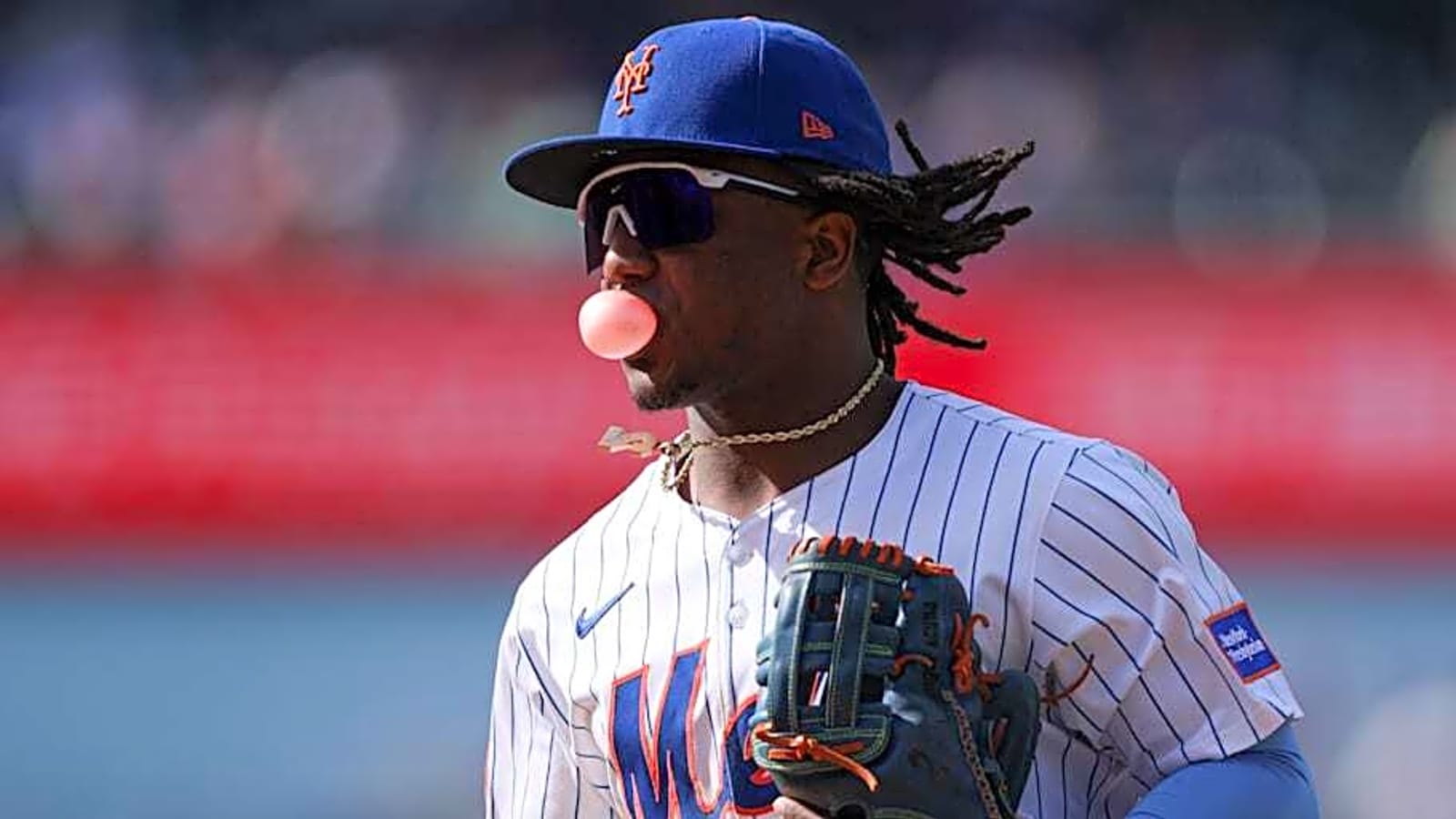
If the time hadn't come already, Tuesday night marked a new era for the White Sox.
By trading Luis Robert Jr. to the New York Mets, all players from the 2021 roster –– the last group to win the AL Central and reach the playoffs –– are gone. As a result, the White Sox got rid of Robert's $20 million 2026 salary and acquired 23-year-old utilityman Luisangel Acuña and minor-league right-hander Truman Pauley.
General manager Chris Getz explained how the trade ultimately came to fruition.
"They have had interest in Luis [Robert] for a while. They have," Getz said Wednesday. "I would say yesterday morning is when they felt like they were at a decision point. I don’t know what else they were working on. I’ve got a good relationship with David Stearns. When you sense urgency and know something is real, you usually want to engage on it."
"Yesterday morning it picked up. Over the weekend, we had some discussions as well. I know they have been active in the free agent market and been able to convert on some moves. Perhaps they have missed on some players as well. You never know what’s going to affect the market. This weekend is when they connected with us and yesterday morning I felt like it was about to get pretty serious."
Beyond the impact of becoming more financially flexible with Robert's $20 million salary off the books, Getz is excited about the multi-faceted value Acuña can provide.
"It's really about being able to bring in Acuña, getting access to him," White Sox general manager Chris Getz said Wednesday. "We're talking about a player that's five-plus years of control, one of the younger, exciting players in our game."
"I know over in New York, talking to individuals over there, they did not want to get rid of him, I know that. That's because of how valuable he can be with a team. Now, he was on a roster that didn't really allow him to go out there and show what he can do on a regular basis and we're going to be able to provide that. To get a chance at bringing in a player like that and gain some more flexibility with moving Luis seemed like something we needed to strike on and we went ahead and did that."
With defensive versatility and speed established, Acuña aims to add power
At his floor, Acuña will provide plus defense at various positions and elite base-stealing ability. Manager Will Venable mentioned on Jan. 7 that several offseason acquisitions have been young, athletic players, and Acuña aligns with that approach.
At 5-foot-8 and 181 pounds, he stole 40-plus bases in four straight minor-league seasons from 2021-24, including a career-high 57 in 2023 in Double-A. And if given the chance to play every day with the White Sox, breaking his older brother Ronald's mark of 73 stolen bases during his 2023 NL MVP season could be attainable.
"It definitely is a difficult task," Luisangel said. "But it's not impossible."
The same season Ronald won MVP with the Atlanta Braves, Luisangel was traded by the Texas Rangers to the New York Mets in exchange for right-handed pitcher Max Scherzer. That coincided with the best season of Acuña's minor-league career by several measures, as he slashed .294/.359/.410/.769 with nine home runs, 63 RBI, 57 stolen bases, 52 walks and 106 strikeouts across 569 plate appearances in Double-A.
That led to Acuña being ranked as high as No. 3 among Mets prospects and No. 66 overall by MLB.com during the 2024 season. It also earned Acuña his big-league debut.
But Acuña's offensive numbers in MLB are a bit underwhelming at .248/.299/.341/.640 with three home runs, 14 RBI, 16 stolen bases, 14 walks and 43 strikeouts in 233 plate appearances across two seasons. His strikeout and whiff rates were both above MLB average in 2025, but his ground ball rate was below average.
And on a playoff-hopeful roster in 2024 and 2025, the Mets couldn't afford to give Acuña everyday at-bats if he wasn't ready to produce at a high level. Getz believes there's truth to the idea that giving a longer runway to a player like Acuña can also lead to better results.
The White Sox saw that last year with Miguel Vargas, who struggled in his first few MLB seasons but had breakout season in 2025 with 16 home runs and a career-high batting average and OPS. A similar situation could benefit Acuña in Chicago.
"These younger players, it can be difficult. It's not for everyone," Getz said. "There's some pressure to perform right out of the gate. That pressure to perform, when you get these runways of a week to two weeks, to three weeks, you need a couple months of consecutive days of playing to really get your footing at the major league level. But if you're with a club that loses three in a row and you just took an 0-for or you didn't have good outings on the mound and they have someone that was performing pretty well, they were hoping that they were going to get what they projected with that younger player, the change is made a lot quicker."
"Well, the player starts feeling that and the next opportunity that they get, they press and then it just kind of snowballs. You see it every year and that's why it can be so difficult to break in. Where as I think we've had a lot of success here, certainly pointing to last year where we were able to give these guys a runway. It didn't matter if they had a rough game, bounce back and see what happens. They were able to gain confidence and eventually you really started seeing the production."
Part of the reason the White Sox can give Acuña everyday at-bats is because he's comfortable all over the field. He's already appeared at shortstop, second base, third base and center field with the Mets, and he's played shortstop and center field this offseason in the Venezuelan Winter League.
Getz said Acuña plays plus or plus-plus defense at those three infield positions, and in time he's confident Acuña can be a plus defender in center field –– if he's not already. His versatility also allows the White Sox to optimize their lineup on a day-to-day basis, keep players fresh and limit the negative impact of injuries, all factors that Getz considers "extremely valuable."
"The thing that excites me the most is I will have the opportunity to keep growing and developing as a baseball player," Acuña said of joining the White Sox. "But besides that, the most important thing for me is just to help the team in whatever capacity they need me to and I’m open for whatever they ask me."
Along with a longer runway theoretically leading to better results, Acuña has made swing adjustments with the goal of adding more power to his profile. While he recently hit four home runs in one Venezuelan Winter League game, he's only projected to hit seven home runs in 103 games during the 2026 MLB season by FanGraphs DC.
Acuña said he's been working on staying behind the ball longer and using his right leg to put the ball in the air more often. These adjustments have been ongoing since his time with the Mets, and the White Sox plan to continue that process with Acuña.
"[The Mets] started to see those strides," Getz said. "He’s been able to take that into Winter League in Venezuela. That’s not always an automatic it’s going to translate. We have to acknowledge that. There are some indicators he is headed in the right direction, and once again you put that on top of the fact that he’s going to come to a club where we can give him consistent at-bats to test and get early feedback on those adjustments. If he needs to make more, you rinse and repeat. That’s the beauty of our situation here."
"Most of his value is certainly the defense, the elite baserunning. He has contact ability. He has shown the ability to hit. It’s just a matter of hitting more line drives. He’s got some power. We know that can be dangerous for some. But really find that balance for his overall offensive production. Our marker a lot of times is does this player have a pathway to at least become a two-win player. We feel Acuna based on the defense and baserunning and with his offensive skillset, if we can increase his offensive skillset, we have a guy who can go two wins or more."
More must-reads:
- Three AL MVP front-runners with Aaron Judge sidelined
- Yankees get big Max Fried injury update
- The 'Foreign-born 250-HR club' quiz
Breaking News
Trending News


Customize Your Newsletter
 +
+




Get the latest news and rumors, customized to your favorite sports and teams. Emailed daily. Always free!
PRIVACY POLICY COOKIE POLICY CONTACT US
ABOUT YARDBARKER TERMS OF SERVICE


By using this site, you agree to our Terms of Service and Privacy Policy.
This site is for entertainment purposes only.
There is no gambling offered on this site.
Gambling Problem? Call 1-800-Gambler.
