
-


Follow Us

 On Facebook
 On Flipboard
 On Twitter
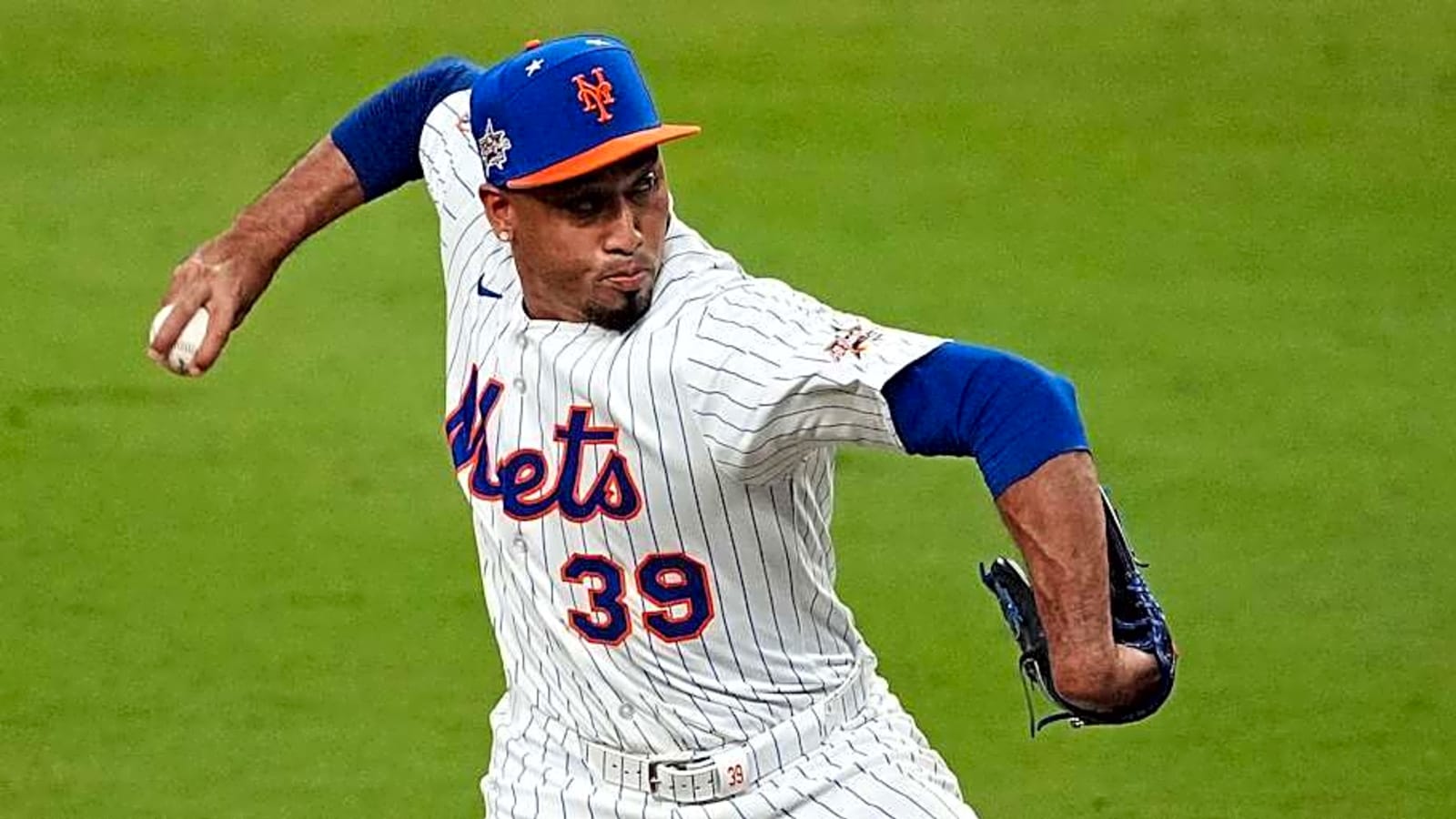
The jarring start to the New York Mets' offseason took a shocking turn during the Winter Meetings in Orlando when star closer Edwin Díaz signed with the Los Angeles Dodgers.
After seven years in New York, it took just a three-year, $69 million deal for the Dodgers to pry one of the best relievers in baseball away from the Mets. Once it was reported that David Stearns' offer to Díaz came up $3 million short of that figure, many were left wondering what really happened to cause the right-hander to leave for the defending World Series champions.
Shortly after his deal was announced, ESPN's Jeff Passan reported that Díaz took issue with how the Mets handled their signing of Devin Williams, stating that he was "upset" that he didn't get a "heads up" from the team before they added the fellow late-inning reliever to a lucrative three-year, $51 million contract.
But in a December 16 article, ESPN's Jorge Castillo revealed additional details that informed Díaz's difficult decision. According to Castillo, Díaz was sitting on a three-year offer from the Dodgers and a five-year offer from the Atlanta Braves but wanted to wait for the Mets to make an offer. On December 7th, they made their first offer of three years at $66 million with $21 million deferred over 10 years.
As they continued to negotiate, the Mets added a $9 million signing bonus to match what the Dodgers had on the table and stretched the $21 million in deferrals over 15 years. However, the 32-year-old was determined to get an average annual value of at least $20 million and wanted less deferred money over a shorter period.
The Mets and Braves both reportedly "refused" to meet those terms, and the Dodgers swooped in with their third and final offer of three-years, $69 million with a $9 million signing bonus, $13.5 million in deferred money over 10 years, and a conditional $6.5 million option for 2029 that will trigger if he spends a certain number of days on the injured list.
Mets "refused" Edwin Díaz's additional terms
Just a day after Díaz left, the Mets also lost longtime slugger Pete Alonso to the Baltimore Orioles on a five-year, $155 million deal. While the moves were equally shocking in terms of significance, Stearns' refusal to pay Alonso $30-plus million over five years shouldn't have been a huge surprise. But in Díaz's case, it wasn't length that held up the deal, as he could have opted for the five-year deal with Atlanta.
Rather, per Castilo's report, it was the gap between the AAV and deferrals, something that a Steve Cohen-financed club does not always have to worry about. The Mets, who had the second highest payroll in baseball behind the Dodgers in 2025, decided to stick with Williams, who they feel "very comfortable" having in the closer role moving forward.
Even if Williams proves to be a stellar addition, which is a very real possibility, the loss of Díaz hurts the Mets' high-end bullpen depth in a way that may not have an immediate fix. With the Braves pivoting to Robert Suarez on a three-year, $45 million deal, the best remaining options for a high-leverage, late-inning reliever are Pete Fairbanks and Luke Weaver.
There will be plenty of moves left for the Mets to make this offseason, but it will be hard to replace the impact of the 2025 NL Reliever of the Year. That said, Stearns remains committed to an offseason plan that he feels "very optimistic" about.
If you like our content, choose Sports Illustrated as a preferred source on Google.
More must-reads:
- Phillies add more pop to lineup by signing Adolis Garcia
- Adam Schefter shares bold prediction about Chiefs' Patrick Mahomes after brutal injury
- The 'AL and NL MVPs since 2000' quiz
Breaking News
Trending News







Customize Your Newsletter
 +
+




Get the latest news and rumors, customized to your favorite sports and teams. Emailed daily. Always free!
PRIVACY POLICY EDITORIAL POLICY CONTACT US
ABOUT YARDBARKER TERMS OF SERVICE


Use of this website (including any and all parts and
components) constitutes your acceptance of these
Terms of Service and Privacy Policy.
This site is for entertainment purposes only.
There is no gambling offered on this site.
Gambling Problem? Call 1-800-Gambler.
