
-

-


Follow Us
-

 On Facebook
 On Flipboard
 On Twitter
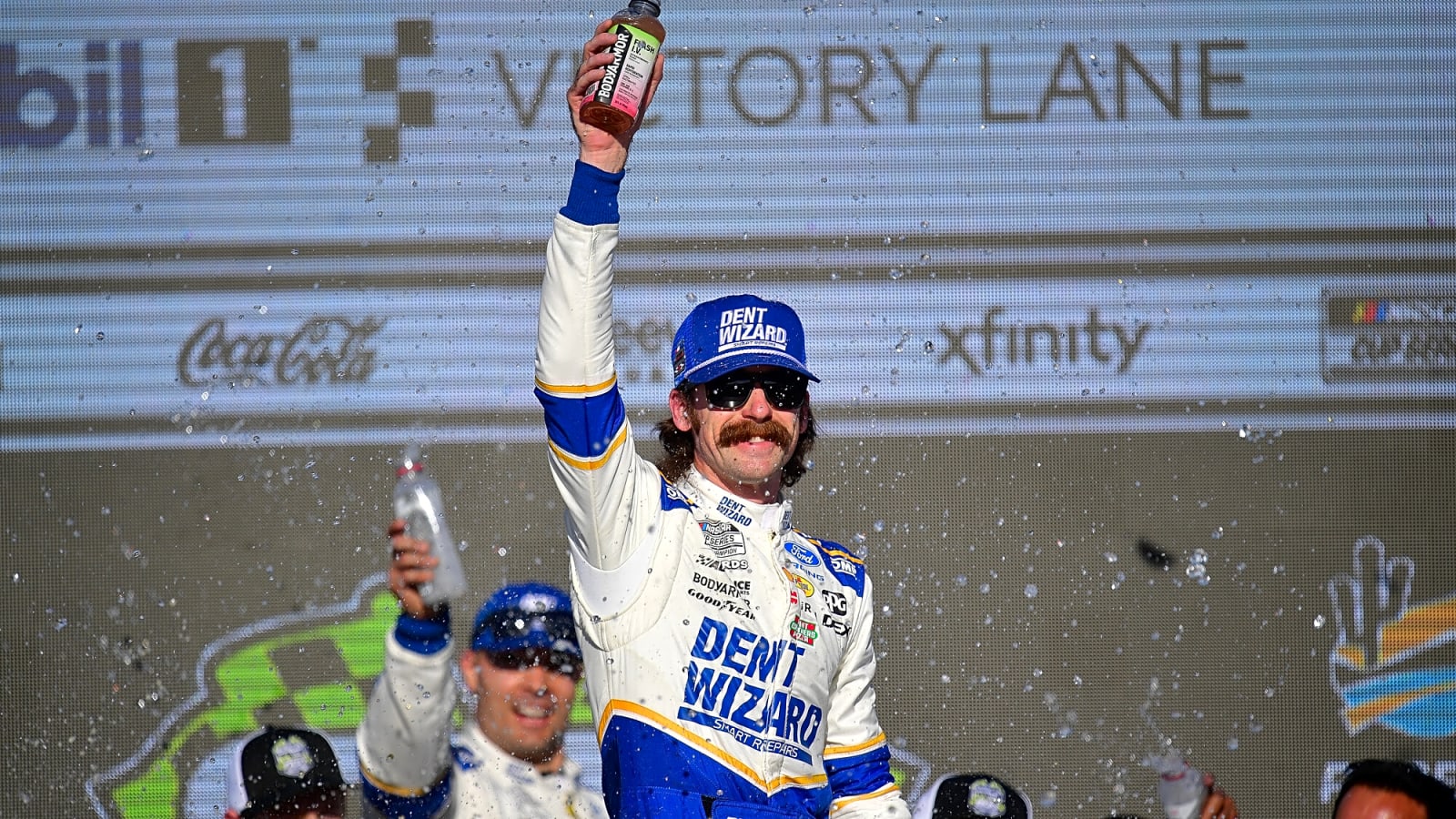
Ryan Blaney went to Phoenix and did what he does best. He won. The No. 12 Team Penske Ford held off a relentless Toyota charge to capture the Straight Talk Wireless 500 at Phoenix Raceway on March 8, 2026. That’s the short version. But if you watched even a single lap, you know this race didn’t just produce a winner.
It reaffirmed a hierarchy. Phoenix didn’t just host a race. It delivered a message. This was the kind of afternoon that reminds you why Phoenix has become one of the most important tracks in the modern NASCAR landscape.
The race featured 11 lead changes among six drivers, a mix of long green‑flag stretches and chaotic restarts, and a field that never allowed the leader to breathe. Blaney entered the weekend with the best NextGen‑era stats at Phoenix, and he left with even more proof. Fans didn’t just watch this one. They witnessed a driver doubling down on dominance.
How the Finishing Order Unfolded
Blaney crossed the line first, securing his third Phoenix win in the last four seasons and extending his streak of top‑five finishes at the track to seven straight. Christopher Bell finished second, just 0.6 seconds behind, after mounting a late charge that had Toyota fans on their feet.
Kyle Larson came home third, continuing his trend of consistency at the desert oval. Ty Gibbs and Denny Hamlin rounded out the top five, giving Toyota three cars inside the top five for the first time at Phoenix since 2021.
But the race was never really about the margin of victory. It was about the ebb and flow of control throughout the afternoon. The average green‑flag run was 21 laps, keeping the field tight and forcing drivers to manage tires, track position, and traffic with precision.
Even mid‑pack battles shaped the outcome, as slower cars created pockets of opportunity and danger for the leaders. The closing laps were a study in execution. Bell had the long‑run speed, but Blaney had the short‑run firepower, and the final restart played directly into his hands.
Phoenix has a way of tightening the screws on even the most seasoned drivers, and Sunday was no exception. The finishing order tells you who ended where, but it doesn’t capture the intensity of the final 40 laps. This was a race where timing mattered as much as speed.
How the Race Was Decided
Team Penske arrived with a plan, and they executed it with surgical precision. Blaney led 112 laps, the most of any driver, and controlled every restart inside the final 50 laps. Christopher Bell led 64 laps of his own, giving Toyota a legitimate shot at the win, while Ty Gibbs added 31 laps led the most he has ever led in a Phoenix Cup race.
But strategy, not just speed, shaped the outcome. A caution with 47 laps to go reset the field, forcing teams to choose between track position and fresh tires. Penske chose track position, and it paid off. Toyota chose balance, and it nearly worked. Bell’s long‑run pace was undeniable, but the final run was too short for him to fully close the gap.
Meanwhile, chaos struck behind them. Joey Logano, who had been a top‑five threat all afternoon, was collected in a multi‑car crash that ended his day. Austin Cindric suffered a similar fate after running inside the top 10 for much of the race.
And Chase Briscoe’s nightmare season continued with a crash that left him 181 laps down, his second consecutive last‑place finish. The race wasn’t decided by one moment. It was decided by a series of perfectly timed decisions, executed by a team that knows exactly how to win in the desert.
Driver Notes and Key Facts
Ryan Blaney, 1st Place: The Desert Dominator
Blaney’s Phoenix résumé continues to grow into something historic. He now owns three wins, seven straight top‑fives, and the best average finish (4.1) of any driver at the track in the NextGen era. He led 112 laps and posted the fastest short‑run average of the field. When Phoenix becomes a rhythm track, Blaney is the one setting the beat.
Christopher Bell, 2nd Place: Toyota’s Long‑Run Hammer
Bell delivered one of the strongest long‑run cars of the afternoon. His 64 laps led were his most ever at Phoenix, and his average running position of 5.3 ranked second only to Blaney. Toyota’s long‑run package was elite, and Bell maximized it. He leaves Phoenix second in points and with momentum.
Kyle Larson, 3rd Place: The Quiet Threat Who Never Goes Away
Larson did what Larson does: he stayed in the fight all day. He spent 89% of the race inside the top 10 and posted the fastest 20‑lap average in the middle stage. Larson didn’t have winning speed, but he had championship‑caliber consistency. That’s why he’s always a threat.
Ty Gibbs, 4th Place: A Statement Run in a Prove‑It Season
Gibbs backed up last week’s strong run with another top‑five finish. His 31 laps led were a career‑best at Phoenix, and his fourth‑place finish moves him to a career‑high fourth in the standings. For a driver entering a “prove it” season, this was exactly the kind of performance he needed.
Denny Hamlin, 5th Place: The Veteran Who Refuses to Fade
Hamlin quietly put together a strong afternoon. He posted the fastest short‑run speed of any Toyota and recorded his 12th career Phoenix top‑five. Hamlin didn’t have the winning car, but he had a top‑five car, and he maximized it.
Full Finishing Order At Phoenix
- 1. Ryan Blaney — No. 12 — Team Penske
- 2. Christopher Bell — No. 20 — Joe Gibbs Racing
- 3. Kyle Larson — No. 5 — Hendrick Motorsports
- 4. Ty Gibbs — No. 54 — Joe Gibbs Racing
- 5. Denny Hamlin — No. 11 — Joe Gibbs Racing
- 6. Bubba Wallace — No. 23 — 23XI Racing
- 7. William Byron — No. 24 — Hendrick Motorsports
- 8. Tyler Reddick — No. 45 — 23XI Racing
- 9. Michael McDowell — No. 71— Spire Motorsports
- 10. Erik Jones — No. 43 — Legacy Motor Club
- 11. Shane van Gisbergen — No. 97— Trackhouse Racing
- 12. Todd Gilliland — No. 34 — Front Row Motorsports
- 13. Ryan Preece — No. 60 — RFK Racing
- 14. Chris Buescher — No. 17 — RFK Racing
- 15. Brad Keselowski — No. 6 — RFK Racing
- 16. Austin Dillon — No. 3 — Richard Childress Racing
- 17. Kyle Busch — No. 8 — Richard Childress Racing
- 18. Riley Herbst — No. 35 — 23XI Racing
- 19. A.J. Allmendinger — No. 16 — Kaulig Racing
- 20. Carson Hocevar — No. 77 — Spire Motorsports
- 21. Austin Hill — No. 33 — Richard Childress Racing
- 22. Ricky Stenhouse Jr. — No. 47 — HYAK Motorsports
- 23. Chase Elliott — No. 9 — Hendrick Motorsports
- 24. Cody Ware — No. 51— Rick Ware Racing
- 25. John Hunter Nemechek — No. 42 — Legacy Motor Club
- 26. Ty Dillon — No. 10 — Kaulig Racing
- 27. Zane Smith — No. 38 — Front Row Motorsports
- 28. Ross Chastain — No. 1— Trackhouse Racing
- 29. Connor Zilisch — No. 88 — Trackhouse Racing
- 30. Daniel Suárez — No. 7 — Spire Motorsports
- 31. Joey Logano — No. 22 — Team Penske
- 32. Josh Berry — No. 21 — Wood Brothers Racing
- 33. Anthony Alfredo — No. 48 — Hendrick Motorsports
- 34. Austin Cindric — No. 2 — Team Penske
- 35. Cole Custer — No. 41 — Haas Factory team
- 36. Noah Gragson — No. 4 — Front Row Motorsports
- 37. Chase Briscoe — No. 19 — Joe Gibbs Racing
Who Looked Strongest At Phoenix
Blaney had the winning car when it mattered most, but Bell had the long‑run pace to make things interesting. Larson was steady, Gibbs was impressive, and Hamlin was quietly efficient. Toyota’s combined average finish of 6.8 was its best at Phoenix in five years. Phoenix rewarded the drivers who could adapt and punished those who couldn’t.
The track’s shifting conditions, the timing of cautions, and the intensity of restarts created a pressure cooker that exposed weaknesses and rewarded discipline. The strongest drivers weren’t just fast. They were resilient. And on Sunday, resilience mattered more than raw speed.
What Phoenix’s Layout Meant For The Race
Phoenix Raceway is a track that demands precision. The dogleg invites chaos. The long, sweeping corners reward throttle control. Restarts are unpredictable, and track position can flip in an instant. Sunday’s race showcased all of it: the rhythm, the risk, the razor‑thin margins.
The track’s progressive banking and abrasive surface created a balance challenge that separated contenders from pretenders. Drivers who managed tire wear thrived; those who didn’t paid the price. Phoenix is a truth‑telling track, and on Sunday, it told a story no one will forget.
Championship Implications
Blaney’s win doesn’t just give him momentum. It gives Ford its first victory of the season and sends a message to the rest of the garage. Penske is dialed in. Toyota leaves with three cars in the top five, proving their speed is real. Chevrolet leaves with questions after only one top‑five finish.
For drivers like Briscoe and Cindric, the implications are harsher. Early‑season deficits are difficult to erase, and Phoenix made its mountain even steeper. The playoff picture may be months away, but the separation has already begun.
What’s Next
The 2026 NASCAR Cup Series season rolls on, but Phoenix will linger in the standings and in the minds of every team. Ryan Blaney won when it counted. Christopher Bell proved Toyota is a threat. And several big names left the desert with more questions than answers. Teams will regroup. Drivers will reset. And the countdown to Las Vegas begins.
The next few weeks will reveal who carries momentum and who carries baggage. Crew chiefs will dissect every lap of Phoenix, searching for the tenths they missed. And when the haulers roll into Las Vegas Motor Speedway, every storyline born in the desert will be waiting to ignite all over again. The season is young, but the stakes are already rising.
More must-reads:
- New details emerge about Tiger Woods' arrest
- Hidden keys to victory for men's Final Four
- The 'NBA yearly free throw leaders' quiz
Breaking News
Trending News




Customize Your Newsletter
 +
+




Get the latest news and rumors, customized to your favorite sports and teams. Emailed daily. Always free!
PRIVACY POLICY COOKIE POLICY CONTACT US
ABOUT YARDBARKER TERMS OF SERVICE


By using this site, you agree to our Terms of Service and Privacy Policy.
This site is for entertainment purposes only.
There is no gambling offered on this site.
Gambling Problem? Call 1-800-Gambler.
