
-


Follow Us

 On Facebook
 On Flipboard
 On Twitter

For the Denver Nuggets, everything begins and ends with Nikola Jokic. Their offense, their identity, and their championship ceiling all orbit around the Serbian superstar’s singular brilliance. That’s why Jokic’s recent knee injury didn’t just feel like a routine setback. It felt existential. The Nuggets are still very much contenders. Without their engine, though, they suddenly look vulnerable in a brutal Western Conference race. If Denver wants to survive this stretch and protect its championship aspirations, there is one trade it must pursue. It can’t afford to hesitate.
Denver’s dream season, until it wasn’t
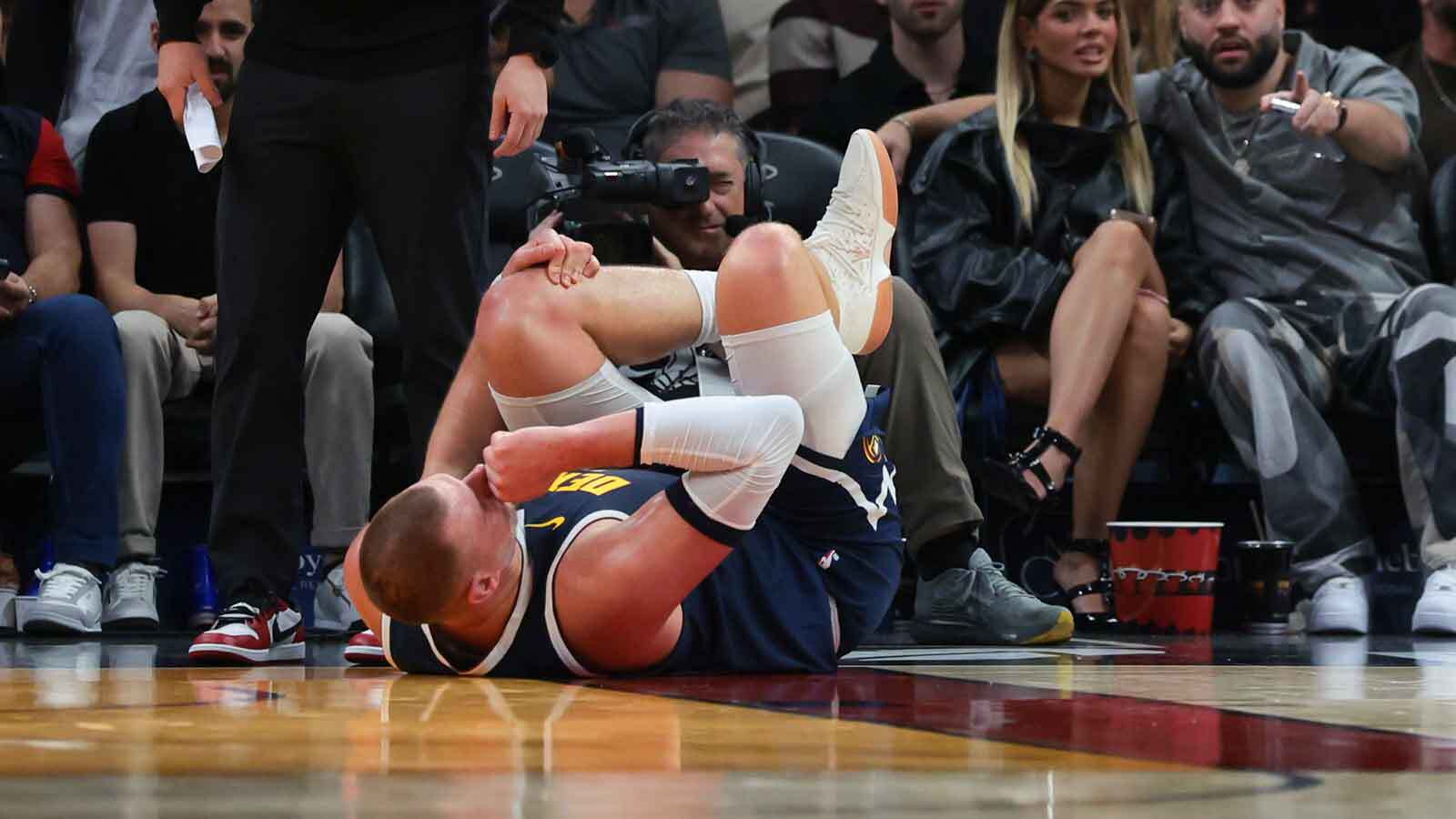
The Nuggets were enjoying a highly successful start to the 2025–26 NBA season. They currently hold a strong 23–10 record and sit third in the Western Conference. That success was fueled almost entirely by Jokic. He was once again authoring a season that defied conventional analysis. Through 32 games, Jokic was averaging 29.6 points, leading the league in rebounds at 12.2 per game and assists at 11.0 per game. Of course, he was doing so on elite efficiency. Denver’s offense hummed with surgical precision. Even with minor injuries elsewhere on the roster, the Nuggets looked every bit like a team built for another deep playoff run.
Then came the gut punch. In a recent loss to the Miami Heat, Jokic suffered a left knee hyperextension accompanied by a bone bruise. That injury will sideline him for at least four weeks and likely cost him around 16 games. The implications are enormous. Denver now faces a stretch that could drastically impact playoff seeding in a tightly packed West. Jokic’s MVP candidacy also hangs in the balance due to minimum games requirements. With backup center Jonas Valanciunas also injured, the Nuggets suddenly find themselves thin, reactive, and dangerously exposed in the middle.
Denver can’t simply wait it out
The Nuggets could try to tread water. They can lean on Jamal Murray shot creation, and hope Tim Hardaway Jr carries the scoring load. Of course, they’re also hoping Aaron Gordon can come back from his own injury as soon as possible. Now, that’s a gamble bordering on reckless. Without Jokic, Denver loses its defensive rebounding anchor, offensive hub, and late-game safety valve. The numbers are clear: Denver struggles to maintain efficiency and defensive structure when forced into extended non-Jokic minutes. This is especially true against teams that attack the paint and pressure the rim.
This is no longer about short-term survival. It’s about protecting championship equity. That’s why Denver must act decisively at the trade deadline. One potential move is with the Atlanta Hawks.
The one trade Denver must pursue
Denver Nuggets receive:
Onyeka Okongwu
Atlanta Hawks receive:
Zeke Nnaji
Christian Braun
2026 first-round draft pick (top-10 protected)
This deal sends Onyeka Okongwu from the Hawks to Denver in exchange for frontcourt depth, a breakout wing, and future draft capital. It’s aggressive but necessary.
Why now
Okongwu is the rare center who fits Denver’s immediate needs without forcing a philosophical overhaul. At 25, he brings elite athleticism, legitimate rim protection, and efficient finishing around the basket. That’s exactly what Denver lacks without Jokic. His ability to defend in space and contest shots (1.2 blocks per game, strong opponent field goal suppression at the rim) allows Denver to preserve its defensive identity even without its MVP.
Offensively, Okongwu doesn’t need touches to be effective. He thrives as a screener, rim runner, and vertical spacer. Those skills pair seamlessly with Murray’s pick-and-roll game and Hardaway’s off-ball gravity. Crucially, Okongwu’s $8 million expiring contract fits cleanly under the second apron. That should give Denver flexibility once Jokic returns. This is not a panic move. It’s a stabilizer that buys time and preserves wins during a dangerous stretch.
Christian Braun’s inclusion stings. However, it’s the cost of doing business. Denver is in a championship window, not a development phase. Okongwu gives them a chance to maintain top-four positioning instead of scrambling through the Play-In gauntlet.
Why Atlanta says yes
For Atlanta, this trade aligns perfectly with direction and timing. Sitting at 16–19 and recalibrating its roster, the Hawks gain a versatile wing in Braun. He can defend, score, and grow into a long-term rotation piece. Zeke Nnaji offers a developmental frontcourt option. Meanwhile, the protected first-round pick gives Atlanta another asset to stockpile around its emerging core.
Okongwu’s redundancy alongside Kristaps Porzingis and Jalen Johnson makes him expendable. His current salary represents a rare buy-low opportunity for a team looking to pivot toward youth and flexibility. This is true value extraction.
Feasibility and impact
From a roster and cap standpoint, the deal is workable but requires precise sequencing. After the trade, Denver would have 13 standard contract players. That means the Nuggets would need to add at least one additional player, who is likely a minimum signing, to remain in roster compliance.
Draft capital is the bigger long-term cost. This move would leave Denver without first-round picks in consecutive draft years (2026 and 2027). That’s a notable sacrifice but one aligned with an all-in title window built around Jokic. With that, the 2026 pick should be traded on draft night after Denver makes the selection. That will keep the Nuggets compliant with Stepien Rule restrictions while still delivering real value to Atlanta.
The most technical wrinkle involves Christian Braun’s ‘poison pill’ contract. Because Braun has signed an extension that begins next season, his outgoing salary for Denver ($4.9M) differs from his incoming salary for Atlanta ($21.6M). That is calculated using an average of his current and future earnings. While that complicates the math, it doesn’t prevent the deal. It simply requires careful salary matching, which this framework accommodates.
These are minor hurdles rather than deal-breakers, especially for a team operating with championship urgency. Ultimately, the trade fits under CBA rules. It positions Denver to remain competitive during a Jokic-less stretch while Atlanta accelerates its asset accumulation. This makes the deal a rare win-win built on urgency and timing.
Final thoughts
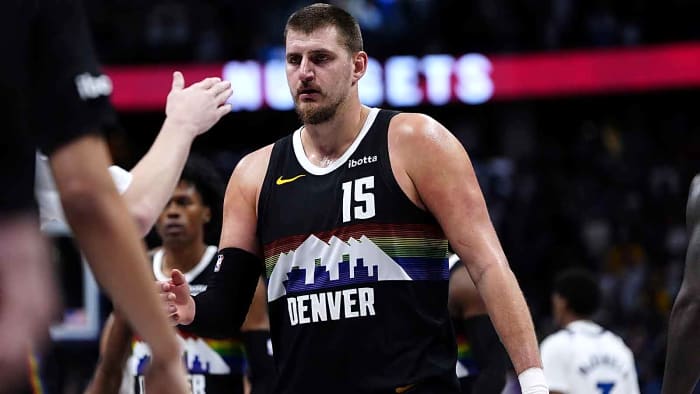
Nikola Jokic will be back. That’s not the question. The question is what Denver looks like when he returns. Will the Nuggets still be a top-tier contender, or a team scrambling to recover lost ground? Trading for Onyeka Okongwu isn’t flashy. It won’t dominate headlines. That said, it’s the kind of smart, decisive move championship teams make when their margin for error suddenly disappears. Now, for Denver, the margin has never been thinner.
More must-reads:
- Hawks players reportedly 'hate' playing with untradable Trae Young
- 76ers PG Tyrese Maxey furthers MVP case with dominant performance in statement win over Mavericks
- The 'NBA Christmas Day triple-doubles' quiz
Breaking News
Trending News




Customize Your Newsletter
 +
+




Get the latest news and rumors, customized to your favorite sports and teams. Emailed daily. Always free!
PRIVACY POLICY EDITORIAL POLICY CONTACT US
ABOUT YARDBARKER TERMS OF SERVICE


Use of this website (including any and all parts and
components) constitutes your acceptance of these
Terms of Service and Privacy Policy.
This site is for entertainment purposes only.
There is no gambling offered on this site.
Gambling Problem? Call 1-800-Gambler.
