
-

-


Follow Us
-

 On Facebook
 On Flipboard

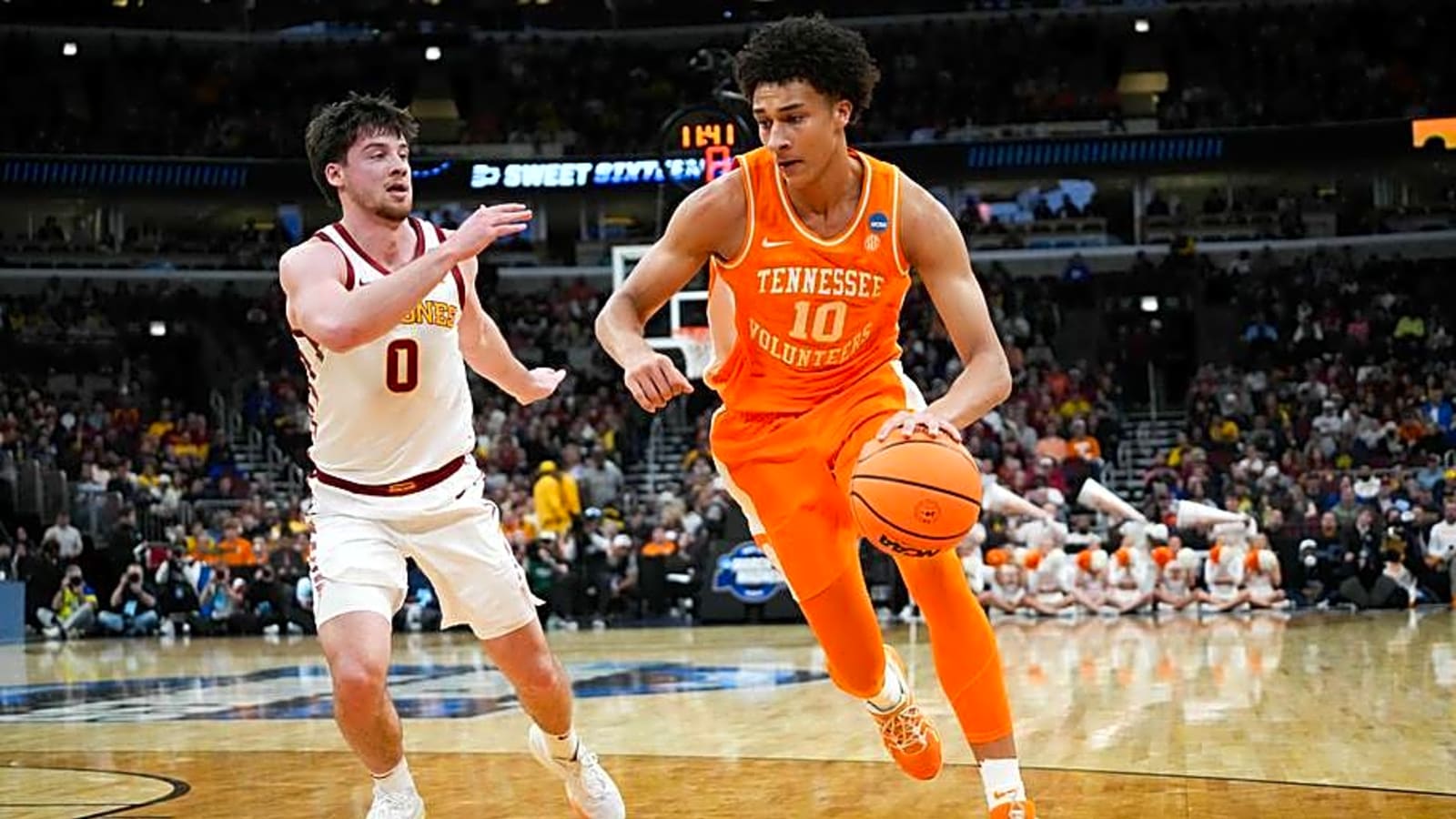
The new era of the NBA has emphasized both outside shooting and positional size. Most competitive teams are now filled with taller wings or forwards who can space the floor and guard multiple positions defensively. The NBA's movement towards taller players with long wingspans has also led to the decline of undersized guards sticking in the NBA.
While we've dove into three queries that emphasize different levels of production based on college year, as shown through the Productive Young Athlete (PYA) query, Productive Sophomore Query (PSQ), and Productive Junior Query (PJQ), the Efficient Tall Freshman (ETF) Query dives into the combination of size and potential as a shooter in predicting NBA outcomes. The title itself is also a play on exchange-traded funds, which are also known as ETFs in the financial world and are one of the most common ways for people to invest their money. Similarly, perhaps the ETF query can be one data point for a team to invest in a prospect who meets the necessary criteria.
The Study
Before we dive into the statistical analysis, it’s important to define what “stick” means in my study. In this case, I considered a prospect to “stick” if they played five-plus seasons in the NBA. Prospects who qualified in recent seasons had projections created for them based on career statistics and overall performance thus far.
There were 77 freshmen throughout the 15 college basketball seasons from 2010-2021 who played at least 40% of their team's minutes, were at least 6-foot-6, had a free throw percentage of at least 75%, had at least 50 free throw attempts, had a Box Plus-Minus of at least +3, and met the minimum athletic threshold of four total dunks. 67.5% (52/77) of those freshmen played five-plus years in the NBA, are currently in the NBA, or are strongly projected to stick in the NBA.
Why are each of these criteria important?
A freshman is the first year of a player at a college or university, indicating a young age of around 18 years old. Minutes Percentage is the share of the team’s total minutes that a prospect plays in. These two criteria alone help narrow prospects down into college basketball players who are young but are already trusted by their college coach and talented enough to play significant (defined here as ≥40% of the team’s total) minutes.
The next indicator for the prospect is having a free throw percentage of at least 75%, which indicates potential as a shooter at the next level. In fact, a player's college free throw percentage is actually a better indicator of potential as an NBA shooter than their college three-point percentage. Additionally, all prospects included in the study shot at least 50 free throw attempts in their freshman season, reducing the chance for error within the free throw shooting indicator.
Since size and, more specifically, height is becoming more important to sticking in the NBA, we looked at players who are at least 6-foot-6. This narrows it down to freshmen being trusted to play a significant amount of their team's minutes, have potential as a shooter in the NBA, and have significant size at 6-foot-6. Finally, one of the last two indicators is a Box Plus-Minus of at least +3, used to ensure that the prospects are impacting the college game to a baseline level over a replacement player. The last indicator is a minimum dunk threshold of four, used to incorporate a baseline athleticism metric.
Therefore, players who meet the Efficient Tall Freshman (ETF) query are freshmen who are trusted to play at least 40% of their team's minutes, are impacting the game at a minimum level (+3 Box Plus-Minus), have positional size of at least 6-foot-6, have positive shooting indicators (converting at least 75% from the line on at least 50 attempts that season), and also meet the four-dunk athletic threshold.
Efficient Tall Freshman Query: Player Outcomes
Sticking in the NBA is one thing, but how impactful were the players who stuck? Below I grouped the 77 players who have met the Efficient Tall Freshman Query from 2010-2024 into four subcategories based on Draft Express Pick Expectations. One highlight: Nearly 34% of players to meet the criteria (26 of the 77 players) became NBA starters or multi-time All-Stars.
While players were grouped based on current career statistics, there were seven players in particular who were too early to group: Tucker DeVries ('22), Mark Mitchell ('23), Andrew Rohde ('23). Julian Phillips ('23), Jett Howard ('23), Johnny Furphy ('24), and Kwame Evans Jr ('24). To be on the cautionary side, only two of these seven players were included in the "Backup" threshold while five of these seven players were included in the "Did Not Stick" category. More on the groups below:
Players were grouped into the following five categories:
Did Not Stick
Players who met the Efficient Tall Freshman Query (ETF) but did not stick in the NBA or are projected not to stick: Xaiver Henry ('10), Trent Widemen ('11), Quincy Miller ('12), Aaron Harrison ('14), William Lee ('15), Mike Daum ('16), Allonzo Trier ('16), Diamond Stone ('16), Tyler Lydon ('16), Jacob Evans III ('16), Kristian Doolittle ('17), Daniel Purifoy ('17), Matt Mitchell ('18), Kevin Obanor ('19), Joe Wieskamp ('19), Ignas Brazdeikis ('19), Nick Muszynski ('19), Zach Freemantle ('20), Marcus Domask ('20), Efe Abogidi ('21), Julian Phillips* ('23), Tucker DeVries* ('22), Andrew Rohde* ('23), Mark Mitchell* ('23), Kwame Evans Jr* ('24)
*Players were too early to group but were included in the study to increase future accuracy of the study
Backup: Five NBA seasons, with career 10-24 minutes per game, or over 4000 career NBA minutes
Backup Players who met the Efficient Tall Freshman Query: Alec Burks ('10), Cody Zeller ('12), Nik Stauskas ('13), Justin Anderson ('13), Amir Coffey ('17), Jonathan Isaac ('17), Oshae Brissett ('18), Kevin Knox ('18), Naji Marshall ('18), Jalen McDaniels ('18), Cam Reddish ('19), Nassir Little ('19), Charles Bassey ('19), Justin Champagnie ('20), Terrence Shannon Jr ('20), Jeremiah Robinson-Earl ('20), Josh Green ('20), Zeke Nnaji ('20), Moses Moody ('21), AJ Griffin ('22), Brice Sensabaugh ('23), Taylor Hendricks ('23), Gradey Dick ('23), Kyle Filipowski ('23), Jett Howard** ('23), and Johnny Furphy** ('24)
**Players were too early to group but were included to increase future accuracy of the study
Starter: Career 24 minutes per game or higher, or started over half of career NBA games (minimum 21 minutes per game)
Starters who met the Efficient Tall Freshman Query: Tobias Harris ('11), Harrison Barnes ('11), Allen Crabbe ('11), Andrew Wiggins ('14), Myles Turner ('15), Mikal Bridges ('16), Lauri Markkanen ('17), Gary Trent Jr ('18), De'Andre Hunter ('18), Julian Champagnie ('20), Jaime Jaquez Jr. ('20), Patrick Williams ('20), Franz Wagner ('20), Isaiah Stewart ('20), Keegan Murray ('21), Bennedict Mathurin ('21), Jabari Smith ('22), Brandon Miller ('23), and Stephon Castle ('24)
All-Star: Two or more appearances in the NBA All-Star Game
All-Star Players who met the Efficient Tall Freshman Query: Karl-Anthony Towns ('15), Pascal Siakam ('15), Devin Booker ('15), Jayson Tatum ('17), Shai Gilgeous-Alexander ('18), Jaren Jackson Jr., ('18), and Cade Cunningham ('21)
The Results
Out of the 77 players who have met the Efficient Tall Freshman Query from the 2010-2024 college basketball seasons...
- ~32.5% of them did not stick in the NBA (25 players)
- ~33.8% of them became Backups (26 players)
- ~24.7% of them became Starters (19 players)
- ~9.1% of them became multi-time All-Stars (7 players)
More must-reads:
- Thunder have a Luguentz Dort problem and must replace him with this player
- Five players with the most at stake in Western Conference Finals Game 7
- The 'NBA Coaches of the Year' quiz
Breaking News
Trending News





Customize Your Newsletter
 +
+




Get the latest news and rumors, customized to your favorite sports and teams. Emailed daily. Always free!
PRIVACY POLICY COOKIE POLICY CONTACT US
ABOUT YARDBARKER TERMS OF SERVICE


By using this site, you agree to our Terms of Service and Privacy Policy.
This site is for entertainment purposes only.
There is no gambling offered on this site.
Gambling Problem? Call 1-800-Gambler.
