-

-


Follow Us
-

 On Facebook
 On Flipboard


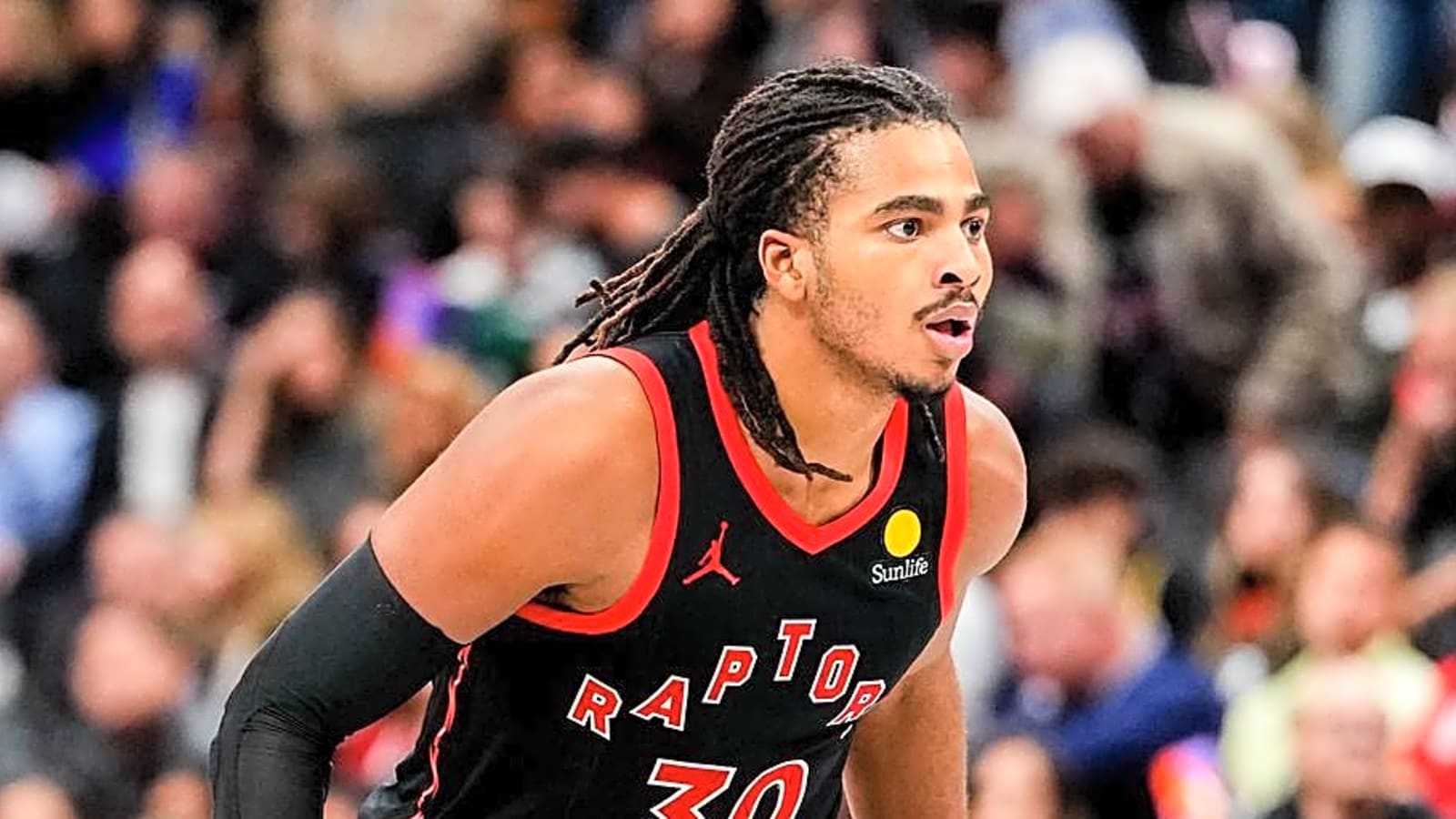
The Toronto Raptors have assembled a roster built around versatility, defensive intensity and unselfish basketball. While established stars command much of the attention, second-year forward Collin Murray-Boyles is rapidly establishing himself as one of the most influential pieces in Toronto’s rotation.
His impact extends well beyond traditional box-score production. Whether disrupting opposing offenses, creating opportunities for teammates or simply making the right play, Murray-Boyles has developed into the type of player who makes everyone around him better.
Perhaps most remarkably, the numbers are beginning to reflect exactly what the eye test suggests.
The 94-Foot Catalyst
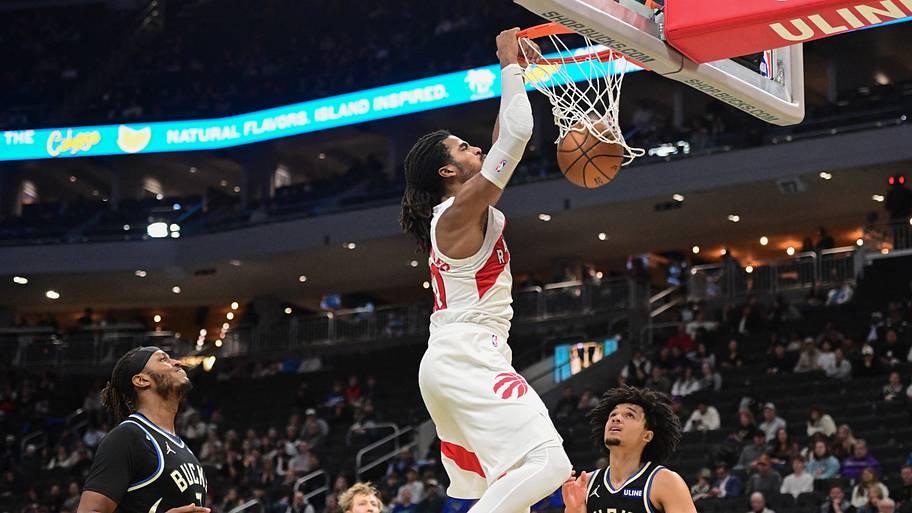
Few players on Toronto’s roster influence winning as much as Murray-Boyles.
His relentless activity, basketball intelligence, and ability to impact possessions on both ends have translated into remarkable on-court results, with an 11.5 On/Off Net. In fact, every major rotation player has posted a better net rating when sharing the floor with Murray-Boyles than when playing without him.
Consider the on/off net ratings for some of Toronto’s most important contributors:
| Player | With Murray-Boyles | Without Murray-Boyles |
|---|---|---|
| Scottie Barnes | +5.6 | -2.9 |
| RJ Barrett | +13.5 | -1.2 |
| Ja'Kobe Walter | +5.7 | -6.9 |
| Immanuel Quickley | +7.2 | +0.3 |
| Jamal Shead | +12.8 | -26.2 |
| Jakob Poeltl | +43.2 | -5.4 |
| Jamison Battle | +3.4 | -8.1 |
| Kawhi Leonard | +19.8 | 0.0 |
The numbers are staggering.
While early-season lineup data requires appropriate context due to small sample sizes, the consistency across his teammates is difficult to ignore, especially given the similar impact he had last season as a rookie.
Murray-Boyles doesn’t need the basketball to influence possessions. His screening creates advantages, his defensive activity generates transition opportunities, and his willingness to do the dirty work allows Toronto’s primary offensive creators to operate more freely.
He is becoming the connective force that allows the Raptors’ individual pieces to function as a cohesive unit.
The Defensive Detonator
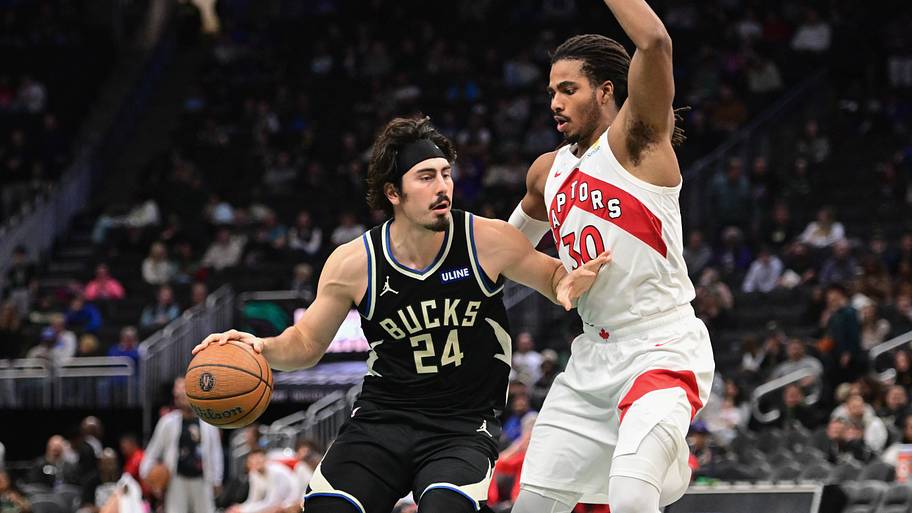
If Murray-Boyles is a catalyst behind Toronto’s collective success, his defense is what ignites the engine.
Few young players possess his combination of physical strength, lateral mobility, anticipation and defensive versatility.
His ability to disrupt passing lanes and generate deflections has placed him in the 100th percentile in that category, illustrating how consistently he creates problems for opposing offenses.
However, his defensive impact extends considerably beyond forcing turnovers.
Murray-Boyles can pressure ball-handlers, switch across multiple positions, battle larger interior players and provide timely help around the basket. His strength allows him to absorb contact, while his instincts consistently put him in advantageous positions before plays fully develop.
Perhaps his greatest value comes from his ability to insulate the defensive limitations of his teammates.
Toronto can afford to be more aggressive with its perimeter pressure because Murray-Boyles provides an additional layer of protection behind the initial defender. His rotations, recoveries and ability to cover ground help minimize breakdowns before they become high-percentage scoring opportunities.
That versatility also creates intriguing lineup possibilities alongside Barnes, giving Toronto two highly disruptive defenders capable of switching assignments and creating havoc throughout the half-court.
Murray-Boyles doesn’t simply execute within Toronto’s defensive system. Increasingly, he is the player who makes its most aggressive concepts feasible.
An Elite Offensive Connector
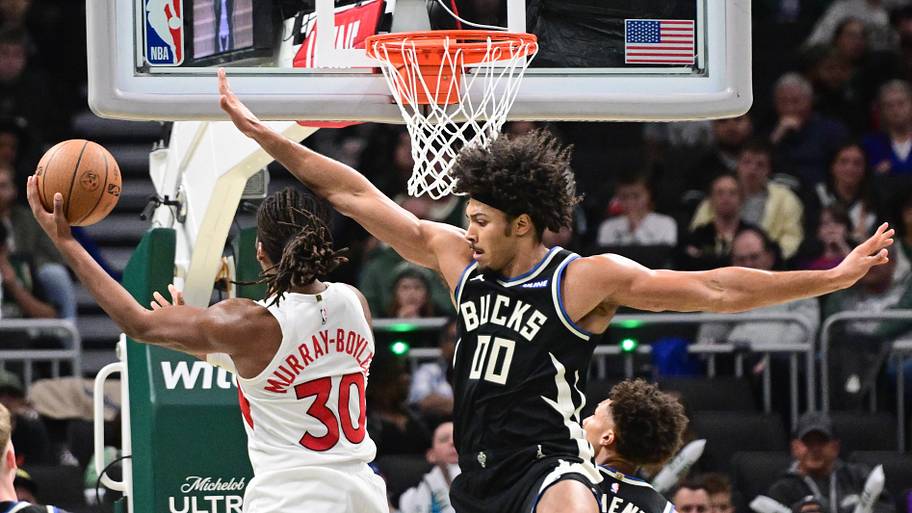
Murray-Boyles’ defensive reputation may dominate discussions surrounding his development, but his offensive contributions are equally important to understanding his overall value.
He is rapidly becoming one of Toronto’s most dynamic offensive connectors, combining intelligent movement, versatile screening, and rapid decision-making to create advantages without requiring high-level usage.
His cutting ability has already been demonstrated. When Toronto was eliminated from the 2026 NBA playoffs, Murray-Boyles was leading the postseason in points generated from cuts.
That production highlights an exceptional understanding of spacing, timing and defensive positioning as well as the mentality needed to be a riser when the playoffs come around.
He consistently recognizes when defenders become occupied with Toronto’s primary creators, attacking open space and presenting himself as an available finishing option.
His screening provides another valuable dimension.
Whether creating separation for Quickley, freeing Barnes to attack downhill or initiating dribble-handoff actions, Murray-Boyles uses his physicality to manufacture offensive advantages.
He is equally effective operating in the short roll, where his passing instincts and ability to process defensive rotations allow him to function as a secondary playmaker.
Rather than forcing difficult shots, he routinely identifies the open teammate or exploits the space created by collapsing defenders.
His aggressive offensive rebounding provides additional possessions, while his powerful interior finishing makes him a dangerous target around the basket.
Perhaps most encouraging is his expanding willingness to operate away from the paint.
Although his perimeter shooting remains a developing component of his offensive arsenal, even modest improvements in spacing would dramatically increase his effectiveness alongside Toronto’s established scorers.
Murray-Boyles doesn’t need to become a high-volume scorer to transform Toronto’s offense. His ability to connect actions, extend possessions and consistently make intelligent decisions already makes him an extraordinarily valuable offensive contributor.
The Ceiling Is Rising
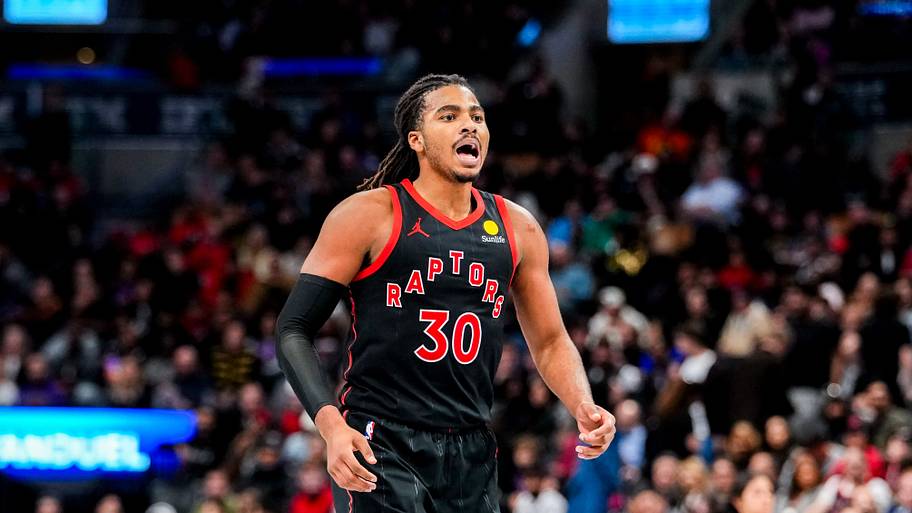
The most exciting aspect of Murray-Boyles’ emergence is that his current production may only represent the foundation of what he can eventually become.
At just 21 years old, he has already established himself as a highly impactful defender and an intelligent offensive contributor. Yet several elements of his game remain relatively unexplored.
Improved perimeter shooting would create additional spacing and make him considerably more difficult to defend. Continued development as a ball-handler and short-roll playmaker could expand his offensive responsibilities, while greater confidence attacking mismatches would provide Toronto with another legitimate scoring option.
There is also the question of his eventual positional role.
At 6-foot-7, Murray-Boyles may lack the traditional height associated with an NBA center, but his strength, defensive instincts and mobility create opportunities for Toronto to deploy exceptionally versatile lineups.
His ability to play alongside Poeltl or operate as a small-ball center gives the Raptors considerable flexibility in constructing their frontcourt.
More importantly, Murray-Boyles has already demonstrated that his value isn’t dependent on individual scoring production.
He impacts winning through an accumulation of small advantages, many of which never appear in a traditional box score.
For a Toronto team attempting to establish itself among the Eastern Conference’s elite, that type of player is invaluable.
The Raptors have plenty of players capable of filling up the stat sheet. What makes Murray-Boyles special is his ability to elevate the effectiveness of those around him.
And if his offensive development continues to catch up with his defensive brilliance, Toronto may have discovered something considerably more valuable than a high-level role player.
It may have found one of the foundational pieces capable of raising the ceiling of the entire franchise.
More must-reads:
- Tipping off: LeBron's spoiled return, rampant tanking continues
- James Harden becoming an insurmountable problem for Cavaliers
- The '1,500-point, 150-block seasons' quiz
Breaking News
Trending News







Customize Your Newsletter
 +




Get the latest news and rumors, customized to your favorite sports and teams. Emailed daily. Always free!
PRIVACY POLICY COOKIE POLICY CONTACT US
ABOUT YARDBARKER TERMS OF SERVICE


By using this site, you agree to our Terms of Service and Privacy Policy.
This site is for entertainment purposes only.
There is no gambling offered on this site.
Gambling Problem? Call 1-800-Gambler.