
-

-


Follow Us
-

 On Facebook
 On Flipboard
 On Twitter
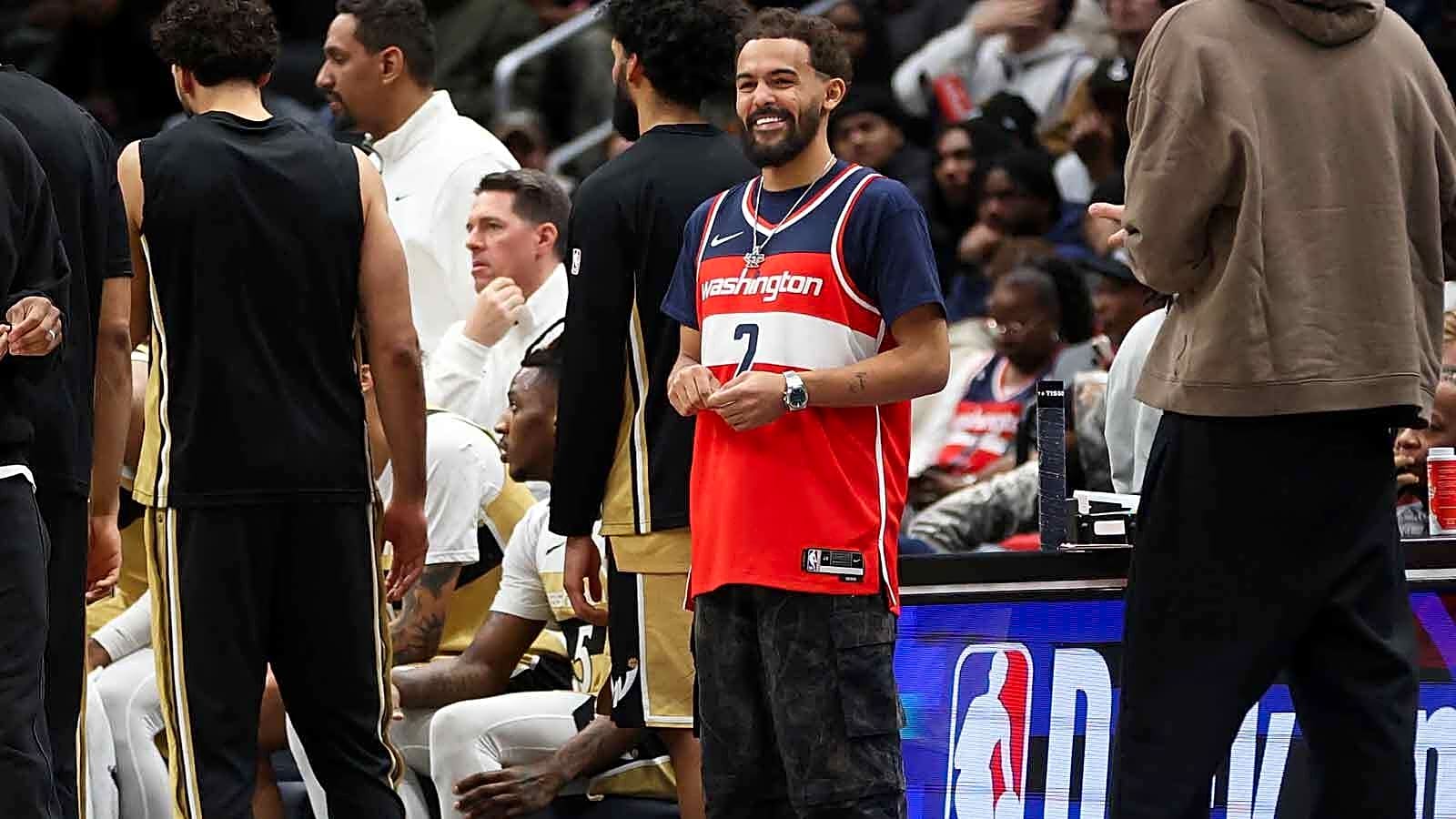
The Atlanta Hawks were one of the busiest teams prior to the trade deadline. This season saw an interesting shift in which player the team belonged to, and in the end, Trae Young’s knee injury early in the season paved the way for Jalen Johnson to seize the controls in Atlanta — eventually leading to Young’s departure.
With Johnson blossoming into one of the best playmaking forwards in the NBA, the Hawks pivoted to acquiring many valuable role players who can provide spacing for the nascent 24-year-old wing. They pulled off a total of five trades, including Young’s move to the Washington Wizards for CJ McCollum and Corey Kispert, and these moves indicate that Atlanta believes in its young nucleus’ potential to make waves in the East for years to come.
On that note, here are individual grades for each trade the Hawks made, which would then add up to an overall grade for their busy trade deadline.
Hawks end the Trae Young era on a whimper
Hawks acquire: CJ McCollum, Corey Kispert
Wizards acquire: Trae Young
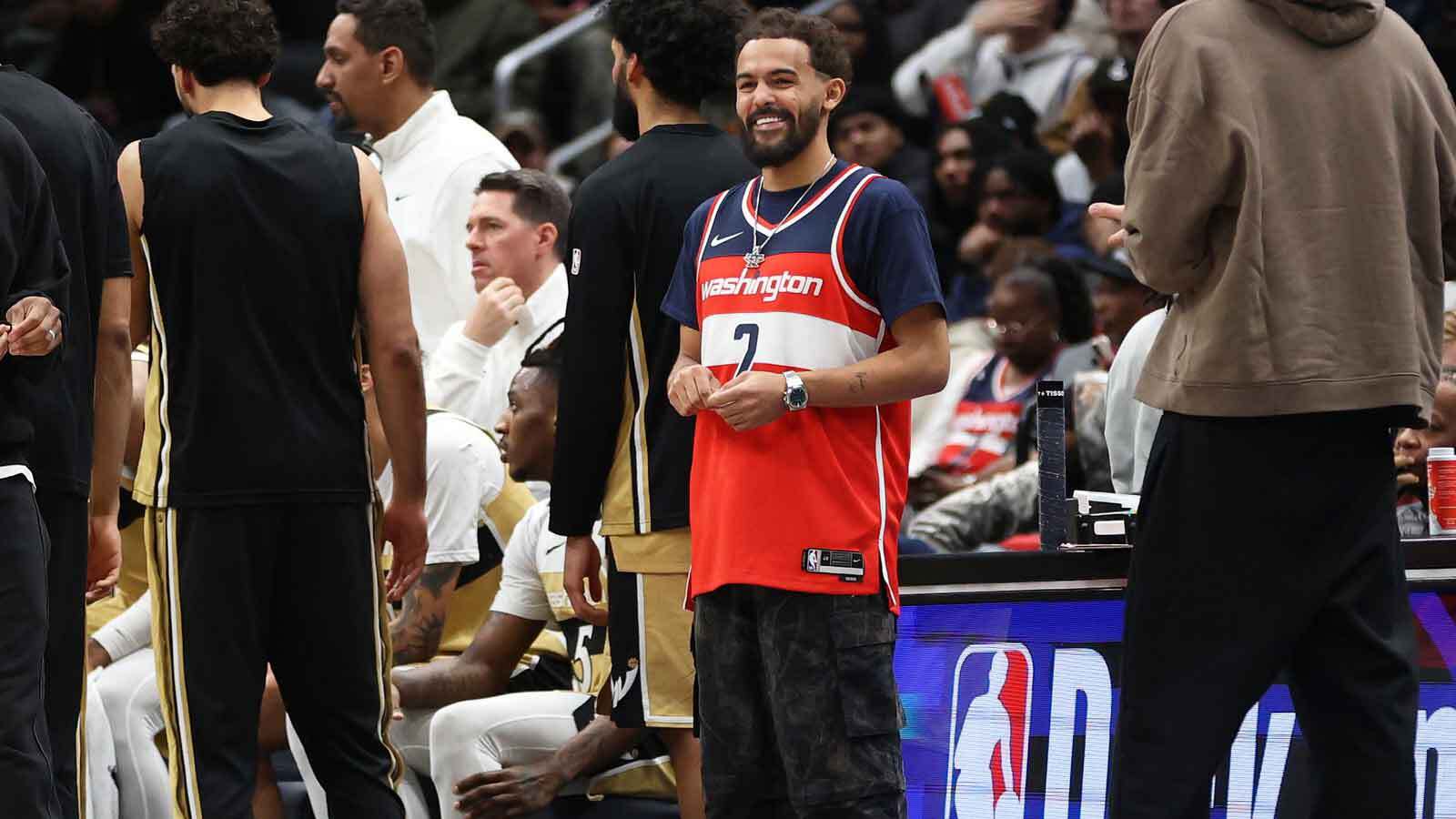
The Hawks’ inability to get a first-round pick or any of the Wizards’ young prospect for their best player of the past seven or so years is telling of how the market perceives undersized guards like Young. Young also has well-documented defensive shortcomings, and it’s become increasingly difficult to build a team around someone with his flaws, especially when he’s making as much money as he is ($46.4 million this season, player option for nearly $49 million for next).
Plain and simply, the Hawks did not want to pay Young what it would take to keep him on the team for the long haul. With the doubts they had as his viability as their franchise star, it was only correct for Atlanta to try and sell on the star guard.
However, there’s an argument to be made that the Hawks waited too long to trade Young. He was so close to free agency (barring the unlikely outcome that he picks up his player option for next season) that other interested teams couldn’t fork over more quality assets for a four-time All-Star.
The Hawks could only get McCollum and Kispert, and as helpful as those players are, it’s difficult not to feel as though Atlanta sold low on a perennial 20 and 10 point guard.
The good news is that this trade gives the Hawks room to maneuver for the next few years, as McCollum’s contract is about to expire at season’s end. Kispert is a plug-and-play movement shooter who should now have an established role on the team following Atlanta’s other trade deadline deals.
Grade: B-
Atlanta ends the Jonathan Kuminga era in Golden State
Hawks acquire: Jonathan Kuminga, Buddy Hield
Warriors acquire: Kristaps Porzingis
Acquiring Porzingis was a huge gamble on the Hawks’ end; the end to his Boston Celtics tenure inspired little confidence that he’d be healthy moving forward, as he was dealing with Postural Orthostatic Tachycardia Syndrome (POTS) — a condition in which transitioning from lying down to standing up causes dizziness, an unusually fast heart rate, and fatigue.
The Hawks knew this and brought him in since the reward was immense; for all of Porzingis’ health issues, he’s still an incredible offensive player and rim protector when healthy. Alas, Porzingis was rarely healthy for the Hawks, suiting up in just 17 games for Atlanta. This left them incredibly thin in the frontcourt, with Onyeka Okongwu having to log heavy minutes nightly given how thin they were at the position.
The bright side was that Porzingis’ contract was expiring, so if the Hawks were to decide to move on, they could very easily do so. However, they decided to trade him to the Warriors for Kuminga and Hield — adding more depth to a team that’s in a sort of limbo at the moment.
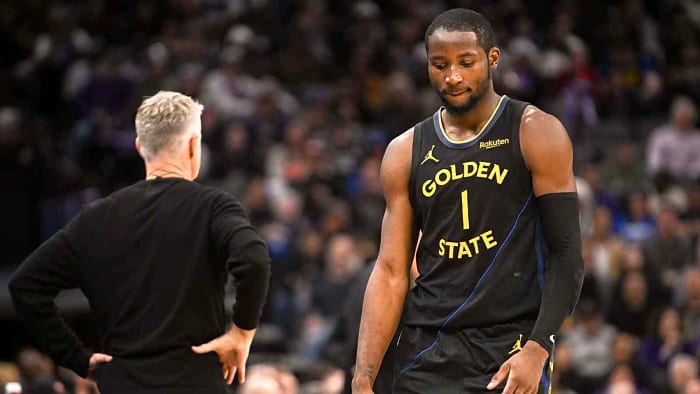
Kuminga is one of the most enigmatic players in the NBA; he’s only 23 years of age and he can put points on the board in bunches. But he did not fit the system in Golden State, as Steve Kerr relied on ball and player movement around Stephen Curry to generate easy buckets. Kuminga, on the other hand, needed the ball in his hands and was a very sufficient shot-creator for himself.
Can he turn his career around in Atlanta? He’ll be playing behind Johnson, so Kuminga has to accept being a microwave scoring option alongside McCollum for the Hawks. Considering how the Hawks have given the keys to Johnson, it’s not likely for Kuminga to break out in his new team, as his fit alongside the team’s best player is iffy at best.
Hield is coming in as a sharpshooter with one more year on his contract, so he’s another trade piece for the Hawks come offseason time in their never-ending bid to upgrade the roster.
Considering how Porzingis didn’t suit up often for the Hawks, trading him away in another gamble, this time on Kuminga’s potential and perhaps the effect of a change of scenery on him, could be worth it. And if all else fails, the Hawks can always decline his team option for next season to free up even more space.
Grade: B+
Hawks address center need with trade for Jock Landale
Hawks acquire: Jock Landale
Jazz acquire: Cash considerations
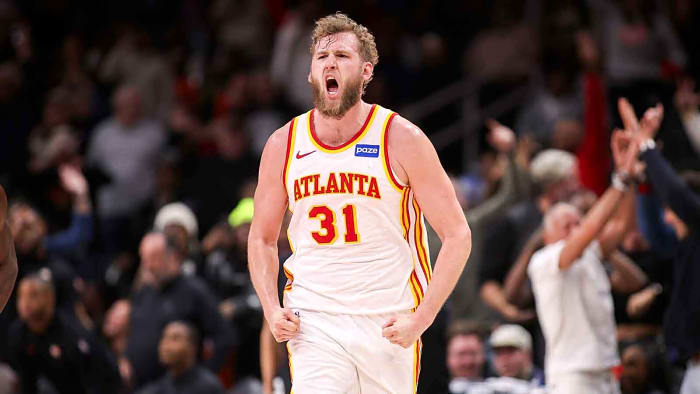
For a team that was in dire need of additional center depth, getting a solid backup option in Landale without having to give up any assets other than cash cannot be construed as anything other than a huge win for the Hawks.
Landale has been more than solid this season during his tenure for the Memphis Grizzlies, averaging 11.3 points and 6.5 boards as he held the fort for them amid Zach Edey’s absences. He provides some toughness in the paint and he can space the floor on occasion, shooting 39.6 percent from three on three attempts per game.
Nonetheless, Landale will be a free agent at season’s end, so it’s understandable that the Hawks got him for a bag of chips. The Jazz will certainly need a cash infusion as they endure a plethora of losses to end the season to try and keep their 2026 first-round pick.
Grade: A+
Hawks trade two snipers in two separate trades
Trade one
Hawks acquire: Gabe Vincent, 2032 second-round pick
Lakers acquire: Luke Kennard
Trade two
Hawks acquire: Duop Reath (later waived), 2027 and 2030 second-round picks
Blazers acquire: Vit Krejci
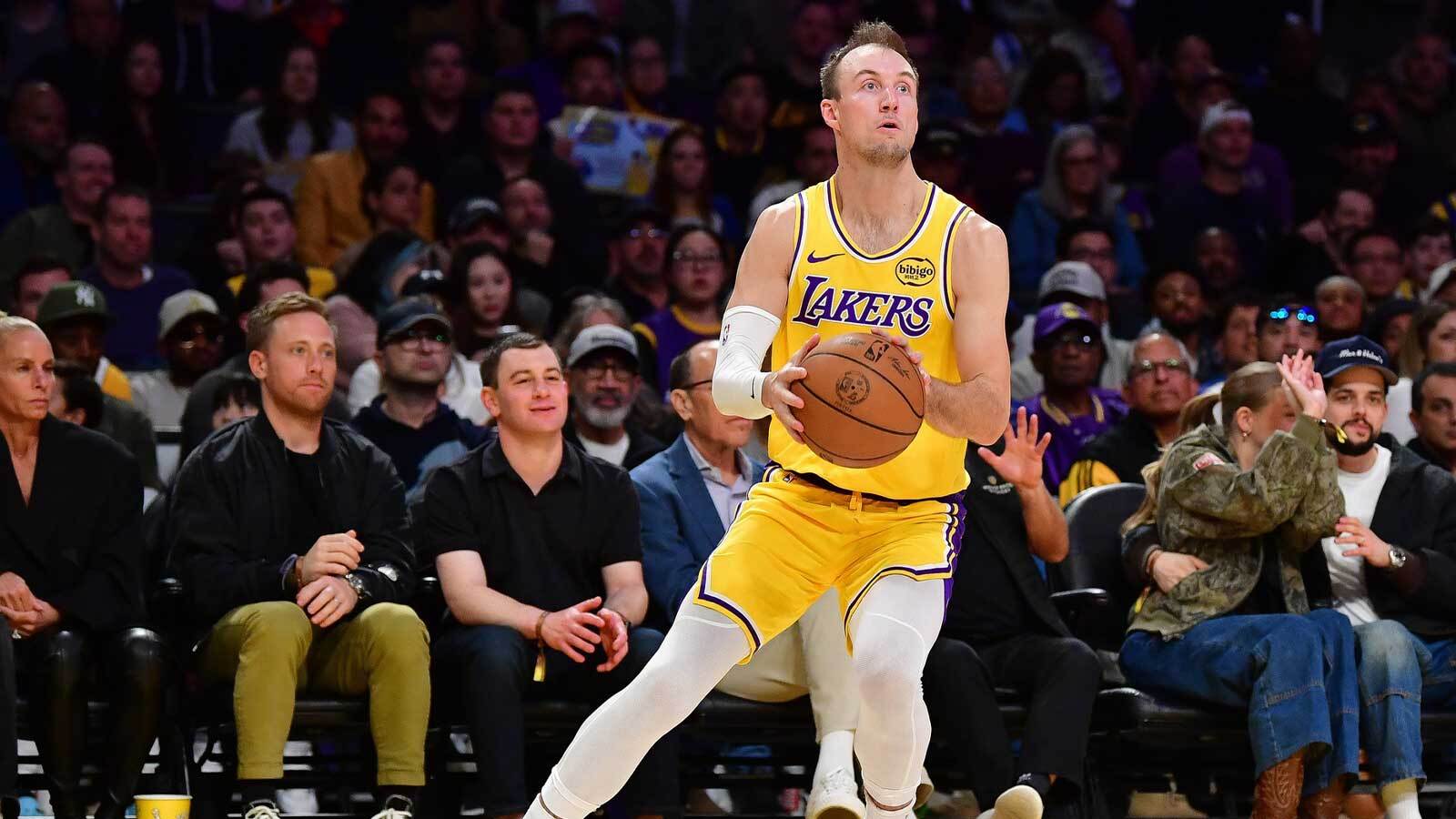
The Hawks acquired Kispert and Hield in separate trades, which meant that Atlanta had more sharpshooting specialists on the wings than they needed. This makes their decision to trade Kennard and Krejci to the Los Angeles Lakers and Portland Trail Blazers, respectively, that much more understandable.
When news of Krejci’s move to Portland broke, many Hawks fans found the move confusing as Krejci has blossomed into one dangerous threat from beyond the arc. He’s shooting over 42 percent from deep with Atlanta at the time of his move, and he had two more years left on his deal at such a bargain price (total of $5.6 million in the 2026-27 and 2027-28 seasons).
Getting two second-rounders, however, can now be seen as a win now that the Hawks managed to acquire similar players that will help cover for his departure.
Meanwhile, getting a 2032 second-round pick for Kennard, who will be a free agent, is an understandable move for Atlanta as well seeing as they now have Hield and Kispert filling his role as a high-level marksman.
It will hurt the Hawks to lose a bit of Kennard’s playmaking. Krejci’s contract was too valuable that the Hawks could have kept him instead. But these aren’t huge losses for Atlanta in the context of all the moves they made prior to the trade deadline.
Grade: B-
Hawks’ overall trade deadline grade: B
More must-reads:
- Warriors receive massive Stephen Curry injury update before Rockets game
- LeBron James really hates Memphis, wants Grizzlies to move
- The 'NBA two's leaders by season' quiz
Breaking News
Trending News







Customize Your Newsletter
 +
+




Get the latest news and rumors, customized to your favorite sports and teams. Emailed daily. Always free!
PRIVACY POLICY COOKIE POLICY CONTACT US
ABOUT YARDBARKER TERMS OF SERVICE


By using this site, you agree to our Terms of Service and Privacy Policy.
This site is for entertainment purposes only.
There is no gambling offered on this site.
Gambling Problem? Call 1-800-Gambler.
