
-

-


Follow Us
-

 On Facebook
 On Flipboard
 On Twitter
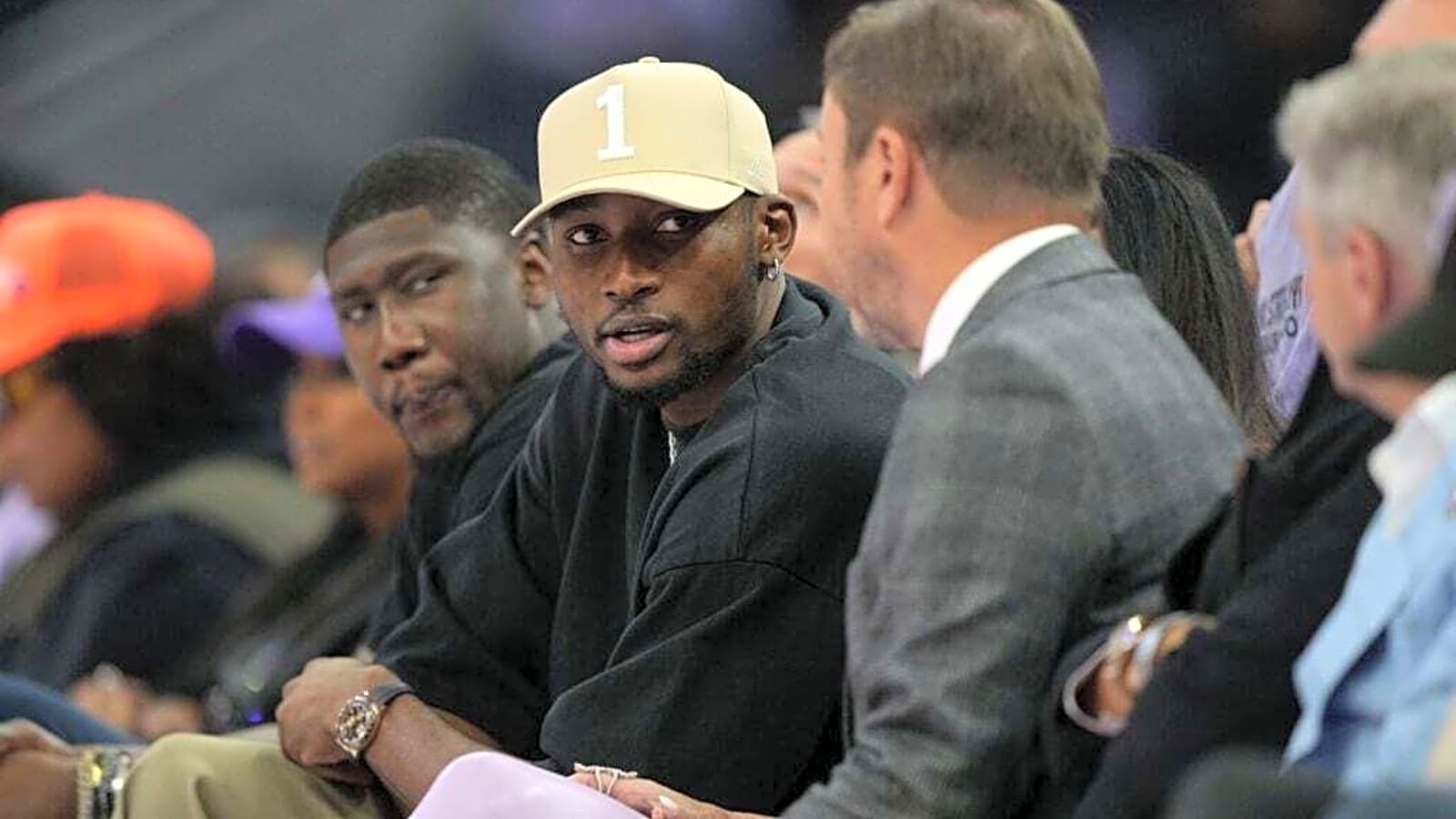
Atlanta Hawks general manager Onsi Saleh is very satisfied with his first NBA trade deadline.
Out went Vit Krejci, Luke Kennard and Kristaps Porzingis. In came Jock Landale, Gabe Vincent, Buddy Hield, and Jonathan Kuminga. When factoring in the Jan. 7 trade that sent Trae Young to the Washington Wizards in exchange for CJ McCollum and Corey Kispert, he’s upended half of Atlanta’s rotation in less than a month. Such drastic changes will inherently illicit a wide range of reactions, but Saleh’s done well to create hope about the Hawks’ future.
Hawks General Manager Onsi Saleh Talks Trade Deadline Mindset, Jonathan Kuminga
“Everything is future forward,” he tells reporters when asked about his trade deadline moves (h/t Brad Rowland of Locked On Hawks). “We didn’t want the flexibility that we created at the start of the season to be impacted by the deadline, and we felt like we maintained that flexibility.”
To clarify Saleh’s comments, when the Hawks moved on from the former face of their franchise, they were largely financially motivated. Young, who has a $49 million player option on his contract for the 2026-27 season, was in pursuit of an extension that Atlanta wasn’t quite keen on offering. Instead of potentially overpaying him, they attained a player on a $30.7 million expiring contract (McCollum). When Porzingis, who was on an expiring $30.7 million contract was on the roster, they were projected to have up to $30 million in cap space (h/t Third Apron salary cap analyst Yossi Gozlan).
For a team that was restricted to using mid-level exceptions in the 2025 offseason, having $30 million in cap space is a big deal.
Of course, the Hawks traded Porzingis for Kuminga and Hield. Unlike Vincent, who was acquired for a player on a one-year deal, neither have expiring contracts. Nevertheless, they could still have up to $25 million in cap space if they decline the 2026-27 team option on his contract. That’s flexibility. Or, to use another word that Saleh’s fond of, it’s optionality.
Money Is Important, It Isn’t Everything
While fiscal flexibility is one mode of optionality, so is retaining assets. To that point, Atlanta has resisted trading either 2024 No. 1 pick Zaccharie Risacher or the 2026 first-round pick they received from the New Orleans Pelicans on draft night.
Pelicans’ 2026 First-Round Pick Is Promising But There Are No Promises
Between Risacher and the 2026 first-rounder, the latter is perceived as more valuable because the Pelicans have a bottom-three record. As a result, the pick that New Orleans used to move up for Derik Queen could become a top-three selection. That would be alluring any year. With Kansas guard Darryn Peterson, BYU wing AJ Dybantsa and Duke forward Cameron Boozer as the projected top-three picks of the 2026 NBA Draft, it’s even more so.
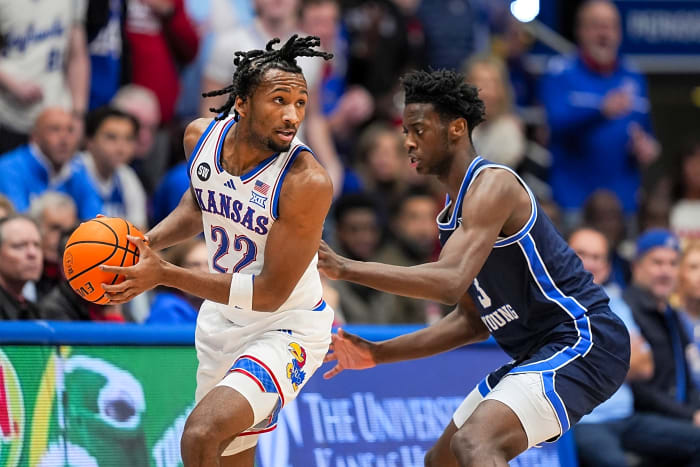
That said, there’s no guarantee any of those players will live up to the hype. Being a top draft prospect doesn’t guarantee they’ll actually be at the pinnacle of the league. There’s plenty evidence of that, Risacher himself providing some of it.
On top of that, the NBA Draft Lottery is unpredictable. Last season, the Wizards (18-64), Utah Jazz (17-65) and Charlotte Hornets (19-63) had the NBA’s three worst records. None of them ended up with a top-three pick.
Zaccharie Risacher’s Utility Matters More Than His Upside
Risacher could end up being even more important to the Hawks than their already mythologized draft pick.
No, he hasn’t matched his pre-draft expectations. He was being compared to Klay Thompson (the Golden State Warriors version, not the Dallas Mavericks version), a player who’s made 40.9% of his career 3s. After 115 games, Risacher’s made 35.8% of his career 3s, making him closer to average than an anomaly. Nevertheless, he’s a 3-and-D wing with a great feel for the game and outstanding defense. His skillset complementing franchise cornerstone Jalen Johnson‘s only makes him that much more useful.
Atlanta’s Most Notable Trade Acquisition This Season Is..
The most notable player that the Hawks acquired this season is Kuminga.
That’s even with Hield, whom Saleh believes will be “good for (their) group,” ranking 15th all-time in made 3s. That’s even with McCollum once forming one-half of one of the NBA’s most lethal backcourts. A victim of circumstance more than anything else, there’s a line of thought that all Kuminga needs is the right opportunity.
Saleh wasn’t on the Warriors’ staff when they drafted the DRC Congo native. In 2021-22, he was Golden State’s basketball strategy/assistant team counsel. However, he had been hired in late September, two months after the 2021 NBA Draft. Nevertheless, he was promoted to Director of Basketball Strategy & Team Counsel the next season. In 2023-24, he was named Vice President of Basketball Strategy & Team Counsel before leaving for Atlanta in May 2024.
As a result, he’s still quite familiar with Kuminga. “Obviously, I know JK really well,” Saleh says (h/t Kevin Chouinard of Hawks.com). “I was there for, I think, his first three years.”
What Onsi Saleh Sees In Jonathan Kuminga
“For us, it made sense given our timeline and what we’re trying to do,” Saleh explains of the decision to trade for Kuminga.
“I think a 23-year-old with a ton of potential — I think the things that he helps us with are his rim pressure that he puts on. He’s a phenomenal athlete. He’s a good rebounder. I think in transition, he could be absolutely phenomenal. And he adds size at the wing position if we ever need to add another defender to guard one of these bigger wings in the league. So, I’m really excited about Jonathan.”
133 seconds of Kuminga attacking the paint. pic.twitter.com/r3Dec4MRXy
— Cuervo (@joe_cuervo) February 6, 2026
100 seconds of Jonathan Kuminga locking in defensively. pic.twitter.com/cY7UEF0Pbk
— Cuervo (@joe_cuervo) February 6, 2026
As Saleh notes, Kuminga is brimming with potential.
Similar to the prototypical wings from the 1990s and 2000s, he’s more athletic than refined. Therefore, he’s primarily an attacking ball-handler at 6-foot-7 and 225 pounds. However, he can score from all three levels and has shown playmaking upside. At the defensive end, he’s often been tasked with guarding the top wings from other teams but can regularly guard 1-4. His off-ball awareness isn’t a strength but he does routinely make solid rotation decisions.
Statistically speaking, it’s worth noting that he averages 20.7 points and 6.2 rebounds per game when playing 30+ minutes.
Of course, his ceiling will be determined by how much he polishes his tool kit. As far as his fit in Atlanta, he may not be a starter until he does so. Simply put, the spacing could get too clunky with those two sharing the court with Dyson Daniels. However, the Hawks have multiple stretch-fives, which makes it easier to see him starting.
More must-reads:
- Latest Luka Doncic injury update may have big implications for Lakers star
- Warriors receive massive Stephen Curry injury update before Rockets game
- The 'NBA two's leaders by season' quiz
Breaking News
Trending News





Customize Your Newsletter
 +
+




Get the latest news and rumors, customized to your favorite sports and teams. Emailed daily. Always free!
PRIVACY POLICY COOKIE POLICY CONTACT US
ABOUT YARDBARKER TERMS OF SERVICE


By using this site, you agree to our Terms of Service and Privacy Policy.
This site is for entertainment purposes only.
There is no gambling offered on this site.
Gambling Problem? Call 1-800-Gambler.
