
-


Follow Us

 On Facebook
 On Flipboard
 On Twitter

And yes—Stewart is nails. He is an enforcer. He’s the player opponents think twice about testing. But the 6-foot-8 big man is far more than a bruiser who checks in only to crank up the physicality.
That’s why he’s viewed as the newest flag bearer of the Bad Boys mantra. He carries the lineage of Rick Mahorn, Bill Laimbeer, and Ben Wallace—the tradition of ferocity and imposition.
Stewart is a walking brick wall in the painted area. If the paint is deep water, he’s the shark patrolling it, ready to devour anything foolish enough to enter.
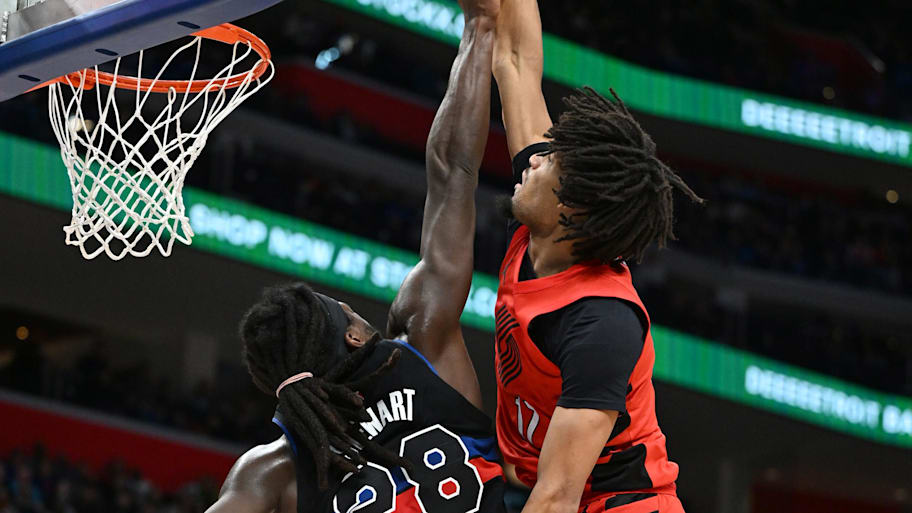
When casual fans see Stewart, they think of him hunting down LeBron James in a November game in his second season in the league. The stories of him punching Drew Eubanks, leaving the big man bleeding, resulted in a 3-game suspension of Stewart.
But these extracurriculars are truly a distraction from what he truly is as a player. And in that regard, Stewart is the most underrated player in the league.
His numbers aren’t eye-popping on paper—10 points, six rebounds, and two blocks in 23 minutes per game—but Isaiah Stewart’s value has never been about box-score inflation. He’s malleable, dependable, and one of the best defensive players in the league, all while making just $15 million annually over the next three seasons with a team option on the final year. At 24, he’s one of the best bargains in the NBA.
Isaiah Stewart has been the primary defender on 81 Field Goal Attempts 0-6 Feet from the Rim
— Point Made Basketball (@pointmadebball) December 6, 2025
On those attempts, he’s held opponents to 44.4% FG (18.2% less than expected)
Only Luke Kornet (44.0%) & Isaiah Hartenstein (44.3%) have been better among players with 75+ DFGAs https://t.co/z2jqPGJIOF
Stewart is the heart and soul of the Pistons. In many ways, he’s this era’s Ben Wallace—an undersized five who dominates anyway. He’s recorded four blocks in five different games this season, tied with Jay Huff and Victor Wembanyama for the most such performances in the league.
Detroit currently ranks second in opponent field-goal percentage at 44.6 percent, and Stewart is a major reason why. Opponents challenge him at the rim, and he meets them at the summit. When they try to drag him into space, he switches seamlessly—onto guards, wings, bigs, whoever. Stewart treats every assignment the same: if he’s on the floor, he’s accepting the challenge.
“He has always been big time.”
— Coty M. Davis (@CotyDavis_24) December 6, 2025
Cade Cunningham speaks on Isaiah Stewart's growth defensively over the years. #Pistons pic.twitter.com/dywjccGCdh
But defense is only part of the story. A few years ago, the front office challenged Stewart to expand his game by becoming a floor spacer. He responded by shooting 38 percent from three in 2023–24. After a season of limited attempts, he’s turned the green light back on—hitting 21 threes this year at a 41 percent clip.
His growth has unlocked lineup flexibility: starting next to Jalen Duren when Tobias Harris was out, functioning as a stretch five in five-out units, and giving Detroit matchup advantages they simply didn’t have before.
His toughness, defensive heartbeat, and positional versatility make Stewart the Pistons’ true joker in the deck—a player who can blow up an opponent’s entire game plan just by being on the court.
Last postseason, Stewart’s injury limited him to just 18 minutes and 53 seconds of action in what should’ve been his playoff debut. Without him, the Pistons lacked their most important defender against Karl-Anthony Towns. Many inside the organization believe that if Stewart had been available, Detroit wins that series. That’s how impactful he is.
He embodies everything the Detroit Pistons stand for—toughness, resilience, defensive integrity, and an unrelenting work ethic. And his on-court presence is as essential to this team’s identity as anything fueling their chase to reclaim the Bad Boys standard this season.
More must-reads:
- Joel Embiid matches franchise icons as he continues dominant stretch
- Interested teams get massive update on Bucks' Giannis Antetokounmpo with trade deadline approaching
- The '14-win NFL quarterbacks' quiz
Breaking News
Trending News






Customize Your Newsletter
 +
+




Get the latest news and rumors, customized to your favorite sports and teams. Emailed daily. Always free!
PRIVACY POLICY EDITORIAL POLICY CONTACT US
ABOUT YARDBARKER TERMS OF SERVICE


Use of this website (including any and all parts and
components) constitutes your acceptance of these
Terms of Service and Privacy Policy.
This site is for entertainment purposes only.
There is no gambling offered on this site.
Gambling Problem? Call 1-800-Gambler.
