
-

-


Follow Us
-

 On Facebook
 On Flipboard


The Toronto Raptors enter the season with high expectations. Still, their outlook may hinge on one obvious question: Can Jakob Poeltl stay healthy and play up to his previous level? If he can, Toronto's center position becomes much less uncertain.
The Raptors lack traditional center depth behind Jakob Poeltl. Collin Murray-Boyles will likely play extended minutes at centre, primarily in lineups that benefit from his defensive versatility and mobility. Trayce Jackson-Davis, Allen Graves, Kyle Anderson and even Trey Jemison III may all get looks, depending on how that positional battle unfolds in training camp.
For the Raptors to reach their goals this season, the soon-to-be 31-year-old's health will be paramount.
Poeltl Gives Toronto Something Nobody Else Can
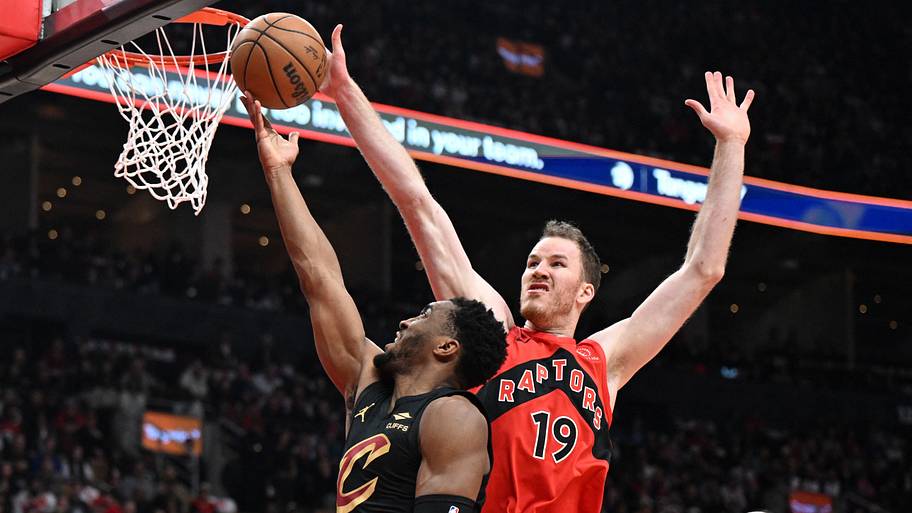
Poeltl's primary value lies in his physical presence in the paint.
Poeltl is a strong interior defender who, when right, protects the rim, defends the post, rebounds effectively, and handles the physical demands of facing larger, physically dynamic, assertive centers. He is also one of Toronto's most reliable defensive communicators, using his experience to direct teammates while operating in drop.
Poeltl regaining his impact as a back-line rim protector allows Toronto's wings to pressure the ball and play the true 94-foot high-pressure scheme that coach Darko Rajakovic emphasizes. Even with Murray-Boyles offering flexibility, there will be many situations where Toronto requires Poeltl's size and physicality.
Poeltl's value also goes beyond defence. He is an underrated passer, particularly from the elbows, where he has shown an ability to find cutters and make quick decisions when the defence breaks down. He is also an extremely efficient finisher at the rim and has developed a reliable floater game.
Last season, he averaged 10.7 points, 7.0 rebounds, and 2.0 assists while posting a remarkable 69.8 percent true shooting.
The Question Is, Which Poeltl Do The Raptors Get?
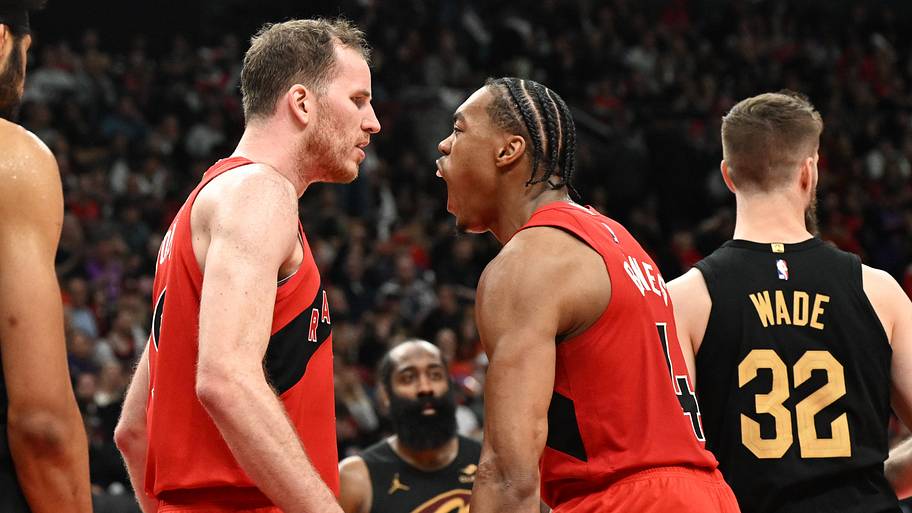
There is no question that Poeltl's production has declined over the last couple of seasons, and health has been a major part of that.
According to Poeltl, he has reworked his entire offseason in preparation for this season.
“I think the biggest difference was to my workout preparation and general day-to-day routine,” Poeltl said. “In the past where I would do a quick mobility and warmup before my workout, do my workout and then lift after, this summer it was more like long mobility stretching session, then an activation session and then a whole lift. So, I had an hour and a half- or two-hour program before my basketball workout even started.”
Last season, Poeltl played only 46 games and never truly looked comfortable or healthy, and his defensive production declined sharply. He averaged 0.7 blocks and 0.9 steals per game, down from 1.2 blocks and 1.2 steals the previous season. His scoring and rebounding also fell from 14.5 points and 9.6 rebounds in 2024-25 to 10.7 points and 7.0 rebounds last season.
That difference is notable, as the 2024-25 version of Poeltl more closely matched Toronto's expectations when they invested in him.
Toronto needs Poeltl to return to that level of performance.
Poeltl's contract is also a consideration. It is costly, reaching $29.4 million at its peak, which, for a center who offers limited perimeter spacing, calls into question his fit within Toronto's long-term roster plans. Still, the contract and the player should be judged separately when considering the Raptors lofty goals coming into this season.
When healthy, Poeltl has steadily been a positive contributor, as reflected in the team's recent performance. The Raptors were 7.9 points per 100 possessions better with him on the floor in 2023 and 2024, and 6.9 points per 100 possessions better in 2025. Last season, however, Toronto was 2.8 points per 100 possessions better with Poeltl off the court.
This by no means guarantees Poeltl will continue to regress, but it underscores concerns expressed by both fans and the media about not only health but also age-related regression.
Toronto Needs Both Poeltl and Murray-Boyles
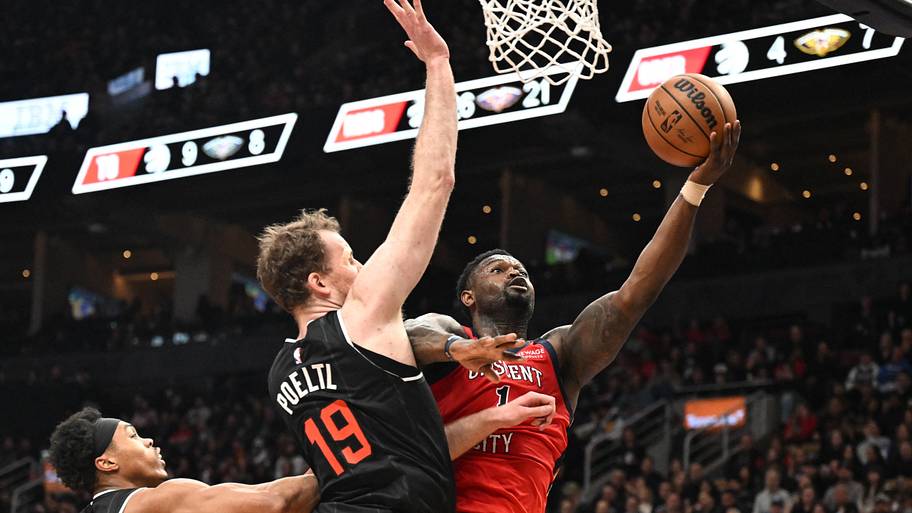
Fortunately for Toronto, the team does not need to choose between Poeltl and Murray-Boyles.
Murray-Boyles gives the Raptors a different look at centre. His ability to defend multiple positions, play at the level, switch onto smaller players, and create offense from the short roll makes him an excellent option in small-ball lineups.
Poeltl provides a contrasting skill set.
He offers Toronto size, physicality, veteran leadership, and a dependable presence near the basket. Although some matchups may favour Murray-Boyles at center, many games will still call for a traditional center like Poeltl.
This demonstrates the importance of Poeltl's health.
The Raptors do not need Poeltl to become a star or significantly expand his offensive role. They need him to perform as he has when healthy: efficient on offence, reliable on the boards, an excellent defensive communicator, and a physical interior defender who supports his teammates in drop coverage. If they get that version of Poeltl back this season, he could define Toronto's season. If not, then Poeltl's days in Toronto may be numbered.
More must-reads:
- Tyrese Haliburton offers encouraging signs in first game back from injury
- 76ers star LeBron James denies rumor about Joel Embiid: 'Stop the lies'
- The 'Last 2-rushing-TD duos by team' quiz
Breaking News
Trending News



Customize Your Newsletter
 +
+




Get the latest news and rumors, customized to your favorite sports and teams. Emailed daily. Always free!
PRIVACY POLICY COOKIE POLICY CONTACT US
ABOUT YARDBARKER TERMS OF SERVICE


By using this site, you agree to our Terms of Service and Privacy Policy.
This site is for entertainment purposes only.
There is no gambling offered on this site.
Gambling Problem? Call 1-800-Gambler.
