
-

-


Follow Us
-

 On Facebook
 On Flipboard

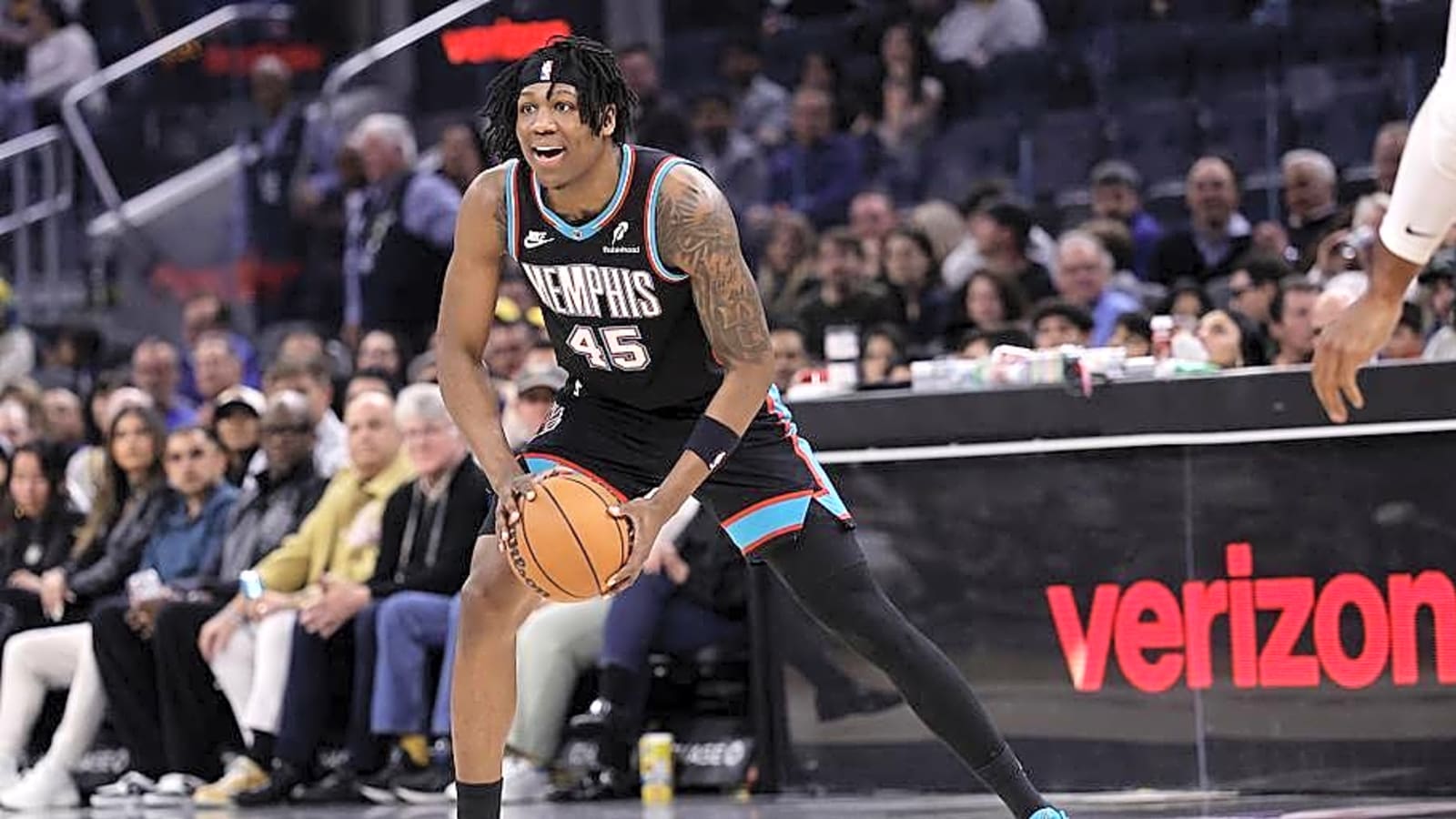
The wing position has been the Achilles heel for the Memphis Grizzlies for over a decade. Ever since the trade of Rudy Gay in 2013, the team has been searching for its missing piece on the wing to complete a hopeful championship puzzle. Being that Memphis is going into a new era, the search for its cornerstone on the wing is as vital as ever. The Grizzlies have multiple candidates on the roster who could hold this position. Here’s how the wings on the Grizzlies’ wings rank for their future with the franchise.
1. Cedric Coward
In a short period of time, Cedric Coward has cemented himself as the best wing on the roster. He finished his rookie campaign averaging 13.6 points, 5.9 rebounds, and 2.8 assists per game while shooting 47.1% from the field. His solid play earned him First Team All-Rookie Honors and was a finalist for the NBA Hustle Award.
After playing only 11 games during his senior year at Washington State, Coward hit the ground running at the beginning of the season. He started the season in the “3 and D” role coming off the bench, but quickly won the starting job over Kentavious Caldwell-Pope and took on more offensive responsibility. He did while also taking on the defensive task of guarding the opposing team's first- or second-best player.
Coward’s defensive versatility, high basketball IQ, and impact on winning made him one of the most consistent parts of a tumultuous Grizzlies season. This shows up in his final True Shooting % and Player Impact Estimate (PIE) stats of the year. He posted a 50.7 PIE rating and a 59.1 true shooting percentage.
He finished second on the team in both categories.
Coward still has room to grow in his overall offensive consistency, ball-handling, and shot-creation ability. However, he has all the skills and potential to be the starting shooting guard on the Grizzlies for the long haul.
2. GG Jackson II
GG Jackon II had a resurgence during the second half of this season. After being buried on the bench during the first half of the year, he averaged 17.7 points while shooting 50.7% from the field post All-Star Break. He was awarded more opportunities after the Grizzlies dealt with a boatload of injuries and transitioned into a full tank. This may remind Grizzlies fans of Jackson’s rookie year. Jackson was playing a large number of minutes on a tanking basketball team. He was able to take as many shots as he wanted and use as many dribbles as needed to get them.
However, this time around, Jackson’s play looked completely different. He got to his shots on limited dribbles, made quicker decisions with the ball, took higher-percentage shots, and attacked the time with an aggression he never displayed before. He also improved on the defensive end, posting a career high in total blocks and steals this season.
Jackson’s size, athleticism, and natural scoring ability allow him to have one of the highest ceilings on the roster. Plus, despite him going in year 4, he’s still the youngest player on the roster. The biggest question for Jackson is whether he can transfer his solid play to a competitive basketball team. If Jackson can continue to improve on the defensive end while taking a leap offensively, he could find himself as the starting small forward for the future of the Grizzlies.
3. Jaylen Wells
Jaylen Wells had a solid sophomore year for Memphis. He slightly improved his scoring from his rookie season, averaging 12.5 points per game while shooting 43.1% from the field and 35.3% from three. He was able to keep a steady level of production on both ends of the floor despite the ups and downs of the season.
That’s the best word to describe Wells: steady. He doesn’t do anything that jumps off the stat sheet, and he isn’t going to wow you with his physical traits. He doesn’t shoot the three-ball at an elite clip, and he doesn’t defensively have the athleticism to keep up with the elite shot-makers in the league. That’s why his position as the starting small forward going forward is in question.
If Wells is supposed to fill the “3 and D” need for this basketball team, he must be elite at both aspects of his game. He posted a slightly worse defensive rating than GG Jackson, 117.8 to Jackson’s 117.5, and when it comes to his overall offensive game, he has substantial room to grow as well.
This is not to argue that Wells is a bad player or shouldn’t be on this team. He is the third-best wing on this roster for a reason. This is simply to argue that he will be better suited coming off the bench. Every team needs a Wells-type player. He’s consistent and plays with a high IQ. He doesn’t do a lot to hurt Memphis. However, teams want their top players to move the needle more. Wells had the worst PIE rating among players who started and ended the season on the roster, at 6.9.
Wells is a good piece of this core who should be on the team for the long term. However, he must improve his overall impact on winning to secure a larger role going forward.
4. Kentavious Caldwell-Pope
KCP had an average first year with Memphis. He averaged 8.4 points per game while shooting 41.0% from the field and 31.6% percent from three. His shooting percentage from three was a career low, and he posted his second-lowest PPG in his career. However, coming off his 13th year in the league and being 33 years old, Memphis isn’t expecting prime numbers from Caldwell-Pope.
KCP’s value is being a veteran presence in the locker room. He has championship experience, which is needed on a young team that is trying to build a championship culture. He remains one of the most consistent defenders on the team. He ranked fourth among players who started and ended the season on the roster in defensive rating, with 115.3.
Heading into Year 14, Caldwell-Pope has a $21.6 million player option he will almost certainly opt in to. Memphis hopes the growth of its younger wings will allow Caldwell-Pope to transition into a role where he isn’t relied on to play 20 minutes a night and can be more of a leader off the court and in the locker room.
Despite his age, Memphis can rely on Caldwell-Pope to give productive spots minutes next season.
5. Jahmai Mashack & Rayan Rupert
Jahmai Mashack and Rayan Rupert were both beneficiaries of the turbulent season. Both appeared sparingly throughout the season, but had flashes of promise. Mashack was put on a two-way contract early in the season. He hung his hat on the defensive end, where he could guard multiple positions. Rupert was the exact opposite. He was acquired by Memphis later in the year and impressed the team with his scoring ability. He averaged 14.7 points per game with Memphis and had a standout 33-point triple-double in a game against the Milwaukee Bucks. His play earned him a two-way contract.
Both Mashack and Rupert will likely spend most of their time with the Memphis Hustle next season. However, they both showed flashes of value for Memphis going forward. If Maschack can improve his overall offensive game and Rupert can grow defensively, both will be ready to add a positive impact if the Grizzlies call them up from Southaven.
More must-reads:
- Victor Wembanyama puts up historic numbers to force Game 7 in WCF
- One contender has already shut the door on Giannis Antetokounmpo
- The 'NBA Coaches of the Year' quiz
Breaking News
Trending News





Customize Your Newsletter
 +
+




Get the latest news and rumors, customized to your favorite sports and teams. Emailed daily. Always free!
PRIVACY POLICY COOKIE POLICY CONTACT US
ABOUT YARDBARKER TERMS OF SERVICE


By using this site, you agree to our Terms of Service and Privacy Policy.
This site is for entertainment purposes only.
There is no gambling offered on this site.
Gambling Problem? Call 1-800-Gambler.
