
-

-


Follow Us
-

 On Facebook
 On Flipboard

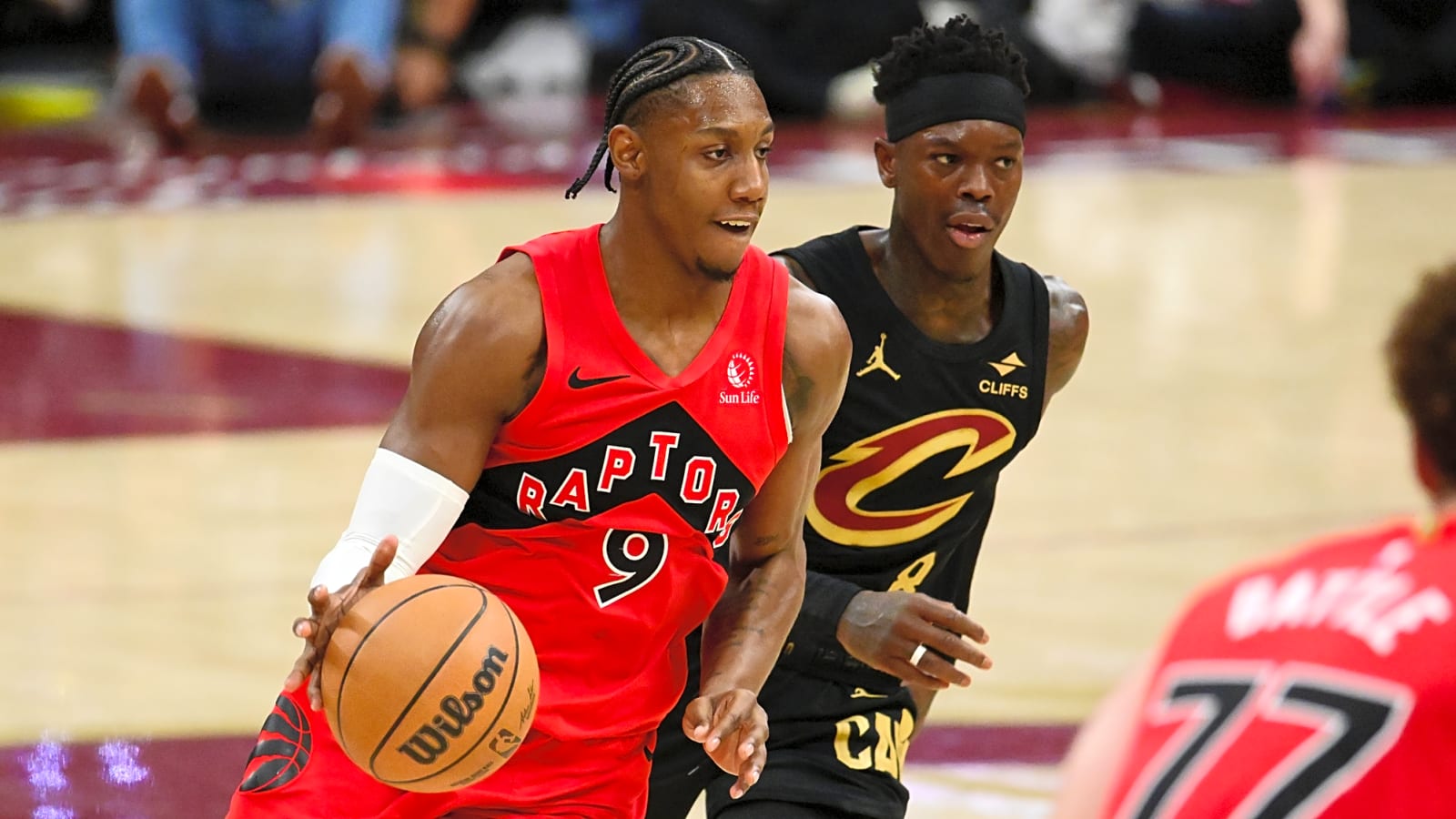
The following is part of Raptors Republic’s series of pieces reviewing the season for the Toronto Raptors. You can find all the pieces in the series here.
The ball hung in the air for an impossible amount of time.
The Mississaugan threw up a straightaway, moon-ball triple, which bounced off the back heel of the rim, flew in the air, above the shot clock, above the past, above the future, before dropping through the mesh.
There were no screams to answer that moment, no primal bookend of manic celebration. The Raptors were too tired for that. Barrett raised his arms and basked in the joy of the crowd. He walked alone, a man in his own city, no teammates joining him right away to celebrate.
So, yes. RJ Barrett hit a playoff game winner for the Toronto Raptors in the Raptors’ second-last game of the 2025-26 season. The last Raptor to do so before him was OG Anunoby, and before that Kawhi Leonard. The moment didn’t save anything, didn’t stop anything. Barrett has been on the trade block since joining the Raptors, and with him entering the final year of his deal, this offseason will be a determinative one for Barrett in Toronto. It is quite likely he’ll either be traded or extended this offseason. And the Raptors have traded away DeMar DeRozan, Pascal Siakam, and countless others. RJ Barrett is not a made man, not yet.
But the moment was one Barrett will tell his kids, one his kids will tell their kids. Whether the Raptors want Barrett or not for the long term, he has built a home in Toronto.
He has become a very different player from who he was in New York, even if no one has noticed. I wrote this during Barrett’s season:
And the seasons passed, and the promise that shadows third-overall picks slowly dwindled and faded. The eyes of the league drifted to shinier objects. The conversation around Barrett ossified and calcified until it became stale and hard like dinosaur bones.
Except Barrett’s game didn’t.
Barrett’s game in Toronto has slowly risen from the earth, shaken off the dirt, and started changing before our very eyes. He is a living zombie — the good kind (is there a good kind?!) — a man who has outrun the conversation surrounding him, outrun the chains of expectations, outrun the assumptions tethered to his every footstep on the court.
Barrett isolates less, drives more. He dribbles less, passes more. He shoots less, cuts more. Even though he’s not a defensive stopper, he just five games going to absolute war with (and almost stealing a series from) Jarrett Allen, getting put through a variety of screens to get switched onto Donovan Mitchell and James Harden, and holding his own.
He opened the season like a house on fire. He averaged 20 points, five rebounds, and four assists a game while shooting practically 60 percent from 2-point range over the first 17 games of the season. His drives were irrevocable, his finishing irrigant for an otherwise-parched offence. The Raptors were terrible, then they seemed to solve basketball as we know it, and through it all Barrett was a lynchpin of constancy.
Then came the injury. He suffered a knee sprain, and not only did he miss almost 20 games, but he wasn’t himself when he returned. His burst was gone, and so many of his churning duck drives stopped shorter, finished with less balance, and enjoyed less burst with his last step. Later, he sprained his ankle. He didn’t rediscover his physical form until March.
But from March on, he actually surpassed his early season form. His statistics equalled those from the start of the year, and he actually shot better on 2-point shots.
And, of course, he carried that into the playoffs.
Barrett became Toronto’s offensive life blood in the playoffs. He scored 24 points a game while finishing the vast majority of those in traffic with at least one center standing between him and the basket. His push shots and floaters were the staple diet of Toronto’s offence, the rice of the meal. They weren’t all he offered. He ran in transition, he crashed the offensive glass. (His rebounding skyrocketed to 7.0 a game in the playoffs, far above anything he has ever averaged in the regular season.)
All told, he had, by far, the team’s best offensive on/offs on the team in the playoffs. The offence basically collapsed when he hit the bench. The team’s 3-point rate and accuracy skyrocketed when he played because he was more or less the only consistent paint touch on the team. Without Barrett, the team was dead in the water in the playoffs. With him, it had a chance.
It was the best Barrett has ever been, both in the micro — game winner! — and in the macro. Of course, it all wasn’t quite enough. Barrett being a team’s second-best player was not enough for the Raptors to win a round in the playoffs. They came close, but this ain’t horseshoes, and nor is it hand grenades. The thing is, Barrett shouldn’t be a team’s second-best player. He performed immaculately in the role. But if the Raptors have their druthers, that won’t happen again. Whether that is because the team has upgraded, or because Barrett is elsewhere, will be determined this offseason. But Barrett has put a claim in; he is trying to become a legend as the hometown kid.
Barrett has laid the foundations in Toronto. Nothing is guaranteed. But don’t be surprised if Barrett’s 2025-26 is just the start.
More must-reads:
- Knicks' OG Anunoby makes revealing comments about injury ahead of ECF
- Spurs-Thunder WCF preview: Five factors that will help decide heavyweight clash
- The 'Most 40-point games in a season' quiz
Breaking News
Trending News





Customize Your Newsletter
 +
+




Get the latest news and rumors, customized to your favorite sports and teams. Emailed daily. Always free!
PRIVACY POLICY COOKIE POLICY CONTACT US
ABOUT YARDBARKER TERMS OF SERVICE


By using this site, you agree to our Terms of Service and Privacy Policy.
This site is for entertainment purposes only.
There is no gambling offered on this site.
Gambling Problem? Call 1-800-Gambler.
