
-


Follow Us

 On Facebook
 On Flipboard
 On Twitter
Houston has spent much of this season looking like a team built for the long haul. The defense travels, the frontcourt punch remains real, and the roster has enough depth to survive ugly nights. However, the games that matter most often come down to a handful of possessions, and that is where things keep unraveling.
Right now, the Rockets’ clutch time nightmare is not a one-off. Instead, it is becoming a pattern that opponents can plan for, and one that Houston has not solved.
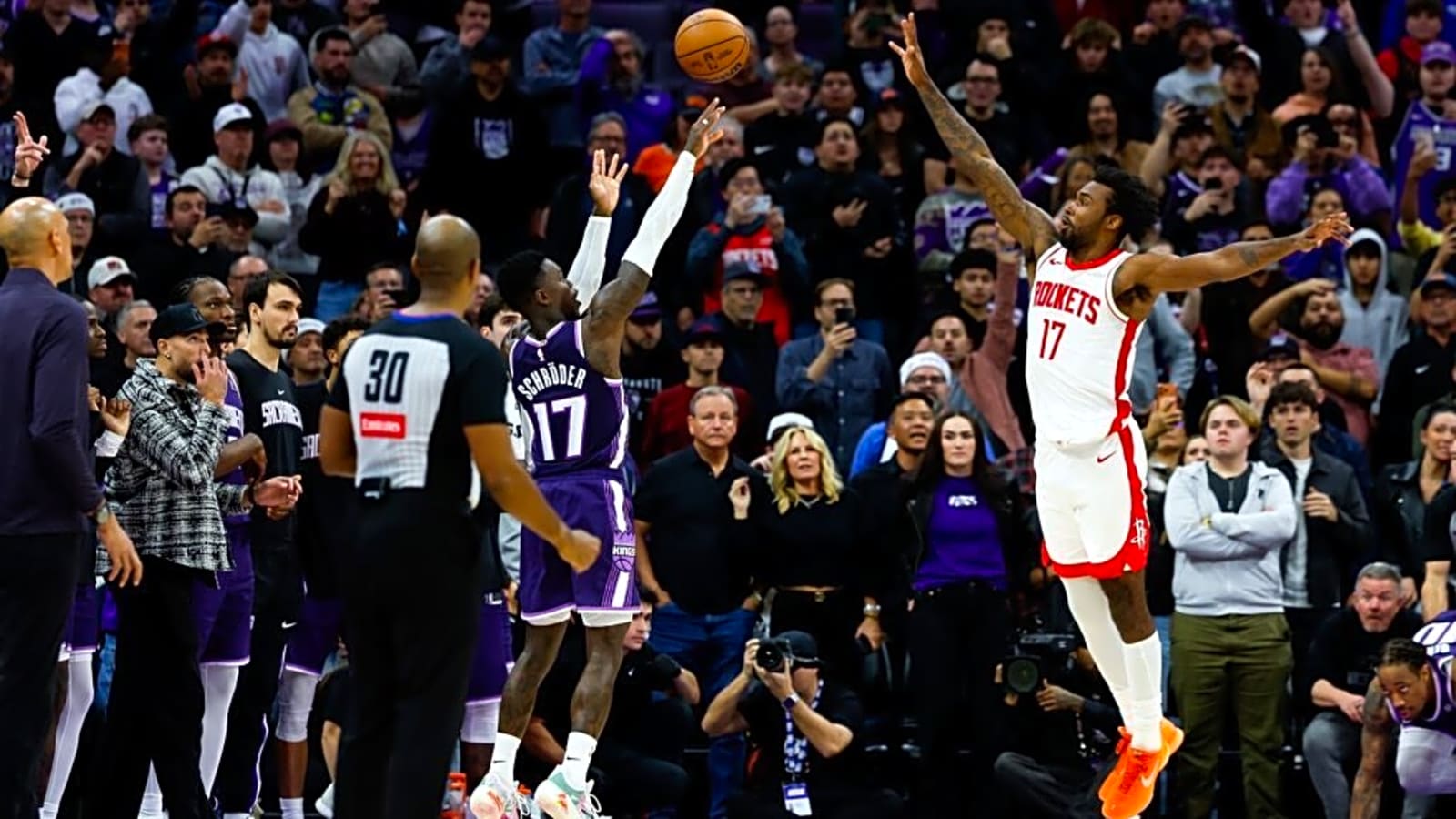
Sunday night in Sacramento offered the latest example. The Rockets lost 125-124 in overtime when Dennis Schröder buried a corner three with 2.2 seconds left, capping a Kings rally and extending Houston’s recent run of late-game frustration.
Rockets Clutch Time Nightmare Keeps Getting Worse
For long stretches, Houston played well enough to win. Alperen Sengun scored 28 points, while Kevin Durant finished with 24 points, 10 rebounds and eight assists. Jabari Smith Jr. added 18 points, and his free throws in the final seconds of overtime briefly put the Rockets ahead 124-122.
Then the ending arrived, and it looked painfully familiar. Sacramento created an advantage, DeMar DeRozan made the right read, and Schröder got the exact shot Houston could not allow. The Kings’ comeback also reflected how quickly the Rockets can lose control when the game shifts from structure to chaos.
Houston’s issues were not limited to that final possession, either. The Rockets committed costly mistakes late, and head coach Ime Udoka pointed to a lack of focus as the game tightened.
Kevin Durant Was Brought In for These Moments, Yet the Usage Question Lingers
Houston’s offseason logic made sense. The Rockets wanted an established closer, and Durant’s résumé speaks for itself. Even so, the current version of Houston has not consistently put him in position to decide games. When opponents load up on Durant, the Rockets too often drift into stagnant possessions that end with difficult shots or rushed decisions.
This is where the Rockets’ clutch time nightmare stops being about a single miss and starts being about process. In Sacramento, Durant got a look at the end, but it was heavily contested and did not fall.
That happens. The more concerning part is how often the Rockets end up in that same place, with the possession narrowing into a tough jumper because the first and second options never materialized.
It also puts pressure on Sengun in a different way. Sengun can create from the elbow and punish switches, yet late-game possessions frequently ask him to initiate far from the basket or operate in crowded spacing. When Houston plays at its best, Sengun gets touches with room to read and punish. When things tighten, the floor shrinks, and the offense becomes easier to predict.
Overtime Losses Are Stacking Up, and the Standings Will Feel It
The timing matters because the Western Conference does not forgive wasted opportunities. Houston’s overtime results paint a clear picture. The Rockets have struggled to finish these games, and recent outcomes show how quickly tight losses can pile up—even for a strong team.
This stretch also tests Houston’s identity. The Rockets have leaned on rebounding, physicality, and defense to create separation in the middle quarters. Yet late-game basketball often flips those advantages. Officials swallow whistles, opponents hunt matchups, and every turnover gets magnified.
If Houston cannot stabilize those final possessions, then it will not matter how dominant the first 40 minutes look.
That is why the Rockets’ clutch time nightmare deserves real attention now, not later. It is not a January problem or a playoff problem. It is a current problem, showing up against teams Houston expects to beat and against teams it needs to beat if it wants a favorable postseason path.
The numbers only reinforce how serious the issue has become. Eight of Houston’s nine losses this season have come in clutch situations, a staggering figure for a team with legitimate postseason ambitions. The Rockets are also 1–4 in overtime, with three of those losses coming in the past week alone. They all follow similar patterns of late-game confusion, defensive lapses and stagnant offense.
The good news is that this is fixable. Houston can simplify late-game play calls, increase the urgency to get into actions earlier, and tighten the defensive communication that keeps leading to open threes at the worst time. Still, until those changes become consistent habits, the Rockets will keep living on the edge.
And right now, the edge keeps breaking the wrong way.
More must-reads:
- LeBron James won't take Chris Paul's side in feud with Clippers
- Lakers' JJ Redick gives no clarity about Luka Doncic's left leg injury
- The 'Youngest 40-point NBA games' quiz




Customize Your Newsletter
 +
+




Get the latest news and rumors, customized to your favorite sports and teams. Emailed daily. Always free!
PRIVACY POLICY EDITORIAL POLICY CONTACT US
ABOUT YARDBARKER TERMS OF SERVICE


Use of this website (including any and all parts and
components) constitutes your acceptance of these
Terms of Service and Privacy Policy.
This site is for entertainment purposes only.
There is no gambling offered on this site.
Gambling Problem? Call 1-800-Gambler.
