
-

-


Follow Us
-

 On Facebook
 On Flipboard

Comparison is the thief of joy. It is also often misguided when it comes to basketball, specifically. Two players can be alike, but simply equating one player’s game to another’s rarely captures the game’s nuance.
So please don’t take what I’m about to write too literally.
Kyle Lowry is the Greatest Raptor of All Time.
But he isn’t the team’s all-time leading scorer, nor was he their No. 1 option during the franchise’s championship season. The essence of what has made Lowry the GROAT is a mix of intangible toughness, possession-winning fortitude and an overall will to overcome obstacles. The courage, initiative and resourcefulness that make doing difficult things possible. He was able to solve problems others couldn’t and wasn’t afraid to take it on the chest to do so. The sum of it all? Winning basketball. Kyle Lowry Over Everything.
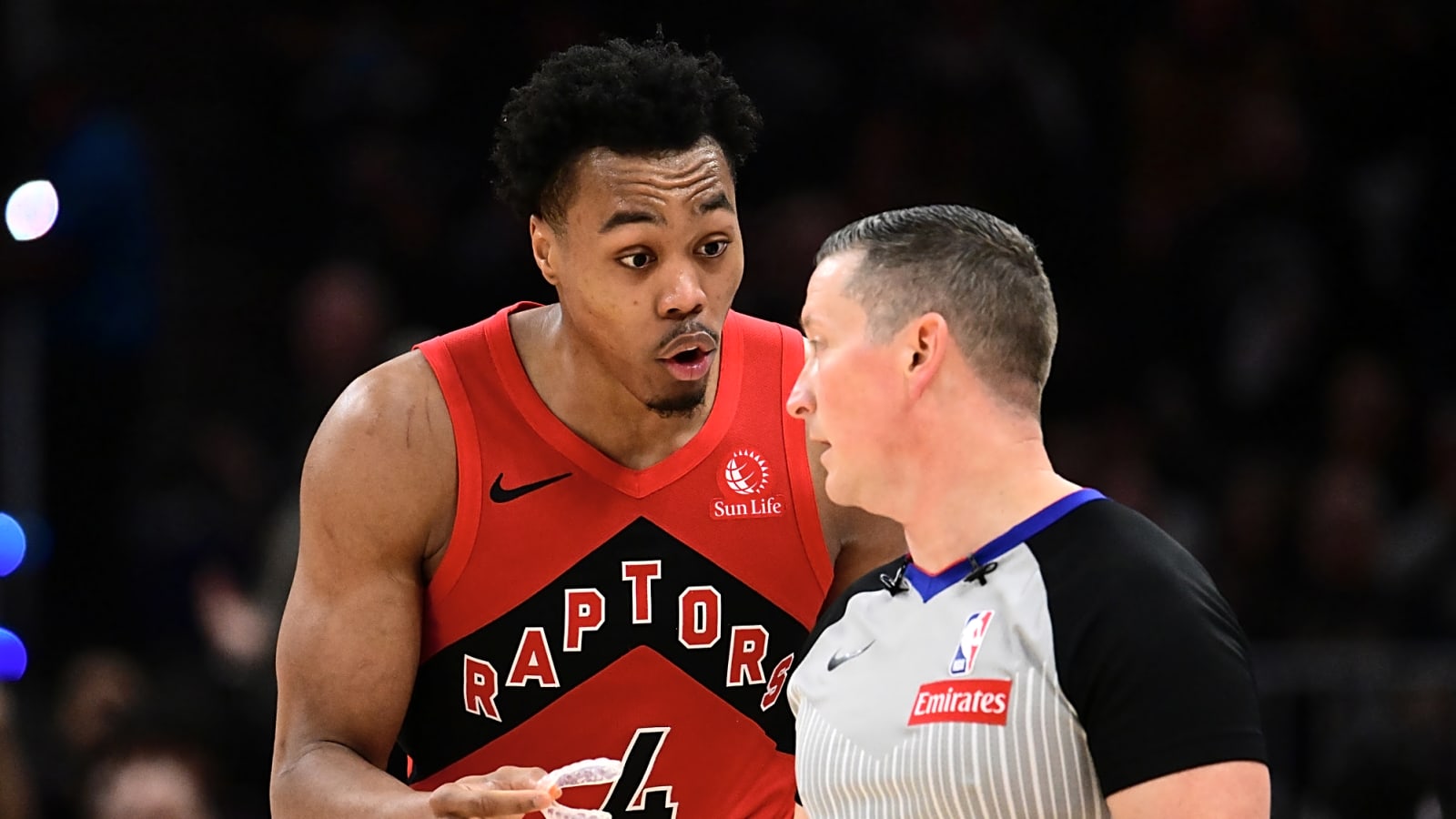
Ever since Pascal Siakam left for the Indiana Pacers at the 2024 trade deadline, Scottie Barnes has been the Raptors’ best player. But he’s yet to lead the team in scoring. Like Lowry, he achieves greatness in non-traditional ways. Methods that are difficult to replicate.
Lowry and Barnes share a defining asset. Their greatest talent is reading and reacting to the game. Using their big, beautiful basketball brains to map out what the court is presenting to them, process the most advantageous read, and execute it perfectly, all in an instant. They know the question before it’s asked and solve it correctly. Not only do they make the right decisions, but they also make the decisions that others don’t even see as possibilities.
On Tuesday, Lowry fulfilled the promise he made a few years ago while in town with the Miami Heat to return and retire as a Raptor on a one-day contract. It was a beautiful celebration of Lowry as a person, a basketball player, the winning culture he fostered in Toronto, and the belief he instilled in Raptors fans. It was also over five years since his last game with the team.
“I did anything it took to win basketball games,” Lowry said at his press conference.
For most people, that concept of ‘anything it takes’ is shooting, scoring, maybe a few more things. The simple stuff. For Lowry, it was so much more. And it’s fitting that right as Lowry left, Barnes came and picked up the mantle. In the half-decade since, he’s slowly come to embody the same principles and style of play that made Lowry great. Not just the all-around box-score contributions (Lowry leads the Raptors with 16 career triple-doubles; Barnes is second with nine) but also a clever ability to put teammates in positions to succeed. Not just doggedness that results in big-time defensive playmaking but also the ability, wherewithal and effort to effect change in more subtle ways.
In the Raptors’ first-round series against the Cavaliers, Barnes often recognized that Jarrett Allen and Evan Mobley were creeping off of Collin Murray-Boyles ever so slightly and hit him with passes that led him to successful drives to the basket. Barnes sees the small advantages that others don’t. It’s reminiscent of Lowry’s blend of both smart and tight-window passing that so often set up his Raptors teammates with excellent shots.
On defence, Barnes and Lowry both have a knack for apparating — seemingly out of nowhere to opposing players — in the right spots. For making the perfectly timed weak-side help rotation (yes, Lowry did this often as a guard). They were “playing chess.” Not just a few moves ahead, but reading and understanding the board, how it’s likely to move, using that understanding to manipulate the game in their favour. Their instinctive timing often blew up plays and caused stops, or resulted in straight-up turnovers.
The starkest example of Barnes emulating Lowry is probably when he utilized the GROAT’s patented 2-for-1 technique to close out the third quarter of the Raptors’ Game 3 win that got them back into the Cavs series. With 30 seconds remaining, Barnes hard-charged towards the packed paint, spun and surveyed the court around him, and made the read to the open man — Collin Murray-Boyles, who stuck a floater from the short corner.
The next trip down, Barnes hustled off the inbound and drained a rushed mid-range pull-up to give the Raptors the lead going into the fourth quarter. They won that frame 43-23 to secure the win and avoid going down 3-0.
Of course, Barnes and Lowry have their differences. They play different positions. There’s an immense contrast in their physical proportions — though they’re both very strong. Barnes was a heralded prospect picked No. 4 overall with the vision of a big-time role already laid out for him. Lowry was picked No. 24 and had to grind his way into a starting spot, an All-Star selection and eventually the part of franchise point guard.
But what they share supersedes any surface-level characteristic. It’s their gargantuan processing ability that makes all the difference. It mines advantages from the murkiest and most unfathomable depths. They clap and scream full-throated at the ref to give them the ball, to inbound it a second earlier when the defence is slightly less set. Their thought process tilts the margins of possessions in the Raptors’ favour, and their mindset galvanizes their teammates around them. The things that are most obvious components of basketball success in their respective leagues — size for Lowry and shooting for Barnes — are decidedly not their strengths.
The best players, and leaders, set examples for their peers that ripple throughout the roster. Jamal Shead jumping Donovan Mitchell right as he was about to cross half-court to force a pivotal eight-second violation in the dying seconds of Game 4, as the Raptors went on to even the series, typified a Lowry-esque play. Shead’s propensity for drawing moving screens also fits neatly within the KLOE ethos. The Raptors are once again becoming a team moulded in Lowry’s image. (Barrett also executed a successful 2-for-1 in the second quarter of Game 4 — a quick transition layup then a shovel to Brandon Ingram for a buzzer-beating 3.)
That image is one of toughness. Of smart decision-making. Of unselfishness and sacrifice and comporting oneself to meet the needs of the greater good. More than anything else, it’s one of winning basketball.
Another thing Lowry and Barnes share: they were both the Raptors’ best player until the arrival of Kawhi Leonard. In the 2018-19 season, Lowry took a big step back as a scorer, but his powers as a decision-maker and facilitator reached a new peak. Now that a new version of Leonard is likely to return — pending the NBA’s investigation into the Clippers — the Raptors’ best player and basketball supercomputer could once again have to reshape their game around Leonard’s own greatness. Considering Barnes’ uncanny basketball acumen and win-over-all-else attitude, it stands to reason that it would be an easy adjustment.
For all Lowry’s immense abilities to win basketball games, he was never able to do so on the highest stage as his team’s best player. Perhaps that, too, could be mirrored in Barnes, even right down to the details. By the end of this season, Lowry and Barnes could have another thing in common: Doing whatever it takes to win big-time basketball games alongside Leonard.
More must-reads:
- Mark Cuban takes Mavericks owner Patrick Dumont to court
- Celtics' Joe Mazzulla finally speaks on stunning Jaylen Brown trade
- The '60-point NBA games' quiz
Breaking News
Trending News


Customize Your Newsletter
 +
+




Get the latest news and rumors, customized to your favorite sports and teams. Emailed daily. Always free!
PRIVACY POLICY COOKIE POLICY CONTACT US
ABOUT YARDBARKER TERMS OF SERVICE


By using this site, you agree to our Terms of Service and Privacy Policy.
This site is for entertainment purposes only.
There is no gambling offered on this site.
Gambling Problem? Call 1-800-Gambler.
