
-

-


Follow Us
-

 On Facebook
 On Flipboard
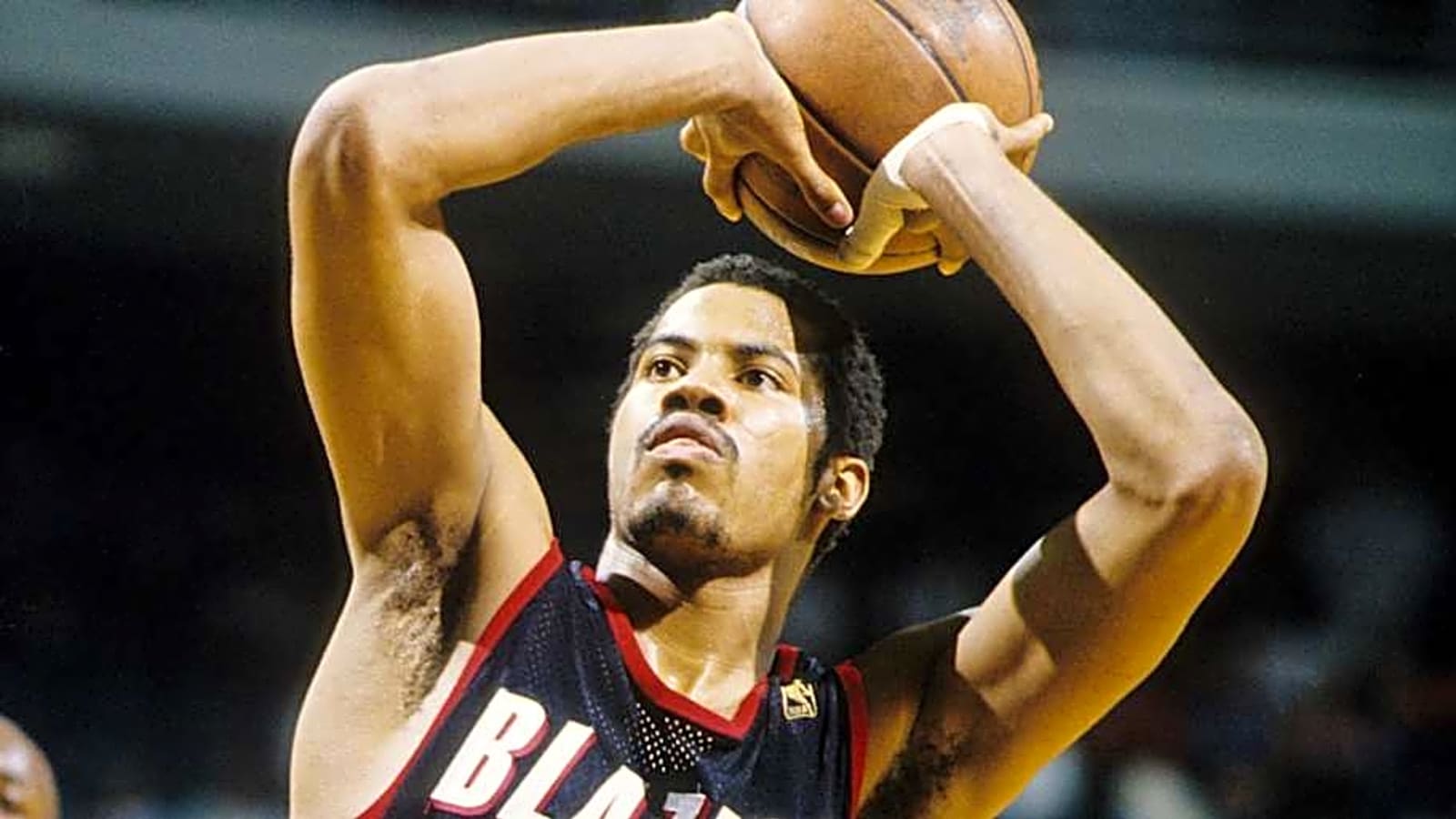
The Portland Trail Blazers’ pursuit of NBA titles might be temporarily halted, but with a break in action, it feels like the perfect time to revisit the last team to truly come close during this generation.
On Apr. 14, 2026 — as the current-day Blazers were stamping their signature into the Play-In Tournament history books against the Phoenix Suns — legends of the franchise’s past were telling their sides of the story from the “Jail Blazers” era.
What followed was a masterclass in how to, and how not to build a team, disconnects between players and fanbases, and a wild ride of history along the way. On the topic of Netflix's new "Untold: Jail Blazers" documentary, here's what stood out to a younger fan:
Small Markets, Big Problems

At the root of everything associated with the early-2000s Trail Blazers, one storyline takes precedent: the pitfalls of a small-market franchise committed to the goal of hoisting the Larry O’Brien Trophy.
Relatively early on, the Blazers’ then-GM Bob Whitsitt made it relatively clear. Given Portland’s cultural make-up — and its posture as a small-market team — attracting the NBA’s top free agents wasn’t a reliable play.
The history confirmed that, too; Basketball Reference tallied Whitsitt for 51 different signings, either as free agents, 10-day contracts, or rest-of-season deals.
Of that 51, zero of them went on to become All-Stars.
Among the biggest names of that group: (1) a past-his-prime Detlef Schrempf at ages 37 and 38, (2) Arvydas Sabonis, who, though brilliant, had his best days far in the rearview, and (3) 21 games of Rod Strickland, a once-upon-a-time talent for the Blazers a half-decade before when he was 29.
Compare that to the L.A. Lakers — Portland’s annual arch nemesis and the 1999-00 champions — who, of their 15 players, only had four drafted talents on their roster, and signed Shaquille O’Neal, simply on California allure.
It’s hard to make excuses, though, given that Portland was either No. 1 or No. 2 for the NBA’s highest payroll in every season from 1998-99 to 2003-04. Whitsitt’s decision-making, roster-wise, are rightfully divisive, but his rationale at these times was understandable.
The Gold-and-Purple Problem

And speaking of: the documentary itself rehashed what might’ve been the most agonizing defeat in the franchise’s history.
The details are well-known: the Blazers owned a 71-58 lead in Game 7 of 2000’s Western Conference Finals, and found themselves one well-executed quarter shy of a trip to the NBA Finals.
The story of Portland’s collapse began with 13 consecutive missed shots, and ended with the infamous Kobe-to-Shaq alley-oop that wrapped the bow on a seemingly-impossible 89-84 win for those in Laker Town.
Despite not being old enough to have observed it live, going back to do a whistle-for-whistle analysis on Game 7’s entirety — to truly see if the refereeing favored the Lakers — makes it as fascinating as almost any series of that decade, personally.
There’s also the psychological toll of watching your season end against the same team in 1997, 1998, 2000, 2001, and 2002. Bonzi Wells touched on it briefly during the documentary, but Blazers fans wouldn’t have been wrong in thinking that Rasheed Wallace’s conquering of the Lakers in 2004 with Detroit was vindication, in some form. And speaking of:
Is Rasheed Wallace the NBA’s Most Fascinating Study?

The owner of, perhaps, the NBA’s most dubious record, in accruing 41 technical fouls in 2000-01.
The most recognizable face on a team that came within a few wins shy of back-to-back NBA Finals appearances without any scorer averaging over 16.5 points …
… followed by his role on a Detroit team that won 2004’s championship with +500 odds, the longest-ever of any Finals participant.
At one point, during his time in Portland, the Lakers’ then-head coach, Phil Jackson was asked about how to stop Wallace, to which he dryly replied, “You don’t.”
From chasing down referees in parking lots to the infamous “both teams played hard” press conference, it feels as if everyday was an adventure for those who had anything invested in Portland. Perhaps, though, that should’ve been expected, given the expletive-threat filled t-shirt Wallace had on at his introductory press conference.
Basketball lore will remember him as a could’ve-been Hall of Famer who could stand toe-to-toe with anyone, but, for better or worse, just cared about other things. For those seeking to understand him, the piece with Geoffrey C. Arnold — one writer he did relate to — is probably a must-read.
Five Other Side Thoughts
- The Damon Stoudamire situation was as unfortunate as could be. The documentary discusses an unwarranted search that, afterwards, left him paranoid in his own home as a hometown kid.
- The documentary itself covers plenty of different viewpoints, but cases could’ve been strengthened if they had gotten, say, head coach Mike Dunleavy, involved. Or, Arvydas Sabonis and Steve Smith; the latter is an on-screen analyst who would’ve certainly spoken. Kerry Eggers would’ve also been a perfect addition.
- At one point, Wallace accumulated three technical fouls over a five-second span. Given that fact, it’s likely to be one of those never-to-be-broken records. Remarkably, he ranks third all-time in career techs.
- For all of his criticism, Whitsitt’s pitch to Scottie Pippen in 1999 was the stuff of genius. Pippen would’ve been far behind in the pecking order if he joined the Lakers in 1999, as planned. Whitsitt, playing to the ego, made certain he was aware of it.
- It’s said that the longest the “Jail Blazers” went without incident was 17 days. That’s a true nightmare scene for a one-newspaper city. In all likelihood, it’ll be the type of team-building experiment never to be seen again.
More must-reads:
- Kevin Garnett said the quiet part out loud about Joel Embiid
- 76ers' Tyrese Maxey has strong reaction to Knicks fans taking Philadelphia over
- The 'Active playoff scoring leaders' quiz
Breaking News
Trending News


Customize Your Newsletter
 +
+




Get the latest news and rumors, customized to your favorite sports and teams. Emailed daily. Always free!
PRIVACY POLICY COOKIE POLICY CONTACT US
ABOUT YARDBARKER TERMS OF SERVICE


By using this site, you agree to our Terms of Service and Privacy Policy.
This site is for entertainment purposes only.
There is no gambling offered on this site.
Gambling Problem? Call 1-800-Gambler.
