
-

-


Follow Us
-

 On Facebook
 On Flipboard
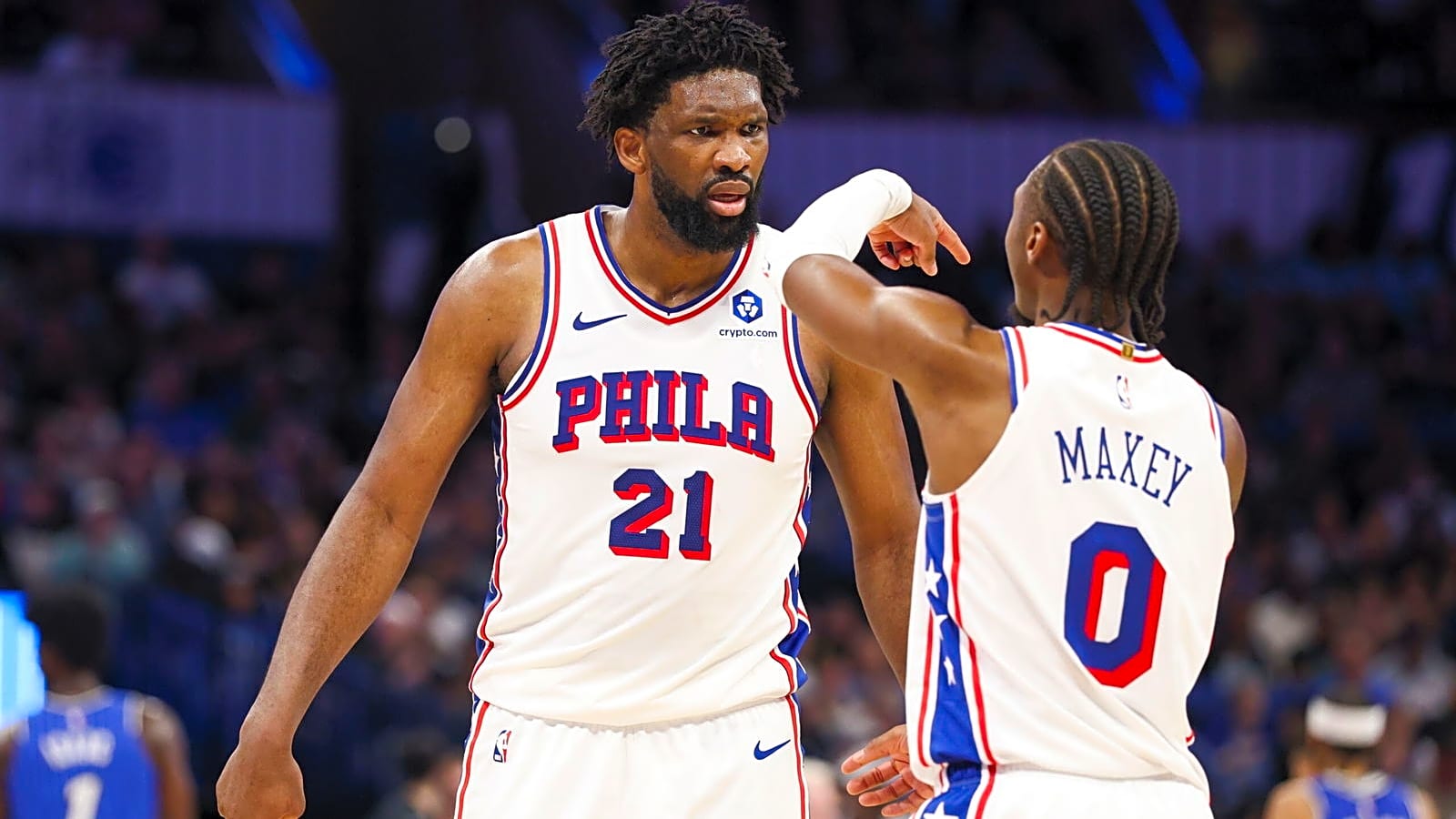
The Philadelphia 76ers have spent much of the 2025–26 season fighting a battle that has little to do with opposing defenses. Instead, their biggest challenge has been availability.
In recent weeks, the Sixers have been forced to navigate games without several key players. Joel Embiid, Tyrese Maxey, and Kelly Oubre Jr. have all been out of the lineup with injuries. With multiple starters sidelined at once, the team has had to rely on temporary contracts and lineup adjustments to stay competitive.
The situation highlights a familiar reality of the NBA season: talent wins games, but depth often determines whether a team survives difficult stretches.
A Growing Injury List
Philadelphia’s injury report reads more like a roster sheet than a short update.
Joel Embiid, the franchise cornerstone and former MVP, is out with an oblique injury and is expected to be re-evaluated soon. Embiid’s absence is always significant; his scoring, rebounding, and defensive presence shape nearly every aspect of the Sixers’ identity. Without him, the 76ers lack both their primary offensive hub and defensive anchor.
Tyrese Maxey’s tendon injury in his right pinkie finger has dealt another huge blow to the squad. Philly’s medical staff will re-evaluate Maxey in about three weeks. As a result, the Sixers will be without their top perimeter creator for the foreseeable future.
On the wing, Kelly Oubre Jr. will miss at least two weeks after suffering a sprained left elbow. Oubre has been one of the team’s most consistent scorers this season, averaging 14.7 points per game on 46% shooting from the field. Losing him removes both offensive production and defensive versatility from a 76ers team that already desperately needs both.
The frontcourt depth has also taken a hit. Adem Bona missed a game last week with a back injury. Meanwhile, veteran center Andre Drummond missed three in a row with his own back issue.
When multiple injuries occur simultaneously, the impact multiplies. Rotations shrink, roles change, and players who normally provide depth suddenly become starters.
Opportunities for the Supporting Cast
While injuries create problems, they also create opportunities. These stretches often reveal the hidden value of roster depth. A player who normally contributes ten minutes off the bench might suddenly be asked to play thirty.
Players who might typically see limited minutes are now stepping into larger roles; the coaching staff must experiment with lineups and rely on versatility rather than star power. Bench players become temporary starters, two-way players see increased run, and role players take on additional scoring responsibilities.
For Philadelphia, the emphasis has shifted toward pace, ball movement, and collective effort. Without a dominant scorer like Embiid or Maxey orchestrating the offense, the Sixers have been forced to generate points through committee.
Enter the new starting five: players like Justin Edwards, Trendon Watford, Quentin Grimes, VJ Edgecombe, and Dominick Barlow have all been given chances to shine. Meanwhile, new signing Cameron Payne gets the opportunity to come off the bench and prove why he deserves a spot.
Adjusting the Game Plan
Injury-heavy lineups force teams to rethink their strategies. Philadelphia’s coaching staff has had to adjust both offensively and defensively to compensate for their missing stars.
Offensively, the absence of Embiid removes the team’s most reliable half-court scoring option. The Sixers often run their offense through him in the post or at the elbow. From there, he can score, draw fouls, or create opportunities for teammates. Without that presence, the offense becomes more perimeter-oriented and dependent on ball movement.
Defensively, losing Embiid also changes the way Philadelphia protects the rim. His size and shot-blocking ability have allowed perimeter defenders to play aggressively; without him, the team must rely more heavily on help defense and rotations.
Meanwhile, Maxey’s absence limits the team’s speed in transition. Known for his explosive drives and quick scoring bursts, Maxey frequently pushes the tempo. Without him, the offense slows and relies more on structured sets.
Every injury shifts the team’s identity slightly—and when several occur at once, the adjustment becomes significant.
Surviving the Stretch
NBA seasons are long, and every team experiences injuries at some point. What separates contenders from struggling teams is how they respond during those stretches.
For the Sixers, the goal is simple: stay competitive until the roster is healthy again.
Philadelphia’s injured stars will eventually return. When Embiid regains full health, when Maxey’s finger heals, and when Oubre’s elbow recovers, the 76ers will look like their old selves.
For now, Philadelphia is learning how to win without its usual foundation. Surviving this stretch will require patience, adaptability, and contributions from every corner of the roster. Until then, the Sixers must piece together victories with whoever is available. As the saying goes in the NBA, the most important ability is often availability.
More must-reads:
- Spurs' playoff run propels Sean Sweeney to head-coaching opportunity with Magic
- NBA cracks down on tanking with new rule
- The 'NBA Coaches of the Year' quiz
Breaking News
Trending News




Customize Your Newsletter
 +
+




Get the latest news and rumors, customized to your favorite sports and teams. Emailed daily. Always free!
PRIVACY POLICY COOKIE POLICY CONTACT US
ABOUT YARDBARKER TERMS OF SERVICE


By using this site, you agree to our Terms of Service and Privacy Policy.
This site is for entertainment purposes only.
There is no gambling offered on this site.
Gambling Problem? Call 1-800-Gambler.
