
-

-


Follow Us
-

 On Facebook
 On Flipboard

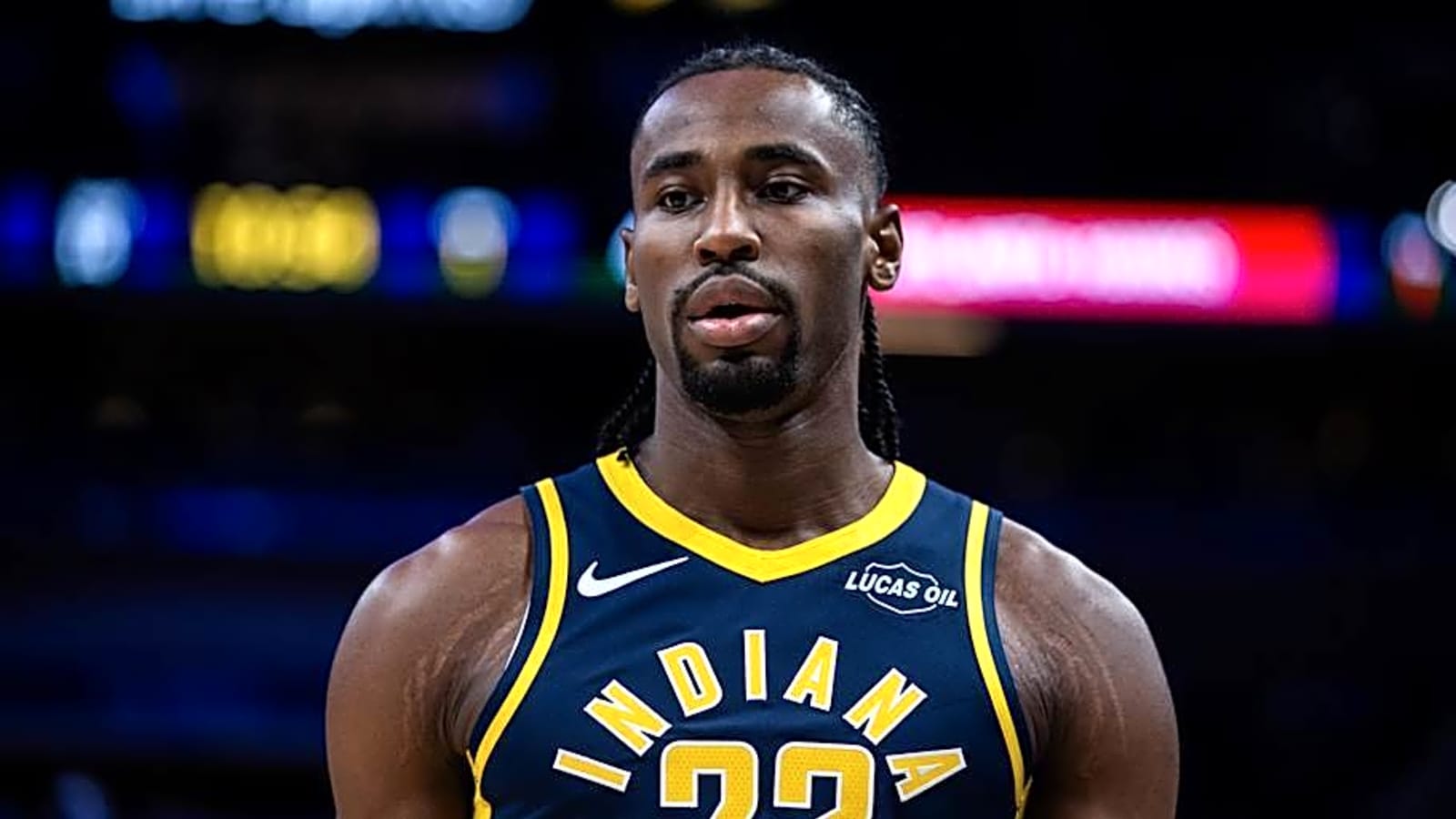
Team building in today’s NBA is more complicated than ever.
With the league’s updated Collective Bargaining Agreement introducing first and second apron penalties, front offices across the NBA have become increasingly cautious. The financial consequences of crossing those aprons significantly limit roster flexibility, forcing teams to think long term about every dollar committed.
For the Indiana Pacers, financial discipline is nothing new.
Indiana has avoided the luxury tax since the 2004–05 season. Under longtime owner Herb Simon — the league’s oldest and longest-tenured owner — the franchise has consistently operated with restraint, only signaling a willingness to enter the tax if it believes it has a legitimate championship roster.
According to president of basketball operations Kevin Pritchard last offseason, the Pacers were prepared to enter the tax to retain Myles Turner and re-sign Isaiah Jackson. However, Turner’s decision to leave for Milwaukee shifted the team’s financial trajectory and allowed Indiana to avoid the tax once again.
Looking ahead, the Pacers’ tax situation could hinge on their 2026 draft pick. If it lands in the top four and stays in Indiana, the added salary likely pushes them into tax territory. If it conveys elsewhere, they may still maintain flexibility.
With that context in mind, here are three of the most team-friendly contracts on Indiana’s roster.
Whether you view Jay Huff as a backup center or a third-string option, his contract is undeniably team-friendly.
Huff signed a four-year, $10.1 million deal that runs through 2028. He earns $2.35 million this season, $2.67 million next year, and $3 million in the final year.
For a rim-protecting big who can space the floor, that price point is extremely manageable. Affordable depth at the center position is critical in today’s league, and Huff’s deal provides Indiana flexibility at minimal cost.
Aaron Nesmith might own the best value contract on the roster relative to production.
Indiana’s starting small forward is earning just $11 million per year on a three-year extension that began last season. He remains under that number through next season.
In October 2025, Nesmith became extension-eligible and agreed to a two-year, $40.4 million extension that will carry him through the 2028–29 season at roughly $20 million annually.
While that represents a significant raise, it aligns with his impact. Nesmith has proven to be a playoff riser, delivering standout performances, including his historic six three-pointers in the final five minutes of regulation during Game 1 of the Eastern Conference Finals.
For a two-way wing entering his prime, $20 million per season projects as fair market value, if not a bargain.
The Pacers’ trade for Ivica Zubac was about more than fit. It was also about value.
Zubac occupies just 12.2 percent of the team’s cap space, the third-highest share on the roster. For comparison, Tyrese Haliburton and Pascal Siakam each account for 29.5 percent.
Zubac is finishing the first season of a three-year, $58.6 million extension he originally signed with the Clippers. He is earning $18.9 million this season, followed by $20.3 million next year and $21.7 million the year after.
For a center widely viewed around the league as a top-10 player at his position (and potentially closer to top six) that is strong value. His combination of rebounding, interior defense and efficiency makes the deal even more attractive in a rising cap environment.
Indiana’s roster construction reflects balance.
By securing quality starters and rotation players on team-friendly contracts, the Pacers have built depth around Haliburton and Siakam while preserving financial maneuverability. That flexibility allows the front office to remain aggressive in trades without crippling its future.
In an era where cap management is as important as talent evaluation, Indiana’s ability to find value contracts may be just as critical as any acquisition it makes.
More must-reads:
- Knicks mop up 76ers inside in tight Game 2 win
- Draymond Green takes unbelievable shot at Charles Barkley's career during 'Inside the NBA'
- The 'NBA Defensive Players of the Year' quiz
Breaking News
Trending News



Customize Your Newsletter
 +
+




Get the latest news and rumors, customized to your favorite sports and teams. Emailed daily. Always free!
PRIVACY POLICY COOKIE POLICY CONTACT US
ABOUT YARDBARKER TERMS OF SERVICE


By using this site, you agree to our Terms of Service and Privacy Policy.
This site is for entertainment purposes only.
There is no gambling offered on this site.
Gambling Problem? Call 1-800-Gambler.
