
-


Follow Us

 On Facebook
 On Flipboard
 On Twitter
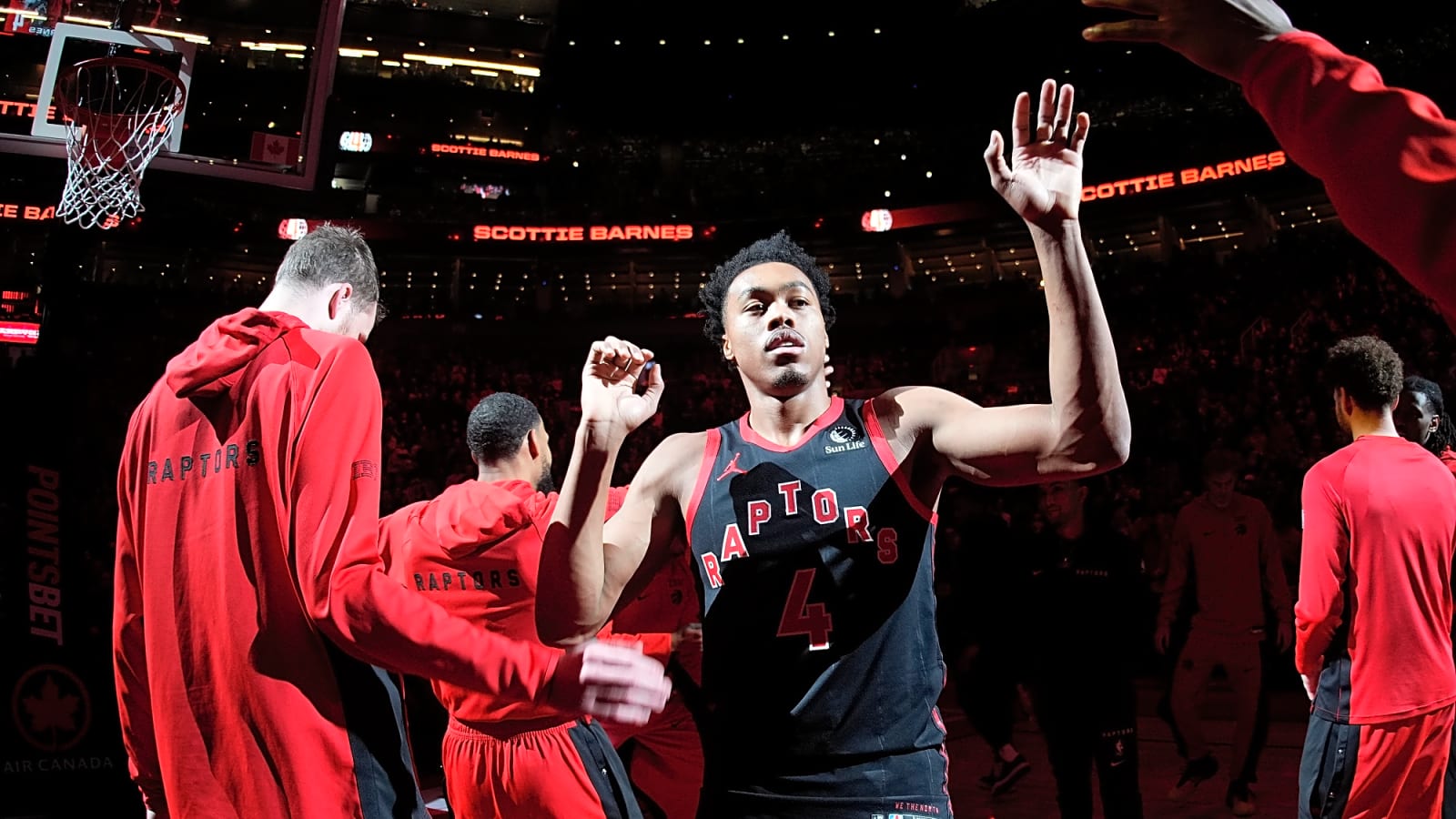
In the modern day NBA, predictability and measurement reign supreme.
Everything – from body mechanics to each individual action in a game – are data points. Tracked, put together, analyzed, and spat out. Outcomes closing towards preordained.
Yet, something is always missing. On paper, as they say, it should fit. It should work out. The numbers say it so. But, like a meddlesome ghost, something keeps it from all coming together. Something that so often distinguishes listless teams from purposeful ones.
You can call that something many things. Cohesion. Aura. Vibes. For the sake of our shared understanding, I’ll call it team identity. But even that feels too much of a construct – it’s so nebulous.
There’s no science to it. No blueprint found deep in the NBA archives on how to build one. No algorithm to forecast its success. No secret lab of psychoanalysts mixing-and-matching player profiles to concoct the perfect concept.
All any franchise can really do is sprinkle a recipe together best they can and hope it percolates. It’s not there. Then, suddenly, it is. Or not.
Besides, it’s not like there’s a luxury of choice. When it falls in your lap, you don’t ask questions; you thank your lucky Lord Naismiths, and you run with it.
Defining where it originates when it finally comes is difficult too. It’s in everything. The zeitgeist of the franchise. The style of play on the floor. The culture off of it. The momentum. The resilience. The execution. They feel it. The fans feel it. The League feels it. We see you, OKC. We fear you.
Each part feeds the other. It is rare – though possible – to have a team so dialed in play but so disharmonious in personality. One kink – like a pompous owner or duplicitous General Manager – can doom the whole project.
That’s what makes sports enthralling. Humanity overlays it all. The data, the skillsets, the strategies, the teambuilding. If something doesn’t come together, rosters can molt by December – just ask the Los Angeles Clippers.
Lou Will says he heard from people in the Clippers organization that Chris Paul was very critical of the players, coaches, and front office — and the front office had enough of his criticism
— NBACentral (@TheDunkCentral) December 3, 2025
(@RunItBackFDTV )
pic.twitter.com/KkaYoatxyn

But when they do come together, they’re so obvious. They’re various; vastly different too. But they’re there. Each one. Clear as day.
There’s Minnesota, seized by its incontestable alpha, Anthony Edwards. Or Golden State, structured by the clerical order of Steph Curry, Draymond Green, and Steve Kerr. There’s the monarchical dominance of LeBron James in Los Angeles or the benevolent tyranny of Shea Gilgeous-Alexander in Oklahoma City. There’s the continuity of the bureaucratic dynasty in #heatculture Miami. Or, the comradery of the feisty platoon in Detroit. Or, the corporate governorship and its odd CEO in Boston. And so on and so forth.
But, in Toronto, the team’s identity does not sing as distinctly.
Not yet, anyway.
The Sun
The Toronto Raptors have lacked an identity since the dying days of the Fred VanVleet, Pascal Siakam, O.G. Anunoby triumvirate. Each had felt deserving of a maximum contract despite leading a something-ain’t-right [insert Matt Devlin “accent”] team no where.
With Scottie Barnes emerging, the vibes became all the more tenuous. He was a mighty-mite sealed in a Ziploc. A talented, yet pesky annoyance to the elders.
Barnes – like all younger generations – was burdened both by the weight of a history he had no part of and by expectations set by others. His true self – with all it’s eccentricities, brilliance, and spiritedness – chafed against a pre-established hierarchy.
The franchise, eventually, reset surrounding Barnes with an influx of young talent. Where he went they would go. What he was to become, so would they.
That took time. Much to be figured out. A brand new roster to configure. A new hierarchy to establish. A new style of play to implement. Scottie Barnes needed to discover who he was as a player. As the player. To face the responsibility of the moment and understand the consequences of what that meant. For the first time, everyone looked to him and him alone.
It did not go easy. Last year was a trying one. For most involved. Injuries hampered experimentation and development. The team seemed overwhelmed by Head Coach, Darko Rajaković’s new system. The roster felt incompatible. Barnes, while flaunting his All-Stardom, ultimately, looked overburdened. His usage rocketed and efficiency sunk.
With the difficulties came the impatience and frustration. The looks of contempt at missed passes or blown open shots. The sulking jogs back down the floor. The random possessions taken off on defence. Questions arose – fair or not – if shifting the team to Barnes was a wise decision. It all looked so muddled.
But expectations were rushed. This was a long process. Barnes’ struggles were unfortunate; they were also necessary. Even the most offensively-gifted young players struggle when defences zero in on them. It’s how they adapt. How they learn to embrace the challenge and learn from the failures.
And Barnes was learning. He was becoming more selective on who he attacked and where. Toasting slower bigs with tighter ballhandling and an improved mid-range; turning slighter defenders into wet paper towel mush with his imposing frame.
More importantly, however, Barnes realized his true strength was on defence.
As Barnes shifted from point-of-attack defending [Thank God] to the second line, his greatness emerged. His blend of athleticism and intuition enabled him to be everywhere at once, to disrupt multiple actions – on- or off-ball – in single possessions.
Post-All-Star break, last year, the Raptors had a top-of-the-league defensive rating (109.4) allowing five points less with Barnes on the floor (87th percentile). Many thought this was end-of-season fortune. A young, hungry bunch of guys taking advantage of a standings more or less decided.
That same elite defence remains this year. The Raptors have slipped to ninth in defensive rating during their recent losing streak, but Barnes’ rise to All-NBA defender continues.
And much of that, has to do with his acceptance of that role.
The Blaze of the Sun
This year, Barnes has stepped back offensively. He’s no longer the primary option. No longer willing an impotent offence into existence alone. His usage is down (-3%). His shot selection has tightened (-8% outside the paint; +7% at the rim). And his isolation (10% to 5%) and pick-and-roll ballhandling (20% to 13%) frequencies have halved.
Barnes is still a necessary part of the Raptors’ offence. In fact, there’s still more for him to do. In a few previous close games, for example, Barnes has been an after thought.
In a tight one, against Charlotte, the Raptors overused a depleted Ingram (0/9 in the fourth quarter and overtime). Versus Portland, Barnes crushed, yet had only one shot attempt in the final three-and-a-half minutes of the game. Same with the Lakers, where he finished 8/16 with 23 points without a single field-goal attempt in 12 minutes of play in the fourth quarter.
That will evolve, I trust. What’s most important is that he trusts.
There’s no more hand-gesturing for the ball. No walking back in disgust. He’s not hanging his head when he’s missed on a wide-open swing or an advantageous isolation.
He has other responsibilities now, more important obligations to the team. Whatever was lost on the offensive end he will win back on the defensive one. Where his dominance ascends.
Much of Barnes’ defensive prowess has already been covered by others [check Samson Folk’s piece].
Some defensive numbers for Scottie Barnes — who’s well on his way to a 1st team All-Defense spot:
— Esfandiar Baraheni (@JustEsBaraheni) December 2, 2025
– only player in the NBA to have 30+ steals and 30+ blocks
– 4th in total deflections
– 1 of 18 players averaging > 1 steal and 1 block per game
– Top 10 in miles traveled on…
What’s equally important, is Barnes’ unremitting energy and effort. You can feel his sense of urgency. You can see the role he’s accepted. That same burden he shouldered offensively, last year, is now upon him defensively. Like below:
Barnes sniffs out the pick and roll and cheats off Evan Mobley to stifle the rolling Jaylon Tyson. Without delay, he charges the kick out and challenges Lonzo Ball’s 3 at its release. Barnes stopped it all.
You may note two other things too. One, both Brandon Ingram and Jamal Shead stood still as the play progressed; neither shifted over to Ball. Two, Immanuel Quickley, who had left Ball to cover Mobley, throws his hands up in disappointment of their failure to rotate.
Barnes doesn’t. He might have last year. A must I do it all? sort of futility. Now, it’s I must do it all. Maybe after there is a lecture or bum tap to be had. First, close the play out at all costs.
That’s translated off the floor too. Watch Barnes on the sidelines:
He is engaged. The whole of the possession. Cheering them on and celebrating as though he was involved.
Barnes’ energy radiates through the roster. They’re fifth in forced turnover percentage, fifth in defensive distance traveled, and second in transition points allowed. Everyone is flying about. Guys don’t hold back their emotion either – not even Coach Rajaković:
Barnes makes that okay. Because his identity is their identity now. Their success, his success.
The Moon
What we all – those of us watching closely – saw last year, the management surely did too.
A spunky defence upholding an inept offense (26th in offensive rating pre- and post-All-Star break). And a Scottie Barnes burdened by an unwieldy offensive weight.
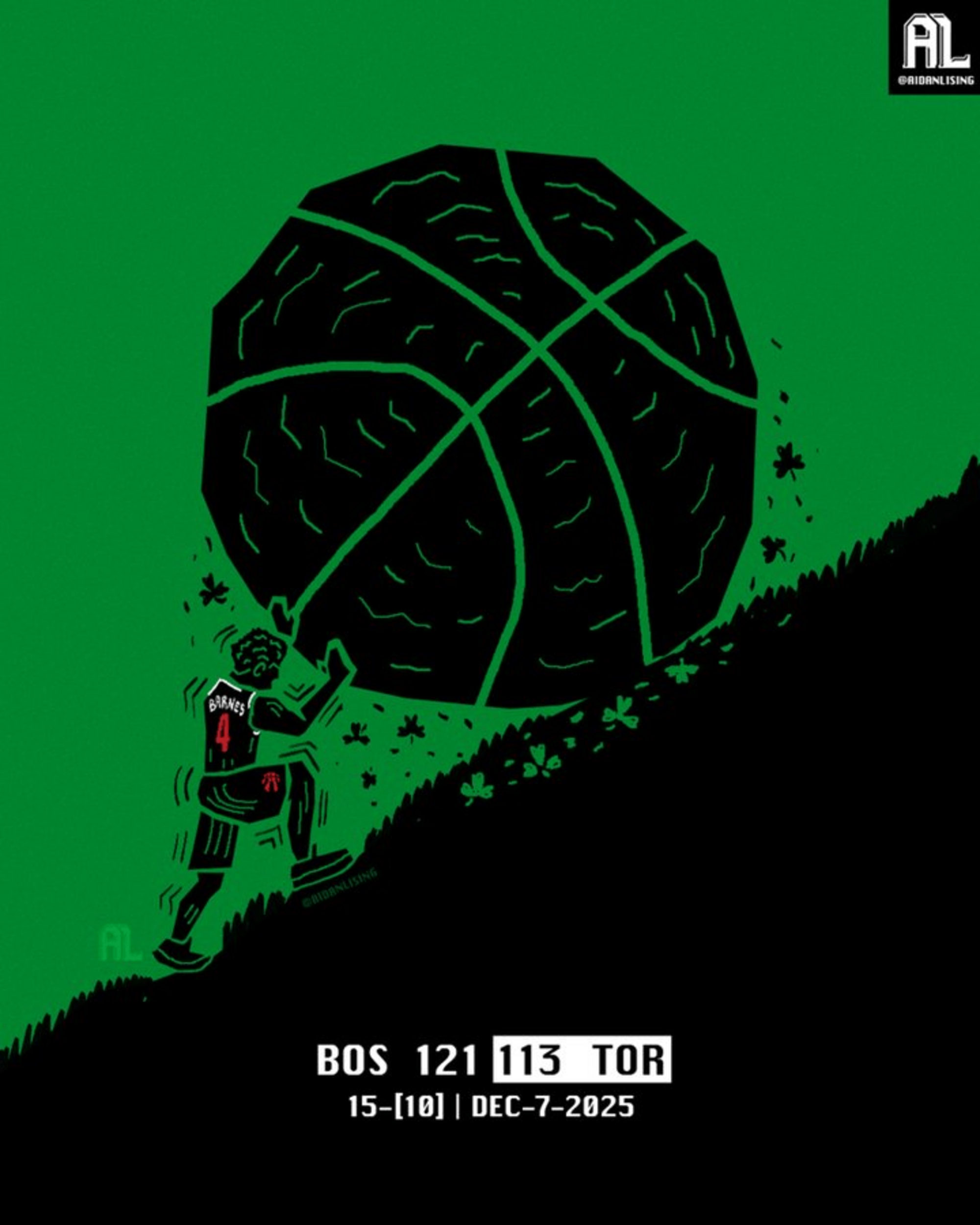
The Raptors could have hoped that Barnes would grow into an offensive superstar. And hoped the plethora of young guys burgeon alongside him.
But that would take time. And there would be much consternation along the way. Perhaps, so much so, the toxicity I mentioned above might settle in. Where frustration leads to finger-pointing and finger-pointing to distrust and distrust to malfunction. By then, there may not be any future to wait upon. Lesser has destroyed greater in shorter time.
So they traded for Brandon Ingram. The sultriest mid-range maestro on this side of the St. Lawrence. A shot alchemist. A scoring monolith. A “walking bucket” as they say. An inoculation to any faltering offense.
The Glimmer of the Moon
Brandon Ingram shrouds this team in his calming energy. Rarely rattled or overzealous. He’s a motor humming at its optimum, coursing his magical way towards scores.
There’s no speeding Ingram up. Nor slowing him down, for that matter. He operates in an airless chamber refilled with icy cool mint. His change of motion and speed relying on a more viscous laws of physics. The confounding footwork and dazzling handles tight and deadly, yet smooth and sultry. Like a martial art obfuscated through dance.
It is this very zen-like nature of hooping that both naturally accompanies Scottie Barnes’ tempestuous ilk and fulfills Toronto’s quenching need for offense. Already, the Raptors jumped from 25th last year to 10th in points per 100 possessions in the half court, cutting their turnovers in half and slowing their pace significantly.
No longer do the Raptors look hopeless when things slow to a muck. No longer must they lean, solely, on the possession battle to outscore opponents. With Ingram (23rd in usage), the Raptors finally, have someone to draw attention, to self-create, and to heft the scoring load.
Look at the Toronto Raptors moving the basketball. pic.twitter.com/UqyxdCBjHQ
— Steve Jones (@stevejones20) December 3, 2025
The knock-on effect allows opportunity for others. Barnes has more room to attack in isolation – often against lesser defenders. RJ Barrett and Sandro Mamukelashvili have wider lanes to carve through. Immanuel Quickley and Jamal Shead have more time to orchestrate the pick-and-roll and meander their ways toward the rim.
And, when things don’t work out, there’s Ingram, cooly taking on the highest-leverage tasks.
Brandon Ingram with a RIDICULOUS shot clock buzzer beater while drawing a 2nd defender.
— Omer Osman (@OmerOsman200) December 5, 2025
MY GOOODNEEESSSSS. pic.twitter.com/aCrxDqbjqd
It’s not perfect, Ingram’s game, nor complete. The blemishes worsening in the Raptors’ recent losses. His slender frame leaves him vulnerable to stronger defenders. Fatigue has set in.
His playmaking comes and goes too. Ingram’s instinct is to combat doubles not pass out of them before too late – he shares a similarly low assist-to-usage ratio as Pascal Siakam and Jaylen Brown with the same high turnover percentage as sophomore guard, Keyonte George. Without a consistent three (33%), defences remain congealed.
The team can rely too much on Ingram, at times, too. But, that’s a testament to his stabilizing force and to what this offence is building around.
The New World
This, perhaps, was always the vision.
To find someone not to temper Barnes but to unleash him. To let his furious genius flourish and cover what couldn’t.
In Brandon Ingram, the Raptors found Barnes’ complement. A partner in crime. A Holmes to Sherlock. A Chewbacca to Han Solo. A cool, collected energy to counterweigh intuitive reactivity.
This was all best exemplified in the closing minutes of the Los Angeles Lakers game the other night. In succeeding plays, Barnes stops LeBron James in his tracks followed by Ingram nailing a clutch jumper to take the lead.
The team has run aground as of late. RJ Barrett missing has not helped. Likely, the final iteration of this team has yet to come either. The rumour mill is spinning names like Anthony Davis and Ja Morant about.
But with Barnes and Ingram, at least, the Raptors now have two leaders who together define this team and what it can become.
Have the Raptors found their identity? Jamal Shead thinks so.
— The Athletic NBA Daily (@AthleticNBAShow) December 7, 2025
“We know what our identity is. We just have to play it for 48 minutes.” pic.twitter.com/mEHiLZOmy6
More must-reads:
- Cooper Flagg tops LeBron James with record-breaking performance
- Adam Silver's Las Vegas experiment with NBA Cup may be ending
- The 'Active NBA PPG leaders' quiz
Breaking News
Trending News






Customize Your Newsletter
 +
+




Get the latest news and rumors, customized to your favorite sports and teams. Emailed daily. Always free!
PRIVACY POLICY EDITORIAL POLICY CONTACT US
ABOUT YARDBARKER TERMS OF SERVICE


Use of this website (including any and all parts and
components) constitutes your acceptance of these
Terms of Service and Privacy Policy.
This site is for entertainment purposes only.
There is no gambling offered on this site.
Gambling Problem? Call 1-800-Gambler.
