-

-


Follow Us
-

 On Facebook
 On Flipboard


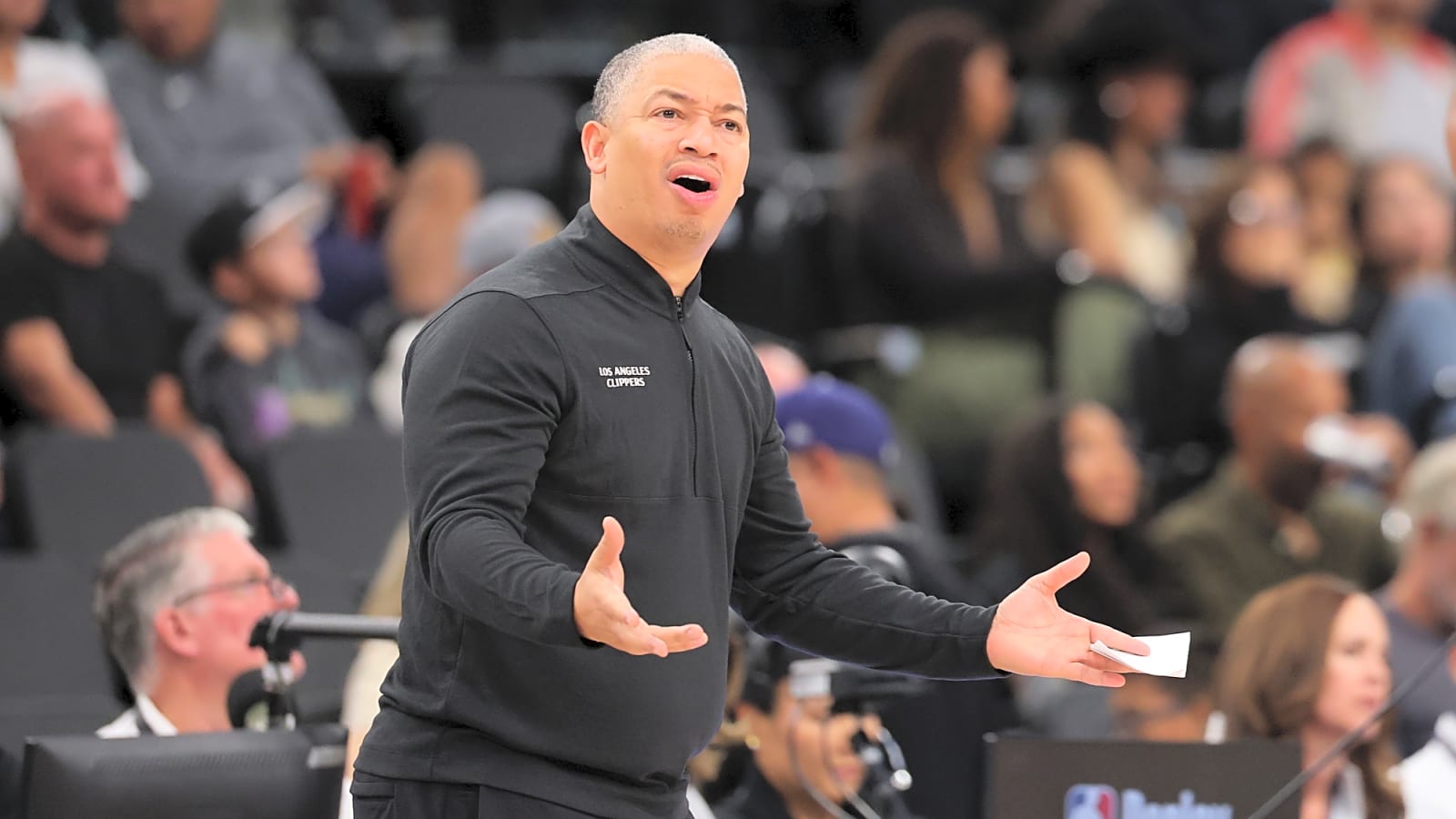
Two consecutive wins show progress, but the Clippers must turn rebounding, ball movement and late game adjustments into consistent execution as every game becomes another possession that matters.
Clippers rebounding: Mynt J makes the case that two straight wins mean little unless the Clippers turn their rebounding fixes, ball movement and late game adjustments into consistent habits.
INGLEWOOD, Calif. — Two consecutive victories have given the Los Angeles Clippers something to build on, but winning games and consistently executing the right plays are two different things.
The Clippers defeated the Oklahoma City Thunder 113-112 on Friday and followed with a 113-105 comeback victory over the Charlotte Hornets on Sunday at Intuit Dome, improving to 4-8 through 12 games.
Both victories demonstrated resilience, but two games are too small a sample to establish consistency. The question is whether the Clippers can turn adjustments into habits rather than waiting for opponents to expose their weaknesses.
Coach Tyronn Lue has emphasized protecting the basketball and rebounding. But are those the problems themselves, or symptoms of deeper issues involving execution, anticipation and understanding responsibilities?
Two Wins, Two Different Challenges for the Clippers
Against Oklahoma City, Brook Lopez scored 26 points, while Darius Garland added 24, including a decisive three point play in the closing minute.
Charlotte presented a different challenge.
The Clippers led 22-21 after the first quarter but trailed 52-51 at halftime. Charlotte collected 15 offensive rebounds in the first half and eventually built a 13 point third quarter lead.
Lue said the coaching staff addressed the rebounding problem at halftime, emphasizing positioning and making contact before pursuing the ball.
Charlotte managed just two offensive rebounds after halftime. Los Angeles regained an 84-83 lead entering the fourth quarter and secured the victory.
The adjustment worked, but why did it take 15 offensive rebounds before the Clippers corrected the problem?
Clippers Turnovers or Execution?
Turnovers remain a concern, but the number alone does not determine the outcome.
On Nov. 20, 2024, Los Angeles defeated Orlando 104-93 despite committing 25 turnovers. On March 4, 2025, the Clippers lost 119-117 to Phoenix despite recording only six player turnovers.
Against Oklahoma City, the Clippers committed 11 turnovers. Against Charlotte, they committed 17. Both games ended in victories.
Charlotte converted Clippers turnovers into 14 points, while Los Angeles scored 17 points off the Hornets’ 15 turnovers.
Protecting possessions matters, but so does what happens around those mistakes.
Bad passes, offensive fouls, traveling violations and lost balls require different corrections. Some are forced by opponents; others are preventable.
Are the Clippers identifying recurring mistakes and adjusting responsibilities, or simply measuring turnovers as a collective number?
Execution also involves shot selection, defensive positioning, communication and recognizing opportunities before they disappear.
Clippers Rebounding Starts With Anticipation and Basketball IQ
Rebounding requires more than height and jumping ability. Positioning, timing and anticipation influence who controls the basketball.
When a shot goes up, players must recognize their assignments, establish contact and anticipate where the ball might land.
Lue explained that Lopez was instructed to make contact with former Clippers center Moussa Diabaté, allowing teammates to help secure rebounds.
The second half improvement demonstrated that the strategy worked.
But it also raises a question about player accountability. At what point should players recognize an opponent dominating the offensive glass and communicate necessary adjustments?
Not every decision belongs to an individual player. Defensive systems involve specific assignments, but understanding when to communicate and anticipate movement is part of basketball IQ.
Brook Lopez and Finding Balance Between the Perimeter and Paint
The Clippers collected 44 offensive rebounds over their previous five games, averaging 8.8. Their totals ranged from 13 against New Orleans to five against Charlotte, with both games resulting in victories.
Those numbers require context. Better shooting produces fewer offensive rebounding opportunities.
Against Charlotte, Los Angeles shot 55.4% from the field and connected on 16 of 31 three point attempts.
Lopez provides perimeter spacing, but playing away from the basket can limit his offensive rebounding opportunities.
With Lopez and Isaiah Jackson offering different offensive strengths, balancing perimeter shooting with interior positioning could generate additional opportunities when shots stop falling.
The answer is not necessarily shooting fewer threes. It is recognizing when the game requires perimeter spacing, attacking the paint or securing second chance opportunities.
Clippers Second Unit Chemistry Beyond the Numbers
Before Sunday’s game, Lue praised the developing chemistry of the second unit, highlighting its energy, pace and understanding of individual roles.
He later credited the reserves with helping Los Angeles recover during the third quarter.
The Clippers recorded 32 assists against Charlotte, reflecting improved ball movement.
Rookie Keaton Wagler pointed to unselfishness, defensive stops and rebounding as factors in changing the game’s momentum.
Lue has also explained that evaluating rotations involves statistical information and what he observes during games. A lineup can execute effectively without immediately producing favorable numbers.
That becomes important when particular player combinations repeatedly make similar mistakes.
Should the correction involve communication, changing responsibilities or adjusting the rotation?
As injured players return, maintaining the chemistry developing among the reserves will become another challenge.
Every Game Is a Possession, and Every Possession Matters
There is a familiar response when teams struggle early in an 82 game season: There are plenty of games left.
But that mindset can become dangerous.
In basketball, every possession matters. Players cannot afford to throw away opportunities assuming another possession will correct the previous mistake.
Every game should be treated with that same urgency. Every game is another possession, and every opportunity must count.
At Game 10, there are plenty of games remaining. Then comes Game 15, Game 20 and Game 30. At what point does that conversation change from having plenty of games left to suddenly having only 10?
At 4-8, the Clippers have played 12 games, leaving 70 opportunities to improve. But the Western Conference is not standing still while Los Angeles figures things out.
Other teams are building momentum, strengthening their records and establishing positions in the standings.
That does not mean every game must end in victory. It means every game deserves the urgency of a meaningful possession.
The Clippers cannot wait until the season becomes urgent to begin playing with urgency.
Two Wins Are Progress, Not Proof
The Clippers demonstrated two different ways to win.
Against Oklahoma City, they executed when the game was on the line. Against Charlotte, they overcame a double digit deficit by correcting defensive rebounding and improving ball movement.
Both required collective effort, but neither guarantees consistency.
Execution means knowing what needs to be done and carrying it out. Anticipation means recognizing what is likely to happen before it develops.
The Clippers have demonstrated they can adjust. The next challenge is recognizing problems before an opponent forces those adjustments.
Los Angeles returns to Intuit Dome on Tuesday to face the Utah Jazz, another opportunity to turn lessons into habits.
The Clippers cannot recover the games already lost, but they can control how they approach the next one.
Every game must be treated like a possession. Every possession matters, and every one must count.
Two victories created momentum. Whether that momentum becomes consistency will depend on what the Clippers do with their remaining opportunities.
More must-reads:
- Tipping off: The unstoppable Spurs; Lakers on pace to rack up even more wins
- Jazz rookie Darryn Peterson matches Donovan Mitchell milestone on career night
- The '1,500-point, 150-block seasons' quiz
Breaking News
Trending News

Customize Your Newsletter
 +



Get the latest news and rumors, customized to your favorite sports and teams. Emailed daily. Always free!
PRIVACY POLICY COOKIE POLICY CONTACT US
ABOUT YARDBARKER TERMS OF SERVICE


By using this site, you agree to our Terms of Service and Privacy Policy.
This site is for entertainment purposes only.
There is no gambling offered on this site.
Gambling Problem? Call 1-800-Gambler.