
-

-


Follow Us
-

 On Facebook
 On Flipboard

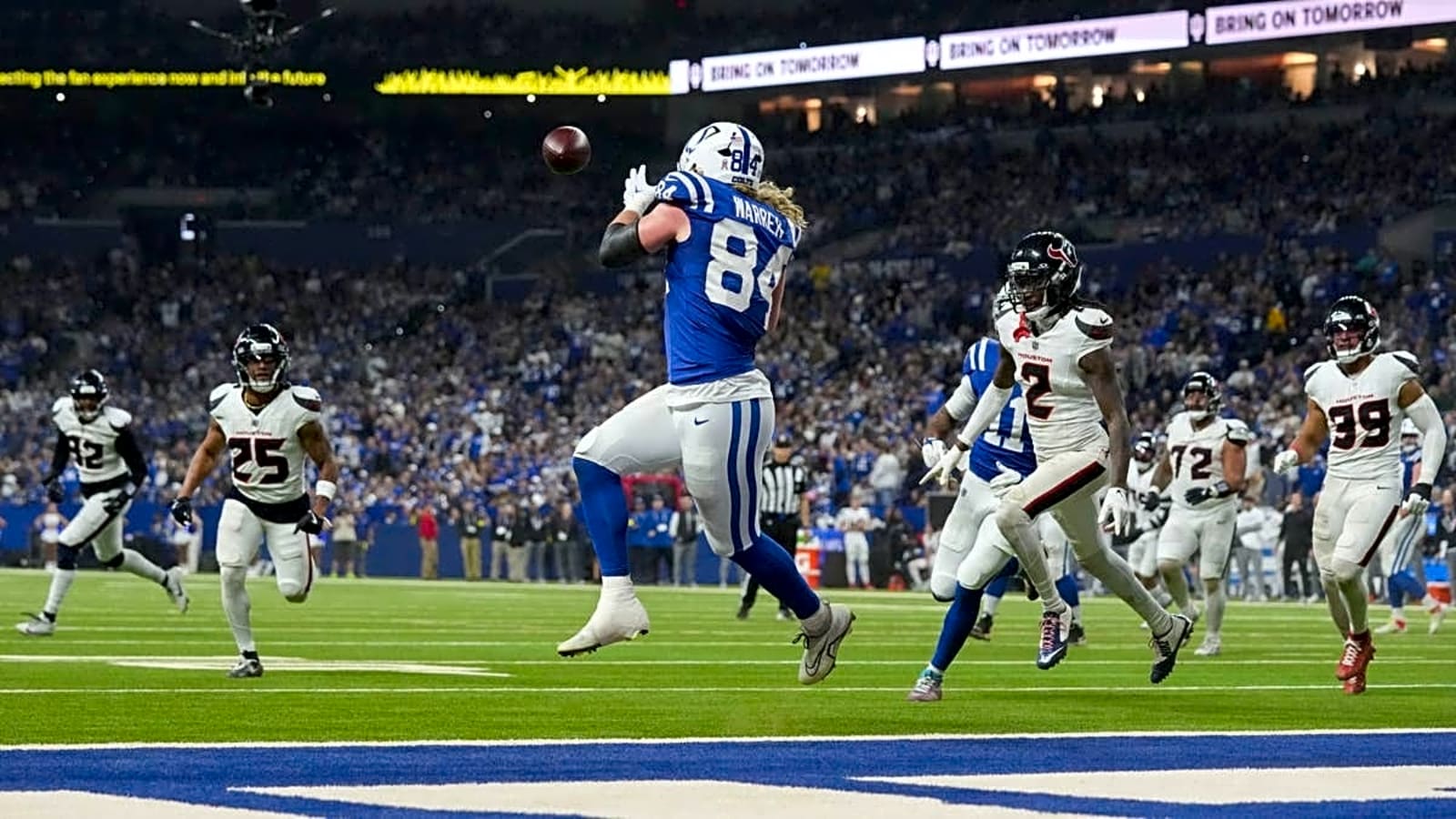
This 2026 fantasy football tight end analysis focuses on players with realistic paths to starting lineup value as your No. 1 starter or rotational flex option. Like wide receivers, TEs need dependable route participation, steady targets, red-zone involvement, and offensive roles that survive weekly game-script changes.
Elite options can create a weekly edge, but the rest of the position requires careful separation between stable starters, touchdown-driven plays, and players whose value depends too much on injuries or matchup luck.
Fantasy Football TE Player Draft Analysis
Tier 1: Standing All Alone
1) TE Trey McBride, Arizona Cardinals | Bye: 14 | Projected Fan Pts: 266.2
It doesn't get much safer than McBride. He has improved each season, topping out with what ultimately should go down as a career year. He racked up the most TE catches ever at 126 on 169 looks, and McBride finished with 11 scores -- five more than his three prior years combined. He saw 18.9% of his targets in the red zone, and all of that came with the 15th-highest poor-throw rate. Jacoby Brissett returns as the starter, but rookie QB Carson Beck may start late in the year, and that's not a bad thing for an elite TE.

Tier 2: Elite Upside and Involvement
2) TE Brock Bowers, Las Vegas Raiders | Bye: 13 | Projected Fan Pts: 223.7
A troublesome PCL sprain and bone bruise sidelined Bowers from Weeks 5-7 entering the bye week before he returned to remind fantasy managers what they'd been missing with a career-high 43.3 PPR bomb. He then admirably fought his way through the injury until being shut down in December. The balky knee is healthy, and Bowers is poised to dominate in 2026. Veteran quarterback Kirk Cousins should start until new head coach Klint Kubiak is confident No. 1 overall pick Fernando Mendoza is ready to take over. Both quarterbacks are equipped to feed him in this underwhelming receiving corps.
3) TE Tyler Warren, Indianapolis Colts | Bye: 13 | Projected Fan Pts: 217.3
Even while suffering through multiple quarterbacks and a 30.4% poor-throw rate, Warren's rookie season generated the fifth-most points in full PPR. He saw the third-most positional targets, tied for sixth in catches (76), and tied for the 13th-most receiving TDs with five. Daniel Jones is slated to return from an Achilles injury, and he consistently incorporated Warren prior to the injury. In 2026, more targets are available with the trading of WR Michael Pittman Jr., and there's a reasonable chance this projection is too low.
4) TE Colston Loveland, Chicago Bears | Bye: 10 | Projected Fan Pts: 206.4
Pro Football Focus graded Loveland's rookie season third among 37 qualifying TEs in terms of receiving work, and he graded out as TE5 overall. For fantasy, it took until Week 9 before we enjoyed anything from the Michigan standout. Loveland exploded with a 6-118-2 line at Cincy, and then he went on a tear down the stretch. From Week 17 through the Wild Card Round, Loveland caught 24 of 38 looks with game totals of 94, 91, and 137 yards, scoring twice. This projection may even be skimpy if young WRs Rome Odunze and Luther Burden III don't step up.

Tier 3: Risky But Promising TE1s
5) TE Harold Fannin Jr., Cleveland Browns | Bye: 11 | Projected Fan Pts: 202.0
Despite the presence of veteran TE David Njoku, Fannin exploded onto the scene as a rookie, landing 72 of 107 targets for 731 yards and six scores in 2025's otherwise lackluster Cleveland offense. While playing through a groin injury, he aggravated it on a TD grab in Week 17 and was shut down for the following game. Now, Cleveland moved on from Njoku, and the receiving corps leans heavily on rookies. Fannin will catch passes from either Shedeur Sanders or Deshaun Watson in 2026, and the dynamic sophomore TE is a fine bet for a statistical step forward.
6) TE Kyle Pitts, Atlanta Falcons | Bye: 11 | Projected Fan Pts: 193.6
Few players are as curious a case as Pitts has been in his career. After a fantastic rookie season in 2021, he never found his footing through multiple quarterback and system changes until last year's combination of Kirk Cousins and Michael Penix Jr. helped him reemerge. Pitts has ridiculous athletic traits, which have rarely shown up with consistency, and now he encounters yet another new system as well as a QB in Tua Tagovailoa likely replacing Penix (knee). Any momentum feels halted. Make sure you're aware of the risk-reward profile when investing.

Tier 4: Proven Talent With Notable Downside
7) TE Travis Kelce, Kansas City Chiefs | Bye: 5 | Projected Fan Pts: 183.4
In his age-37 season, the Canton-bound star returns on essentially a one-year deal, but Patrick Mahomes' knee health clouds the picture. Justin Fields could start a few times, which is not the worst situation. While the raw numbers in 2025 may suggest stabilization of an ongoing decline, Kelce's fantasy average dipped to the lowest of his career (11.2 PPR). The last time he caught fewer than the 76 passes of '25 was in 2016, and his 851 yards marked the second-lowest total of Kelce's career. Clearly, Father Time remains undefeated.
8) TE Sam LaPorta, Detroit Lions | Bye: 6 | Projected Fan Pts: 182.7
A herniated disc derailed LaPorta's third season after he had already missed time as a sophomore. Back injuries are tricky and tough to predict. On raw talent alone, he's a top-tier fantasy tight end, but the best ability remains availability. If you're willing to chance it on him staying healthy thanks to his corrective back surgery, LaPorta should benefit from new OC Drew Petzing's TE-friendly design. Most everything otherwise returns intact, and LaPorta just needs to stay on the field to live up to this modest ranking.
9) TE Jake Ferguson, Dallas Cowboys | Bye: 14 | Projected Fan Pts: 177.0
The 27-year-old is coming off a career season in which he posted 82 grabs and scored eight times, but Ferguson's "Checkdown Charlie" role produced a laughable 7.3-yard average on an aDOT of just 4.7 yards. That profile makes him overly dependent on finding the end zone in an offense loaded with talent, so a step backward is logical. To his credit, stable volume at a volatile position matters, and Ferguson has reeled in at least 59 balls in three straight seasons.
10) TE Mark Andrews, Baltimore Ravens | Bye: 13 | Projected Fan Pts: 172.8
The good: Consecutive 17-game efforts from Andrews are awesome to see. He has found paydirt 16 times over the last 103 grabs. TE Isaiah Likely is out of the picture. The bad: He enters his age-31 season with a ton of mileage, has a new offensive system, and is coming off a career-worst 8.8 yards-per-reception average. About that new offense … Declan Doyle was hired as OC, and he's a Ben Johnson guy, so at least we know there's a stable role for TEs baked in. Accept weekly fluctuations in exchange for TD hunting from Andrews.
11) TE Tucker Kraft, Green Bay Packers | Bye: 11 | Projected Fan Pts: 171.7
After breaking through in 2024 with a 50-707-7 line on 70 targets, Kraft was on pace for a special season before a Week 9 ACL tear brought his heater to a crashing halt. Through seven-and-change appearances, Kraft was on pace for 68 grabs, 1,039 yards, and nearly 13 touchdowns. Of his receptions, 43.2% went 10-plus yards, which was the sixth-highest rate at the position, and 27.3% of Kraft's looks came in the red zone (third-most). He's on track for Week 1 but may start on the PUP or at least be slow to get rolling. Given his profile, though, consider this a floor projection.

Tier 5: So. Much. Risk.
12) TE George Kittle, San Francisco 49ers | Bye: 8 | Projected Fan Pts: 157.2
This projection is arguably the best-case scenario for the star tight end as he works back from a January Achilles tear. There's still a chance he will avoid starting the year on the Reserve/PUP, but even a Week 1 start probably means we're looking at a less explosive version of Kittle. He turns 33 in October and missed Weeks 2-6 in 2025 with a torn hamstring. With Jake Tonges showing up in Kittle's absence, the addition of Mike Evans, and Christian McCaffrey's receiving prowess, managers should keep their expectations in check.
13) TE Dalton Kincaid, Buffalo Bills | Bye: 7 | Projected Fan Pts: 155.1
Kincaid's talent is evident when he's on the field, but the Utah product has missed time in each of his three NFL seasons. His 14.6-yard average last year was a career high, and the five TDs scored clocked in one higher than both prior seasons combined, but erratic play is a concern. Kincaid finished second in PFF's TE receiving grading, behind only George Kittle. While Dawson Knox occasionally steals a TD opportunity, a greater frustration is multiple possession-type receivers at Josh Allen's disposal. It's hard to argue Kincaid is anything better than a risky matchup play in aggregate.
14) TE Chig Okonkwo, Washington Commanders | Bye: 7 | Projected Fan Pts: 147.3
Will a change of scenery help the athletic Okonkwo take his game to the next level? The Maryland product enters Washington's offense as the undisputed top pass-catching TE in a Dave Blough system that will cater to the position. Also, Jayden Daniels' receiving targets leave something to be desired, so there's a clear opportunity to be had. Okonkwo may lose some underneath work to RB Rachaad White, but the former Titan is a vertical asset down the seam when utilized correctly (see his rookie season's 7.6 aDOT). Consider him a fringe sleeper.
15) TE Juwan Johnson, New Orleans Saints | Bye: 8 | Projected Fan Pts: 145.5
Breaking out at age 29 makes Johnson tougher to trust in 2026. His emergence last year came on the strength of volume, landing 77 of 102 looks for 889 yards. He has scored only once per 21.2 catches over the last two years. New Orleans brought in a talented receiving back in Travis Etienne, and Alvin Kamara returns for what should be a concentration of aerial involvement. With virtually no role in the red zone (7.8% target rate) and a first-round WR in Jordyn Tyson entering the fray, Johnson is more of a matchup play.
16) TE Hunter Henry, New England Patriots | Bye: 11 | Projected Fan Pts: 145.0
When a 31-year-old produces his strongest fantasy season in seven seasons, there's typically nowhere to go but down. Henry came to life in 2025 with a 60-678-7 line on 87 targets, 10 fewer looks than the prior year. He's been a trusty friend of QB Drake Maye through their two seasons together, but the 2026 offerings figure to be less appealing. The Pats are poised to acquire A.J. Brown after June 1, and WR Romeo Doubs will directly interfere with Henry's role. RB TreVeyon Henderson's growth also is a factor working against him.
More must-reads:
- Packers reportedly make Josh Jacobs decision after arrest
- Patriots fans get bad news about potential A.J. Brown trade
- The 'NBA Coaches of the Year' quiz
Breaking News
Trending News




Customize Your Newsletter
 +
+




Get the latest news and rumors, customized to your favorite sports and teams. Emailed daily. Always free!
PRIVACY POLICY COOKIE POLICY CONTACT US
ABOUT YARDBARKER TERMS OF SERVICE


By using this site, you agree to our Terms of Service and Privacy Policy.
This site is for entertainment purposes only.
There is no gambling offered on this site.
Gambling Problem? Call 1-800-Gambler.
