The NFL Draft always delivers many twists and turns that leave fans and analysts scratching their heads.
This list isn't looking at hindsight and finding the biggest busts in history. These are the picks that -- when made -- received an overwhelming reaction that left the room confused. Whether it's a team drafting a backup quarterback in the first round or trading a haul to move up for a project, there is no shortage of picks that have been made that have been met with glaring reviews.
1 of 25
Mike Mamula, 1995
Photo by Allen Kee/Getty Images
Nowadays, there are combine stars that climb the draft board at an unexpected rate. In 1995, that wasn't the norm, so when Philadelphia went out on a limb and selected Mamula, it raised some eyebrows. The linemen and eventual No. 7 overall pick performed like Superman at the NFL Combine despite his tape, which depicted him a far more mediocre athlete. The latter wound up proving to be the more realistic version of Mamula, who not only was a confusing pick, but one of the biggest busts. The Eagles had some guy named Warren Sapp sitting right there for the taking when they traded up to make the pick.
Joe Camporeale-Imagn Images
A kicker in the first round will never not make this list. Fortunately, Janikowski remains the only one in the modern era to go as high as he did at No. 17. While the pick was laughed at and chalked up as another wasted pick by Oakland, it actually worked out in the long run. "Seabass" went on to be one of the league's best kickers for two decades.
Photo by Al Messerschmidt/Getty Images
The Jaguars chose to use the 21st overall pick to pick a project. Jones was a dual-threat quarterback at Arkansas, but Jacksonville loved his measurables and metrics so much that they slotted him in as a wide receiver. It turns out picking a "positionless" player at that high didn't work, especially when you consider that the next wide receiver drafted was Roddy White. Jones could never pick up the intricacies of being an NFL wideout, and his career fizzled out not long after it began.
4 of 25
Darrius Heyward-Bey, 2009
Kirby Lee-Imagn Images
This is the peak moment of the Al Davis era of becoming enamored with speed. Heyward-Bey was the fastest man in the draft with an unreal 4.3-second 40-yard time that bolted him up at least one draft board. Oakland took the Maryland wideout at No. 7 ahead of Michael Crabtree. The speedster's career never reached the potential the Raiders envisioned, as he was nothing more than a deep threat.
5 of 25
Tyson Alualu, 2010
Kim Klement-Imagn Images
Analysts had the California product as a second-round prospect. That didn't stop Jacksonville from using a top-10 pick on the lineman. Ironically, many fans had wanted the team to grab Tim Tebow (who will later appear on this list) or cement their offensive line with Trent Williams, which would have been the correct pick. The reach on Alualu was very confusing for a team that couldn't afford to miss at No. 10.
Brett Davis-Imagn Images
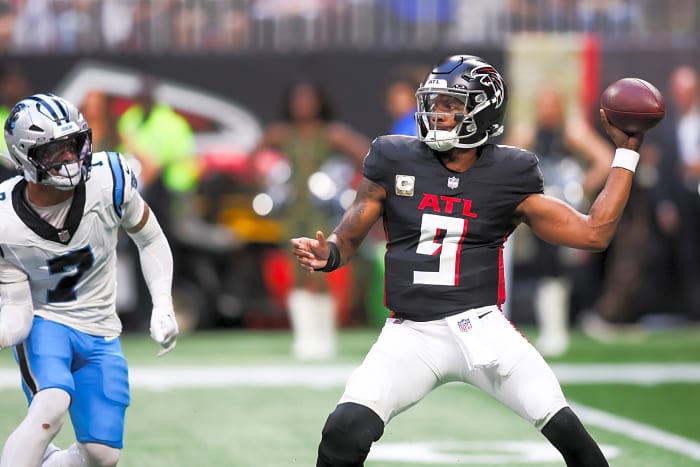
On draft night, analysts and NFL fans alike were completely trolling the Falcons for selecting Penix Jr. at No. 8 overall after just signing Kirk Cousins to a huge contract. The team created an unnecessary quarterback controversy that honestly didn't work out for either player. A couple of years later, Penix Jr. doesn't look like a starting quarterback and finds himself in yet another battle after the team went out and brought in former Miami starter Tua Tagovailoa.
Mark Hoffman / USA TODAY NETWORK via Imagn Images
Another quarterback situation that made no sense at the time. Fortunately for Green Bay, they have been one of the last teams to figure out how to strike a balance between investing highly in its future while still allowing their aging franchise quarterback to keep the win-now window open. Love came to Green Bay as the clear understudy to Aaron Rodgers, a season after the Packers reached the NFC title game. The Packers felt it was necessary to begin the process of preparing for life after their Canton-bound star — rightfully so — and went against the grain by picking a quarterback at No. 26 rather than bringing in a talented weapon for Rodgers like Tee Higgins or Brandon Aiyuk.
Jay Biggerstaff-Imagn Images
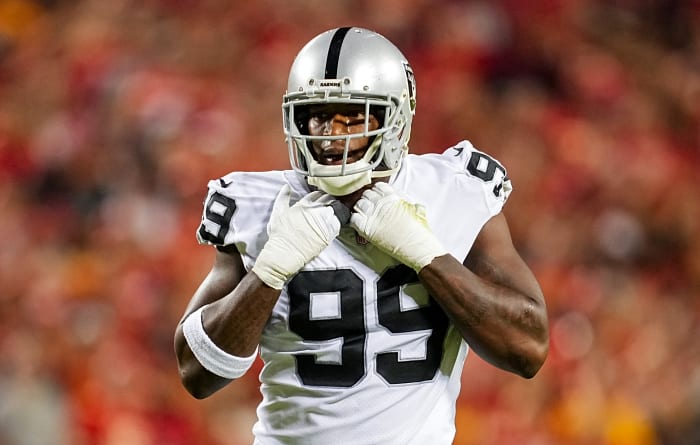
At a certain point, it's fine to make a reach on a prospect. Selecting at No. 4, though, isn't the time. The Raiders made a blunder when they grabbed the Clemson edge rusher nearly 20 picks higher than consensus, bypassing other defensive players like Devin White and Josh Allen. The franchise needed to find a star at that spot, and instead it chose to take a gamble on a player whose career never lived up his draft capital.
Rob Schumacher/The Republic
This wasn't a reach. After all, Rosen was actually labeled the most pro-ready option among the class. It did, though, come as a surprise after the Cardinals had already brought in Sam Bradford and Mike Glennon. Analysts were shocked to see Arizona bypass adding a top prospect up front or at wide receiver. Perhaps unfair, but the pick made even less sense a year later when Arizona used the No. 1 pick on Kyler Murray.
10 of 25
Rashaad Penny, 2018
Trevor Ruszkowski-Imagn Images
This one will make for a great trivia question one day. Penny, who no one had pegged as the first-round option in the 2018 class, wound up being the second running back to hear his name called at No. 27, sandwiched between Saquon Barkley and Nick Chubb. The move simply did not fit Seattle's dire needs on the line, nor did it make sense among the running back landscape. Penny had a few shining moments, but he nowhere near paid off on the team's investment.
11 of 25
Justin Gilbert, 2014
Ken Blaze-Imagn Images
A few factors made this one a head-scratcher. Cleveland traded up one spot to use the No. 8 spot on Gilbert, despite many analysts not believing Gilbert was going to go at No. 9 anyways. The team also already had a franchise corner in Joe Haden, so using more resources on that position felt like an oversight on a team that had massive holes. One of those holes was up front, with Taylor Lewan going a few picks after their selection. Oh, and some guy named Aaron Donald went five picks later.
12 of 25
Danny Watkins, 2011
Jerry Lai-Imagn Images
The Eagles simply got too smart for themselves here. In need of line help, they figured picking a 26-year-old prospect would give him a leg up to becoming a Day 1 starter. Besides being old in comparison to his peers, Watkins also didn't have a passion for football. Instead, he was more interested in being a firefighter. As admirable as that was, it left Philly with a low-ceiling prospect whose heart wasn't fully in the game. That combination proved to be a disaster as Watkins' career fizzled out after two years in Philadelphia.
13 of 25
Ricky Williams, 1999
RVR Photos-Imagn Images
Everyone knew Williams would be near the top of the draft board. The confusion and intense response stemmed from the price New Orleans paid to move up to No. 5. It cost the Saints every single 1999 NFL Draft pick (six selections), along with first- and third-round picks in 2000. To this day, it remains one of the worst trade packages, and ultimately played a major role in Mike Ditka losing his coaching job.
Ron Chenoy-Imagn Images
Selecting a Heisman winner with the star power of Tebow's level wasn't the issue here. The problem was that almost every NFL scouting department pegged Tebow as a developmental player who likely needed to switch positions, labeling him more of a second- or third-round dart throw. Denver opted to trade up the board to grab the Florida icon at No. 25. Besides a few brilliant moments, Tebow's career was far from what his collegiate days were.
Kirby Lee-Imagn Images
The Giants had multiple high-end picks, so waiting for their perceived franchise quarterback was the right choice. Instead, they opted to use No. 6 on Jones, who was projected as a mid-to-late first-round pick. The selection took a lot of heat due to them passing up defensive talent like Josh Allen, Ed Oliver, and Rashaan Gary. To be fair, the QB class that year wound up being very thin, but it doesn't mean that the pick made sense at the time.
Brad Penner-Imagn Images
It rarely works out when a team uses a first-round pick on a player that they immediately ask to change position. Werner was a talented prospect, but he was always best suited as a 4-3 defensive end. That offseason, the Colts brought in Chuck Pagano to overhaul the defense and switch to a 3-4, meaning Werner was now being brought off the line into an outside linebacker. He wound up retiring in 2017 after accumulating just 6.5 sacks over his 38 career games.
17 of 25
Dion Jordan, 2013
Melina Vastola-Imagn Images
Jordan's combine numbers and raw talent had scouts gushing. As a result, he quickly saw his name rise to the top of boards in a classic case of traits being prioritized over production. He didn't accomplish a ton while at Oregon, but that didn't prevent Miami from moving up from No. 12 to No. 3 to take Jordan. The team paid a premium to draft a project, passing up a talented offensive lineman like Lane Johnson who would have helped to protect their young quarterback in Ryan Tannehill.
Eric Hartline-Imagn Images
Ginn Jr. was a highlight reel at Ohio State. Yet, no one in Miami wanted Ginn Jr., who received a steady chorus of boos upon hearing his name called. Many analysts viewed Ginn Jr. as a one-trick pony as a wideout who had potential as a game-changing returner. None of that warranted being a top-10 pick. Dolphins fans had hopes of defensive stalwarts like Patrick Willis or Darrelle Revis being the pick instead, or even one of the top quarterback options in Brady Quinn, who was also available.
Matt Krohn-Imagn Images
Wait, how is one of the game's best all-around backs on this list? That's because when Detroit tagged him with the No. 12 pick, analysts and fans were bewildered. The team had just signed David Montgomery to be the starter, and while his talent and potential were never questioned, many assumed Gibbs would be more of a specialty back than an everyday option. While drafting a "backup" running back just outside the top 10 was laughed at, Detroit will never complain about the prospect they went all-in on.
Kirby Lee-Imagn Images
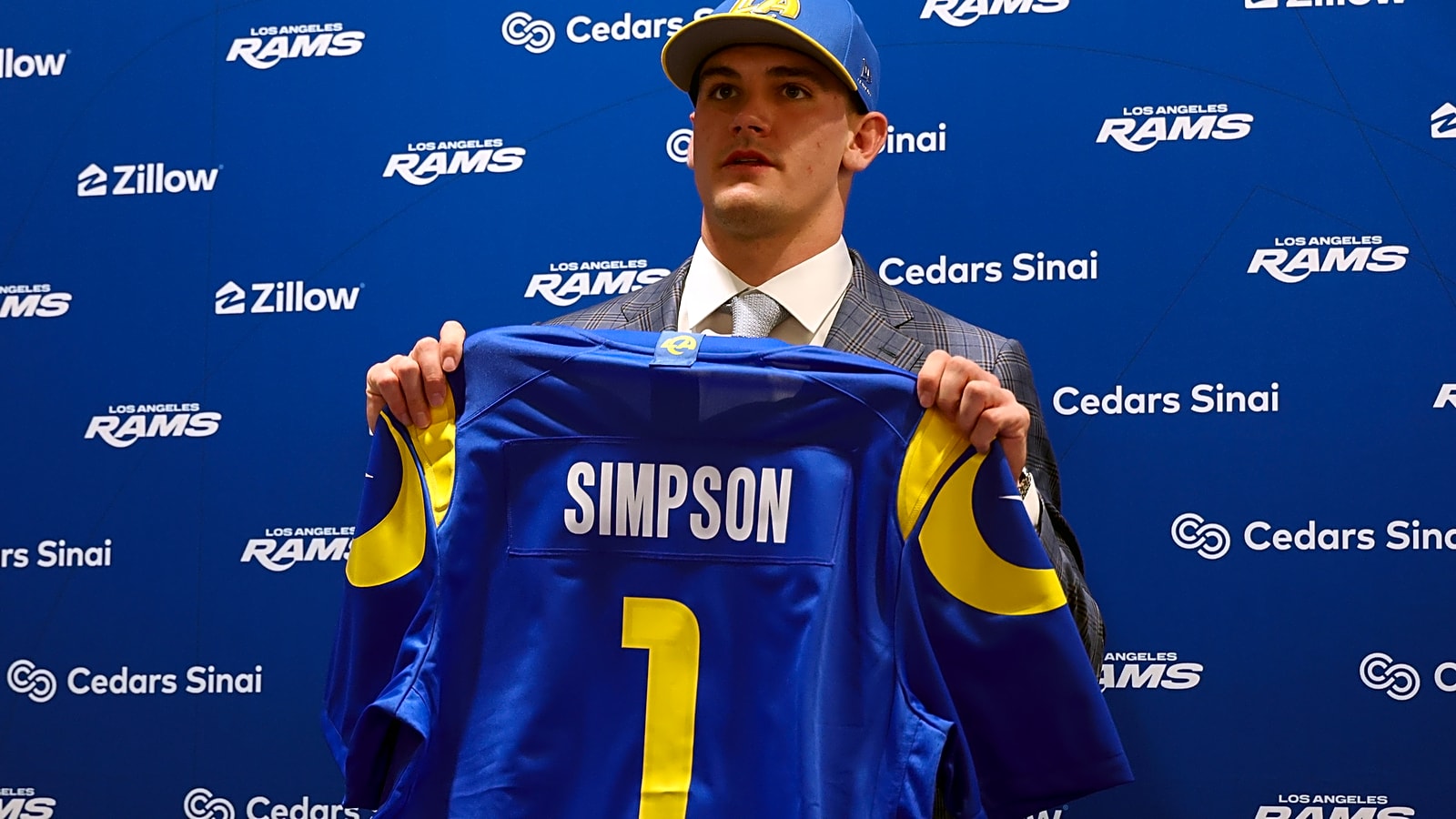
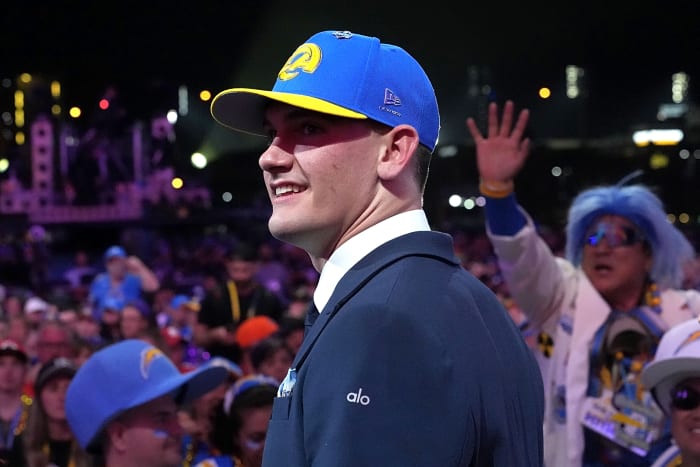
A fresh addition to the list, Simpson finds himself here after going No. 13 in the 2026 NFL Draft to the Los Angeles Rams. The move made little sense to fans and analysts alike, who were stunned to see the Rams use such high draft capital on a backup for Matt Stafford. As a team with Super Bowl aspirations, the move received negative grades due to it not moving the needle in a positive direction. Simpson also only started 15 games (all as a senior), which had many people concerned about his lack of experience.
21 of 25
Donovan McNabb, 1999
Geoff Burke-Imagn Images
If you find a quiet enough place, you can likely still hear the boo birds that roared out following Philadelphia's selection of McNabb. The reason for the venomous eruption wasn't as much about the player, rather the player they bypassed. Everyone in the city wanted Ricky Williams. He was there. Philadelphia passed him up, instead drafting someone they believed could become a franchise quarterback (they were right).
22 of 25
Travis Frederick, 2013
Jerome Miron-Imagn Images
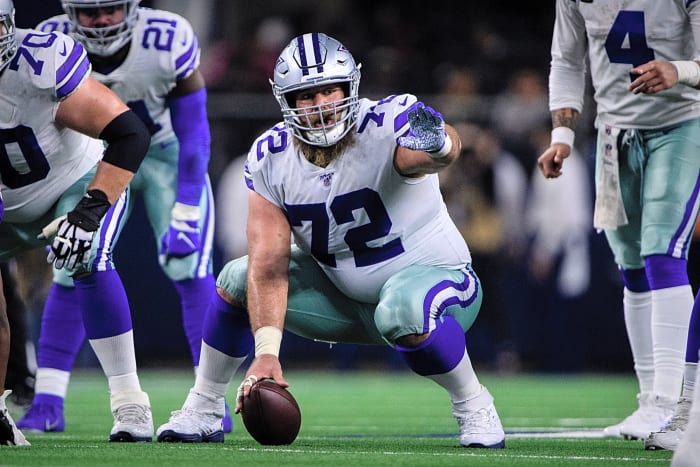
Being that it's Dallas, this move had plenty of people talking... and for all the wrong reasons. There's never going to be much fanfare when it comes to a center going in the first round, so when Dallas opted to draft Frederick, analysts quickly knocked them after bypassing flashier names on the defensive side of the ball. While it didn't receive a passing grade, the career of Frederick's certainly passed with flying colors as a key cog up front for many seasons.
Eric Canha-Imagn Images
An offensive guard who was referred to as a developmental-type player with a second-to-third-round tag wound up having his name called in the back-end of the first round. The Patriots went against the grain with this selection, which left not only analysts and fans stunned but had other organizations laughing. Strange went on to play three seasons in New England, but surely never looked the part of a first-round talent.
Eric Hartline-Imagn Images
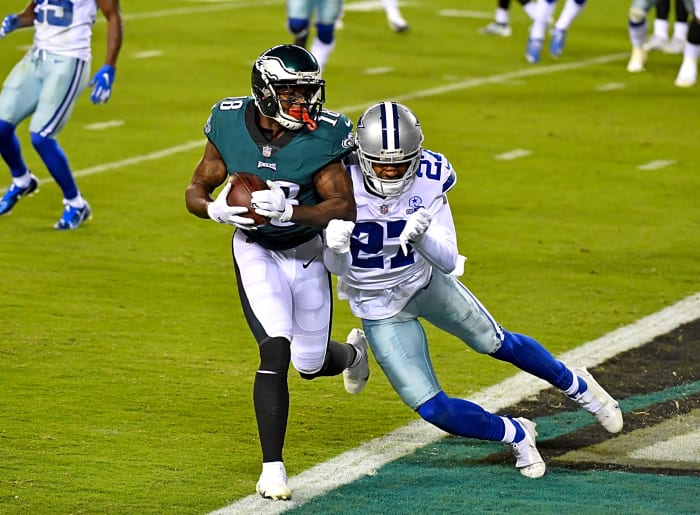
This was the pick that famously saw the camera pan to the Minnesota Vikings' war room and begin to laugh. That's because Philadelphia had selected a relative unknown, gadget-type wide receiver with Justin Jefferson still on the board. No team ever made a selection as quick as Minnesota did when they unexpectadly saw Jefferson sitting there.
Joe Nicholson-Imagn Images
Seattle fell in love with Irvin and pulled the trigger on him at No. 15. In doing so, the team instantly drew jeers as analysts had labeled Irvin a "project" and a defensive end who most likely figured to be a situational player. Many knocked the pick, believing Seattle could have easily traded down to accumulate more capital and still get their guy. Fortunately for both the Seahawks and Irvin, he ended up having a solid career despite entering the league with plenty of doubters.





 On Facebook
 On Flipboard











 +
+






