
-


Follow Us

 On Facebook
 On Flipboard
 On Twitter

Success is great, but it also brings difficult financial consequences. That’s because winning accelerates everything, from expectations and timelines to, inevitably, tough roster decisions. Approaching the homestretch of a Super Bowl run (that they might still win), the Seattle Seahawks will soon enter the 2026 offseason in a delicate position. They are contenders with one of the league’s most complete rosters. They also have a young-ish quarterback playing elite football and a defense that has redefined the franchise’s identity.
Sustained contention in the modern NFL, though, comes at a price. With cornerstone talents like Kenneth Walker III, Boye Mafe, and Tariq Woolen all approaching extension windows, general manager John Schneider must begin reallocating resources. Even with healthy cap space, maintaining long-term flexibility requires trimming veteran contracts that no longer align with Seattle’s evolving competitive timeline.
Here are three Seahawks cut candidates who could become financial dominoes in a championship recalibration.
Resurgence under Mike Macdonald
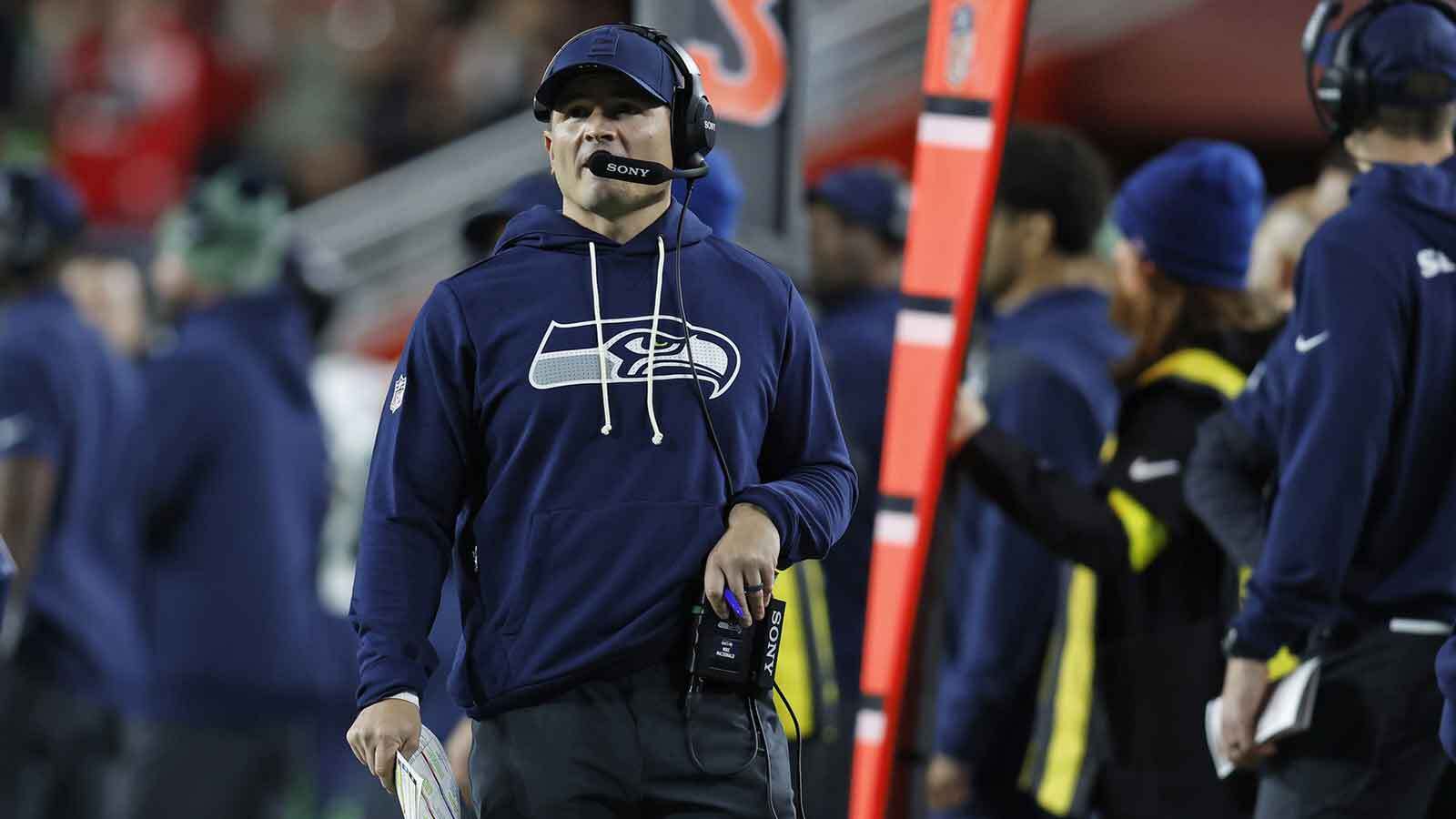
The 2025 Seahawks season will be remembered as one of the most dramatic turnarounds in franchise history. Under second-year head coach Mike Macdonald, Seattle surged to a franchise-record 14-3 finis. They captured the NFC West crown and secured the conference’s No. 1 seed for the first time since 2014. The transformation was rooted in defensive dominance.
Macdonald’s unit led the NFL in scoring defense. They blended schematic disguise with relentless physicality. Leonard Williams anchored the front, Ernest Jones IV commanded the middle, and Devon Witherspoon emerged as the tone-setting enforcer on the perimeter.
Offensively, the story was equally compelling.
Sam Darnold authored the league’s most stunning quarterback renaissance. He threw for 4,048 yards while operating Klint Kubiak’s system with poise and vertical aggression. His resurgence unlocked the breakout season that defined Seattle’s offense.
Playoff dominance
That breakout season belonged to Jaxon Smith-Njigba. He didn’t just break out, though. He detonated. The star wideout shattered franchise records with a league-leading 1,793 receiving yards. He earned Offensive Player of the Year honors and became the centerpiece of Seattle’s aerial attack.
That balance of defensive suffocation paired with explosive offense translated seamlessly into the postseason. Seattle dismantled the rival San Francisco 49ers 41-6 in the Divisional Round. They delivered one of the most lopsided playoff defeats in recent conference history.
The NFC Championship Game proved tighter, but the result was the same. In a 31-27 thriller against the Los Angeles Rams, Seattle’s defense delivered a late stop to secure its first Super Bowl berth in over a decade.
Now, with Super Bowl LX looming, roster sustainability eventually becomes the next frontier.
Free agency priorities
Seattle will enter free agency from a position of strength. They have the league’s fourth-highest projected cap space at roughly $73.2 million. Of course, that flexibility comes with pre-allocated intent.
Kenneth Walker III headlines the extension queue after a 1,027-yard season and dominant playoff run. Locking in the offensive engine is priority No. 1. Beyond retention, the Seahawks must address their most glaring weakness, which is the interior offensive line. Upgrading from stop-gap starters to a long-term anchor remains essential for protecting Darnold’s resurgence. They should potentially target elite centers on the market.
Defensively, Schneider should pursue edge depth and secondary reinforcements to sustain Macdonald’s league-best unit as veteran contracts age out. That brings us to the most logical departures.
LB Uchenna Nwosu
At his peak, Nwosu has been the emotional and schematic heartbeat of Seattle’s pass rush. His versatility, edge discipline, and pressure consistency made him invaluable during the defense’s rise.
Availability, however, has become the central concern. Nwosu missed significant time across the last few seasons. He did, however, play 16 games this season. Still, all those injury concerns can make his production increasingly difficult to justify against his escalating cap number.
Nwosu carries a 2026 cap hit approaching $20 million. That’s third-highest on the roster. Releasing him would generate approximately $11.5 million in savings. That figure alone could fund a major extension for a younger cornerstone like Mafe.
Seattle’s edge pipeline is also strong. Derick Hall and other ascending rushers have flashed starter-level impact within Macdonald’s system. The defense has proven it can generate pressure schematically. That lessens dependence on one high-priced veteran.
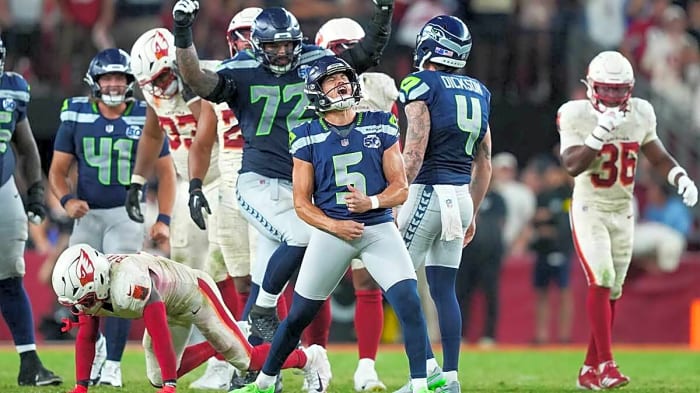
PK Jason Myers
This is one is about consistency vs. cost efficiency. Few kickers have been as reliable for Seattle as Jason Myers. His clutch kicking stabilized countless close contests during the 14-win campaign. That said, roster building at a championship level often turns even dependable veterans into financial luxuries.
The contract reality is this: Myers carries a 2026 cap hit around $7.2 million. Releasing him would save roughly $5.35 million. That figure can fund rotational offensive line help or depth in the secondary. There are age curve considerations, too. Entering his age-35 season, Myers remains accurate. Of course, kickers historically face rapid performance cliffs.
Seattle may prefer drafting a younger, cost-controlled replacement while reallocating veteran dollars elsewhere.
DE DeMarcus Lawrence
Lawrence’s arrival brought credibility and edge discipline. He provided playoff experience to Macdonald’s defensive front. His presence elevated locker-room standards during the Super Bowl run. Age and explosiveness, though, rarely move in opposite directions for long.
Lawrence current contract structure carries a 2026 cap hit near $11.8 million. Seattle has potential savings of roughly $7.5 million via release or post-June 1 designation. Note that Seattle’s defensive line is rapidly getting younger and faster. Emerging talents, when combined with interior disruptors like Byron Murphy II, have crowded the rotation. In addition, Lawrence’s snap share and pass-rush win rate both dipped late in 2025. That signals transition.
Moving on would allow Seattle to reinvest in younger trench depth or extension funds for core defenders entering their primes.
Sustainability requires sacrifice
The Seahawks aren’t cutting players because they failed. They may still win the Super Bowl of course. That said, they are considering cuts because they have already tasted success.
Roster sustainability at the Super Bowl level demands ruthless timing. They need to move off expensive veterans a year early rather than a year late. Uchenna Nwosu, Jason Myers, and DeMarcus Lawrence each played meaningful roles in Seattle’s resurgence. However, the franchise’s next phase revolves around retaining ascending stars and reinforcing structural weaknesses.
This is not a sign that Seattle’s window isn’t closing. If anything, it’s just opening wider. Maintaining that trajectory, though, requires converting past contributions into future flexibility. That transformation could make these three veterans the most notable financial dominoes of the 2026 offseason.
More must-reads:
- Matthew Stafford wins first NFL MVP award, announces decision for 2026 season
- 10 notable NFL free agents and their potential landing spots
- The 'NFL playoff receptions leaders' quiz
Breaking News
Trending News



Customize Your Newsletter
 +
+




Get the latest news and rumors, customized to your favorite sports and teams. Emailed daily. Always free!
PRIVACY POLICY EDITORIAL POLICY CONTACT US
ABOUT YARDBARKER TERMS OF SERVICE


Use of this website (including any and all parts and
components) constitutes your acceptance of these
Terms of Service and Privacy Policy.
This site is for entertainment purposes only.
There is no gambling offered on this site.
Gambling Problem? Call 1-800-Gambler.
