-

-


Follow Us
-

 On Facebook
 On Flipboard

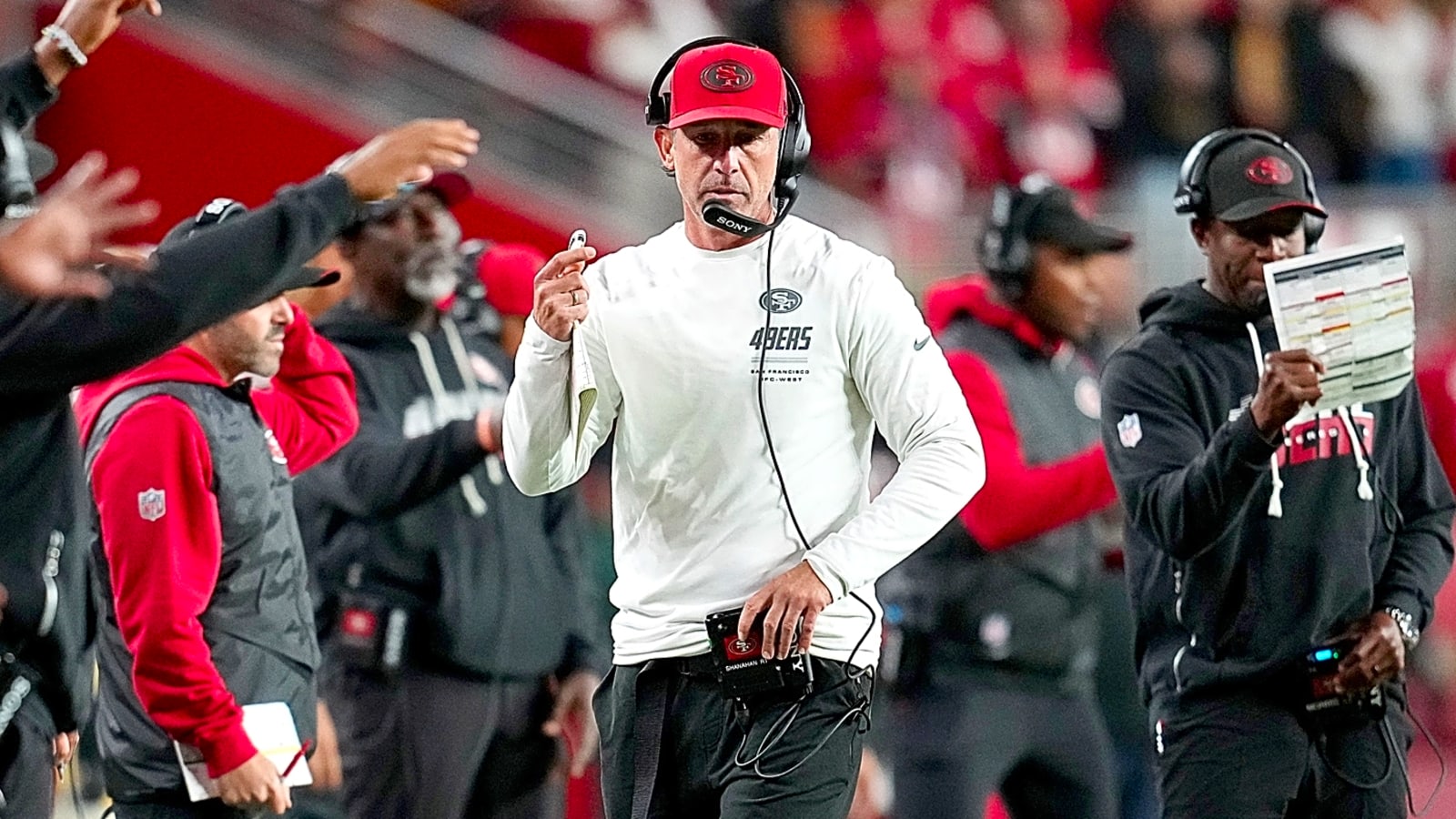
The San Francisco 49ers have gotten off to a strong start this season, winning six of their first seven games and establishing themselves as one of the more productive teams in the NFL. However, a closer look at their performances shows a concerning trend that could become a bigger problem as the season progresses.
The 49ers have been considerably more dominant in the first half of games than they have been after halftime. While their offense has maintained a relatively consistent scoring output, the defense has struggled to keep opponents from getting back into games.
Through seven weeks, San Francisco has scored 99 points in the first half and 98 in the second half. That consistency on offense is encouraging, but the same cannot be said for the defense. Opponents have scored 50 first-half points against the 49ers compared to 89 after halftime.
As a result, San Francisco's point differential drops from +49 in the first half to nine in the second. The 49ers are still outscoring opponents after halftime, but the advantage they establish early in games has become much smaller, especially in the last few games.
The fourth quarter has been the most concerning. San Francisco has scored 54 points in the final quarter while allowing 55. Its +28-point differential in the first quarter has steadily declined throughout games, eventually turning negative in the fourth.
For a team with legitimate Super Bowl hopes, the concern isn't necessarily whether San Francisco has enough talent to compete with the league's best. It's whether the 49ers can avoid getting in their own way. Too often, they have shown an ability to take control early before allowing opponents back into games.
Washington Game Highlights the Problem
The 49ers' October 19 matchup against the Washington Commanders provided one of the clearest examples of their second-half struggles.
San Francisco appeared to have the game under control after building a 20-3 halftime lead. The offense had generated 303 yards and 17 first downs in the first two quarters, while Washington managed just 90 yards. However, the momentum shifted dramatically after halftime.
The 49ers managed only 72 yards and three first downs in the second half. Their offense scored just three more points, allowing Washington to cut into the lead and make the game competitive.
The Commanders outgained San Francisco 224-72 after halftime and scored 14 points in the final two quarters. The 49ers eventually escaped with a narrow 23-17 victory, but what looked like a comfortable win became a game too close for comfort.
The offensive drop-off was especially noticeable, and the inability to sustain drives also put more pressure on the defense, which had to spend more time trying to protect the lead.
Although the 49ers managed to hold on, the performance raised questions about their ability to maintain offensive momentum throughout an entire game.
The 49ers need to find a way to keep their foot on the gas coming out of halftime. Building a comfortable lead is important, but maintaining that intensity is what separates teams that consistently win from those that leave the door open for their opponents.
Against Washington, San Francisco appeared to take its foot off the accelerator, giving the Commanders an opportunity to make a game out of a matchup that shouldn't have been so close in the first place.
Atlanta Exposed Another Concern
The following week, San Francisco experienced another difficult second half, this time against the Atlanta Falcons.
The 49ers entered halftime with a 14-12 lead, but Atlanta took control after halftime. San Francisco was held scoreless in the third quarter and managed only six points in the fourth. The Falcons, meanwhile, scored 17 second-half points on their way to a 29-20 victory.
Turnovers played a significant role in the loss. The 49ers finished with four turnovers, including two interceptions and two lost fumbles, while Atlanta did not give the ball away.
San Francisco still produced 400 total yards and 26 first downs, showing that the offense was capable of moving the ball. However, its inability to protect the ball was costly.
The loss showed another way the 49ers can lose control of a game. Against Washington, the offense struggled to sustain drives after building a significant lead. Against Atlanta, turnovers repeatedly gave the Falcons opportunities to take advantage.
Both performances contributed to a larger pattern of San Francisco this season and over the years having difficulty maintaining its early-game success.
A Trend the 49ers Need to Address
There is still plenty to like about the 49ers' start to the season, though. Their offense continues to be one of the best, and their first-half dominance has frequently allowed them to establish control in games early. However, the difference between their first-half and second-half results is hard to ignore.
The defense has allowed nearly twice as many points after halftime as it has before the break. Meanwhile, the offense has not been able to consistently turn early leads into comfortable wins.
There are several factors that can contribute to those numbers, including adjustments made by the other team, turnovers and the amount of time a defense spends on the field. Seven games also isn't the largest sample, so the trend is hopefully not a guarantee of more to come.
For much of the season, San Francisco has looked like a team capable of competing with anyone in the league. But the 49ers cannot afford to continue making games more difficult than they need to be because they're beating themselves.
So whether it is allowing opponents to get back into games, failing to sustain offensive drives or giving the ball away, the 49ers have created unnecessary challenges for themselves. Against stronger teams coming up in the schedule, those mistakes could turn close wins into losses.
More must-reads:
- Report names ESPN's potential replacements for Troy Aikman, details drama involving Joe Buck
- Cardinals' Budda Baker discusses trade rumors while wearing wild Halloween costume
- The '140-yard, 2-TD catch NFL games' quiz
Breaking News
Trending News




Customize Your Newsletter
 +
Get the latest news and rumors, customized to your favorite sports and teams. Emailed daily. Always free!
PRIVACY POLICY COOKIE POLICY CONTACT US
ABOUT YARDBARKER TERMS OF SERVICE


By using this site, you agree to our Terms of Service and Privacy Policy.
This site is for entertainment purposes only.
There is no gambling offered on this site.
Gambling Problem? Call 1-800-Gambler.