
-

-


Follow Us
-

 On Facebook
 On Flipboard

Somewhere inside the NFL’s league office, phones started ringing in April with a message nobody expected: the Department of Justice had opened a formal antitrust investigation into how the league sells its television and streaming rights. The probe targets the same distribution practices a jury already ruled violated antitrust law in 2024. That verdict awarded $4.7 billion in damages. Under federal antitrust statute, treble damages could have pushed exposure to roughly $14.1 billion. The verdict was overturned on procedural grounds, but the underlying practices remain under a microscope. And now, the feds want a closer look.
A $1,000 Season Pass Nobody Asked For
To watch every NFL game last season, fans spent close to $1,000 across cable and streaming subscriptions. Games now scatter across CBS, Fox, ABC, NBC, ESPN, YouTube, Peacock, Amazon Prime Video, and Netflix. The NFL claims 87% of its games aired on free broadcast television. As media analyst Mike Florio put it: “So they’re on free TV, yeah, but you ain’t getting 87% of them. Nobody’s getting 87% of the games for free.” That 87% number is three-card monte. Technically true. Functionally meaningless for any fan trying to follow a single team.
A Law Built for Rabbit Ears
The Sports Broadcasting Act of 1961 gave the NFL a limited antitrust exemption so teams could collectively sell broadcast rights without triggering monopoly prosecution. The entire point was keeping games accessible on free TV. That law predates modern cable, the internet, and streaming by decades. Courts have already ruled the exemption covers only broadcast TV, not cable, satellite, or streaming. Senator Mike Lee wrote it plainly in early March: the NFL’s current distribution framework “is significantly different from the circumstances that led to this exemption.” The shield Congress built for fans started protecting the league instead.
The Exemption Eats Its Own Purpose
A consumer-protection law became a consumer-extraction tool. The NFL’s current media deals pay the league more than $10 billion annually across roughly $110 billion in 11-year contracts. The exemption lets all 32 teams sell rights collectively, functioning as a legal cartel. Streamers like Netflix and Amazon pay higher fees than broadcast networks, so the NFL carved streaming-exclusive packages. Netflix’s Christmas Day Lions–Vikings game drew 27.5 million U.S. viewers. Amazon’s Broncos–Chiefs Christmas primetime game pulled 21.06 million. Record numbers. Behind paywalls. The law designed to keep football free now subsidizes the business model charging fans to watch it.
How Streaming Broke the Cartel’s Cover
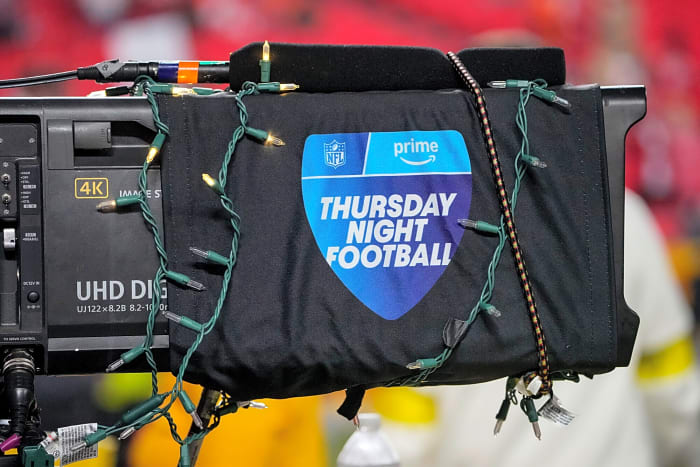
The hidden mechanism is straightforward: streamers outbid broadcasters, so the NFL feeds them exclusive inventory. Every exclusive game pulled from broadcast TV and placed behind a paywall stretches the 1961 exemption further from its original purpose. FCC Chairman Brendan Carr warned that the NFL could reach a “tipping point where they’ve put too many games behind a paywall,” at which point it raises questions about the scope of the exemption. The NFL acquired equity in ESPN as part of a 2025 deal structure. The league isn’t just selling content. It owns pieces of the buyers.
The Numbers Behind the Squeeze
NFL games dominate the list of most-watched U.S. television programs, accounting for the majority of the annual top 100. The league dominates American attention like nothing else. And now it is reportedly seeking significantly higher fees from broadcasters in the next round of negotiations. Media rights run through 2033-34, with opt-out windows opening after the 2029-30 season. Fox alone pays more than $2 billion annually for its Sunday afternoon package. The FCC has received public comments on sports fragmentation, with many supporting keeping games on free broadcast television. Fans aren’t confused about what they want. They just can’t afford it.
Follow the Dinner to Find the Investigation
Major broadcasters, regulators, and members of Congress have raised concerns in recent months over how difficult it has become for consumers to watch their favorite teams as the NFL offers smaller packages to streamers. Within weeks, the FCC launched an inquiry into sports fragmentation, the DOJ opened its investigation, and Senator Lee sent his letter urging a probe. Three separate federal bodies moved on the same issue in the same window. A government official described the DOJ probe as being about “affordability and creating an even playing field for providers.” The NFL saw something else entirely.
The New Rule, Not the Exception
This marks the first coordinated federal investigation of the NFL’s antitrust exemption across multiple agencies in years. The 2024 Sunday Ticket jury verdict, one of the largest antitrust judgments in sports media history, found the NFL violated antitrust law. A federal judge overturned it on procedural grounds, ruling that two expert witnesses had used flawed methodologies and should have been excluded. The underlying antitrust restraint was never exonerated. If the DOJ investigation produces similar findings, every major sports league’s exemption becomes vulnerable. MLB. NBA. NHL. The NFL isn’t facing an isolated problem. It set the precedent everyone else now fears.
The 2029 Cliff Nobody Can Avoid
Opt-out windows with CBS, NBC, and Fox open after the 2029-30 season. The NFL is seeking to reopen its deals with networks to lock in higher rates. If the exemption collapses, individual teams could negotiate separate broadcasting deals, creating fragmentation the NFL itself argues would result in further viewer confusion and higher costs. And here is the cruelest irony: stripping the exemption could drive prices higher for fans, not lower. The consumer-protection argument could produce the opposite of consumer protection.
The Fight That Hasn’t Started Yet
The NFL could voluntarily cap streaming exclusives and commit to keeping most games on broadcast TV, satisfying federal pressure before the investigation concludes. That move would protect the exemption but reduce leverage with Netflix and Amazon. Industry pressure could also backfire: push the NFL too hard, and the league sells even more inventory to non-traditional partners. Every federal action ties back to the same underlying tension between broadcasters, streamers, and regulators. Whether fans end up paying less or more depends on a negotiation between billionaires where consumer welfare is the talking point, not the objective. How much have you spent chasing your team across cable boxes and streaming logins this season — and at what point do you stop paying? Tell us in the comments.
More must-reads:
- Winners, losers from 2026 NFL schedule release: Thanksgiving week delivers
- Chiefs HC Andy Reid gives big Patrick Mahomes injury update amid rumors
- The 'NFL's active 1K-rushers' quiz
Breaking News
Trending News



Customize Your Newsletter
 +
+




Get the latest news and rumors, customized to your favorite sports and teams. Emailed daily. Always free!
PRIVACY POLICY COOKIE POLICY CONTACT US
ABOUT YARDBARKER TERMS OF SERVICE


By using this site, you agree to our Terms of Service and Privacy Policy.
This site is for entertainment purposes only.
There is no gambling offered on this site.
Gambling Problem? Call 1-800-Gambler.
