
-

-


Follow Us
-

 On Facebook
 On Flipboard

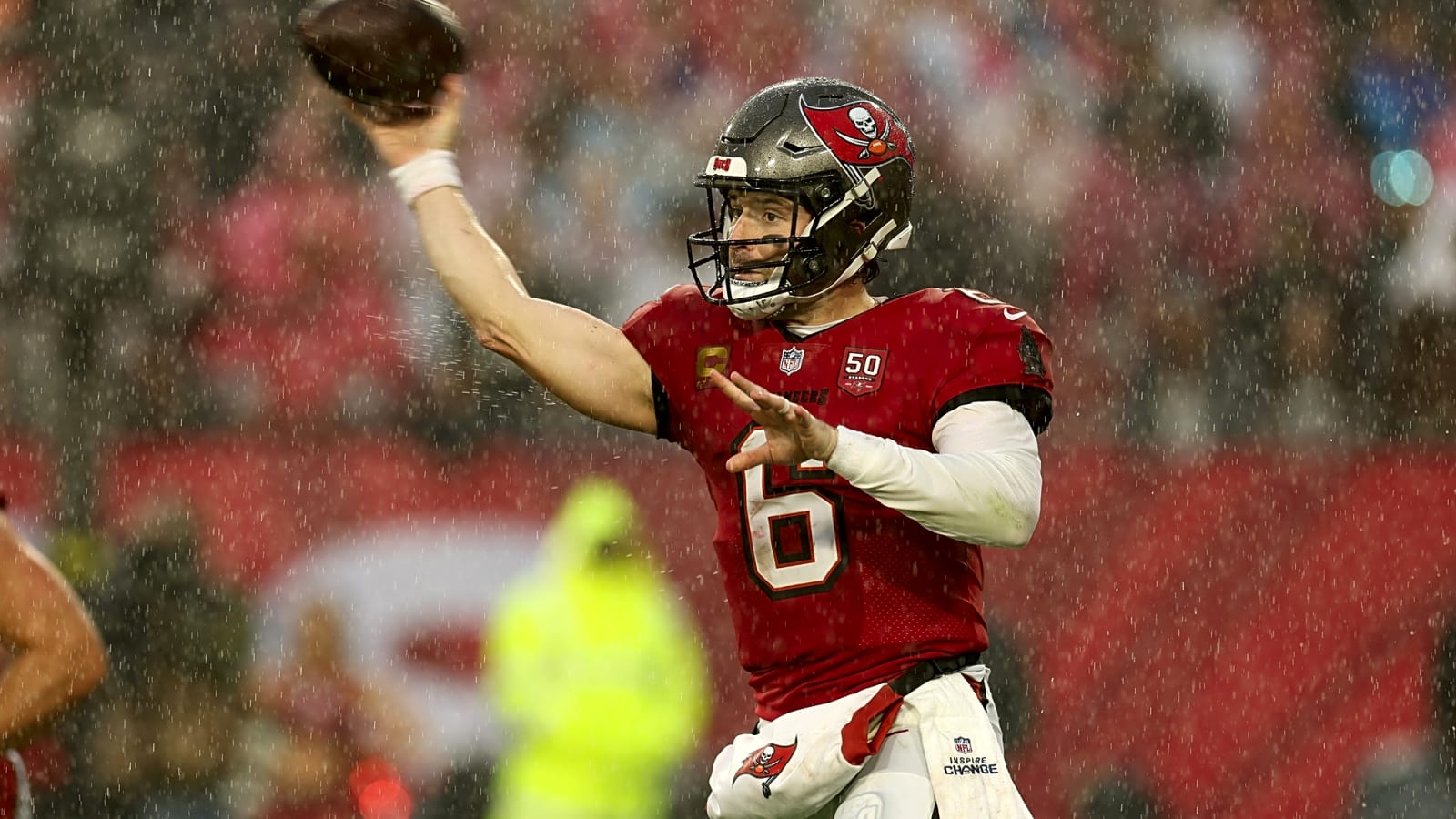
The Tampa Bay Buccaneers’ offense has undergone a clear philosophical shift, one that ties scheme directly to personnel. The unit is no longer about forcing a rigid system onto its quarterback; it is about maximizing Baker Mayfield’s timing and movement skills, leaning into Mike Evans’ rare ability to win at every level of the field, and accelerating the growth of younger wideouts, tight ends, and backs. The result is a layered, calculated attack shaped by route discipline, play-action structure, early-down aggression, and defined red-zone roles that reveal exactly why the box score keeps tilting in Tampa Bay’s favor.
Baker Mayfield’s Command of Structure and Space
Tampa Bay’s offensive blueprint begins with clarity under center. Baker Mayfield is at his best when the picture is defined before the snap and condensed after it. The Buccaneers have responded by building a passing structure that emphasizes defined reads, half-field concepts, and rhythm throws off hard play fakes. Instead of asking him to live in static five-step drops, the design now incorporates movement pockets, sprint-outs, and layered flood concepts that cut the field in half. That approach doesn’t just simplify decisions; it sharpens them. The offense now operates with intent, sequencing early completions to unlock intermediate and vertical shots.
Play-action is no longer a changeup; it is the fastball. Tampa Bay leans into heavy personnel looks, forcing linebackers to step downhill before releasing crossers behind them. Mayfield’s comfort turning his back to the defense and resetting his feet allows deeper developing routes to mature without panic. Deep over routes and sail concepts off stretch action have become reliable explosives.
Bootlegs and half-rolls reshape protection angles and buy time without demanding elite pass protection on every snap. Mayfield thrives when he can reset on the edge, giving him run-pass conflict reads with a clear high-low progression. That structure limits blind-side pressure and highlights his accuracy on the move.
Mike Evans’ Age-Defying Production
While we still don’t know if Mike Evans will play, retire, or choose to play for another team in 2026, Evans continues to defy conventional aging curves for perimeter receivers. His route craft has evolved beyond pure vertical dominance, blending pacing and leverage to create space even when defenders expect the fade or back-shoulder. Tampa Bay uses him as the gravitational center of the passing game, dictating coverage rotations before the ball is snapped. Evans’ size, body control, and timing remain the backbone of high-leverage calls, especially in money downs and compressed red-zone space. The offense feeds off his reliability, adjusting route stems and splits to create isolation advantages that maximize his catch radius.
Evans still threatens vertically from tight splits, forcing corners to open early. That threat sets up deep comebacks, and back-shoulder throws that Mayfield delivers on time and outside. Isolation routes on the boundary remain a primary answer versus single-high coverage.
Inside the 20, Evans’ role becomes surgical. Slant-fade options, quick outs, and high-point fades give Mayfield defined answers. Defenses often bracket him, but that attention opens space elsewhere, reinforcing his indirect value even when he isn’t targeted.
Early-Down Passing Aggression
The Buccaneers have tilted toward early-down passing to stay ahead of the sticks. First-down throws off play-action and RPO looks discourage stacked boxes and limit predictable second-and-long situations. That early aggression also dictates tempo; Tampa Bay controls defensive substitutions by varying personnel while maintaining passing intent. The strategy is calculated, not reckless. Quick game on first down forces linebackers to widen, creating more favorable light boxes on subsequent runs. It is sequencing as strategy, building efficient series instead of chasing third-down miracles.
Coordinated vertical attempts on early downs to prevent safeties from cheating forward. Double-move routes and layered posts create explosive potential without telegraphing intent.
Run-pass options tether slants and quick outs to inside zone, giving Mayfield immediate answers against overaggressive fronts. The ball comes out fast, reducing negative plays.
Route Trees and Usage Hierarchy
When you strip things down to route trees and usage—who earns high-leverage targets, who dominates red-zone snaps, and who benefits from motion or matchup advantages—you’re essentially building the same analytical framework used in an NFL DFS lineup optimizer, even if your only goal is understanding why Evans and company keep showing up in the box score.
Third-and-medium snaps consistently funnel toward Evans or a schemed crosser designed to exploit bracket attention. That predictability in design creates unpredictability in execution.
Younger wideouts are tasked with motion, orbit shifts, and condensed splits to force communication breakdowns. Their assignments stretch horizontally before Evans stretches vertically.
Tight End Integration
The tight end room has evolved into more than a check-down outlet. Tampa Bay deploys its tight ends as seam runners and flat defenders in play-action designs. Pre-snap shifts into wing alignments disguise intentions, creating run looks that morph into intermediate passing threats. The versatility adds stress to linebackers, who must honor both downhill action and seam release speed. Protection responsibilities are balanced with route involvement, ensuring tight ends remain threats rather than tells.
Stick-nod variations and vertical seams punish Cover 2 shells. The tight end becomes a decisive read in the progression, not a last resort. Motioning from inline to slot creates matchup clarity. Defensive adjustments expose coverage intentions before the snap.
Backfield Multiplicity
The running back room functions as both power engine and receiving extension. Tampa Bay uses varied run schemes—inside zone, duo, and counter—to prevent defensive pattern recognition. Backs release into check-downs, angle routes, and screen concepts, giving Mayfield answers against blitz looks. The multiplicity keeps linebackers hesitant, which directly enhances play-action credibility. When backs threaten both interior gaps and perimeter screens, defensive pursuit angles widen and coverage shells loosen.
Tunnel and slip screens slow edge rushers who overcommit to Mayfield’s launch point. Timed releases exploit aggressive defensive fronts. Counter and pull concepts introduce downhill force, complementing the lateral flow of zone runs.
Red-Zone Identity
Inside the 20, the field compresses, but Tampa Bay’s design expands. Route spacing tightens, yet responsibilities sharpen. Evans commands isolation attention, tight ends threaten seams, and backs leak into flats. Motion before the snap forces defenders to declare coverage, giving Mayfield clearer leverage reads. The emphasis is on quick decisions and high-point opportunities, limiting turnover risk while maximizing size advantages. Bunch and stack sets create traffic, freeing primary targets on pivots and quick outs. Hard run fakes pull linebackers forward even in short fields, opening tight windows behind them.
Protection and Offensive Line Cohesion
Scheme evolution means little without protection of integrity. Tampa Bay has tailored its blocking to match the passing identity. Slide protections align with movement pockets, and chip releases assist on premier edge rushers. Communication across the interior stabilizes the pocket depth Mayfield prefers. That cohesion allows deeper route concepts to develop without sacrificing timing. Protection schemes adjust to anticipated pressure, ensuring Mayfield’s front-side read remains intact. Running backs and tight ends delay rushers before entering routes, preserving both protection and outlet options.
Tempo and Situational Awareness
Game flow management defines the Buccaneers’ maturity. Tempo shifts—from no-huddle bursts to deliberate clock control—mirror game context. Situational awareness on third down and two-minute drills underscores role clarity. Each skilled player understands alignment responsibility, reducing pre-snap confusion and wasted timeouts. The offense feels synchronized, not hurried. Quick sideline concepts and boundary awareness preserve clock without abandoning vertical threat. Spacing routes create defined throwing lanes, reducing contested windows.
Development of Younger Playmakers
Beyond established stars, the offense depends on ascending contributors. Younger wideouts refine route pacing and blocking technique, tight ends expand route catalogs, and backs sharpen blitz recognition. The coaching staff invests in role-specific growth, ensuring depth pieces can execute the same concepts without dilution. That developmental arc sustains efficiency even when injuries test rotations. Stem discipline and break timing enhance separation, especially against press coverage.
Young players absorb motion duties and audible adjustments, reflecting trust within the system. Tampa Bay’s reshaped offense is not about reinvention for spectacles. It is about precision—aligning Baker Mayfield’s processing with Mike Evans’ timeless production while cultivating a supporting cast that understands leverage, timing, and defined purpose. Every route, motion, and play-action fake builds a layered identity grounded in structure and clarity.
More must-reads:
- Chiefs provide major Patrick Mahomes injury update
- This John Harbaugh decision could define the Giants' season
- The 'No.2-overall NFL Draft picks' quiz
Breaking News
Trending News




Customize Your Newsletter
 +
+




Get the latest news and rumors, customized to your favorite sports and teams. Emailed daily. Always free!
PRIVACY POLICY COOKIE POLICY CONTACT US
ABOUT YARDBARKER TERMS OF SERVICE


By using this site, you agree to our Terms of Service and Privacy Policy.
This site is for entertainment purposes only.
There is no gambling offered on this site.
Gambling Problem? Call 1-800-Gambler.
