
-

-


Follow Us
-

 On Facebook
 On Flipboard

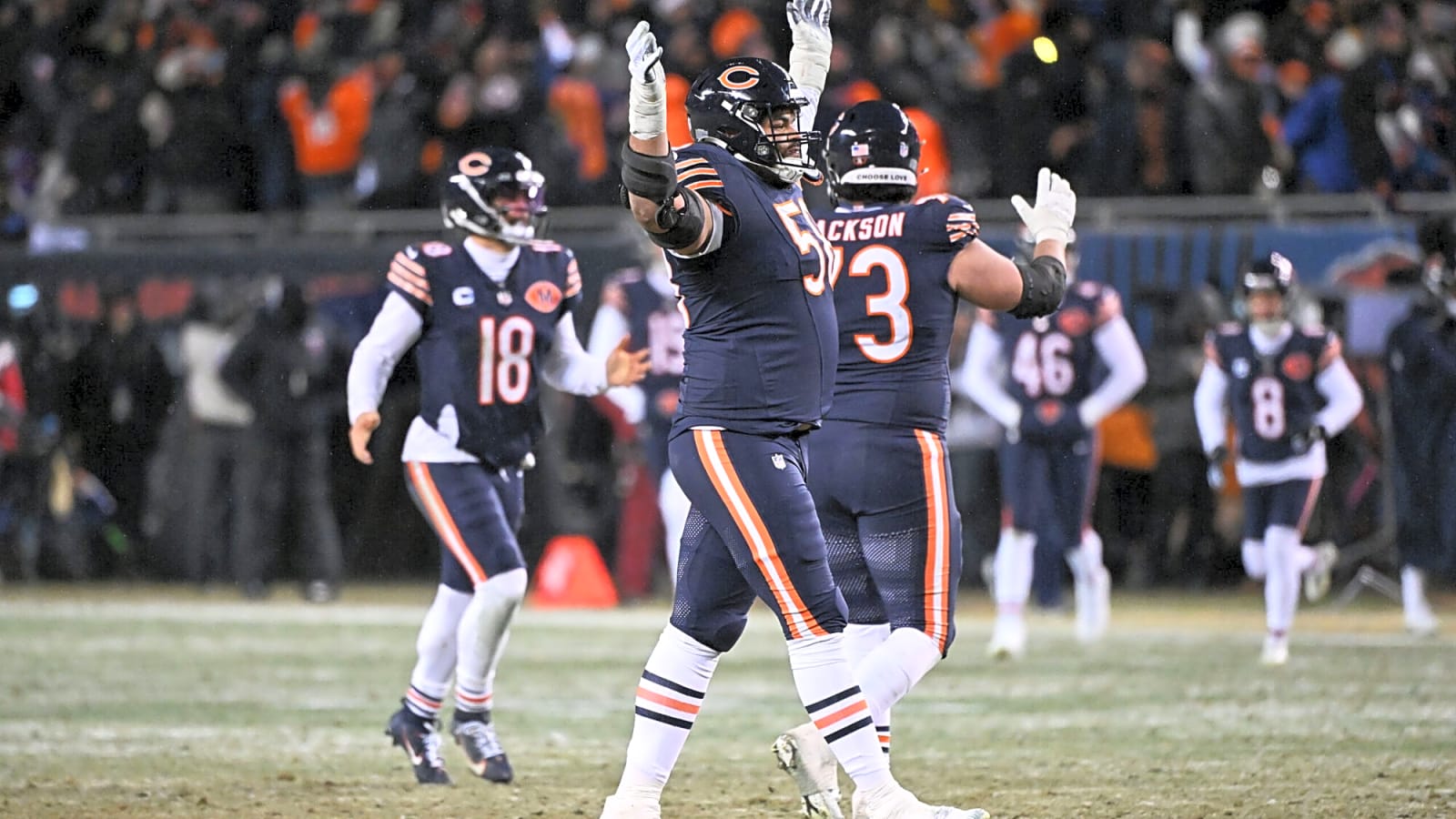
Draft week in Chicago. The front office had spent months staring at a number nobody wanted to say out loud: $243,070 in usable cap space, dead last in the NFL heading into free agency. A team fresh off its first playoff win since 2010, its first NFC North title since 2018, and suddenly the checkbook looked like it belonged to a franchise going backwards. Ryan Poles needed room. He found it the way every aggressive GM finds it. He borrowed from next year.
The Exact Gap That Forced the Move
Pre-draft cap tracking put Chicago at the very bottom of the league, with less usable space than any other franchise entering the 2026 offseason. Dallas, New Orleans, and Miami sat nearby but none matched Chicago’s squeeze. The salary cap itself landed in the low-$300 millions for 2026, which meant even a mid-tier free agent signing was mathematically impossible without surgery on an existing deal. Poles did not have the luxury of waiting for June cuts to create room. The draft clock was already running, and rookie pool accounting demanded flexibility before pick one.
Two Contracts, One Afternoon

Poles restructured guard Jonah Jackson and tight end Cole Kmet in a single stroke, freeing $10.375 million in 2026 cap space. Jackson’s deal converted $13.5 million of salary into signing bonus, shaving $6.75 million off his 2026 hit. Kmet’s conversion moved $7.65 million the same way, cutting $3.825 million. The Bears scored 441 points in 2025, third-most in franchise history. That offense needed its foundation intact. But the cost of keeping it together was already compounding in a column marked 2027.
Ben Johnson’s Offense By the Numbers

The 2025 Bears scored at least 16 points in every single game, a franchise first. They finished third in points scored and posted top-tier marks in both rushing output and sacks allowed, a rare combination for an offense built around a second-year quarterback. Caleb Williams operated behind a line that turned sack rate into a competitive advantage rather than a survival metric. Ben Johnson’s play design layered tempo on top of protection, which is why the 441-point total was not a fluke. The restructures exist specifically to keep that infrastructure intact for one more run.
The Window That Forced the Bet

Fifteen years without a playoff victory. Six years without a division crown. Then Caleb Williams arrived, and the Bears turned into one of the league’s most balanced offenses, leaning on elite protection and a productive ground game at the same time. That kind of window does not stay open because you ask nicely. Poles knew the cap was a constraint, but he also knew that waiting for perfect financial health meant wasting a quarterback on a rookie deal. The myth of disciplined cap management started cracking right there.
The Bill Nobody’s Reading Yet

Jackson’s 2027 cap number jumps to $23.75 million. Kmet’s rises to $15.425 million. Combined: $39.175 million, roughly 13 percent of the projected salary cap, for a guard and a tight end. Both enter the final year of their contracts. Both become trade-or-extend decisions. The Bears freed $10.375 million today. They committed nearly four times that amount twelve months from now. That is not a solution. That is a payment plan with a balloon clause.
What $10.375M Actually Buys in 2026

Ten million in freed space does not buy a star at this stage of the calendar, but it does rebuild depth. That figure comfortably covers a veteran edge rusher on a one-year prove-it deal, a starting-caliber safety, or a high-end swing tackle. It also leaves enough room to absorb the rookie pool without triggering another restructure before camp. In practical terms, the Bears traded 2027 flexibility for the ability to sign one real contributor plus their entire draft class. The math is small on the surface and large in the cumulative effect on the roster.
The Guard They Called Disappointing

Jackson arrived via trade for a sixth-round pick after playing only four games with the Rams. Analysts labeled him the Bears’ most disappointing player, citing early-season penalties and a sub-60 PFF grade. Then ESPN’s full-season analytics dropped, showing an elite-tier pass-block win rate. Jackson started all 17 games and earned a $2.5 million durability bonus. The perception lagged the data by months. The Bears restructured a player the public thought was failing but the film said was dominant. That gap between narrative and reality is the entire story of modern NFL evaluation.
Kmet’s Quiet Gamble

Kmet signed a four-year, $50 million extension. Then he posted solid production, but not $50-million production. The Bears kept him anyway because the contract made him nearly immovable. Now the restructure shifts his financial gravity into 2027, when his $15.425 million cap hit will demand either elite output or a trade. The restructure that looks like commitment today could become the mechanism that forces him out the door tomorrow.
The Rookie Deal Clock

Caleb Williams enters 2026 on the back half of his rookie contract, with a fifth-year option decision arriving in 2027. That is the same calendar year Jackson and Kmet’s balloon hits land. The Bears are not just stacking cap pain into one window, they are stacking it into the exact window where their franchise quarterback becomes expensive. Every restructure pushed forward in 2026 narrows the margin available to pay Williams on his second contract. The bet is not only that 2026 produces a deep run, it is that 2026 produces enough leverage to make the Williams extension math survivable.
The Playbook Philadelphia Wrote
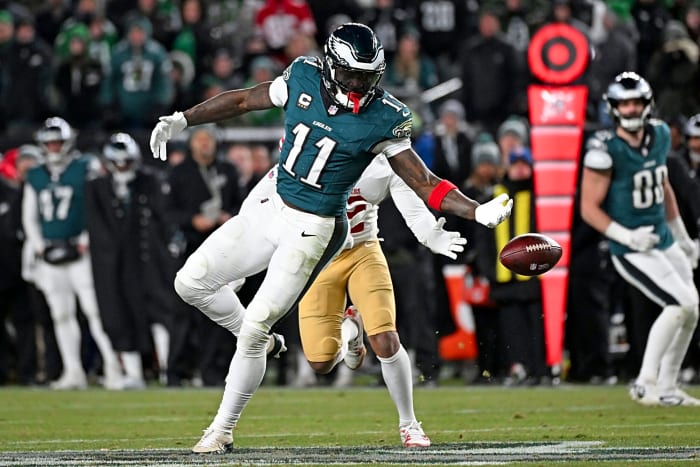
Philadelphia carries hundreds of millions of dollars in void-year cap charges stretching into the next decade. That is not a typo. The Eagles built a Super Bowl roster by systematically converting present salary into future obligation, betting that rising media-rights revenue would bail them out. The Bears just adopted the same playbook. Restructures, bonus conversions, and void years create the illusion of cap management while building crisis architecture one layer at a time. The 2027 Bears roster will be thinner, cheaper around the edges, and entirely dependent on whether 2026 produced a ring worth the wreckage.
How the Other Tight-Cap Teams Handled It

The teams sitting closest to Chicago on the 2026 cap ladder followed the same script almost word for word. New Orleans restructured multiple veteran deals to survive free agency. Dallas leaned on bonus conversions for its highest-paid offensive players. Miami used void years to push current obligations into future seasons. None of those teams treated their squeeze as a one-time emergency, they treated it as a recurring maintenance cost. Chicago joining the club is less a break from league norms and more a confirmation that the Bears now operate like a team planning for multi-year contention.
The 2027 Free Agent Class the Bears Will Face
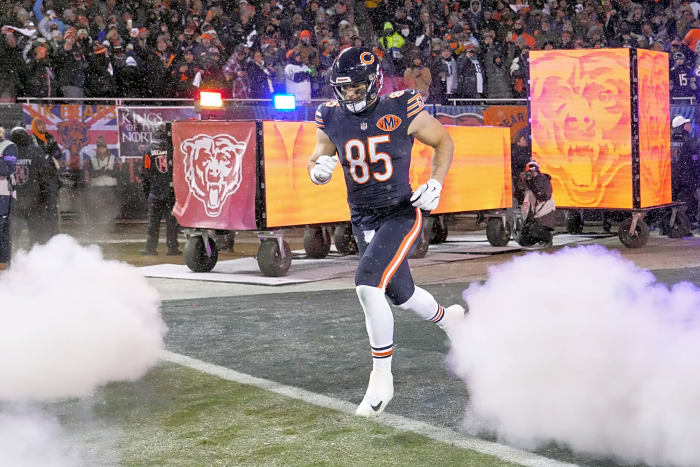
Jackson and Kmet are not the only names entering contract decisions in 2027. DJ Moore, Joe Thuney, and Grady Jarrett all sit on deals that reach critical decision points inside the same window. That means the 2027 cap wall is not just two oversized numbers, it is a cluster of trade-or-extend conversations happening at once. Poles will need to rank which of those players the Bears can afford to keep, which they can flip for picks, and which they must let walk. The restructures executed this week effectively scheduled that triage meeting for next spring.
The Bet That Can’t Be Unwound

Additional restructures remain available. DJ Moore could free roughly $17.5 million. Joe Thuney another $7.3 million. Grady Jarrett, $6.9 million. The Bears could open $40 to $70 million in estimated space if they pushed every lever forward. But each lever adds weight to the same 2027 wall. Jackson and Kmet will either prove the gamble right or become the trade pieces that fund the rebuild. Assistant GM Jeff King used his pre-draft press conference to emphasize competition and hard roster decisions as the front office’s core priorities. The hardest decision is already on the calendar.
Caleb Williams’ Ticking Clock

The entire restructure strategy orbits one player who did not get restructured. Williams enters 2026 with elite pass protection. Jackson at guard. Kmet catching underneath. Ben Johnson calling plays behind an offensive line that ranked among the league’s best. But if 2026 underperforms, the narrative flips overnight: Poles mortgaged the future for nothing. If 2026 succeeds, expect more restructures, more void years, more deferred pain pushed into 2028 and 2029. Either path leads to the same destination. The only variable is whether a trophy sits in the lobby when the bill arrives.
Do you think Poles just bought a Super Bowl window, or did he mortgage the Bears straight into another rebuild? Tell us in the comments.
Over the Cap, April 22, 2026, “Chicago Bears Restructure Jonah Jackson and Cole Kmet Contracts.”
Sports Illustrated, April 5, 2026, “Salary Cap Check: Where All 32 NFL Teams Stand Pre-Draft, Post Free Agency.”
FOX 32 Chicago, April 20, 2026, “Chicago Bears eye one specific trait in a draft where they’re ‘ready to go.'”
Chicago Bears, January 26, 2026, “By the Numbers: Bears’ 2025 Season.”
NFL Football Operations, 2026, “NFL Salary Cap Set at $301.2 Million.”
ESPN, 2025-26 Season, “NFL Pass Block Win Rate Leaders.”
More must-reads:
- Penn State coach defends Drew Allar after Steelers select QB during 2026 NFL Draft
- Mike Tomlin opens up about joining NBC as an analyst after leaving Steelers
- The 'No.2-overall NFL Draft picks' quiz
Breaking News
Trending News







Customize Your Newsletter
 +
+




Get the latest news and rumors, customized to your favorite sports and teams. Emailed daily. Always free!
PRIVACY POLICY COOKIE POLICY CONTACT US
ABOUT YARDBARKER TERMS OF SERVICE


By using this site, you agree to our Terms of Service and Privacy Policy.
This site is for entertainment purposes only.
There is no gambling offered on this site.
Gambling Problem? Call 1-800-Gambler.
