
-

-


Follow Us
-

 On Facebook
 On Flipboard


Something cracked inside the Cincinnati Bengals front office this weekend. The franchise that built its identity on patience, on waiting, on letting other teams overpay, walked into a room and traded away the 10th overall pick. No hesitation. No committee meetings that stretch into next month. Dexter Lawrence II, a three-time Pro Bowl defensive tackle, passed his physical in Cincinnati and had his extension signed within roughly 24 hours of the deal being reported. Years of trade-market silence, shattered in a weekend.
The Price of Patience
The Bengals had not executed a notable draft-day trade in roughly three years, aside from small 2024 moves involving Joe Mixon and Khalil Herbert. Meanwhile, Joe Burrow kept absorbing hits behind a defense that struggled to get stops. The NFL salary cap climbed to roughly $301 million in 2026, a record, and Cincinnati had largely sat on its hands while AFC North rivals dealt. That restraint looked like discipline from the outside, but the Lawrence trade recast it.
The Myth Starts to Crack
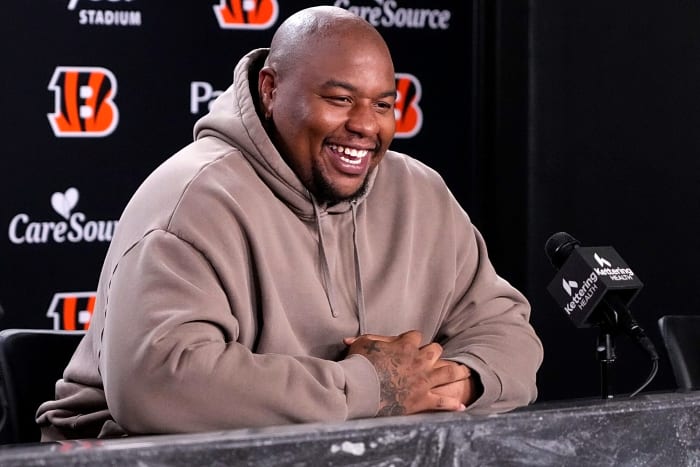
Analysts called it a “rare aggressive swing by a front office often criticized for fiscal conservatism.” That phrase does a lot of heavy lifting. “Rare” means it almost never happens. “Aggressive” means the old playbook got torched. And “fiscal conservatism” is the polite way of saying this franchise pinched pennies while its quarterback’s prime ticked by. Lawrence requested a trade from the Giants after contract negotiations stalled, and Cincinnati pounced. One of the biggest moves in recent Bengals history happened because a team that preached patience finally moved decisively.
Desperation Wearing a Suit

The Bengals’ package, in total, locks Lawrence in for three years and roughly $70 million — the $42 million remaining on his prior deal plus a one-year, $28 million extension in new money. They also surrendered the No. 10 pick. The extension was agreed to within about 24 hours of the trade. That speed tells the story. MMQB senior reporter Albert Breer wrote he would “not be surprised if the Dexter Lawrence II trade winds up being a precursor to the Bengals being more aggressive moving around the board this weekend.” Translation: they may not be done dealing.
The Hidden Playbook

Breer’s reporting outlines the mechanism. The Bengals hold seven picks across rounds two through seven: pick 41, pick 72, pick 110, two sixth-rounders, and two seventh-rounders. The strategy, per Breer, involves potentially trading down in round two to accumulate extra selections and using late-round picks as currency to move around the board. That’s not a team making one bold move. That’s a team treating the draft like a trading floor.
The Numbers Behind the Bet

Lawrence’s cash compensation averages about $23.3 million per year across the three remaining seasons of the restructured commitment. The deal now runs through the 2028 season, meaning Lawrence will be 31 in its final year. Meanwhile, the Bengals still need help at cornerback, linebacker, safety, and on the offensive line — all from rounds two through seven, with no first-rounder to lean on.
Who Pays for the Pivot

Cap space tightened after the Lawrence extension, and analysts have suggested the Bengals may eventually need to restructure Joe Burrow’s contract to stay flexible in future league years. Every team in the league now knows Cincinnati is open to dealing this weekend, which means trade partners can ask more. That’s the cost of broadcasting intentions through insider media before the draft opens. Other traditionally conservative franchises will be watching.
A New Rule, Not an Exception

Trading a top-10 pick for a proven All-Pro defensive tackle cuts against the rookie-contract value model that front offices typically prize. The Bengals effectively declared that a known commodity at 28 was worth more to them than an unknown prospect at 10. If other contenders follow that logic, veteran pricing and draft-pick valuations shift. Once you see it, the Lawrence trade reads less as a one-off football story and more as a philosophical admission: patient drafting had not produced a defense capable of protecting the franchise quarterback.
The Clock Is Already Running
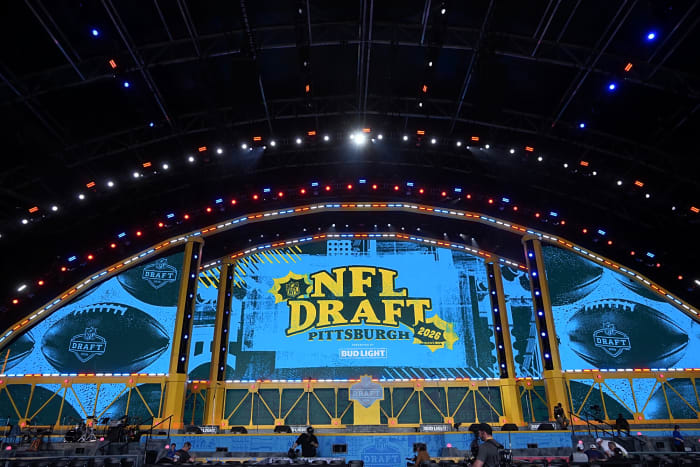
The 2026 NFL Draft opens Thursday in Pittsburgh, and the Bengals’ first selection is pick 41 in round two. Breer’s prediction of additional trades will be tested within days. If Cincinnati moves down in round two and starts packaging late-round picks for targets, the aggressive pivot is confirmed. If they sit still and draft sequentially, the Lawrence trade looks like a one-off.
The Gamble Nobody Can Take Back
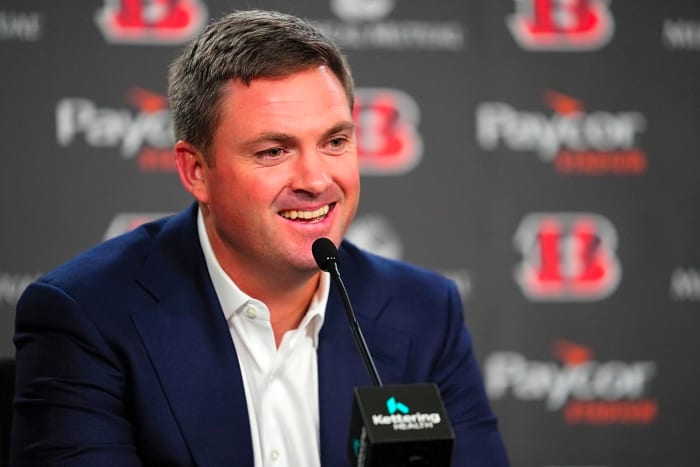
The Giants will use the No. 10 overall pick — alongside their existing No. 5 — to jumpstart their rebuild. Cincinnati supplied the ammunition. While the Bengals push chips in on a closing window, New York reloads with Cincinnati’s draft capital. Conservative organizations rarely turn aggressive out of confidence; they turn aggressive when the alternative is watching their best player’s prime expire. By the end of the weekend, it will be clearer whether this was boldness or a confession.
Sources:
Schefter, Adam. “Sources: Giants trade DT Lawrence to Bengals for No. 10 pick.” ESPN, 18 Apr. 2026.
Rapoport, Ian. “Giants trading DT Dexter Lawrence to Bengals in exchange for 2026 No. 10 overall pick.” NFL Network, 18 Apr. 2026.
Breer, Albert. “Bengals’ Dexter Lawrence trade may be a precursor to more draft-weekend aggression.” Sports Illustrated/MMQB, 22 Apr. 2026.
New York Giants. “Giants trade Dexter Lawrence to Bengals for No. 10 draft pick.” Giants.com, 19 Apr. 2026.
Dehner Jr., Paul. “Bengals trade for Dexter Lawrence ahead of 2026 NFL Draft.” The Cincinnati Enquirer, 18 Apr. 2026.
Over the Cap. “Dexter Lawrence Contract Details.” Spotrac/Over the Cap database, accessed 23 Apr. 2026.
More must-reads:
- Winners, losers from Day 2 of 2026 NFL Draft: Browns keep adding playmakers
- True-or-false for Rounds 2-3 of 2026 NFL Draft: Did Cardinals, Steelers realistically find franchise QBs?
- The 'NFL No.1-overall draft picks' quiz
Breaking News
Trending News



Customize Your Newsletter
 +
+




Get the latest news and rumors, customized to your favorite sports and teams. Emailed daily. Always free!
PRIVACY POLICY COOKIE POLICY CONTACT US
ABOUT YARDBARKER TERMS OF SERVICE


By using this site, you agree to our Terms of Service and Privacy Policy.
This site is for entertainment purposes only.
There is no gambling offered on this site.
Gambling Problem? Call 1-800-Gambler.
