-

-


Follow Us
-

 On Facebook
 On Flipboard


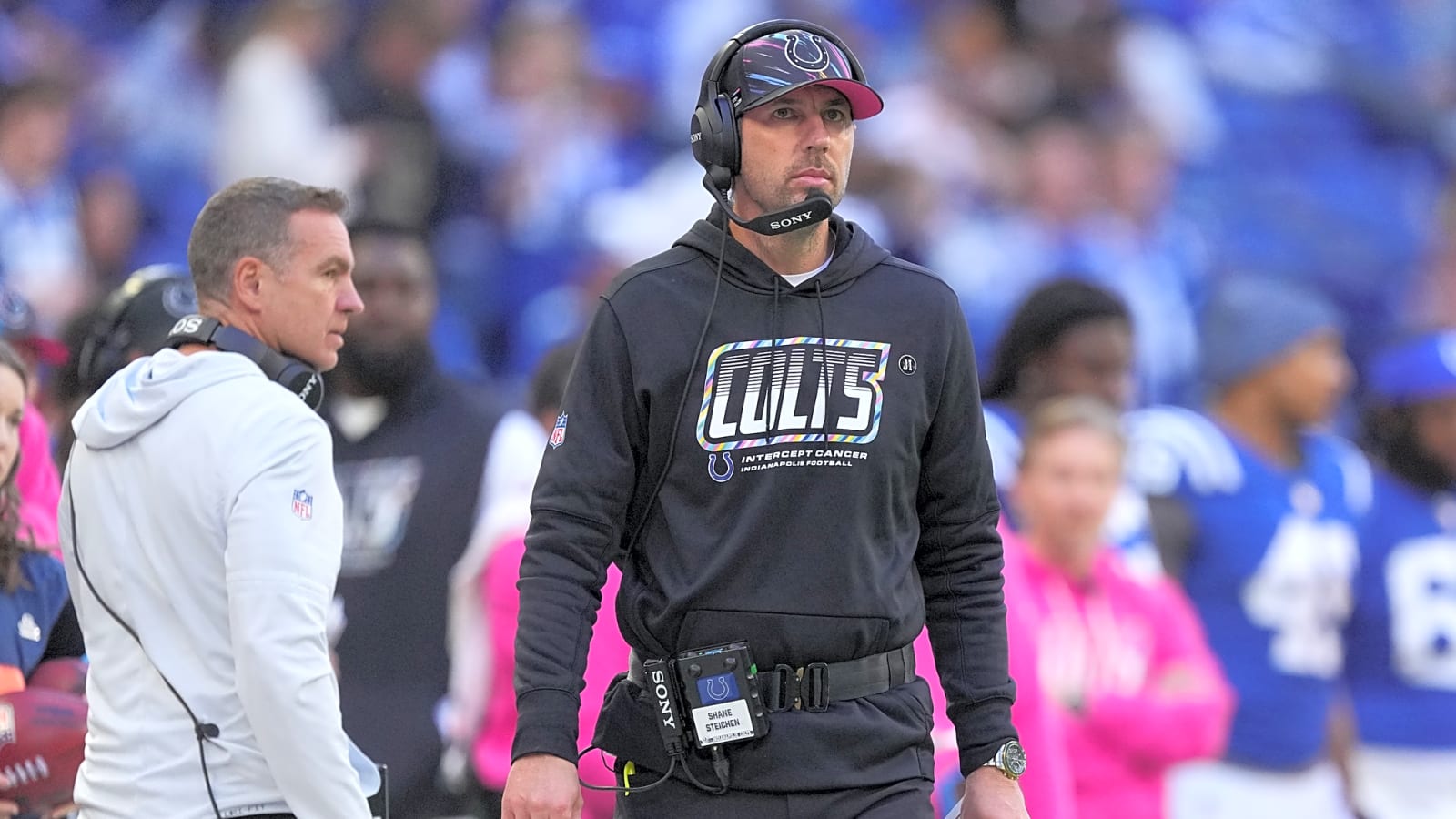
The Colts became the first team to make a major shakeup to their coaching staff or front office in 2026. After a bad loss to the formerly winless Titans dropped them to 2-4 in a make-or-break season for this staff, Indianapolis fired longtime GM Chris Ballard on Monday, jumpstarting their rebuild and sending a message to the team: this isn’t acceptable anymore.
For years, the Colts have been hovering around the edge of the playoff picture, occasionally sneaking in as a wild card team but missing out much more often than not. It was always tough to truly reset the roster with blue-chip talent, as they were rarely bad enough to earn a premium pick. The Colts have been stuck in a sort of purgatory, unable to break through to true success but never bad enough to significantly upgrade the roster.
That all seemed to change in 2025, when the Colts jumped out to an 8-2 record to open the season, with last-second losses to the Rams and Steelers the only blemishes on a resume that included wins over the Broncos and Chargers. Head coach Shane Steichen had Indy’s offense as an unstoppable juggernaut and they were on pace to earn the AFC’s No. 1 seed. To capitalize on this success, Ballard and the Colts traded for Sauce Gardner from the Jets, sending two first-round picks and WR Adonai Mitchell to New York for one of the league’s best cornerbacks.
Shortly after that, Colts QB Daniel Jones tore his Achilles, and it’s been all downhill since then. Since that 8-2 start to open 2025, the Colts are a combined 2-11, performing like one of the league’s worst teams. Jones is back healthy in 2025 but this offense just isn’t the same. What looked like an impressive turnaround was just an illusion, one the Colts bought into and for which they are now facing the consequences.
New Colts owner Carlie Irsay-Gordon, daughter of the late Jim Irsay (from whom she inherited the team when he passed away in May 2025), wants to make her mark on this team. She encouraged Ballard to make the Gardner trade and expressed confidence in the Steichen/Ballard combination before the season — while still detailing her expectations for them.
Irsay-Gordon will head up the search for a new general manager, and while for now Steichen is still in place, he has more to prove. How did the Colts get here, and what’s next for this franchise?
Why Chris Ballard Got So Many Chances
In the past, there was always a reason not to fire Ballard, if Colts ownership went looking for one. Hired in 2017 from the Chiefs front office, Ballard developed a reputation as one of the best scouts and draft managers in the league. During his time in Indy, the Colts were an excellent drafting team, consistently finding value on Day 3, keeping the roster young and hitting on their picks. Even in recent seasons, when Ballard’s job security was a near-constant question, his fellow GMs always spoke highly of his scouting ability.
That’s probably why the Colts were reluctant to move on for so long — even though Ballard had just a 72-82-1 record over nine seasons (plus six games) and had only reached the playoffs twice. Indianapolis didn’t want to lose Ballard’s elite track record in the draft. Fans were seemingly always clamoring for his job, but as one of the most widely respected general managers in the league, he had some leeway. At a certain point, though, his deficiencies in roster management became too much to overlook.
Ballard believes strongly in his own ability to find talent in the draft and hates handing out big contracts to external free agents. While this kept Indy’s cap situation in excellent condition and meant they always had a ready stockpile of picks to use each year, it did mean that they would struggle to address positions of weakness if that year’s crop of rookies didn’t pan out. Too often, Ballard would go into a draft with a massive hole at one spot on his depth chart. If he couldn’t fix it in the draft, it would become a problem spot all season long.
Additionally, Ballard kept getting more chances because it was easy to argue he never got a fair shot at solving the Colts’ quarterback problem. Until he did.
The Quarterback Situation
When Ballard was hired in 2017, the Colts had one of the best quarterbacks in the NFL: Andrew Luck. But when Luck abruptly retired just weeks before the start of the 2019 season, it sent the Colts into a tailspin they still haven’t been able to recover from.
Luck’s backup, Jacoby Brissett, led the Colts to a 7-9 record in 2019. In 2020, Ballard and then-coach Frank Reich lured Philip Rivers to Indianapolis and the team won 11 games and made the playoffs, losing by a field goal in Buffalo in the wild card round.
Like Luck before him, Rivers surprised the Colts by retiring after the season. Reich advocated for the Carson Wentz trade, bringing his old quarterback over from Philadelphia. The Colts were in prime playoff position at 9-6 but lost their final two in embarrassing fashion, missing the playoffs and leading to Reich apologizing for bringing Wentz over in the first place.
Ballard attempted to recreate their success with Rivers by trading for longtime Falcons starter Matt Ryan in 2022. It was an abject disaster: the Colts bottomed out at 4-12-1, Reich got fired and the Jeff Saturday interim coach experience happened. After that, though, Ballard kept his job and the Colts picked No. 4 overall. He finally had his chance to take a quarterback.
The Colts loved Anthony Richardson pre-draft. Don’t let hindsight fool you on this. Ballard and his scouting department loved what they saw at Richardson’s pro day and the newly-hired Steichen was on board too. Richardson only started 12 games in college at Florida and while he was the most athletically gifted quarterback in NFL Combine history, he had a lot of development to do.
That became a problem when he couldn’t stay on the field. He missed most of his rookie season with a shoulder injury before back issues wiped out the latter half of his 2024 campaign. And while Richardson had shown flashes when available, he was far from consistent. This led to the Jones signing in 2025.
Jones beat out Richardson for the starting job that summer and followed it up with the incendiary first half of the 2025 season. That was enough to earn him a two-year, $88 million contract this offseason even coming off a torn Achilles, as Steichen and Ballard understood they had to recapture the magic of the first half of 2025 and make the playoffs to keep their jobs. Needless to say, it hasn’t gone well so far.
Speaking of Steichen….
Will Shane Steichen Be Retained?
Outside of trade chatter on their big-name veterans, this is the main decision the Colts have to make this season. Steichen will most likely get the rest of the season to audition for keeping his job, and the Colts will balance getting future assets with keeping enough of a functional team to properly evaluate Steichen.
I’m not sure how realistic it would be for Steichen to actually be retained. Some of Indy’s shortcomings were beyond his control. Who knows what that 2025 season looks like if Jones never got hurt? But he is also partially responsible for the state of the roster, the team’s collapse last season and poor in-game decision-making.
Steichen’s track record pre-Indy is great. He is largely credited with the early development of Justin Herbert and Jalen Hurts. His offenses in Indianapolis generally have outperformed their perceived talent. If fired, he’d be a top offensive coordinator candidate on the market — if he didn’t get another head coaching shot right away. Some league executives speculated Irsay-Gordon is hesitant to lose Steichen if he could helm a strong turnaround.
On the other hand, Steichen is working on a 27-30 overall record as a head coach. Sometimes a clean break and a fresh start are needed. If Steichen engineers a complete turnaround this season, he won’t be going anywhere. Short of that, though, it’s hard to imagine a new general manager wouldn’t want to make their own hire.
State Of The Roster
The Colts are far from the most talented roster in the NFL, but group should be several steps above the true bottom-dwellers. The offensive line is one of the league’s best, Jonathan Taylor is an exceptional running back and Tyler Warren leads a deep and versatile tight end group. When healthy, Alec Pierce and Josh Downs make for a great pairing at wide receiver. On defense, Gardner and Charvarius Ward are an imposing duo of cornerbacks and DeForest Buckner and Grover Stewart are a criminally underrated duo at defensive tackle. Camryn Bynum is also a standout at safety.
The thing is, I just named all of the Colts’ good players. And many of them might not be in Indy much longer. All-Pro G Quenton Nelson, WR Keenan Allen, Downs, Buckner, Stewart and Taylor have all gotten or are expected to get significant trade interest since Ballard’s dismissal. Pierce has barely played since signing his big offseason extension. This depth chart could look very different in a matter of weeks, let alone after the season.
Warren, Pierce, LT Bernhard Raimann, C Tanor Bortolini and Gardner are the foundational pieces on this roster. Everyone else is either on an expiring contract and potentially useful as trade bait or still has something to prove. Downs, for example, is a player the Colts would love to keep around. But he’s in the final year of his rookie deal and it may make more sense to deal him for a valuable pick if he might hit free agency anyway.
The one silver lining of the Jones contract is the guarantee structure. No matter what the Colts do, they’re on the hook for a prorated $8.8 million signing bonus next year. But they can cut him before March 10 with a post-June 1 tag and get out of the rest of the money. All things considered, that’s not too bad.
Expect the Colts to go for a full rebuild this time around, so trading veterans for picks makes a lot of sense, especially in the wake of the Gardner trade. Warren might be the only truly off-limits player, even if it would take a hefty offer to pry some of the others away. As always in these situations, they won’t trade everyone — but it would be a surprise (and a mistake) if they didn’t trade anyone.
What’s Next For The Colts As They Look To Compete Again?
Firing Ballard is a start, but it can’t be the end. This team has a lot of issues and cleaning house probably makes the most sense. No offense to Steichen, but you want your timelines between the coach and general manager in sync.
If I were in charge of the Colts, here’s what I would do:
- Thank Steichen for his work but bid him farewell at the end of the season. Start fresh with a new general manager and head coach to lead the rebuild.
- Trade as many expiring contracts as you can before the trade deadline. The Colts aren’t in a position to be handing out big free agent deals this offseason, and most of these guys will walk anyway (Downs is the main exception here, if an extension could be reached). Other veterans like Taylor and Ward could be appealing trade targets for contending teams. Without a first-round pick in this upcoming draft, there’s no incentive to tank for better draft positioning. This is all about stockpiling future assets to jumpstart the rebuild.
- Address the quarterback position. Drafting Richardson was a fair shake at that, but it didn’t work out. So it’s time to try again. It’s a shame Indy doesn’t have their first-round pick as the 2027 quarterback class is intriguing, but there should be plenty of second-round options. Take one of them and see what you get, with a forward-looking approach to 2028.
- Focus on premium positions. One of Ballard’s greatest weaknesses as a general manager was his lack of positional priority. Yes, great players are great players no matter what position they play. But in recent years, Indy’s big contracts have gone to an offensive guard, running back, two defensive tackles and a safety. It’s tough to get excited about that when you have massive holes at quarterback, wide receiver and edge rusher. More emphasis needs to be placed on needle-moving additions to the most valuable positions on the field.
With a few smart moves, the Colts can turn things around fairly quickly. This roster isn’t destitute and there’s a path towards a short turnaround. If things break right, Indianapolis could be competitive again as soon as 2028. But the long-term shouldn’t be sacrificed for a few quick wins in the now. Give this rebuild time, actually commit to it, and see what comes of it.
More must-reads:
- Three key matchups to watch in NFL Week 7 games
- Ravens will be without Lamar Jackson for important Week 7 game
- The 'Last 300-yard game by NFL team' quiz
Breaking News
Trending News


Customize Your Newsletter
 +



Get the latest news and rumors, customized to your favorite sports and teams. Emailed daily. Always free!
PRIVACY POLICY COOKIE POLICY CONTACT US
ABOUT YARDBARKER TERMS OF SERVICE


By using this site, you agree to our Terms of Service and Privacy Policy.
This site is for entertainment purposes only.
There is no gambling offered on this site.
Gambling Problem? Call 1-800-Gambler.