
-

-


Follow Us
-

 On Facebook
 On Flipboard
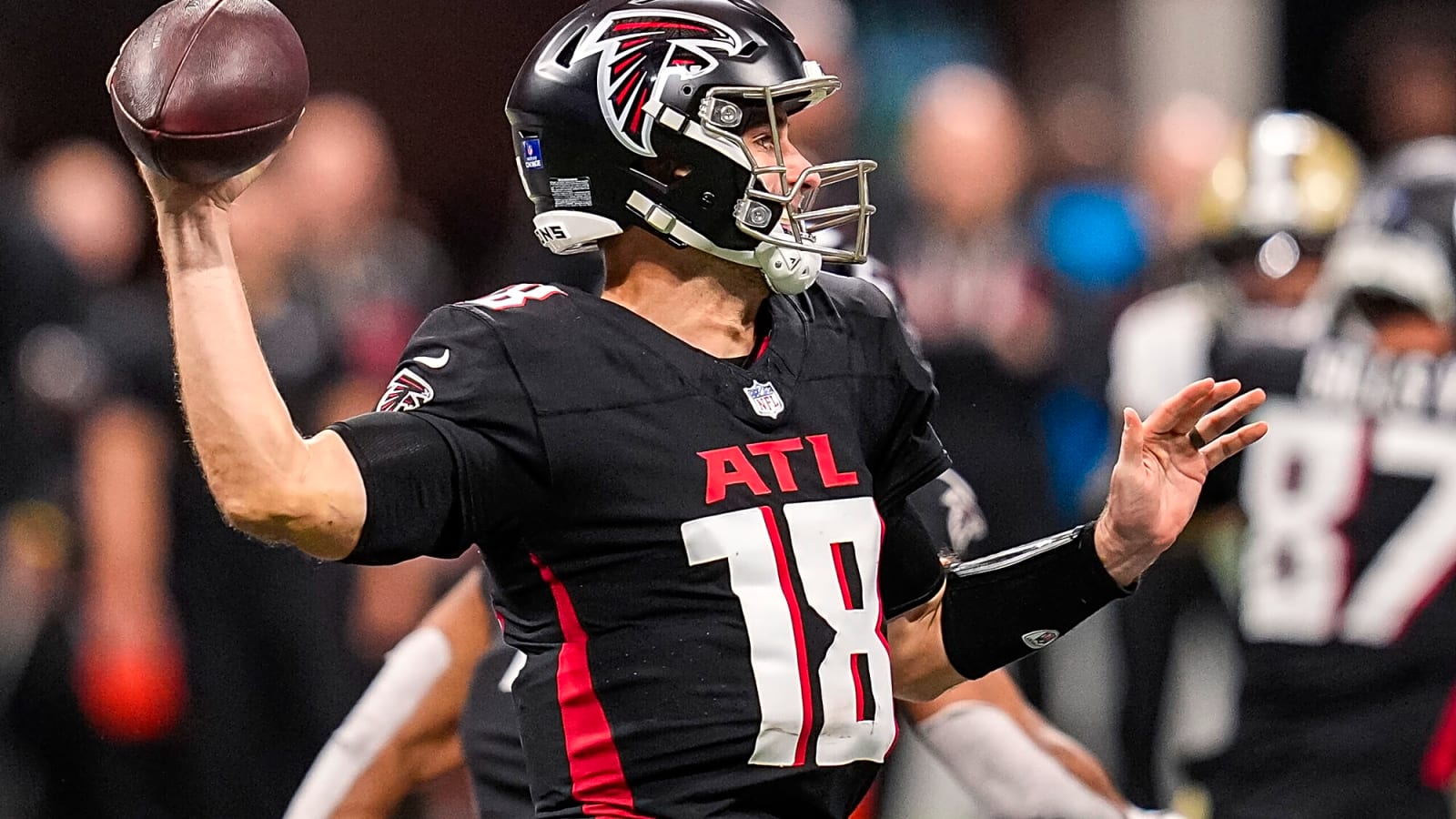
Kirk Cousins walked into Las Vegas with a five-year, $172 million contract on paper. On paper. The actual number that matters for 2026 is $20 million, fully guaranteed. The number that hits the Raiders’ salary cap? Just $1.3 million. That leaves a gap of $18.7 million that somebody else covers. Somebody who didn’t sign him, didn’t want him, and watched him leave town months ago. The Atlanta Falcons are still writing checks for a quarterback wearing silver and black.
Atlanta’s $8.7 Million Ghost
The Falcons signed Cousins to a four-year, $180 million deal in March 2024. Six weeks later, they drafted his replacement. By January 2026, his roster bonus vested, locking Atlanta into $8.7 million in offset obligations. Then they cut him. The Raiders swooped in, signed him to the veteran minimum of $1.3 million, and offset language in the original Falcons contract forced Atlanta to cover the rest. Cousins collects $20 million guaranteed. The Falcons pay 43.5% of that salary for a quarterback suiting up for a rival.
The Structure Nobody Saw Coming

Most fans assume the salary cap is a hard ceiling. Spend $301.2 million, stop. That assumption is wrong. GM John Spytek and the Raiders’ legal team structured a $10 million roster bonus for 2027 with zero offset language, meaning if Las Vegas cuts Cousins next year, he keeps every dollar. The Falcons can’t reduce their liability. Albert Breer called it a “really smart way to work around the offset, get the player more money and force his old team to pick up a big part of freight.”
The “Too Obvious” Trick

Mike Florio said it plainly: “Too obvious that the Raiders came up with a way to get Cousins to $20 million while paying only $11.3 million of it.” Too obvious. And yet the NFL allowed it. Not just this deal. Over the past decade, the use of void years to defer cap obligations has exploded across the league. By 2025, the majority of NFL teams carried significant deferred money on their books — a dramatic shift from a strategy that was once rare. The league watched it happen and changed nothing.
How the Hidden System Works

Void years are phantom contract years tacked onto the end of a deal. They exist only for cap accounting. The CBA places no explicit limit on number, duration, or total deferral amount, giving teams broad flexibility to push today’s costs into tomorrow’s budget. The Philadelphia Eagles used this exact mechanism to build the most talented roster in football and win Super Bowl LIX. That championship wasn’t built by better scouting. It was built by better contract lawyers spreading cap hits across years that will never be played.
The Numbers Behind the Curtain
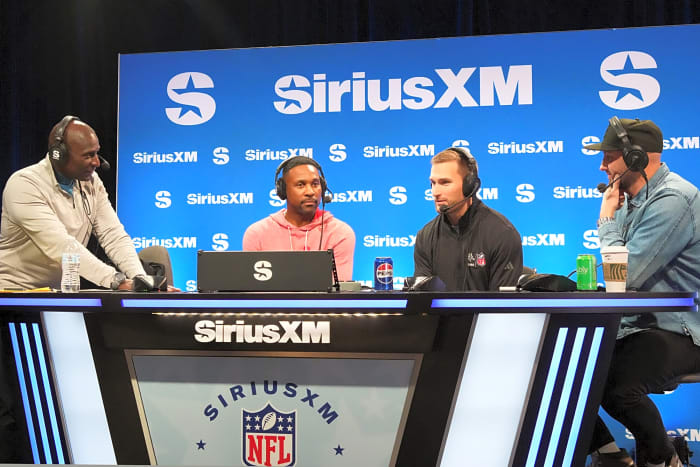
Cousins’ contract is listed at five years, $172 million. The realistic number is one year, $20 million — and the Raiders pay $11.3 million of that, with Atlanta covering the remaining $8.7 million through offset obligations. An 8.6x gap between listed and actual value. The 2026 salary cap sits at $301.2 million, the highest in league history, nearly double the $177 million cap from 2018. That 70% growth gave teams more room to defer. And defer they did. The majority of teams now carry substantial future void year obligations. The cap grew. The accounting tricks grew faster.
The Ripple Hitting Other Rosters

Cousins isn’t even the only released quarterback bleeding his old team dry. Tua Tagovailoa signed with Atlanta after Miami cut him, and the Dolphins still owe $54 million guaranteed in 2026. Russell Wilson, Kyler Murray, Tagovailoa, Cousins: all signed minimum deals after being released, sticking former teams with the balance. The Cardinals absorbed significant offset obligations on Murray’s deal. If deferred obligations across the league come due at once, rosters collapse. That’s not a loophole. That’s a ticking clock.
A New Rule, Not an Exception
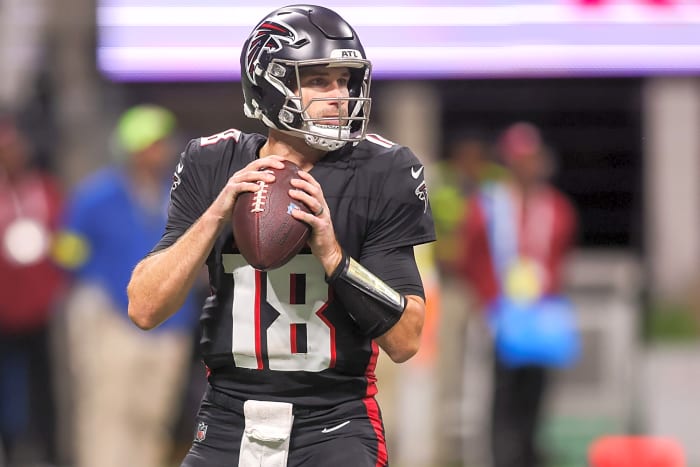
The Cousins deal looks like a one-off exploit. It’s actually the new standard. The Eagles proved void years win championships. The Raiders proved offset language can weaponize a release. NFL owners discussed changes at the 2026 annual meeting. They approved new kickoff rules and expanded replay authority. They did not close the salary cap loophole. The majority of the league uses this strategy. Once you see that number, the salary cap stops looking like a constraint and starts looking like a suggestion.
The Window Before It Closes

Owners will likely propose rule changes at the 2027 annual meeting. That leaves months for copycat deals. Every team with a released player carrying offset language now has a blueprint. Kirk Cousins has earned over $322 million in his career — after the Raiders deal pushes his total past $341 million, he climbs to third all-time in NFL career earnings, trailing only Matthew Stafford and Aaron Rodgers. He will hit free agency again in 2027. The man who exposed the system could run the same play twice, and the NFLPA will fight any rule that limits contract creativity for players.
Lawyers Win Championships Now

The Raiders hold the first overall pick in the 2026 NFL Draft, where projected No. 1 pick Fernando Mendoza is expected to sign on as the franchise quarterback. They brought in Cousins as a bridge for just $1.3 million in 2026 cap space — with the Raiders’ total commitment at $11.3 million — keeping roughly $87 million in projected room to build around their rookie. That’s not luck. That’s a legal department outworking every front office that still thinks the salary cap is about math. The real competition in the NFL now lives in contract language, not combine times. Small-market teams that can’t navigate void years aren’t just losing games. They’re paying for other teams’ quarterbacks.
Sources:
“Kirk Cousins’ two-year, $172M Raiders deal breakdown” — Tom Pelissero, NFL Network / X “Raiders took advantage of loophole to save $8.7 million” — Mike Florio, NBC Sports / ProFootballTalk “What to Expect of Kyler Murray, Kirk Cousins Deals” — Albert Breer, Sports Illustrated “NFL may change contract rule following Kirk Cousins deal” — Yahoo Sports “Falcons won’t make a stink about the Kirk Cousins contract” — Mike Florio, NBC Sports / ProFootballTalk “Kirk Cousins’ Raiders contract will see him double the guarantee he had left on Falcons deal” — Bolavip / NFL Network
More must-reads:
- Report: Dianna Russini 'sidelined' amid investigation by New York Times regarding Mike Vrabel hotel photos
- Joe Buck addresses his future at ESPN
- The 'NBA top-seed top-scorers' quiz
Breaking News
Trending News


Customize Your Newsletter
 +
+




Get the latest news and rumors, customized to your favorite sports and teams. Emailed daily. Always free!
PRIVACY POLICY COOKIE POLICY CONTACT US
ABOUT YARDBARKER TERMS OF SERVICE


By using this site, you agree to our Terms of Service and Privacy Policy.
This site is for entertainment purposes only.
There is no gambling offered on this site.
Gambling Problem? Call 1-800-Gambler.
